
Clubbing On
It wasn’t until February 6th, 1958, that the Youth Academy at Manchester United came under genuine scrutiny. British European Airways Flight 609, crashing on takeoff at 15.03 pm from Munich-Riem airport, Germany, killed 8 of a squad that had been built on belief in youth; left full back and captain, Roger Byrne, 26 starts that 1957-58 season; left full back, Geoff Bent, 0; center half, Mark Jones, 10; right half, Eddie Colman, 24; Eire inside right, Liam ‘Billy’ Whelan, 20 (12 goals); center forward, Tommy Taylor, 25 (16); and left winger, David Pegg, 21 (4), while left half, Duncan Edwards, 26 (6), passed away at Rechts der Isar hospital 15 days later, and injury ended the careers of inside forward, Northern Irish, Jackie Blanchflower, 18, and right winger, Johnny Berry, 20 (4).
The squad were returning from an encounter, on February 5th, at Stadion JNA, against Serbia’s Red Star Belgrade, in the quarter-final of the European Cup, with Dennis Viollett, 22 (16), on 2 minutes, 1-0, with left back, Milan Zekovic, unable to take him down from behind, at the edge of the ‘D’, center. Dennis, inside the 18 yard box, struck the ball into the right corner of the net, as Croatian ‘keeper, Vladimir Beara, came out. Bobby Charlton, 21 (8), on 30 minutes, after crossing the center circle, with the ball, right to left, from inside his own half, hammered a shot, left-footed, past Beara, from just outside the 18 yard box, center; inside the right post, low, 2-0. Beara, in the 32nd minute, opting to kick away a right-footed cross-shot, right of the 18 yard box, close to the byline. The ball, instead finding Charlton; almost on the penalty spot, goal, center, 3-0.
A lead, whittled away by left winger, Bora Kostić, on 46 minutes, 1-3, and center forward, Lazar Tasić, a penalty, on 50 minutes, awarded, according to center half, Bill Foulkes, after Lazar pulled Bill down on top of him, 2-3. United ‘keeper, Harry Gregg, saved at Kostić’s feet, but handled outside the area. The resultant free kick, on 58 minutes, according to Viollett, gained such a curve, ricocheting off his head, Harry could only palm it into his net, 3-3.
Rather than Berry, £25,000 from Birmingham City, debuting on September 1st, 1951, at Bolton Wanderers, 0-1, then 31 years, Wales’ Kenny Morgans, 11 starts that 1957-58 term, was the right winger, 18 years, and the youngest member of the squad, found by two German photographers, in the wreckage of the fuselage, hours after an official abandonment of the search for survivors, at 9.30 pm, ‘The first team wasn’t clicking, so Matt Busby had made changes.’1 Albert Scanlon, the other major pre-Munich team change, alongside Morgans, on December 21st, 1957, against Leicester, 4-0, with Scanlon, 9 (3), opening the scoring, on 13 minutes, and the team on an unbeaten run in the league since, had been preferred to Pegg, then 22 years, as the left winger.
Having won, 2-1, in the first leg, on January 14th, despite Tasić’s opener on 35 minutes, with Charlton, in the 64th, and Colman, in the 82nd minute, the team qualified on aggregate, 5-4, to contest a semi-final with Italy’s Serie A club, AC Milan. The first team decimated, a makeshift side made up of reserves, survivors, and youth team players, won, 2-1.
Morgans, ‘man of the match’, as he recalled, ‘played his heart out’, while England forward, Charlton, glaringly absented for a Friendly at London’s national Wembley Stadium, on May 7th against Portugal, 2-1, was scoring goals there. After receiving a through ball from inside left, Fulham’s Johnny Haynes, in the 25th; from 20 yards, and despite being off-balance, due to a strong challenge from Académica OAF left half, Márlo Torres, inside ‘keeper Carlos Gomes’ post, 1-0. Into center field, from Blackburn Rovers’ Bryan Douglas, finding Bobby; left-footed thunderbolt, past the CP Sporting ‘keeper, 2-1, in the 62nd minute. Kenny, his heart no longer in it, making only 2 league appearances in 1958-59, 0 in 1959-60, and just 2 in 1960-61, was transferred to Swansea Town, in March 1961, for £3,000.
Behind, on May 8th, at Old Trafford, in the 24th minute, after a strike from Milan ‘playmaker’, Uruguayan attacking midfielder (AM), Juan Schiaffino, 0-1, the side, recovering, though deserted, desolate, and abused by the loss of Charlton on international duty, through Viollett, on 39 minutes, 1-1, and a penalty, converted by inside forward, Ernie Taylor, an ‘emergency’ February 19th signing from Blackpool, 2-1, on 80 minutes, finally collapsed, on May 14th at San Siro, 0-4; losing 2-5 on aggregate.
Before the Munich disaster, the club had emphasized youth, as a platform upon which to build the future, which afterwards became a principle; in memory of those that lost their lives. In the 1955-56 season, Wilf McGuinness, 3 (1), debuted, 19 years, on October 8th, 1955, against Wolves, 4-3, through Pegg, in the 42nd minute, 1-0, Taylor, in the 71st, 2-2, John Doherty, in the 84th, 3-3, and Taylor, in the 88th. Wilf later managed the club, appointed for 1969-70, after then manager, since 1945-46, Matt Busby.
Former Manchester City right half, Busby debuted against Middlesborough, 3-1, at inside left, on November 2nd, 1929, through right winger, Ernie Toseland, 42, center forward, Tommy Tait (28), and Welsh left winger, Jack Harrison, 1 (1), in what was, bizarrely, his only ever appearance. Matt requested the role of trainer, selector, seller and purchaser, from October 1st, 1945, without interference. James W. Gibson, clothier, agreed, Chairman since 1927, though replaced in 1951, upon his demise, by Harold Hardman, a former trainee left winger at Everton, signed for 1908-09.
Though transferred to Bradford City, on January 8th, 1909, Harold appeared 4 times for the club, when John Davies, brewer, was Chairman, based at Bank Street’s ground, Clayton. Debuting, for then manager, Ernest Mangnall, on September 19th, 1908, away at Manchester City, Hyde Road, 2-1, after goals from Scot’s center forward, Jimmy Turnbull, 1-1, on 41 minutes, and inside left, Harold Halse, on 68 minutes. Hardman, as Chairman, would oversee the proper development of the Youth Academy, and its concomitant; the rise of the ‘Busby Babes’.
McGuinness, 13, had qualified for a league championship winners’ medal, in the 1956-57 campaign, at left-half, which was some feat, as that was the position held by the team’s ‘young giant’, Edwards, 34 (5). Descried as a talent with ‘everything’, because of his strength, stamina, the timing of his tackling, ‘The Tank’, and the two-footed power of his shooting, Duncan made his first team debut, 16 years and 185 days, against Cardiff City, 1-4, on April 4th, 1953; through Byrne (pen.), on 87 minutes: Edwards’ only appearance that term.
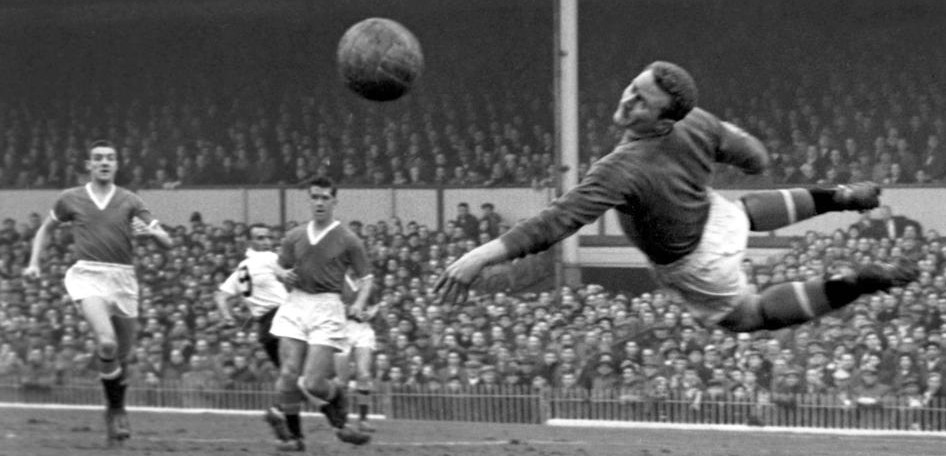
‘Big Dunc’ was already on his way to winning the inaugural 1952-53 FA Youth Cup, alongside other emerging soccer Titans in the 1953 Final; Colman, Whelan, and Pegg. Beating Wolverhampton Wanderers, on May 4th, 7-1, at Old Trafford, and on May 9th drawing 2-2 at Molineux Stadium: taking the trophy 9-3 on aggregate. Some members of the side’d ironically be greater after Munich; left winger Scanlon, debuting on November 20th, 1954, against Arsenal, 2-1, through center forward, Taylor, on 60 minutes, and inside right, Blanchflower, in the 87th, subsequent to Albert’s recovering from injuries, incurred in the disaster, and captain, center half, Ron Cope, 21 years, debuting at Highbury, on September 29th, 1956, 2-1, through inside right, Whelan, on 10 minutes, 1-0, and right winger, Berry (pen.), in the 35th, 2-0.
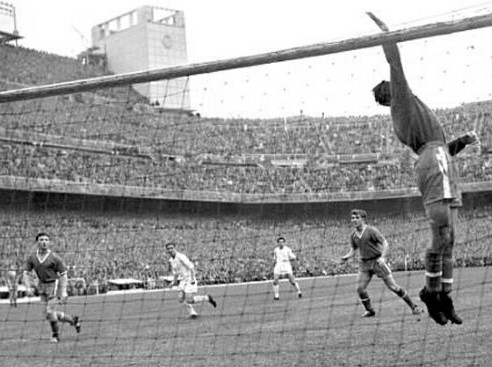
Bobby Charlton debuted, 18 years, on October 6th, 1956, against Charlton Athletic, 4-2, through Berry, in the 25th minute, 1-1, Charlton, in the 32nd and 37th, 3-1, and Whelan, in the 65th, 4-2. Charlton would become a legend after Munich, as the deep-lying center forward in the side, rising from the ashes, like the mythical Phoenix bird, to win the European Cup in 1968. With McGuinness at left half, Bobby, at outside left, had come into the team that won the 1954 FA Youth Cup, again against Wolves, 4-4, on April 23rd, at Old Trafford, and on April 26th, 1-0, at Molineux; 5-4 on aggregate.
Eire’s Shay Brennan, right back in that ‘68 Final was at inside forward in the 1954-55 FA Youth Cup Final win over West Bromwich Albion, 4-1, on April 27th, at Old Trafford, and on April 30th, 3-0, at The Hawthorns; 7-1 on aggregate. Eire’s Joe Carolan, at right half; Morgans, right winger; inside forward, Mark Pearson, and Scot’s center forward, Alex Dawson, who’d feature strongly in the immediate post-Munich hiatus, were in the side that beat Chesterfield in the 1956 FA Youth Cup Final, 3-2 on April 30th, at Old Trafford, and drawing, 1-1, on May 7th, at the Recreation Ground; 4-3 on aggregate.
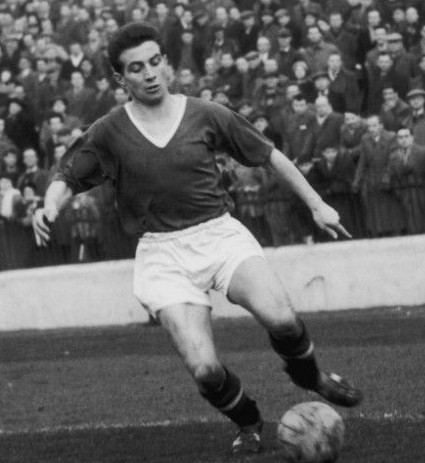
The effect of youth, on the first team squad, was startling. Called ‘Boom Boom’ by Berliners, Edwards’ first international goal came, during a Friendly defeat of Germany, 3-1, on May 26th, 1956, at Olympiastadion, Duncan, 33 (3), for the 1955-56 term, striking from the edge of the 18 yard box, past Rot-Weiss Essen ‘keeper, Fritz Herkenrath, after ‘Tank Gun’ evaded a tackle from Essen center half, Heinz Wewers; 1-0, in the 25th minute.
Colman, 25, ‘Snakehips’, for his body swerve, 19 years, debuted at Bolton’s Burnden Park, 1-3, despite Taylor’s opener in the 3rd minute, on November 12th, 1955. Eddie, right half to Duncan’s left half, was replacing Jeff Whitefoot, 15, debuting against Portsmouth, on April 15th, 1950, 0-2, then the youngest to start for the club, 16 years, 105 days. Whitefoot belonged to Busby’s first phase ‘Babes’, along with John Doherty, 5 (2), 17 years, inside right, debuting in the 1952-53 season, on December 6th, 1952, against Middlesboro’, 3-2, through Stan Pearson, on 7 minutes, at center forward, John Aston Snr, in the 23rd, and Pearson, in the 32nd, with Doherty, 16 (4), also a part of the squad that won the 1955-56 title, before Whelan’s emergence at inside right. Celebrated, for being able to find the net, with either foot, and often from difficult angles, Liam, 36 (27), top scored in 1956-57, arriving from Dublin’s Home Farm club, after a spell as a trainee, debuting on March 26th, 1955, at Preston North End’s Deepdale, 2-0, through Scanlon, 14th, and Byrne (pen.), 60th minute.
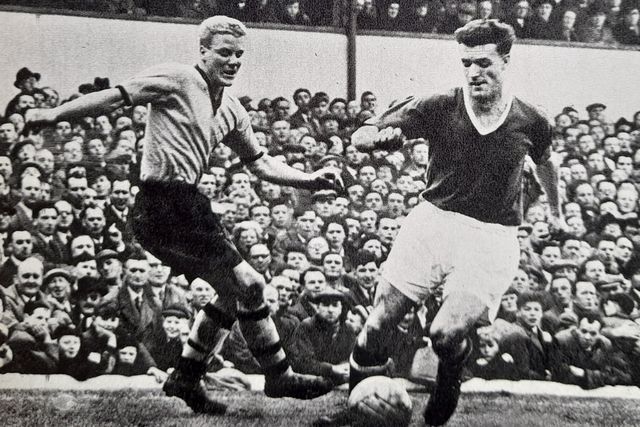
Though Jeff contributed, 3, the 1951-52 title was won by the more seasoned, apart from left full back, Byrne, 24 (7), sometime left winger that term, debuting on November 24th, 1951, 22 years, against Liverpool, 0-0. Jack Rowley, 40 (30), center forward, and Stan Pearson, 41 (22), at inside left, had been in the 1948 FA Cup Final winning side, 4-2 against Blackpool, initially through Rowley, toeing the ball away from ‘keeper Joe Robinson’s fingertips, right boot, outstretched, past Joe, right, side-footing, 1-1, on 28 minutes, and in the 70th, a cross from inside right, Johnny Morris, out on the right, level with the right corner of the 18 yard box. Jack, leaping, a header, left side of the goal area, level with the left upright, top right corner of the net, 2-2, then Stan Pearson, on 80 minutes, at inside left, right side of the penalty area, right-footed, in off the left post, 3-2, and right half, John Anderson, in the 82nd, outside the 18 yard box, right side of the ‘D’, top left corner, 4-2.
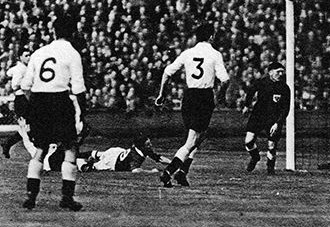
Scot, John Downie, 31 (11), joining from Bradford Park Avenue for £18,000, replaced inside right, Johnny Morris, before 1951-52’s championship success. Netting on his debut, on March 5th, 1949, at Charlton Athletic, 3-2, through Stan Pearson, on 4 minutes, 1-0, John in the 52nd, 2-1, and Pearson, 3-1, in the 62nd.
Reaching double figures, Taylor, 33 (25), and Viollett, 34 (20), debuting at Newcastle United’s Saint James Park, 19 years, on April 11th, 1953, 2-1, through Taylor, on 7 minutes, 1-0, and in the 58th, 2-1, the club won the 1955-56 title, and the FA Shield curtain raiser to 1956-57, 1-0, through Viollett, on 75 minutes, on October 24th, against Manchester City, at Maine Road. Ray Wood, ‘keeper, 39, was replaced, on 45 minutes, by David Gaskell, then the youngest ever to take the field, at 16 years, 19 days; though being in the eleven at the start is always the genuine measure of a manager’s belief.
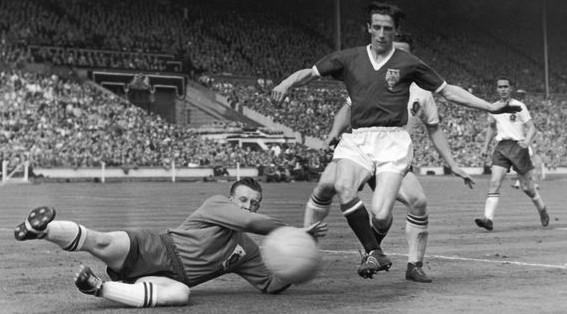
Charlton, 14 (10), and McGuinness, 13, featured in ‘56-57, with Bobby sometimes at inside left instead of Viollett, while inside forward, Nobby Lawton, coming into the side for the 1957 FA Youth Cup Final against West Ham United, would press for a while in the post-Munich aftermath. ‘The Hammers’ were beaten, 3-2, on May 2nd, at Upton Park, and on May 7th, at Old Trafford, 5-0; 8-2 on aggregate.
The side won the 1957 FA Shield ‘opener’ to the 1957-58 season, 4-0, at Old Trafford, on October 22nd, having lost to Villa in the 1957 FA Cup Final, on May 4th, at Wembley, the previous season, when going for ‘the double’ of league and cup. A collision with Villa left winger, Peter McParland, after only 6 minutes, disabled United ‘keeper, Wood, with Blanchflower taking the ‘keeper’s jersey. A hat-trick (3) in the FA Shield, on 50 minutes, 1-0, in the 54th, 2-0, and 70th, 3-0, with Berry (pen.), on 87 minutes, 4-0, Taylor got ‘hamstrung’ United’s sole reply, in the ‘57 Final, on 83 minutes, 1-2; what might have beens.
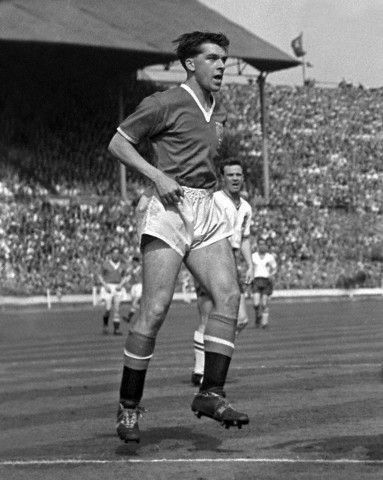
Brennan, inside forward, 5 league starts that 1957-58 season, as the usual alternative to Pegg, left winger Scanlon, had injuries, Seamus, ‘Shay’, debuted, at outside left, in the initial post-Munich game. In the 5th Round FA Cup tie against Sheffield Wednesday, at Old Trafford, on February 19th, 1958, Brennan’s corner on the left; high, in-swinging, in at the near post, beyond ‘keeper Brian Ryalls’ grasp, on 29 minutes, 1-0, and in the 70th, Shay’s right instep, just outside the 6 yard box, level with the right upright; inside the right post, low, 2-0. Dawson, 12 (5), struck again, late on; right of the penalty area, outside the 6 yard box, opposite the right upright; low shot, right-footed, bottom left corner of the net, in the 85th, 3-0.
On a peoples’ wave of non-partisan emotion, the team would reach the May 3rd FA Cup Final, at Wembley. Only to lose, at the last hurdle, to a clinical Bolton center forward, Nat Lofthouse. Receiving a low, left-footed through ball, from left half, Bryan Edwards, just outside the 18 yard box, left, Nat struck low, right-footed, from inside the penalty area, left, into the left corner of the net in only the 3rd minute; bulling ‘keeper, Harry Gregg, 19, over his own line, as he tried to keep hold of the ball, 0-2, on 50 minutes.
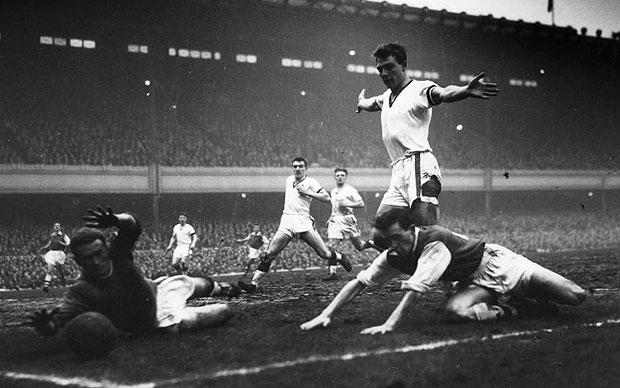
Though Brennan would go on to be a part of the side that won the 1963 FA Cup Final, at right back, 3-1, against Leicester City, as well as being regularly selected for the league title campaigns of 1964-65 and 1966-67, Bill Foulkes, 42, now as captain, was at right back in the Final, where he’d mostly been since Munich, after debuting, 20 years, on December 13th, 1952, against Liverpool, 2-1, through Aston, on 50 minutes, 1-1, and Stan Pearson in the 80th, while inside forward, Wales’ Colin Webster, 20 (6), who hadn’t made the trip to Belgrade, but had seen action in the ‘55-56, 15 (4), and ‘56-57, 5 (3), title charges, after debuting, 21 years, on November 28th, 1953, at Portsmouth, 1-1, through Taylor’s equalizer, on 70 minutes, was out on the left as the winger.
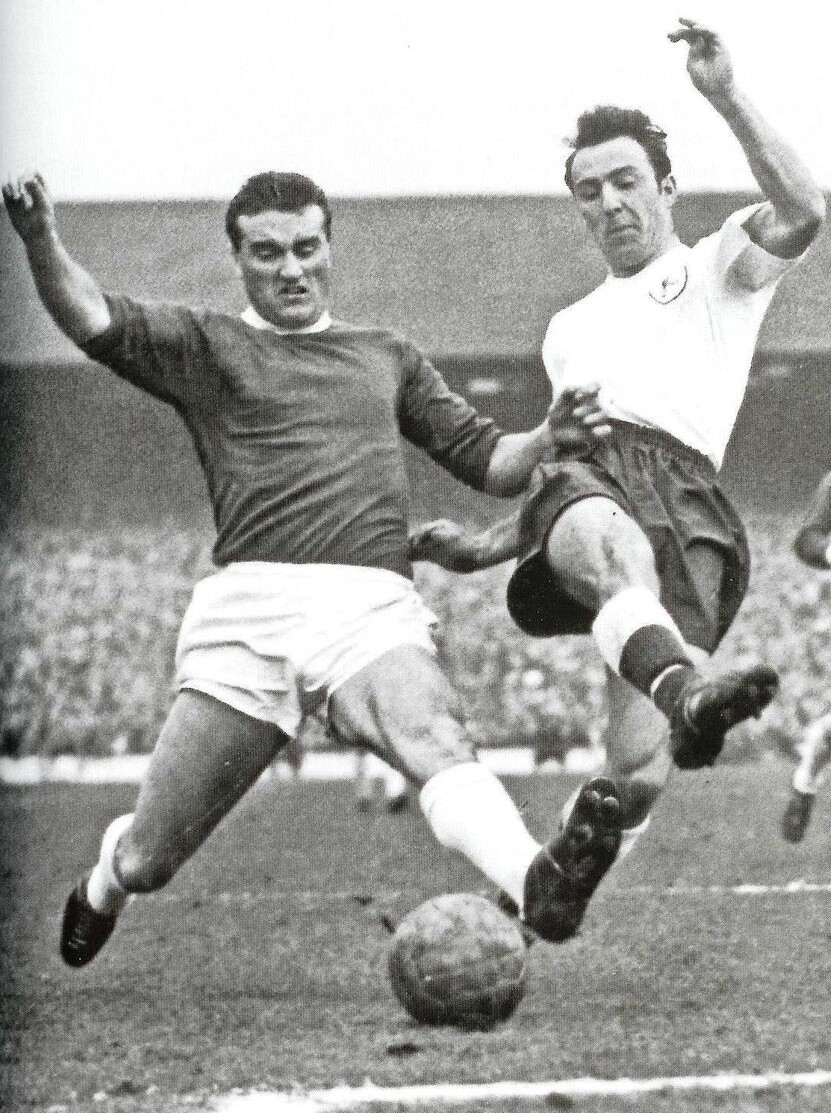
Freddie Goodwin, right ‘wing back’, defined as an attacker, in the place of the full back, supplying all of the width, rather than wingers, and also required to defend, as a full back, usually requiring an additional central defender when deploying, also wasn’t on the trip to Red Star. Debuting November 20th, 1954, 21 years, against Arsenal, 2-1, through Taylor, on 60 minutes, 1-1, and Blanchflower, in the 87th, 2-1, contributing to the ‘56, 8, and ‘57, 6, title wins, Freddie was given 16 starts in 1957-58. Stanley Crowther, 11, left half, £18,000 from Sunderland, with the thankless task of replacing Duncan, and Ernie Taylor, 11 (2), inside right, £8,000 from Blackpool, shortest player in the league, at 5’ 4”, with his defence-splitting passing ability, on a similar ‘hiding to nothing’, replacing ‘Billy’ Whelan, were both ‘emergency’ debuts, in the 3-0 FA Cup 5th Round defeat of Sheffield Wednesday, on February 19th. Having been to the Final, both were transferred, in the earlier part of the 1958-59 campaign; partly due to painful comparisons with their illustrious predecessors. Ernie, 11, to S’land for £7,000, on December 12th, 1958, and ‘Stan’, 2, to Chelsea for £10,000, on December 16th, 1958. Thanks, and farewell.
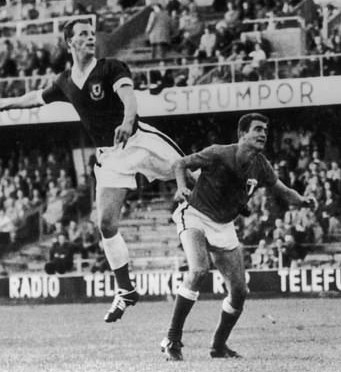
The Munich disaster had been double for England, preparing for the 1958 World Cup Finals in Sweden; losing Byrne, Colman, Jones, Berry, Pegg, and Taylor. Though Charlton was in the squad, he wasn’t selected by then manager, Walter Winterbottom, for the team. Russia beat England in a play-off for 2nd place in Group 4, at Ullevi, Gothenburg, 0-1, on June 17th, progressing to the quarter final.
Gregg was ‘keeper for the Northern Ireland team that had lost Jackie to injury, captained by his brother, Spurs’ right half, Danny Blanchflower, beaten 4-0 by France at the quarter-final stage, on June 19th at Idrottsparken, Norrköping.
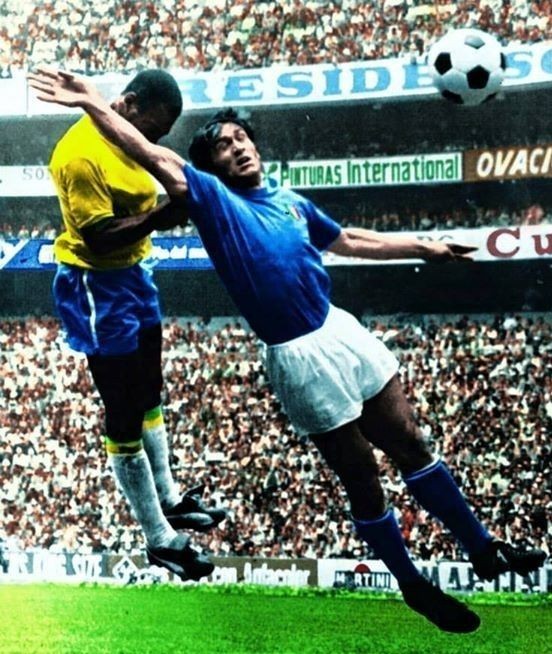
Webster, named in Wales’ squad, took the field against Hungary, 1-1, Mexico, 1-1, and the quarter-final against eventual South American winners, Brazil. In the eleven, for injured Italian Serie A club, Juventus’ center forward at center half, ‘gentle giant’, John Charles, beaten on June 19th, at Ullevi, by club Santos’ Pelé, 17 years, on 66 minutes, taking the ball on his chest, inside the 6 yard box, left, tapping the ball forward, right-footed, towards the goal, behind him, while turning to follow its path; right boot, stroking the ball, low, bobbling inside ‘keeper Jack Kelsey’s left upright, 1-0, en route to beating Scandinavia’s Sweden, in the Final, 5-2, on June 29th, 1958, at Råsunda, Solna.
Brazil’s first title, and Pelé’s first of three; in Northern Europe in ‘58, and in South America’s Chile in ‘62, against Central Eastern Europe’s Czechoslovakia, 3-1, on June 17th at Estadio Nacional, Santiago, and in Central America’s Mexico in ‘70, against Southern Europe’s Italy, 4-1, on June 21st, at Stadio Azteca, Mexico City.
A throw in, on the left wing, from Cruzeiro’s center forward, Tostão, crossed, on the bounce, left-footed, by Corinthians’ left winger, Rivellino, just outside the 18 yard box, almost level with the right corner of the 6 yard box, where there’s Pelé, heading the ball, high, inside Cagliari ‘keeper Enrico Albertosi’s right post, 1-0, in the 18th minute.
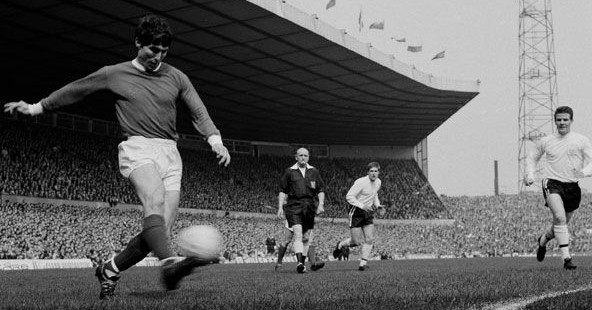
Goodwin was a linchpin of the side in 1958-59, 42 (6), more often at right half, replacing Colman, while Carolan, 23, making his debut as a ‘Babe’, 21 years, on November 22nd, 1958, at Old Trafford against Luton Town, 2-1, through Viollett in the 1st minute, 1-0, and Charlton in the 11th, 2-0, began impressively at left back, replacing the immediate choice after Munich, Ian Greaves, injured, unable to travel to Belgrade, transferred from Buxton United for 1953-54, debuting on October 2nd, 1954, 22 years, at Wolves’ Molineux, 2-4, through Viollett, on 26 minutes, and Rowley, in the 73rd. Ian, left back in the 1958 FA Cup Final defeat to Bolton, had 34 starts in 1958-59.
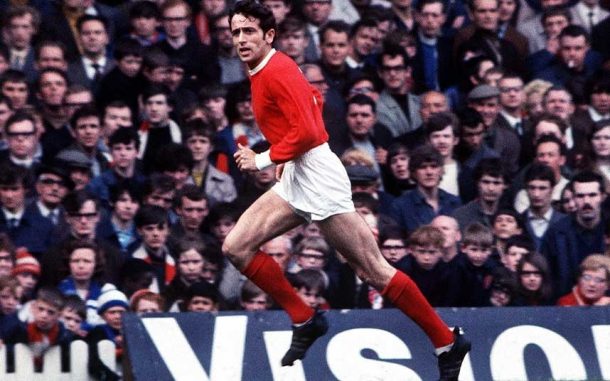
Warren Bradley, 24 (12), wasn’t, strictly speaking, a youth product, but an amateur, with Northern League club, Bishop Auckland, winning the FA Amateur Cup in ‘56 against Corinthian Casuals, 4-1, on April 12th at Middlesboro’s Ayrsome Park, after a draw, 1-1, on April 7th at Wembley, and again in ‘57 against Wycombe Wanderers on April 13th at Wembley, with Warren netting on 72 minutes, 3-1.
After his debut, 25 years, on November 15th, 1958, at Bolton, 3-6, through Dawson, on 35 minutes, 1-2, and in the 65th, 2-3, and Charlton, in the 50th, 3-3, the club’s emergency signing of Bradley, post-Munich, had immediate rewards; visibly, and tangibly, on-field, while £45,000 signing, ‘The Golden Boy’, 25 years, second striker, Albert Quixall, 33 (4), from Sheffield Wednesday, had glaringly less impact in terms of goals, although Charlton, 38 (29), gave him credit as a valuable ‘provider’. Dennis Viollet, 37 (21), and Scanlon, 42 (16), also got into double figures, with the team finishing 2nd in the title race; 5 points behind Wolves on 55.
The club finished 7th in 1959-60. Maurice Setters, brought from West Bromwich Albion (WBA), in January 1960, for £30,000, replaced McGuinness, victim of a career-ending December 1959 leg-break, during a reserve team game against Stoke City. Goodwin was sold to West Yorkshire club, Leeds United, for £10,000, on March 16th. Lawton, 3, debuted at inside left, on April 9th, 1960, at Luton’s Kenilworth Road, 3-2, through Bradley, on 20 minutes, 1-0, and Dawson, in the 30th , 2-1, and 32nd, 3-1. Eire’s legendary midfielder, ‘general’ Johnny Giles, 10 (2), for a signing on fee of £10, turning out for Dublin’s Stella Maris in 1956, began his career as a right winger, 19 years, on September 12th, 1959, against Spurs, 1-5, with only Viollett to reply, in the 43rd minute, 1-3. Mark Pearson, 10 (3), 18 years, debuting in the FA Cup 5th Round defeat of Sheffield Wednesday, in the aftermath of Munich, on February 19th, began to impact as a forward, though Viollett, 36 (32), Charlton, 37 (18), Dawson, 22 (15), and Quixall, 33 (13), got into double figures.
Mark Pearson, 27 (7), was how he repaid his being selected in 1960-61, while Carolan, 2, with Greaves transferred to Lincoln City in December 1960, was replaced by Eire’s Noel Cantwell, 24, at left back, brought from West Ham United for £29,500 in November 1960. Eire’s Tony Dunne, 3, 19 years, who’d be at left back for the ‘red devils’ against Portugal’s Sport Lisboa e Benfica, O Glorioso, ‘The Glorious One’, Benfica of Lisbon, in the European Cup Final of 1968, signing on April 26th, 1960, from Dublin’s Shelbourne for £5,000, as cover for Brennan and Cantwell, debuted against Burnley, on October 15th, 1960, 3-5, despite Viollett’s hat-trick, on 30 minutes, 1-1, in the 40th, 2-3, and 80th, 3-4.
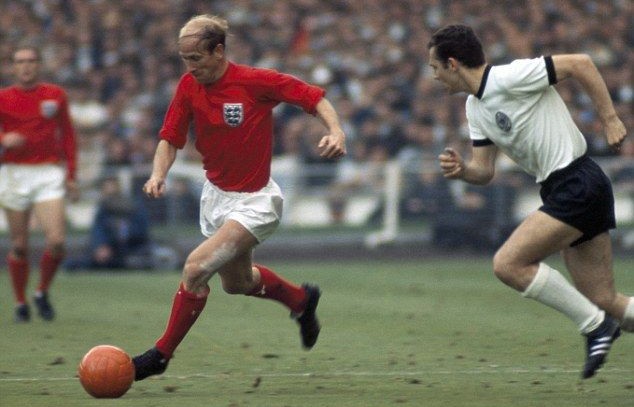
Jimmy Nicholson, 31 (5), 17 years, debuting on August 4th, 1960, at Everton’s Goodison Park, 0-4, shared mainly half back duties with Nobby Stiles, 26 (2), 18 years, debuting, on October 1st, 1960, at Bolton, 1-1, through Giles’ equalizer in the 75th. Stiles’d be in the side that won the World Cup with England in 1966, alongside Bobby Charlton, and his brother, center back, Jack, at Leeds United, on July 30th, at Wembley.
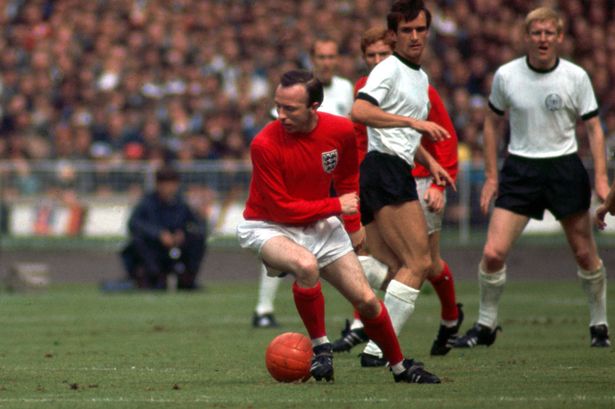
Whereas center forward, Geoff Hurst, and England captain in ‘66, center half, Bobby Moore, had been losers for West Ham, against Blackburn Rovers, 1-1, and 1-0, that is, 1-2 on aggregate, in the Final of the 1959 FA Youth Cup, it was a hat-trick (3) from Hurst of ‘The Hammers’, in the 18th, 101st, and 120th minutes, largely responsible for the defeat of Germany, 4-2 (2-2), a.e.t., although it was left wing, Martin Peters, also ‘forever blowing bubbles’ at Upton Park, 8 yards from goal, after Everton’s Alan Ball, right wing, found Hurst from a corner, who converted Geoff’s subsequently deflected strike, past ‘keeper, Hans Tilkowski, to give England the lead, 2-1, on 77 minutes.
Giles, 23 (2), and Scot’s midfielder, Ian Moir, 8 (1), 17 years, completed the 1960-61 season’s roster of ‘Busby Babes’. The team again finished 7th; Charlton, 39 (21), Dawson, 28 (16), Viollett, 24 (15), and Quixall, 38 (13), getting into double figures.
Scot, David Herd, center forward, was signed for 1961-62, at £40,000 from Arsenal, top scorer there for the four previous seasons; 24, 15, 14, and 29, while Lawton, 20 (6), and Northern Irish left winger, or center forward, Sammy McMillan, 11 (6), debuting on November 4th, 1961, in a defeat, 1-3, although Viollett reduced the deficit, 1-2, on 20 minutes, at Sheffield Wednesday’s Hillsborough, made significant contributions in terms of appearances and goals.
With Busby looking in vain at Mark Pearson, 17 (1), to replace Viollett, 13 (7), transferred to second tier Stoke, 28 years, at £25,000 in January 1962, and Dawson, 4 (2), looking as if already replaced by David, the club finished 15th, as only Herd, 27 (14), and Quixall, 21 (10), could reach double figures.
Although the 1962-63 league position didn’t improve, 19th, tempestuous Scot, Pat Crerand, 19, arrived on February 6th, 1963, from Glasgow Celtic for £56,000, as a tough-tackling, ball-distributing, and tactically thoughtful, right half. The club, still recovering from the Munich disaster, needed him, and former Manchester City center forward, returned from Italy’s Serie A club, Torino, Turin, replacing Viollett, along with the pretenders to Dennis’ throne, for £55,000, Scot, Denis Law, 38 (23), believed by most to be the best striker of a generation.
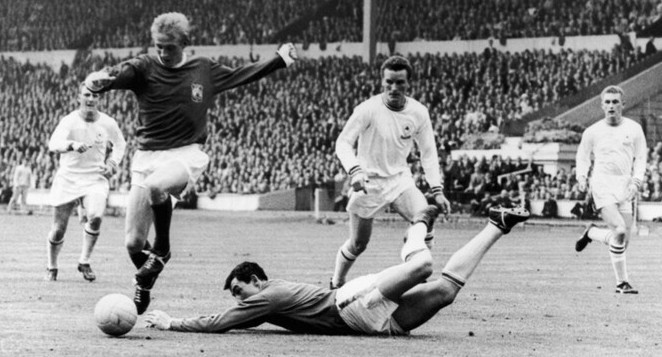
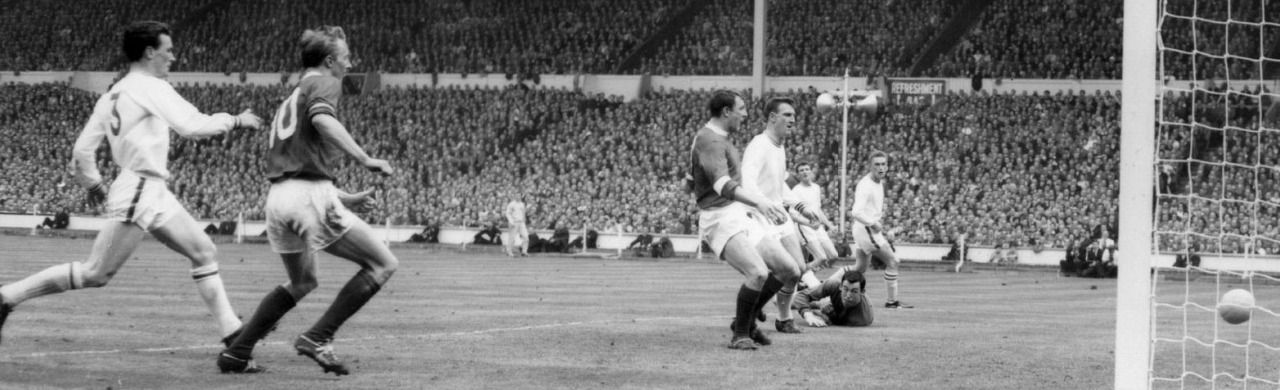
Beating Leicester City, 3-1, on May 25th, 1963, at Wembley, with Cantwell, 25 (1), captain, and an opening goal by Law, ‘The King’ to the Stretford End supporters, reestablished the club in the top tier. Leicester ‘keeper, Gordon Banks, saved a Charlton, 28 (7), effort, on the half hour. Crerand, 25 yards out, intercepting the ball, bowled out by Banks, for Scot’s inside left, David Gibson. Lifting it, over the outstretched leg of the out rushing defender, left of the ‘D’, Pat, ran into the 18 yard box; squaring the ball to Law, right, with the outside of his right boot. To deceive the defence, Denis feinted, as if accepting the pass, but allowing the ball to run on behind him; stopping it with his left foot, turning anti-clockwise, on a sixpence, at the penalty spot, striking with his right boot, left corner of the net, 1-0.
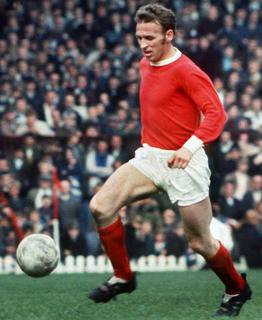
In the 57th minute, a cross-field ball from Giles, 36 (4), bursting through on the right, from inside his own half, finds an unmarked Charlton; far left of the pitch, hurtling on into the left corner of the 18 yard box: on a ‘run and shoot’. Banks parries into the path of Herd, 37 (19); a tap in, 2-0.
Banks, coming for a Giles cross, floated from just outside the right corner of the 18 yard box, the defender; trying to head away the ball. Banks, impeded; attempting to catch the ball in the air, and sweep it under his arm, in a single movement; fumbling, making it seem as if he’s punched the ball to the ground. Herd, on the bounce, turns, right-footed, low, 3-1, past the defender on the goal line, on 85 minutes.
At the traditional FA Shield, champions versus FA Cup winners, ‘showpiece’, on the opening day of the new season, the team lost, 0-4, to Everton, on August 17th. However, the 1963-64 squad gave themselves a very good chance at winning a European trophy, 4-1 against CP Sporting of Portugal, in the Cup Winners Cup quarter-final at home, on February 26th, 1964.
Law got a hat-trick (3), receiving a long ball, right-footed, from right midfield, inside the Manchester half, bouncing in front of Denis, heading it on, still well outside the 18 yard box, but ahead of Sporting’s pursuing number 2, left back, Hilário, inside the left side of the ‘D’, moving right, almost at the penalty spot; right-footed strike, low, right corner of the net, 1-0, on 22 minutes.
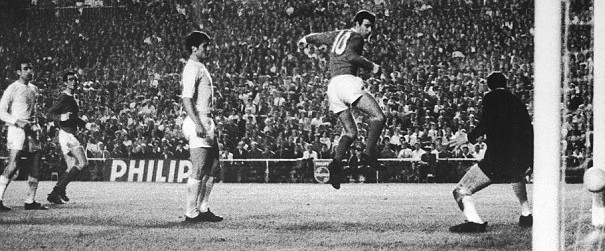
A pass, from just inside the Manchester half, outside of the right boot, Charlton chasing, catching up, well outside the 18 yard box, running on, with the ball, delivering a rocket from the right corner of the penalty area; low, right-footed. There’s an attempt to block by ‘keeper Joaquim Carvalho, but the ball’s trickling over the goal line; inside the right post, 2-0, in the 39th minute.
Brought down by defender, Alfredo Moreira, inside the 18 yard box, center, clean through on goal, Stiles is awarded a 60th minute penalty. Law’s right-footed shot, low, left corner of the net, 3-0, despite Carvalho’s correctly going to his right. After another blatant assault by midfielder, captain Fernando Mendes, on Charlton, trying to accept a ball, inside the left side of the 18 yard box, from Best outside on the left, Dutch referee, Joop Martens, awards a second penalty. With half the Sporting team pushing and shoving Martens, as they did for the first decision, and both linesmen having to come on to prevent the melée developing into something more unpleasant, the Portuguese players are fortunate to remain on the pitch. Law, right-footed, low, right corner of the net, 4-1, in the 70th minute.
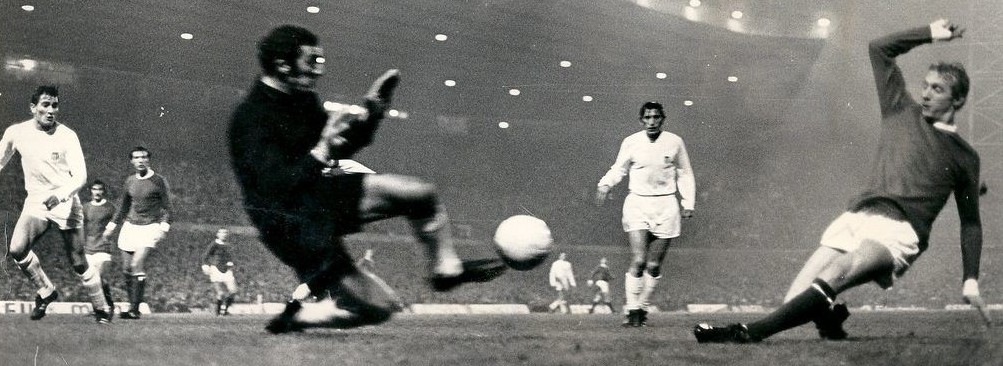
Disastrously the side lost, 0-5, away, on March 18th, at Estádio José Alvalade, named for CP’s 3rd President (1910-12), Lisbon. However, Busby’s youth policy continued. David Sadler, 19 (5), 17 years, inside forward, according to the squad roster, signing professionally, as a youth from Maidstone United, ‘The Stones’, debuting on August 16th, 1963, at Sheffield Wednesday’s Hillsborough, 3-3, through Moir, on 38 minutes, 1-2, Charlton, in the 52nd, 2-2, and in the 78th, 3-3, would become even more distinguished as a center half.
The mercurial dribbling skills of Northern Ireland’s left winger, George Best, 17 (4), 17 years, were seen for the first time against WBA, 1-0, through Sadler, on 64 minutes, on September 14th, 1963, while Willie Anderson, 2, left winger, sold to Aston Villa, on January 17th, 1967, for £20,000, because Best couldn’t be rivaled, debuted, 16 years, against Burnley, 5-1, on December 28th, 1963, through Herd, on 11 minutes, 1-0, Moore, in the 25th, 2-0, Best, in the 38th, 3-0, Moore in the 68th, 4-0, and Herd in the 70th, 5-0.
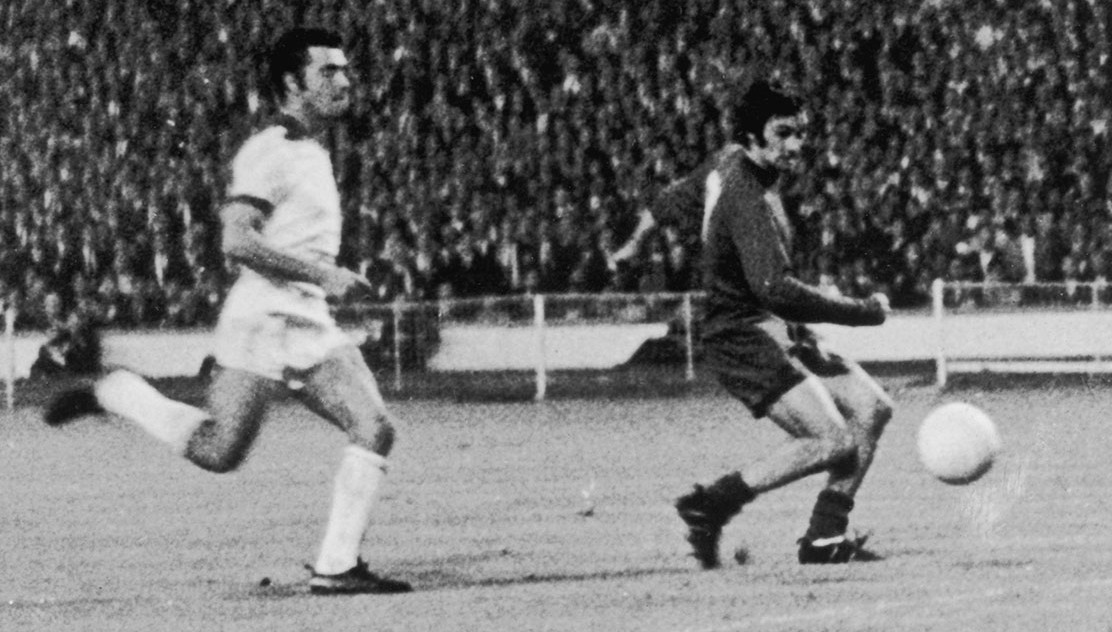
Wales’ Graham Moore, 18 (4), 22 years, at the club for only a year, through injury, £35,000 from ‘The Blues’ of Chelsea at Stamford Bridge, London, competed for a role in midfield, with the overlooked and disappointed Giles, 0 that season, transferring to Leeds for £33,000 for the 1964-65 term, saying of Matt, ‘I am going to haunt him.’2 John did, and Matt admitted his ‘mistake’, although the difference between 15th in the league in 1962-63, with Giles, and 2nd that 1963-64 term, without John, is inarguable.
Phil Chisnall, debuting on December 2nd, against Everton, 1-5, with Herd’s 60th minute consolation, 1961-62, 9 (1), 19 years, faring less well in the coaches’ estimation for 1962-63, 6 (1), made a significant contribution in 1963-64, 20 (6), as ‘probably the best passer of a ball in the country’,3 according to England manager, Alf Ramsey, displacing Quixall, at inside forward, alongside Moir, 18 (3), and Sadler. Law, 30 (30) and Herd, 30 (20), got into double figures, as the club finished runner-up in the league, 4 points behind Liverpool’s 57.
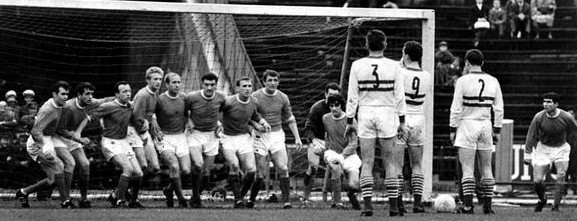
The 1964 FA Youth Cup Final was won, with a team including captain, Bobby Noble, left back; Scot, John Fitzpatrick, at left half; right winger, Anderson; inside right and captain, Best, center forward, Sadler, and left winger, John Aston Jnr, on April 27th, against Swindon Town, 1-1, at the County Ground, and 4-1 at Old Trafford, on April 30th; 5-2 on aggregate.
The team sheet; three left wingers; Anderson, Best, and Aston, is deceptive. In practice, wingers’ wings are switched; if they’re unsuccessful. Best, though a left winger, often ‘switched’ to the right, as he was an inside forward, or second striker (SS), as well as an attacking midfielder (AM), which is true for most left sided forwards, as they’re awkward for a right-sided, ‘square’, defence.
In 1964-65 the team gave themselves an even better chance at winning a European trophy, 3-2, in the first leg of the semi-final of the Inter-Cities Fairs Cup, at Old Trafford, on May 31st, 1965, against Hungary’s Nemzeti Bajnokság I club, Ferencváros. Law opened the team’s account with a penalty equalizer, 1-1, before Herd, on 61, and 69 minutes, made it 3-1.
However, in the second leg, on June 6th, at Budapest’s Népstadion, ‘Peoples Park’, the ‘Fradi’ were awarded a penalty on 44 minutes, after Stiles, 41, trying to handle left winger Máté Fenyvesi, handled the ball, and right back, Desző Novák, right-footed, right corner, struck low, past Eire ‘keeper, Pat Dunne, 0-1; 3-3 aggregate. Crerand, 39 (3), tangling with forward, Pál Orosz, in the 75th minute, both were red-carded. United lost a play off, as the match-up occurred before the ‘away goals count double’ ruling, 1-2, at Üllői úti stadion, Budapest, on June 16th, with right winger, Connelly, a consolation goal on 86 minutes, after right winger, János Karába, struck on 44 minutes, 0-1, and left winger, Fenyvesi, on 54 minutes, 0-2.
Pat Dunne, 37, was brought, £10,500 from Dublin’s Shamrock Rovers, close season, to compete with Gaskell, 5, ‘keeper in the 1963 FA Cup Final, as Busby had looked to replace Gregg. John Connelly arrived from Burnley’s Turf Moor for £56,000, as the side needed a right winger, following the hiatus surrounding the departure of Giles, while Fitzpatrick, 2, known for a high work-rate, stamina, biting tackles, off-the-ball running, touch control, and ball distribution, debuted, on February 24th, 1965, 18 years, away at Sunderland’s Roker Park, 0-1, and John Aston Jnr., 1, 17 years, left winger, son of John Snr., sometime center forward, and left back in the 1948 FA Cup Final win at Wembley, on April 24th, debuted on April 12th, 1965, against Leicester City, 1-0, through Herd, on 49 minutes. The entire forward line of Law, 36 (28), Herd, 37 (20), Connelly, 42 (15), Best, 41 (10), and Charlton 41 (10), reached double figures, as the club were champions, with a better goal average, 2.282, than Leeds, 1.596, also 61 points, before goal difference became the basis for separating clubs level on points from 1976-77.
Upon Harold Hardman’s demise, butcher Louis Edwards, ‘a fan’, in his own estimation, became Chairman. The 1965 FA Shield, ‘shared’, was drawn, 2-2, with Liverpool, at Old Trafford, on August 14th, with Anderson on for ‘out-of-sorts’ Law on 18 minutes. Best, on 29 minutes, lurking 10 yards onside, L’pool center backs, Scot, Ron Yeats and Tommy Smith, were ready to move up, and spring the ‘offside trap’. Charlton, a through Ball, for Best to run onto. L’pool ‘keeper, Scot, Tommy Lawrence fails to come out, and Best, able to see more of the goal, places the ball wide of him, 1-0, on 29 minutes. Herd, on 81 minutes, deceptively casual, struck from the edge of the 18 yard box, 2-1.
1965-66, qualifying as champions, was the club’s first stab at winning the European Cup since Munich. Having never left the competition, before the semi-final stage, the side duly progressed to an encounter with Partizan Belgrade, losing the first leg away, 0-2, on April 13th, 1966. In the second leg, on April 20th, Crerand was again red-carded, this time for fighting with center back, Ljubomir Mihajlović, and both were sent off, on 65 minutes, although it was clearly Stiles that had thrown a punch at Mihajlović.
However, Pat did throw a left hook at Partizan left winger, Josip Pirmajer, for badgering him, on his way off the pitch. On the restart, a short corner on the left, taken by left winger, Anderson. Stiles, right-footed, an in-swinging cross-shot, from out by the corner flag, beating ‘keeper Milutin Šoškić, near post, 1-0, in the 72nd minute; 1-2 on aggregate.
Noble, 2, debuted at left back, 20 years, on April 9th, 1966, against Leicester City, 1-2, through Connelly, on 81 minutes. Scot, 20 years, right winger, Jimmy Ryan, 4 (1), debuted, on May 4th, at WBA, 3-3, through Herd, on 27 minutes, 1-0, Aston in the 49th, 2-2, and Dunne, in the 70th, 3-2. Herd, 36+1 (24), Charlton, 38 (16), and Law, 33 (15), reached double figures, but not Best, 31 (9), or Connelly, 31+1 (5), and the club finished 4th in the league table.
Matt brought ‘keeper, Alex Stepney, 35, from Chelsea for £55,000 for 1966-7, as replacement for Northern Ireland’s Harry Gregg, 2, transferred from Doncaster Rovers for £23,500 in December 1957 and, ‘keeper in the European Cup quarter-final against Red Star Belgrade, on February 5th, 1958, known as ‘The Hero of Munich’ for his efforts to aid the survivors, as one of the few able bodied on the scene; immediately after the plane crash on the 6th. Law, 36 (23), Herd, 28 (16), Charlton, 42 (12), and Best, 42 (10), achieved double figures, while early in the campaign Connelly, 6 (2), was transferred to second tier B’burn for £40,000, as the club won the league title from Nottingham Forest by 4 points with 60.
The 1967-68 season began without Noble, because of injuries sustained in a car accident, on April 22nd, 1967, following a draw, 0-0, at Sunderland, while Bobby was driving home, and before the team clinched the 1966-67 title, with a 6-1 defeat of West Ham at the Boleyn ground, in the penultimate game of the campaign, on May 6th, 1967, beginning with a left-footed Charlton blockbuster, on 2 minutes, 1-0, from the right side of the 6 yard box. Dispossessed by Bobby, Jack Burkett, right back, too optimistically, had been trying to play the ball out, after Stiles’ shot was blocked. Aston delivered a high center for Crerand’s header, close in, right side of the goal area, in the 7th, 2-0.
Foulkes, and ‘keeper, Colin Mackleworth, rose to challenge for a ball; dropping at Bill’s feet, in the 10th, 3-0. Best, accepting a Stiles’ pass, on 25 minutes, 4-0. Law (pen.) in the 63rd, after center back, John Charles, was adjudged to have been pushing, 5-1, and Denis again in the 79th. Though Mackleworth parried Best’s shot, Law was left free to stab the ball back, high, into the net, 6-1.
Scot, Francis Burns, 18 years, debuting on September 2nd, 1967, against West Ham at Upton Park, 3-1, through Kidd, on 54 minutes, 1-0, Sadler in the 59th, 2-0, and Ryan, 3-1, in the 82nd, took over Noble’s left back duties, while second striker, Gowling, 4+1 (1), 19 years, had a scoring debut, on March 30th, 1968, against Stoke City, 4-2, at ‘The Potteries’, through Best, on 2 minutes, 1-0, Alan, in the 23rd, 2-1, Aston in the 69th, 3-2, and Ryan in the 78th, 4-2.
Best, 41 (28), in place of Connelly, Charlton, 41 (15), Kidd, 38 (15), replacing Herd, 6 (1), and Aston, 34+3 (11), but not Law, 23 (7), whose knee injury also kept him out of the European Cup Final, achieved double figures, as the club finished runner-up; 56 points to Manchester City’s 58.
The FA Shield, on August 12th, 1967, was notable for Tottenham Hotspur’s second, credited to Northern Irish ‘keeper, Pat Jennings; ball in hand, a long punt, bouncing in front of Stepney, and over his head into the net, 2-0, on 8 minutes; leaving United with a mountain to climb. Crerand, left side of midfield, a few yards from the touchline, midway inside the Spurs’ half; right-footed ball, inside, right, along the ground, to Charlton. In position to shoot with his right boot, left footed, Bobby instead moves forward; shifting the ball, left of Spurs’ defenders, looking to block; left edge of the ‘D’. A left-footed strike; top left corner of the net, on 18 minutes, 1-2.
Law, bursting-through, on a tremendous run, down the left, inside his own half; shimmying. The Spurs’ defender, inside the United half, uncertain which way Denis will go; Law goes left: past him. Then another defender, further left, and with a burst of electrifying pace, Denis goes past him also, but is forced out wide; onto the wing. Law, with the ball, inside the Spurs’ half; passing along the turf, low, to débutante center forward, Brian Kidd, 17 years; impressing. Kidd takes the ball forward, well outside, but level with, the left corner of the 18 yard box. A left-footed ball, right angled, low. Inch-perfect, grass-cutter; inside to Charlton: center of the field. Bobby, running onto the ball, striking with his left boot; top center of the net, on 20 minutes, 2-2.
Charlton, left of center midfield, moves right of the defender, outside the ‘D’ at the 18 yard box, center; left-footed shot, low, saved by ‘keeper Jennings, at full stretch; down, by the left upright. Law, pouncing on the loose ball, left corner of the 6 yard box; left-footed, goal, center, on 72 minutes, 3-3. Sharing the Shield earned Kidd a league debut, on the first day of the campaign, August 19th, against Everton, 1-3, at Goodison Park, with Charlton’s 86th minute consolation.
The season’s crown was also Brian’s, with Benfica beaten in the European Cup Final, 4-1 (1-1), a.e.t., at Wembley, on May 29th, although the more studious would argue that it was a rare strike from Foulkes in the 78th minute, 3-3, in the second leg of the semi-final against Real Madrid at the Santiago Berneabéu, on May 15th, that made the Munich survivor the true hero. An own goal by defensive midfielder, Ignacio Zoco, in the 43rd minute, 1-2, had given United a lifeline, although right winger, Amancio Amaro, El Brujo, ‘The Wizard’, restored Madrid’s lead, 1-3, just before half-time, leaving Sadler, in the 75th, 2-3, to again reduce the gulf between the teams.
The side were level, 3-3 aggregate, after the first leg, on April 24th, 1-0, through left winger Aston’s left-footed ball, low along the ground, on 36 minutes, inside the 18 yard box, by the byline, finding Best, near the penalty spot, left-footed strike, center; roof of the net. Until Crerand found Best, sprinting down the right wing at the Berneabéu, with a throw-in. George, inside the 18 yard box, right, near the byline, back-heeled, right-footed, finding Foulkes. Ignoring screams from the dugout to remain at the back, Bill, going far enough forward to read Best’s intent, elegantly finished the move; right-footed, just outside the right corner of the 6 yard box: low, accurate, the ball nestling inside ‘keeper Antonio Betancort’s left netting, 4-3 on aggregate.

With the score at Wembley, 0-0, after the first half, in the 53rd minute, Sadler, in for injured Law, found Crerand, with a throw-in from the left touchline. David, receiving the ball back from ‘Paddy’, right-footed, passing the ball along the left wing. Moving inside, left corner of the 18 yard box, Sadler’s right-footed cross to Charlton; a glancing header, directing the ball into the inside of the net, near post, 1-0. However, in the 79th José Augusto, winger, wide on the right, a high ball; center forward José Torres’ header, over the heads of Stiles and Sadler, center of the 18 yard box, with right midfielder Jaime Graça, running in. A powerful strike; right boot, right corner of the penalty area, left corner of the goal, 1-1, at full-time.
In extra time, a right-footed punt by ‘keeper, Stepney, back-headed by Sadler, inside Benfica’s half; halfway between the center circle and the ‘D’. Jacinto Santos, center back, aims to swing a kick at the ball, or Best. On the outside of his right heel, Best flips the ball over Santos’ leg, racing on into the 18 yard box; the ball on his right foot. Best cuts inside, around ‘keeper, José Henrique, come out beyond the penalty spot; left-footed from Best, in the 92nd, side-footed, on the edge of the penalty area, and level with the left upright, goal, center, 2-1. In the 94th, from a corner on the left, high; Sadler, right of the penalty spot, heads the ball towards the left corner of the net. Kidd, without the ball bouncing, anticipating it doesn’t have enough pace, directly heads it at goal; center. Henrique, as if protecting his face, blocks with his hands. No bounce, Kidd, 18 years that day, moves right; leaps, heads in: over Henrique, top right corner, 3-1.

In the second half of extra time, Kidd, right of the center circle, inside Benfica’s half, back to goal, finds Charlton, moving up, right of the center circle in the United half, crossing the halfway line. Bobby plays the ball back to Kidd, moving out to the right. Brian takes the ball, along the right wing, pushes the ball forward, right-footed, skips over the outstretched leg of left back, Fernando Cruz. Kidd cuts inside, right and center outside the 18 yard box; low, ball, driven along the ground, left-footed, to Charlton. Bobby, right corner of the penalty area, gives lift to the ball; right-footed, 4-1, in the 99th minute, top left corner of the net.

As clubs were permitted a substitute from 1965-66, ‘sub’ was Jimmy Rimmer, 16 years when ‘keeper for the 1964 FA Youth Cup Final, as necessary in case of injury to Stepney, rather than strategic or tactical; de rigeur only after an outfield replacement, as well as a ‘keeper, known as ‘two from five’, was allowed from 1988.
Ominously, also in season 1967-68, Leeds United won the double of League Cup, 1-0, against Arsenal, at Wembley, on March 2nd, 1968, and the Inter Cities Fairs Cup, after beating Ferencváros of Hungary, 1-0, at Elland Road, on August 7th, 1968, in the first leg of the Final, and drawing, 0-0, in the second, on September 11th at Népstadion, Budapest; 1-0 on aggregate. The specter of John Giles’ doom upon Busby’s decision to sell him had grown.

However, victory in the 1968 European Champion Clubs’ Cup gave the Manchester team the opportunity to become Intercontinental Cup champions in a match-up between the club winners of South America’s Copa da Libertadores, ‘Freedom’s Cup’, Estudiantes de la Plata, Argentina, and the champions of Europe. The first leg, on September 25th, 1968, against ‘The Students’, as Estadio Uno, in the provincial capital, La Plata, was deemed unsuitable, was staged at Primera División club, Boca Juniors, Estadio Boca Juniors, Buenos Aires. Lost 0-1, to a Marcus Conigliaro headed goal, in the 27th minute; from a corner by strike partner, Filipe Ribaudo.
Law, injured, was substituted by Youth Academy graduate from Italy, 20 years midfielder, Carlo Sartori, 11+2 that 1968-69 season, on 44 minutes. Sartori had made his league debut, substituting for Burns, 14+2, on October 9th, 1968, at Spurs’ White Hart Lane, 2-2, through Crerand, on 35 minutes, 1-1, and Law in the 53rd, 2-2. Stiles, 41 (1), described in the match program as ‘an assassin’,4 quoting Benfica coach, Otto Glória, at one point reported by the linesman for standing too close to violent midfielder, Carlos Bilardo, was sent off in the 79th minute by Paraguayan referee, Hugo Sosa Miranda, for retaliating to kicks, punches, and head butts; the team endured.

In the second leg, on 16th October, at Old Trafford, automatically missed by Stiles, because red-carded, winger Juan Ramón Verón, La Bruja, ‘The Witch’, father of right midfielder, Juan Sebastián Verón, so La Brujita, ‘The Little Witch’, who won the 2002-03 title with United, headed a goal from a free kick by defender, Raúl Horacio Madero, past Stepney, 38, on 6 minutes, 0-1; 0-2 on aggregate. In the 79th minute Best punched José Hugo Medina in the face and both were sent off.
Scot’s right winger, Willie Morgan, 29 (6), ironically brought for the 1968-69 campaign from Burnley for £117,000, as a permanent replacement for Connelly, as Morgan had ousted him there, managed to get on the end of a right-footed Crerand, 35 (1), free kick, in the 90th minute; right midfield, just inside the Estudiantes’ half. Willie, edge of the left corner of the penalty area, right-footed shot, to ‘keeper Alberto Josė Poletti’s left: bottom right corner of the net, 1-1; 1-2 on aggregate. Although the Stretford End were angered by Serbian referee, Konstantin Zečević, unsighted, not signaling a goal for a Kidd, 28+1 (1), effort that television coverage of the game showed had clearly been in the Estudiantes’ net, the club would not be blessed with the crown of Europe and South America.

Busby’s main concern was how to replace Bill Foulkes, 36 years, at center half, 10+3, with Steve James, 18 years, the earliest candidate, 21 (1), debuting on October 12th, 1968, against Liverpool, 0-2, at Anfield, while debuting, 18 years, as a substitute for Fitzpatrick, on September 9th, 1967, in a 2-2 draw at home to Burnley, through Burns, on 86 minutes, 1-2, and Crerand in the 90th, Scot, Frank Kopel, right back, 7+1, was back up to Dunne and Brennan.

The team reached the semi-final stage in defending the European Cup, losing on April 23rd, 1969, at San Siro to Italy’s Serie A club, AC Milan, 0-2, with Fitzpatrick red-carded on 80 minutes, kicking Sweden’s right winger, Kurt Hamrin, when the ball was yards away, and on May 15th, at Old Trafford, 1-0. Best, edge of the 18 yard box, right of the ‘D’, avoiding tackles to his left; ball on his right foot, inside the area, stabbing the ball to Charlton. Bobby, right, running on with the ball; a right-footed rocket, at an acute angle, right corner of the 6 yard box: near the goal line, 70th minute, 1-2 on aggregate. Best, 41 (19), and Law, 30 (14), reached double figures for the campaign; the club finishing 11th, while John Giles’ Leeds United were champions.
Busby advocated McGuinness, as his successor, and reserve coach Wilf was appointed manager for 1969-70. Scot, Ian Ure, 34 (1), center back, was brought from Arsenal for £80,000, while Paul Edwards, 18+1, right back, or center back, 21 years, debuted on August 19th, 1969, at Goodison, Everton, 0-3.

Eire center forward, 19 years, Don Givens, 4+4 (1), debuted, as a substitute for Dunne, 33, on August 9th, at Crystal Palace, 2-2. Sadler, right midfield, right-footing a ball to Morgan, on the right wing, Willie’s left-footed cross had ‘keeper, John Jackson, going to challenge for the ball with Kidd, back-heading over the Palace ‘keeper, with Charlton running on, just outside the 6 yard box, right of center; striking right-footed, bottom left corner of the net, 1-1, on 24 minutes. After Jackson failed to punch away a long, right-footed ball from right midfield, Law, just in front of the beleaguered ‘keeper, and with his back to him, laid it into the path of Morgan, with his left boot, in the 56th; Willie striking right-footed, just outside the 6 yard box, right of center, top left corner of the net, 2-2. Givens would go on to almost win the 1975-76 title with Queens Park Rangers at Loftus Road, Shepherd’s Bush, West London. Best, 37 (15), Kidd, 33+1 (12), and Charlton, 40 (12), achieved double figures, as the club finished 8th.

Although Wilf guided the team to a two-leg League Cup semi-final against Manchester City, the side lost, 1-2, at Maine Road, on December 3rd, 1969, despite Best’s efforts. In the right full back position, making for the center circle with the ball; inside the City half of the circle, center, George passes to Kidd, outside the center circle, right: taking the ball out onto the right wing. Brian crossing, right-footed, from near the right touchline, well outside the 18 yard box; a long, high ball, into the goal area. Charlton, accepting what looks like a pass from the City defender, trying to trap the ball, right-footed; instead it’s rolling towards the right of the 6 yard box: left-footed strike from Bobby, 1-1, on 66 minutes. However, center forward, Francis Lee, just outside the 18 yard box, left, collecting a long ball from Oakes; wide on the left, takes it inside the left corner of the penalty area. Ure’s reckless tackle, scything Lee down, results in the awarding of a penalty; converted by Lee, on 88 minutes, 1-2. The second leg, on December 17th, ended, 2-2; a 3-4 aggregate defeat. Nevertheless, right back, Paul Edwards, afforded Law opportunity to put the side ahead.

Ure, center back, left of the ‘D’, inside the center circle, in the United half, left-footed ball, low, along the turf, to Crerand, center midfield. A through ball, between central midfielder, Alan Oakes, nearer to Pat, and central defender, Mike Doyle, farther off. Paul, right of the ‘D’, edge of the 18 yard box, nudging the ball, right. A legitimate tackle from Glyn Pardoe now unlikely, as Edwards ran the diagonal; in front of the City left back. Pardoe now behind; left, can’t bring Paul down. Edwards, straightens his sights on goal; inside the 18 yard box, right-footed strike: high, top right corner of the net, 1-1, on 23 minutes.
Ure again, inside his own half; left of the center circle, left-footed pass to Best: inside the center circle, center. George, aggressively determined to run with the ball. Best’s basic character trait, in attack; surging forward into the City half. Shaking off pursuing striker, Ian Bowyer, with a burst of speed. Unable to avoid the next challenge, Best wins the ball, in a clash with Oakes, off his right boot. George, right-footed, right of the ‘D’, outside the 18 yard box; City ‘keeper, Joe Corrigan, parries the strike, high, both hands: can’t hold. Law, running into the 6 yard box, Corrigan diving to his right; the ball coming off his right hand. Denis pounces; left-footed, 2-1, on 60 minutes.

In a second replay, the team lost to Leeds United, 0-1, in the FA Cup semi-final, on March 26th, at Burnden Park; a left-footed strike, between penalty spot and edge of the 18 yard box, center, by Leeds’ captain, Billy Bremner; low, left corner of the net, on 7 minutes. The previous games, on March 14th, at Hillsborough, being 0-0, and on March 23rd, at Villa Park, 0-0, a.e.t., with Law, 10+1 (2), substituting for Sartori on 96 minutes in the first replay, and on 61 minutes for Carlo in the second replay; benched for much of the time in favor of Sartori: to fans’ disgruntlement.
1970-71 was similarly disappointing, as Wilf was refused the financing of transfers. Promoting youth from within, strengthened by the loss of so much rare unfulfilled talent in the Munich air crash, with Matt having retired, policy ossified. The club loathe to replace nurtured talent developed by Busby’s Academy. Prolific center forward, with a cannonball shot, and majestic heading ability, Malcolm Macdonald, from Luton Town, for example, as a replacement for Charlton; as well as Colin Todd to replace Foulkes.

Colin, Sunderland’s pace-staying, ice-cool, thoroughbred central defender, in the 1966 FA Youth Cup Final, lost, 3-5, on aggregate to Arsenal, was coached by Brian Clough, at Roker Park. Rejoining Clough, then manager at Derby County, Todd debuted on February 27th, 1971, at The Baseball Ground, against Arsenal, 2-1, and went on to win the 1972-73, and 1974-75, league titles there. Mooted as Dunne’s replacement, Ipswich Town’s left back, Mick Mills, later captained England at the 1982 World Cup Finals in Spain.
Unable to buy to improve the side, McGuinness was relieved of team duties from December 29th, 1970. In spite of Kidd’s efforts in the League Cup semi-final against Aston Villa. On December 16th, 1970, in the first home leg, Brian began a move wide on the right, passing the ball to Stiles, between the legs of Stonehouse referee, Dave Smith, then ran into the 18 yard box. Stiles passed the ball to Sartori, right touchline; a high, left-footed cross. Aston Villa left back, Charlie Aitken, failed to clear; in fact heading the ball towards Brian, right of the 6 yard box. Kidd, scissors-kick volley, left-footed screamer, both feet off the ground, top left corner of the net, on 44 minutes, 1-1.

Under threat of being replaced by Gowling, 17+3 (8), for his lack of goals, Brian, 24+1 (8), in the second leg, on December 23rd, at Villa Park, collected a long punt from the right full back position, by the penalty area, deep in the Manchester half. Well outside the 18 yard box, right side of the field, out on the right wing, ball bouncing between Villa central defenders, Fred Turnbull, and Brian Tiler, Kidd’s ahead of the ball, shielding it, back to the Villa goal. Tiler, kicking at the ball, hits Brian in the chest, and appeals for a handball. Kidd, shaping to go out wider on the right, ball on his right boot, instead turns inside Turnbull, ball on his left boot; into the penalty area at the right edge of the ‘D’, right corner of the 18 yard box. Easing the ball past Fred, with the outside of his left boot, allowing the ball to run on, Brian passes the ball back, with his right boot, onto his left, then pushing the ball ahead of him, past the lunging form of Tiler. Kidd, racing on, nudged the ball past ‘keeper, John Dunn, diving at his boots, striking low, left-footed, left corner of the net, 1-0, on 14 minutes. However, the second leg finished, 1-2; 2-3 to Villa on aggregate. Thereafter, Matt returned, as manager, until season’s end.
Leeds United’s John Giles won the 1971 Inter Cities Fairs Cup, in a rain affected Final that saw the first leg, at Italy’s Serie A club Juventus’ Stadio Comunale, Turin, on May 26th, 1971, abandoned in the 51st minute, 0-0. The replay was drawn, 2-2, while Leeds, drawing 1-1 at home, and the aggregate score being, 3-3, won the trophy on the ‘away goals count double’ rule. Manchester United approached Leicester City to release Eire’s Frank O’Farrell to be the club’s manager for the 1971-72 term.
Tommy O’Neil, 1, right back, 18 years, debuting on May 5th, 1971, 4-3, at Manchester City’s Maine Road, through Charlton on 15 minutes, 1-0, Law, in the 30th, 2-0, and Best, in the 31st, 3-0, and in the 75th, 4-3. Scot, Willie Watson, 8, right back, 20 years, debuting September 26th, 1970, at home to Blackpool, 1-1, with the opener from Best, on 29 minutes, after Morgan received a back-heeled pass on the right wing, racing upfield, cutting inside the 18 yard box, at the right corner, before crossing right-footed, parallel with the edge of the 6 yard box; the pass slightly behind it. Best, just outside the goal area, center, back-heeling the ball into the side netting of the left upright, low, 1-0. Tony Young, right wing/right back, 0+1, 17 years, debuting as substitute for Best in the 46th minute, on August 29th, 1970, at home to West Ham, 1-1, Fitzpatrick equalizing, in the 28th, a 2nd minute strike from Hurst. New faces introduced during the 1970-71 campaign. Best, 40 (18), and Law, 28 (15), got into double figures, as the club finished 8th.

The 1971-72 campaign ended with the club again finishing 8th. Though top at New Year, injury to center back James, with Paul Edwards as his stand-in, resulted in 6 straight losses, while John Giles’ Leeds won the FA Cup, at Wembley, on May 6th, 1972, against Arsenal, 1-0.
Although O’Neill, 37, secured the right back berth, Scot, Martin Buchan, 13+1, center back, and sometime right back, arrived for £120,000 from Aberdeen, on February 29th, 1972, as a long-term replacement for Sadler, debuting on March 4th, against Spurs, at White Hart Lane, 0-2, and left winger, Ian Storey-Moore, 11 (5), as a replacement for Aston, 2+7, though John effectively bowed out in 1970-71, 17+1 (3), transferred to Luton for 1972-73 for £30,000. At £225,000 from Forest, Ian’s was a scoring debut, on March 11th, 1972, against Huddersfield Town, 2-0, through Best, on 35 minutes, and Storey-Moore in the 62nd.

Northern Irish second striker, Sammy McIlroy, 8+8 (4), hoping to eventually replace Law, while overtaking Gowling, 35+2 (6), as a preferred alternative, on his debut, at Manchester City’s Maine Road, 3-3, on November 6th, 1971, with the opener, on 39 minutes. Best, beginning a move, just outside the center circle, inside the City half, finds Kidd, out on the right wing. Brian, left-footed, crosses the ball into the penalty area. George, back to goal, outside the edge of the 6 yard box, center, traps the ball, loose; leaving it for ‘Super Sam’, running on, to strike, left-footed: inside the right upright, 1-0. Charlton, center midfield, inside the City half, passing to Best, inside left position, crossing the ball left-footed, at the edge of the 18 yard box, finding Kidd, near the penalty spot, left-footed, right corner of the net, 2-0, on 46 minutes. Gowling, in the 64th, inside the penalty area, deflecting a long-range shot, well outside the 18 yard box, from Aston, half-time ‘sub’ for Dunne, at left midfield, past ‘keeper, Joe Corrigan, 3-1. Best, 40 (18), Law, 32+1 (13), and Kidd, 34 (10), made it into double figures for the season.

O’Farrell was replaced by Scotland team boss, Tommy Docherty, on December 19th, 1972, with the club finishing 18th in the league. Ted MacDougall, 18 (5), center forward, from then third tier Bournemouth for £200,000, scoring on his debut, in the 18th minute, against Birmingham City, on October 14th, 1972, 1-0, and Wales’ renowned header of the ball, center forward, Ron, Wyn ‘The Leap’, Davies, 15+1 (4), £60,000 from Manchester City, debuting against Derby County at Old Trafford, on September 23rd, 1972, bought to challenge Law, 9+2 (1), and Kidd, 17+5 (4), for their places in the team, sooner than McIlroy was able to.
Dunne, center midfield, outside the ‘D’ at the 18 yard box, finding Best with the outside of his left boot, left. George, with his back to goal, lifting the ball, right-footed, over into the penalty area, where Storey-Moore, right of the the penalty spot, outside the 6 yard box, headed into the bottom left corner of the net, 1-0, on 33 minutes.

Morgan, bursting through, from right midfield, crossing into the penalty area, well outside the 18 yard box, with the Derby defender, center, outside the 6 yard box, able only to sidefoot the ball towards the left edge of the ‘D’. Wyn, pouncing to strike, right-footed humdinger, top right corner of ‘keeper Colin Boulton’s net, 2-0, in the 66th minute.
Best, taking the ball in the left back position, running to the center circle, releasing a forward ball, right-footed, just outside the circle, in the Manchester half, for Morgan to chase. Willie, catching up with the ball, going through the circle in the Derby half, midway to the penalty area, outpacing Scot’s midfielder, Archie Gemmill, stroking a low, right-footed shot, from the edge of the 18 yard box, at the ‘D’, center; bottom left corner of the net, 3-0, in the 75th minute.

Tony Young, 28+2, had emerged as first choice at right back, although Docherty bought Scot, Alex Forsyth, 8, 20 years, for £100,000 from Scotland’s then first tier club, Partick
Thistle, to fill that position, debuting January 6th, 1973, at Arsenal, 1-3, with a consolation from Kidd, on 85 minutes, and Scot, Jim Holton, 15 (3), from Shrewsbury Town at Gay Meadow, for £80,000, to fill the problematic center back role.
At 21 years, almost unbeatable in the air, and aggressive in the tackle, though without much delicacy on the ground with the ball, Holton debuted, 6’ 1”, on January 20th, 1973, against West Ham, 2-2. Charlton (pen.), right-footed, left of the goal, on 31 minutes, 1-1, after Morgan was brought down, inside the right edge of the penalty area. Macari, in the 80th, stretching, just outside the 6 yard box, turning a right-footed cross-shot from Morgan, on the left, outside the 18 yard box, in at the left corner of the net, 2-2.
With modern soccer strategy shifting, from left half, center half, and right half backs, to twinned center backs, with a half back moving into central midfield, the fans chant was, ‘Six foot two, eyes of blue. Big Jim Holton's after you.’5 They’d have to wait for blond, blue-eyed ‘Big Gordon’ McQueen, 6’ 3”, for that, as 6’ 1” Holton’s eyes, like his hair, were brown.

With the retirement of Crerand, coach under O’Farrell, and assistant manager with Docherty, ‘The Doc’ brought Scot, George ‘Stroller’ Graham, in December 1972 to fill that midfield position, from Arsenal for £120,000, where he’d top scored for ‘The Gunners’, at center forward in 1966-67, 33 (11), and 1967-68, 38 (16), before John Radford moved from the left wing into the central striking role.
At left midfield George won the Inter Cities Fairs Cup in 1969-70, 1-3, away, in the first leg of the Final, against Belgium’s Anderlecht, at Constant Vanden Stock, on April 22nd, 1970, and 3-0, on April 28th, 1970, in the second leg at Highbury; 4-3 on aggregate.
The side from ‘the Marble Halls’ next won the 1970-71 league title, and FA Cup ‘double’. With George again at inside forward, at Wembley, on May 8th, 1971, Liverpool were beaten, 2-1 (0-0), a.e.t., though Graham lost his place in the Arsenal line-up, after the signing of Alan Ball from Everton for £220,000, on December 22nd, 1971.

Debuting for United, Graham, 18 (1), 28 years, along with Forsyth at left back, as Tony Young was in Alex’s usual right back position, on January 6th, 1973, at former club, Arsenal, 1-3, disappointed in 1972-73, with Eire’s Mick Martin, 14+2 (2), 21 years, brought for £20,000 from Bohemians, Dublin, debuting on 24th January, 1973, at home, 0-0, against Everton, challenging George for selection in the team.
Lou Macari, 16 (5), Scot’s club Glasgow Celtic’s second striker, arrived for £200,000 to replace Law, debuting, along with Holton, on January 20th, 1973, against West Ham, 2-2, securing that point in the 80th minute. Best, 19 (4), announced he wouldn’t play for Docherty, leaving Morgan, 39 (4), and Storey-Moore, 26 (5), to provide the service to the forwards from the wings. Charlton, 34+2 (6), top scored, as the club struggled to finish 18th.

In the second disaster, after Munich, the club was relegated in 1973-74 to the second tier; finishing 21st in the table, with 32 points. Birmingham City above, on 36, 20th, and Norwich City, below, on 29, 22nd, were also consigned to the second tier. The team was so diffident in front of goal that opprobrium was poured on the side, as Tommy gave Stepney, 42 (2), the task of taking penalties, although Gerry Daly, 14+2 (1), Eire’s attacking midfielder, challenging Mick Martin, 12+4, and replacing the disappointing Graham, 23+1 (1), viewed as one-paced, and so often outpaced, transferred from Bohemians (Bohs) for £20,000, debuting on August 25th, 1973, 19 years, at Arsenal’s Highbury, 0-3, missed but 1 of 19 in his subsequent career at the club.

Stewart Houston, 20 (2), Scot’s left back, replacement for the formerly irreplaceable Dunne, arrived from West London’s Brentford, ‘The Bees’, for £55,000, debuting on January 1st, 1974, at QPR, 0-3, and Scot’s attacking midfielder, Jim McCalliog, 11 (4), for £60,000 from Wolves, as support for McIlroy and Macari, 34+1 (5), debuting on March 16th, 1974, away to Birmingham, 0-1.
Jim, striking 4 times in 3 matches, against Newcastle United, 1-0, on April 13th, 1974; Everton, 3-0, on April 15th, and away at S’ton, 1-1, on April 20th, looked to have saved the side. However, there were defeats in the final games of the run-in; away at Everton, 0-1, on April 23rd; and against Manchester City at home, 0-1, on April 27th. The die-hard Stretford End were absolutely silenced, as Colin Bell, unconcernedly in control at center midfield, right-footed a pass to center forward, Francis Lee, back to goal, inside the ‘D’. Lee, taking the ball, with his right foot, going to his left, a diagonal run, across the ‘D’, inside the penalty area, outside and right of the 6 yard box, right-footed a cross-pass inside to former Old Trafford favorite, Law. Allowed a free transfer to Maine Road for 1973-74 by Docherty, Denis, at the edge of the goal area, center, almost apologetically, back-heeling the ball into the right corner of Stepney’s net, on 82 minutes, which for soccer folklorists sealed United’s fate, and although confirmed by another defeat, away at Stoke, 0-1, on April 29th, it had.

In the event of Storey-Moore, 2 (1), incurring an ultimately career-ending injury in training, the truculent Best, 12 (2), agreed to a brief resumption, though stating categorically he wouldn’t accept second tier, and didn’t, initially preferring a return to competitive action in the United States’ North American Soccer League, at Los Angeles Aztecs, 23 (15), during the NASL’s 1976 season, taking place in spring, summer, and autumn, with the Aztecs finishing 3rd in the Pacific Conference Southern Division, losing 0-2 to Dallas Tornado in the 1st Round of the championship play-offs, on August 18th, 1976, while the home game against QPR, on January 1st, 1974, 0-3, was George’s last for United.

Docherty persevered with Morgan on the right, 41 (2), and left winger, Trevor Anderson, 11+1 (1), transferred for £10,000 from Northern Ireland’s Portadown club, Armagh, 2+5 (1) in 1972-73, debuting on March 31st, 1973, 22 years, substituting for Kidd, 21 (2), on 65 minutes, at The Dell, Southampton, 2-0, through Charlton, on 16 minutes, and Holton, in the 50th, while trying out Welsh central defender, Clive Griffiths, 7, 18 years, debuting October 27th, 1973, at Burnley’s Turf Moor, 0-0, and more successfully, defensive midfielder, Brian Greenhoff, 36 (3), 20 years, debuting at Portman Road against Ipswich Town’s ‘Tractor Boys’, on September 8th, 1973, 1-2, with Trevor Anderson the consolation, on 85 minutes. McIlroy, 24+5 (6), top scored, while John Giles’ Leeds were champions.
Brian Greenhoff began to forge a career as a center back in the second tier, alongside Buchan, 42, after Holton, 34 (2), broke a leg, with Wyn ‘The Leap’ Davies substituting for him, on 15 minutes, at Sheffield Wednesday, ‘The Owls’, on December 7th, 1974. Jim never played for the team again.

The opener, on 7 minutes, at Hillsborough, came from Houston’s left-footed free kick, outside the 18 yard box, center, through the Wednesday wall, bottom right corner of the net, 1-0. A free kick, left midfield, outside the 18 yard box corner, McCalliog, left-footed; a far post header down, across the goalmouth, for Macari, opposite the left upright, inside the 6 yard box, to boot in with his left, low, in the 53rd minute, center net, 2-3. Stuart Pearson, bought from Hull City for the 1974-75 season for £200,000, on 63 minutes, turning in a right-footed cross, low, from the right, outside the 18 yard box, midway along the side of the penalty area, left-footed, at the penalty spot, inside the right upright, 3-3. A Wednesday defender adjudged to have handled, a free-kick ensued; right-footed, out on the right wing, high, into the penalty area. Macari’s strike, just inside the edge of the 18 yard box, center, blocked; Lou struck again, the ball further right, low, right boot, in the 85th minute, inside the bottom left corner of the net, 4-4.

The club won the second tier championship trophy; a cup with a lid, similar to the FA Cup in design, though distinguishedly smaller: finishing 3 ahead of Villa with 61 points. Stuart Pearson, 30+1 (17), bludgeoning Northern center forward, replacing Kidd, transferred to Arsenal for £110,000, scoring on his debut at Leicester City’s Filbert Street, on August 17th, 1-0, with Stuart, also debuting on August 17th, 1974, seeing victory at Leyton Orient’s Brisbane Road, 2-0, after Morgan, on 28 minutes, received a lobbed ball from Brian Greenhoff, right-footed; left of the center circle, inside the Orient half. Willie, wide on the right, tearing into the right corner of the 18 yard box, approaching the right corner of the 6 yard box; right-footed shot, top left corner of the net, 1-0.

A free kick awarded, outside the penalty area, after right back Forsyth was brought down from behind by Orient left back, Bill Roffey, near the right touchline. Alex taking the kick, left back Houston’s header, outside the left corner of the 6 yard box, going in off the inside of the near post, 2-0, in the 73rd minute. Macari, 36+2 (11), and Daly, 36+1 (11), also reached double figures.
The term was noteworthy for the sudden limelight shone on Arnold Sidebottom, 12, sometime seam-bowler for Yorkshire, as a cricketer, and for England in the Third Test against Australia, from July 11th to 16th, 1985, at Nottinghamshire’s Trent Bridge; taking the wicket of leg-spin bowler, Bob Holland (1 for 65). Emergency stand-in for Holton, Sidebottom, but 2 starts in the 1972-73 season, debuted on April 23rd, 1973, 19 years, against Sheffield United, 1-2, despite Kidd’s opener on 12 minutes.
The campaign was also notable for the arrival, late in the campaign, of right winger, Steve Coppell, 9+1 (1), from third tier Tranmere Rovers for £60,000, debuting at Cardiff, 4-0, 19 years, on March 1st, 1975, through Houston, on 59 minutes, Pearson, in the 62nd, McIlroy, in the 85th, and Macari, in the 88th. Coppell’s impact, on for Morgan, 32+2 (3), on 58 minutes, was instantaneous, as heir designate to captain Willie’s position in the team.

Again the side reached the semi-final of the League Cup, with a first leg against second tier, Norwich City, on January 15th, 1975. Macari netted twice, in the 51st, 1-1, and 71st, 2-1, but MacDougall, another haunting, got an equalizer in the 88th minute, drawing 2-2 at Old Trafford, before the side lost, 0-1, on January 22nd at Carrow Road; 2-3 on aggregate.
New faces, with a future at the club, were Scot’s left back, Arthur Albiston, 2, 17 years, debuting against Manchester City in the 3rd Round of the League Cup, on October 9th, 1974, 1-0, through Daly (pen.), on 78 minutes; Northern Irish right back, Jimmy Nicholl, 0+1, 18 years, debuting on April 5th, 1975, at S’ton, 1-0, through Macari, on 76 minutes, with Nicholl on for Buchan, 41, in the 85th minute, and Northern Irish, attacking (AM) and/or defensive midfielder (DM), David McCreery, 0+2, 17 years, debuting, as substitute for Morgan, in the 70th minute, on October 15th, 1974, at Portsmouth, 0-0.

Docherty added Tommy Jackson, 16+1, who ran like a barrel, but could organize from center midfield, on a ‘free transfer’ from Forest, debuting on August 16th, 1975, away at Wolves, 2-0, through Macari, in the 73rd and 79th minutes. Initially Jackson was to captain the reserve team, as a ‘mother hen’, but marshaled the first team in the early part of the season’s campaigning; like Tik-Tok in Frank L. Baum’s stories of ‘the army of Oz’.
Gordon Hill, 26 (7), left winger, in the Storey-Moore position, came from Millwall for £70,000. ’Merlin’, to ‘The Lions’ of Bermondsey, South East London; going past opposing right backs with a magician’s illusoriness. Practicing elusiveness to deliver accurate balls into the 6 yard box, for Stuart Pearson, the position’s near (phew), to get onto. As the wizard Coppell, 39 (4), did on the right, with the result that the league championship was almost won.

The fact that it wasn’t, and Givens’, 41 (13), QPR finished 1975-76 runner-up, 1 point behind Liverpool, with 60, is as thorny a subject as the hedge keeping the prince away in ‘Sleeping Beauty’. The Doc’, midway through the campaign, had determined that Stepney, 38, should be replaced by Eire ‘keeper, Paddy Roche, 4, who was there, or rather wasn’t, for a League Cup 5th Round defeat, 0-4, away to Manchester City, on November 12th, 1975.
The spell began well enough, with a defeat of Norwich, 1-0, at home, on November 1st, 1975; Stuart Pearson netting on 79 minutes. However, a 1-3 defeat to Liverpool at Anfield, on November 8th, after Houston’s left-footed cross-shot, outside the 18 yard box, midway along the left side, with ‘keeper Clemence able only to keep the ball out at the near post, finding Coppell running up to blast a half-volley, left-footed, into the back of the net, right corner, 1-2, was followed by that League Cup exit.

Although the side recovered to beat Villa at home, on November 15th, 2-0, with strikes from Coppell in the 15th, and McIlroy in the 55th minute, defeat at Highbury to Arsenal, 1-3, on November 22nd, was 4 points lost, in the period before 3 for a win from 1981-82. Coppell, wide on the right, going nearer to the right corner of the penalty area, passing the ball to right back, Nicholl, center midfield. Jimmy’s forward ball, controlled by Pearson, on his left thigh, back to goal, just inside the 18 yard box, turning to strike, right-footed, top right corner of the net, 1-2, on 58 minutes, leaving the team too much ground to make up. With Stepney restored, the side didn’t experience defeat again until, 1-2, away at also-promoted Villa, on February 21st, 1976, emphasizing Docherty’s error.

With the league title out of reach, the club progressed to the 1976 FA Cup Final, losing, 0-1, to second tier club, Southampton, ‘The Saints’, at Wembley, on May 1st, after right winger, Paul Gilchrist, wide on the S’ton right, just inside the United half, heading down a high ball, to center forward, Mick Channon, pressed by left back, Houston, on the bounce, back to goal, left-footed, across to McCalliog, transferred to S’ton by Docherty, at £40,000, for the 1974-75 term, and coming back to haunt. Jim, right edge of the center circle ‘D’, inside the S’ton half of the pitch; lobbing a right-footed ball over the defence: finding left winger, Bobby Stokes. Outside the ‘D’ of the 18 yard box, Stokes running with the ball; left edge of the ‘D’, left-footed. The ball, low, along the ground, beating Stepney, inside the right post, 0-1, in the 83rd minute. The nearly men. Pearson, 39 (13), Macari, 36 (12), and McIlroy, 41 (10), hit double figures, as the club finished 3rd, on 56 points, 3 behind runner-up QPR.
After the 1976-77 term began, Docherty made the decision to drop McIlroy, 39+1 (2), from the front line. Daly, 16+1 (4), would lose out, transferred to Derby County, on February 15th, 1977, for £175,000, while Sam would be at center midfield with Macari, 38 (9), rather than second striker. Brian Greenhoff’s, 40 (3), second striker brother, Jimmy, 27 (8), was transferred from Stoke City for £100,000, debuting at Leicester City’s Filbert Street, 1-1, through a Daly (pen.), in the 84th minute, on November 20th, 1976. Although Nicholl, 39, replaced Forsyth, 3+1, at right back, the unspoken belief was that the team would return to Wembley and win the FA Cup in the Final; the dream that became reality.

Giles, departing to become player-manager of WBA, after the Yorkshire club’s loss to German Bundesliga club, Bayern Munich, in the 1975 European Cup Final, 0-2, at Parc des Princes, Paris, France, on May 28th, Leeds were beaten, 2-1, in the FA Cup semi-final, on April 23rd, 1977. With early goals; from Jimmy, in the 6th minute, after an in-swinging corner on the right. Taken left-footed by Hill, finding Coppell, by the right corner of the 6 yard box; a back header. Leeds’ right midfielder, Frank Gray, unable to clear; the ball, ricocheting off his leg, it falls to Jim. Leaning back, with the instep of his right boot; top of the net, right corner, 1-0. In the 14th, Hill, outside the left edge of the ‘D’, at the 18 yard box; shot charged down by left back, Peter Hampton, rebounds right, to Coppell. Just inside the 18 yard box, parallel with the right corner of the 6 yard box; a right-footed hooked volley: top left corner of Scot’s ‘keeper David Stewart’s net, 2-0.

‘The Reds’ went on to defeat Liverpool in the May 21st, 1977 FA Cup Final, 2-1, after McIlroy’s headed ball, going a long way forward, from left of the ‘D’ in the center circle, inside the L’pool half. Headed determinedly on by Jimmy, central midfield; captain Emlyn ‘Crazy Horse’ Hughes, central defender, challenging. Ball over his head, Pearson running onto it; between Liverpool’s Welsh left back, Joey Jones, and central defender, Tommy Smith: right of the 18 yard box ‘D’. Jones closing, to Stuart’s right. Pearson, heading the ball down, forward, and right; leaving Jones behind, left: making an angle for the strike. Inside the right corner of the 18 yard box, Stuart, right-footed, low; the ball squeezing under ‘keeper Ray Clemence, on 51 minutes: left corner of the net, 1-0.

An equalizing goal; a right-footed half-volley. From just inside the 18 yard box; left of the ‘D’. L’pool midfielder, Jimmy Case; on the turn. Collecting a long through ball, on his right thigh, back to goal. Off the right boot of left back, Jones, wide on the left; inside the United half, on 53 minutes. Case, moving the ball, a yard to his left, with his right boot; a yard in from the 18 yard line: center. Jimmy, turning, strikes; top right corner of the net, 1-1.
Nicholl, wide on the right; a ball, long and high. Macari, Hughes close on his heels, back-heading; the ball finds Jim: inside the right corner of the 18 yard box. A tussle, won by the L’pool defender, but Lou, running in, before the ball can be controlled; striking, right-footed, deflecting off Jim’s chest, past ‘keeper Clemence: inside the right post, 2-1, on 55 minutes.

The occasion was noteworthy for the inclusion of Albiston, 14+3, at left back, Houston, 36 (3), being absent through torn ankle ligament damage, which ultimately ended his career at the club, with Arthur taking over the position permanently, and defensive midfielder McCreery’s, 9+16 (2), substituting for Hill, on 81 minutes, become a feature of the team’s defensive strategy.
Pearson, 39 (15), and Hill, 38+1 (15), made double figures, as the club finished the campaign 6th in the league. Docherty was sacked before the 1977-78 season, after it was revealed he was having a love affair with Mary, the wife of the club’s physiotherapist, Laurie Brown.
Some supporters felt Tommy was the third disaster after Munich, but he managed in the period before 1988, when 2 outfield substitutes from 5 on the bench, were permissible, and in those circumstances, as Alex Ferguson would later prove, ‘resting’ squad members, like the unluckily surplus Daly, as an aspect of a ‘rotation system’, similar to American Football’s changes from ‘offense’ to ‘defense’, where the benched professional would expect to give 100% effort, while appearing 50% of ‘game time’, was far preferable to disposing of useful talent on the transfer market.

Dave Sexton, appointed as manager from QPR from 1977-78, shared the FA Shield with Liverpool, at Wembley, on August 13th, 0-0, then examined the available members of the squad, before turning to the transfer market; ‘keeper, Roche, 19; former Spurs’ right winger, transferred for £30,000; Northern Irish, Chris McGrath, 9+9 (1), debuting October 23rd, 1976, at home to Norwich, 2-2, through Daly (pen.), 1-0, on 38 minutes, and Hill, in the 42nd, 2-0. Although Chris’ introduction, substituting for McIlroy, on 46 minutes, coincided with City’s resurgence. Eire’s left winger, Ashley Grimes, 7+6 (2), from ‘Bohs’ for £35,000, as cover for Hill, debuted on August 20th, 1977, 20 years, substituting for Pearson, on 55 minutes, at Birmingham City’s St. Andrew’s, 4-1, with Macari, level with the left upright, inside the 6 yard box, heading in a right-footed corner on the left from Coppell, on 5 minutes, 1-0.
Coppell, in the 22nd minute, a long throw-in, from the right touchline, opposite the 18 yard box, center, finds Macari’s back header, inside the penalty area, outside the right corner of the 6 yard box, with the defender unable to clear; heading the ball left and down: Lou volleying into the roof of the net, 2-0.

Hill, seizing upon a ball lofted by left back Albiston, left-footed, in the left midfield position, into the penalty area; Gordon volleying, left-footed, just outside the corner of the goal area: top right corner of the net, 75th minute, 3-1.
Macari’s hat-trick (3), in the 83rd, from a left-footed Hill corner on the right. A header, center, just outside the 6 yard box, down and across the goalmouth. McIlroy, trying to keep the ball down, while directing it at goal, right-footed, outside the goal area, right, bouncing into Lou’s path. Macari’s header. City’s ‘keeper, Jim Montgomery, reflexively saves, arm outstretched; left handed. Lou strikes at the fallen ball, right-footed; acute angle: far left corner of the net, 4-1.
Youth Academy graduate, center forward, Andy Ritchie, 4, 17 years, debuted December 26th, 1977, at Everton, 6-2, through Macari, on 27 minutes, 1-0, Hill, in the 41st, 2-0, Lou, in the 53rd, 3-0, Coppell, in the 58th, 4-0, Jimmy Greenhoff, in the 68th, 5-0, and McIlroy, in the 75th minute, 6-1.

Sexton brought center half, Scot, ‘Big Gordon’ McQueen, 14 (1), £500,000, on January 4th, 1978. A defender in the Holton mold, 6’ 3”, as replacement for the perceivably ‘height-challenged’, 5’ 9”, Brian Greenhoff, 31 (1), and clever enough, on the ground, with the ball, to allay any fears over his ability to distribute; after breaking up an attack. Also Scot, ‘Big Joe’ Jordan, 14 (3), £350,000; a no-nonsense center forward in the same mold, 6’ 1”, aiming to be unbeatable in the air: initially conceived as a replacement for Jimmy Greenhoff, 31 years, 22+1 (6). Both Gord’ and Joe came from Leeds United. Jimmy and Jordan were paired, however, as center forward and second striker. ‘Pancho’ Pearson, the ‘bandit’, nicknamed for Mexico’s Pancho Villa,6 incurred a knee injury that, sidelining him for 1978-79, eventually resulted in his transfer, 30 years, to West Ham.

Before season’s end it was revealed, perhaps unwisely, that Hill would be transferred for £250,000 to Derby County. Hill, 36 (17), and Pearson, 30 (10), were the strikers that got into double figures, as the club finished 10th in the table. Dave was beginning to look like the fourth disaster after Munich.
Taking over from Roche, 14, Gary Bailey, 28, 20 years, born in South Africa, ‘keeper for Wits University, Johannesburg, paying his own airfare from there to try out at the club, successfully, debuted on November 18th, 1978, against Ipswich at Old Trafford, 2-0, through Coppell, on 7 minutes, and Jimmy Greenhoff, in the 85th, while Stepney left for Texas’ Dallas Tornado in the NASL.
Mickey Thomas arrived from Wales’ Wrexham, Y Dreigiau, ‘The Dragons’, as Hill’s replacement. However, 1 goal from 25 starts, debuting on November 25th, 1978, at Chelsea, 1-0, crossing at the goal line, outside the 6 yard box, for Jimmy Greenhoff, center and edge of the goal area, to head down into the left corner of the net, on 68 minutes, compared to Gordon’s prolific scoring rate, from out wide on the left, raised a few eyebrows. Thomas required a subtle but essential delineation, as to performance criteria in the role of providing from midfield as a wing, Mickey, or attacking up front as a winger, Hill.

Only a fanfare was needed to emphasize the club’s luck in persuading a ‘standout’ 15-a-side Gaelic football star with Dublin to join. As a center, Kevin Moran was revolutionary, because atypically he wasn’t static. More attack-minded, and mobile, through Kevin, ‘Dubs’ were All-Ireland Champions against Kerry, 3-8, goals and points, to 0-10, in 1976, at Croke Park, Dublin, on September 26th, and 5-12, that is, 5 goals in the net, and 12 points over the cross bar, between the posts above the goalmouth, to 3-6 against Armagh, in 1977, on September 25th. The future of Eire’s soccer at center back, Moran, 1, 22 years, debuted on April 30th, 1979, at S’ton, 1-1, after Ritchie’s opener, on 13 minutes, 1-0.

The team reached the FA Cup Final, losing, 2-3, against Arsenal, at Wembley, on May 12th, 1979, after being, 0-2, down, then coming back late on in the match to make it, 2-2. A right-footed free kick from Coppell, over near the right touchline; Jordan, left of the 18 yard box, driving the ball into the six yard box, right-footed, low, and McQueen, relatively disabled through cramp, and therefore a liability in defence, so playing up front, as substitute Brian Greenhoff had been injured, warming up by the touchline, turning the ball, left-footed, into the right corner of the net; 1-2, on 86 minutes.
Coppell, near the center circle, a long ball; left-footed. McIlroy, shaping as if to run on with the ball, instead holding up its progress, on his left thigh, Arsenal center back, Eire’s David O’Leary, unable to challenge inside the penalty area, losing his balance, slides to the ground, without troubling Sam’s progress. Steve Walford, defender, on 83 minutes, in for David Price, central midfielder; a decision by manager, Northern Ireland’s Terry Neill, blamed for Arsenal’s losing their pattern: in pursuit. Sammy nutmegs him, right-footed, Walford slipping to the turf. Pat Jennings, now Arsenal’s ‘keeper, transferring from relegated Spurs, on August 6th, 1977, comes out to dive at the ball at McIlroy’s feet, but unerringly Sam slips it past Jennings, left-footed, a yard to the right of the penalty spot, before Scot’s center back, Willie Young, arriving, left, can intercept, and the ball is nestling in the left post’s side netting, 2-2. Wide on the left, however, in the 89th minute, left winger, Graham Rix, at the corner flag, crossing for second striker, Alan Sunderland, to nod the ball in; almost on the goalmouth, 2-3.
Jimmy Greenhoff, 33 (11), Coppell, 42 (11), and Ritchie, 16+1 (10), made double figures, as the club finished 9th in the table. Sexton’s big buy for the 1979-80 season was Chelsea’s midfield orchestrator, Ray Wilkins, 27 (2), for £750,000. McQueen’s commanding presence had improved the defence; 35 goals conceded, while Liverpool, champions that term, conceded 30. However, where United scored 65, L’pool struck 80 times. The Manchester side, 58 points, runner-up to the Merseysiders’ 60. Though Thomas’ figures improved, 35 (8), Jordan’s, 32 (13), were the only double figures; indicating the team’s lack of penetration, as well as the disproportionate amount of team effort expended in assisting Joe to improve his tally.

On the day that Martin Edwards, Louis’ son, became Chairman, on March 22nd, 1980, following his father’s demise, the home team beat Manchester City, in the ‘derby’, 1-0, with McIlroy, having chased a long ball, outside the left corner of the City penalty area, right-footed, passing it back to Albiston, out on the left wing. Arthur, left-footed, finds right winger, Coppell, with a forward ball. Steve, with his back to goal, inside the left corner of the 18 yard box, back-heeling, left-footed, for left wing Thomas’ strike, with his left boot, over City ‘keeper Corrigan’s head, into the roof of the net, on 48 minutes. The first win in 8 and 2 defeats, with the side losing, on the last day of the season, 0-2, to Leeds at Elland Road, dropping 2 points; 2 behind champions, L’pool. Moreover, Sexton’s credibility had suffered; 0-6, at Ipswich’s Portman Road, on March 1st, 1980.
1980-81 followed the same pattern. Sexton brought Forest center forward, Garry Birtles, 25 (0) that season for United, as a replacement for Jimmy, but 9 (6) for Forest before his transfer for £1.25m. In the 1979 European Cup Final, Birtles was center forward for Forest, 35 (14) against Sweden’s Malmö FF, at Olympiastadion, Munich, 1-0, on May 30th, and in the 1980 European Cup Final, Garry was again # 9, 42 (12), against German Bundesliga club, Hamburger SV, at the Berneabéu, Madrid, 1-0, on May 28th, so hopes were high. Birtles debuted for United, on October 22nd, 1980, at the Victoria Ground, Stoke, 2-1, through Jordan, on 15 minutes, 1-0, and Macari in the 58th, 2-0. Garry’s inability to score at all that season for United became frustrating.

Nikola Joyanović, 19 (4), £300,000 from Red Star Belgrade, only the second non-Briton at the club, after Sartori, debuted February 2nd, 1980, at Derby, 3-1, replaced in the 73rd by Grimes, with the opener down to center forward Jordan’s persevering run down the left wing, then along the left goal line, crossing left-footed for ‘Super Sam’ at the far post. McIlroy’s header, having hit the right upright, bounced across the goalmouth, where Thomas struck, left-footed, on 38 minutes, 1-1, inside the left post. Alhough Derby ‘keeper, David McKellar, looked to have saved, Mickey’s appeal for a goal to be awarded was upheld.
McIlroy, right side of the 18 yard box, squaring the ball into the center of the goal area, with the heel of his right boot, where the defender, attempting to clear, succeeded only in directing the ball back into Sammy’s path. McIlroy netting, at close range, right-footed, inside the right upright, 2-1, in the 89th minute, as the defender collided with ‘keeper McKellar, in his anger to atone.

A Barry Powell own goal, in the 90th, at the 6 yard box, center line, inadvertently directing a cross, from out by the left goal line, past ‘keeper McKellar, made it 3-1, ironically after midfielder Powell had given ‘The Rams’ the lead in the 33rd minute, 0-1.
Jovanović, with Moran, 32, Buchan, 26, and McQueen, 11 (2), shared responsibility at the center of defence, with sometime center back, Mike Duxbury, 27+6 (2), and sometime center back, Nicholl, 36 (1), though more often right backs, paired with Albiston, 42 (1), or sometime left back, Grimes, 6+2 (2), meant few goals conceded. Jordan, 33 (15), made double figures, but only Macari, 37+1 (9), shared some of the responsibility for what had become the onerous burden of scoring enough goals to stay at the club; finishing in 8th position.

Sexton was replaced for 1981-82 by flamboyant WBA manager, Ron Atkinson, lampooned by the press as ‘Big Time Charlie’, because of his larger than life persona; suited to publicity, television appearances, and the media generally; helpful to a club with such a long history, and tradition of greatness: achieved with flare and style. ‘Big Ron’ moved quickly to secure the aerial power of Frank Stapleton, center forward, from Arsenal, for £950,000, with excellent ball control technique, and a striker’s instinct on the move. Unlike the air power of Jordan; laboring to control the ball on the ground: moved to Italy’s Serie A club, AC Milan, for £325,000. Also, right back, John Gidman, 36+1 (1), came; displacing Nicholl, 0+1, at £450,000 from Everton, with Thomas moved on to Goodison in the ‘swap’ deal.
Remi Moses, 20+1 (2), central midfielder, for £500,000, as competition for Macari, 10+1 (2), and left-footed central midfielder, Bryan Robson, 32 (5), for £1.5m arrived from Atkinson’s former club, WBA. While McIlroy, 12 (3), on February 2nd, 1982, was transferred to Stoke for £350,000, Robson was widely believed the best of his generation, as ‘Big Dunc’ had been.

Youth Academy graduate, Northern Irish, Norman Whiteside, 1+1 (1), 17 years, on 44 minutes, 2-0, the youngest ever to score for the club, on his full debut, May 15th, 1982, against Stoke, 2-0, with Robson also scoring in the 44th, 1-0, though Whiteside had appeared, as a 46th minute substitute for Duxbury, when 16 years, at Brighton & Hove Albion’s Goldstone Ground, on April 24th, 1982, with Norman passing left-footed, just inside the Brighton half, on the right touchline, a long ball to Stapleton, showing blistering speed, down the left wing. By the right corner of the 18 yard box, Frank left-footed infield to Wilkins, center midfield, outside the penalty area ‘D’, center. Ray’s left-footed strike, low, inside the right post, 1-0, on 87 minutes.

Norman, together with Youth Academy graduate, Scot, Scott McGarvey, 10+6 (2), were emerging as potential second strikers to Frank, while Ron, ‘Bojangles’, because of the clanking gold jewelry he wore, had gotten Birtles, 32+1 (11), to put on his goalscoring boots. Scott’s debut, 17 years, was as a substitute for Macari, in the 75th minute, on September 13th, 1980, against Leicester, 5-0, through Coppell, on 3 minutes, Grimes, in the 43rd, Jovanović, in the 49th, Macari, in the 59th, and Jovanović, in the 67th.
Birtles and Stapleton, 41 (13), made double figures, as the team, though winning 7 out of their last 9 games, and having led for much of the campaign, finished 3rd. The determining results were, 0-1, against Liverpool, on April 7th, 1982, and 1-2 at Ipswich’s Portman Road, on April 20th, as L’pool were champions, with 87, and Ipswich 2nd, on 83, to United’s 78.

Birtles, with McGarvey and Whiteside pressing for places in the side, and unselected for the team, at the beginning of 1982-83, in September 1982 returned to Forest for £250,000. Ron had moved pre-season to bring, in McIlroy’s former positional role, Dutch midfielder, Arnold Mühren, 32 (5), on a free transfer from Ipswich, because of his vision, allied to his ability to control the tempo of a game, and as an accurate passer of the ball; short or long.
Eire’s Paul McGrath, 14 (3), moving from Saint Patrick’s Athletic, ‘the black pearl of Inchicore’, Dublin, stood in with equanimity for Robson, and at center back, where Buchan, 3, was being brought to the end of his career by Moran, 29 (2). Paul would replace McQueen, 37, making him ‘the pearl of great price’ (Matt: 13. 45-6) at Old Trafford.

Laurie Cunningham, also called ‘the black pearl’ by devotees of Spain’s La Liga club, Real Madrid CF, was brought on loan. Ron had sold him for £950,000, as manager of WBA, but Laurie, 3+2 (1), with injury issues, reducing his speed and effectiveness as a left winger, though debuting on April 19th, 1983, and on for Whiteside, 46 minutes, at Everton’s Goodison, 0-2, wasn’t to be.
The side reached the 1983 League Cup Final, 1-2 (1-1), a.e.t., to Liverpool, at Wembley, on March 26th, with Whiteside, 39 (8), 17 years, the youngest, on 12 minutes, ever to score in a League Cup Final. Norman, well outside the 18 yard box, back to goal, left of the ‘D’, taking a long ball from center back, McQueen, left of the center circle, just inside the L‘pool half, on his chest, sticking out his left leg, around the ball, dragging it forward with his left boot, away from the L’pool defender; moving right, across the ‘D’, center, at the edge of the penalty area, right-footed shot, low, inside Zimbabwean ‘keeper Bruce Grobbelaar’s right upright, 1-0. Whiteside, also the youngest to score in an FA Cup Final, against Brighton, after a draw at Wembley, on May 21st, 2-2 (2-2), a.e.t. Norman, 18 years, having replaced Birtles, as ‘the cynosure of all eyes’, getting the second, on 30 minutes, 4-0, in the replay on May 26th.

In the initial Final, after right back Duxbury’s, 42 (1), right-footed cross, midway along the right of the 18 yard box, and outside of it, headed on by Whiteside, at the near post, spiting the efforts of Brighton’s Eire captain, midfielder Tony Grealish, to circumvent, Frank stabbed the ball high into the net, with his left boot, at the far post, ‘The Seagulls’ center back, Steve Gatting, despite being almost in Stapleton’s shorts to wear his boots, unable to prevent it, 1-1, on 55 minutes. In the 72nd minute, a Wilkins’, 26 (1), trademark curler; left-footed, edge of the 18 yard box, right, 2-1, top left corner.
Wales’ right winger, Alan Davies, 2+1, was in the side for a recurrent injury to Steve Coppell, 29 (4). A vicious, high challenge, from Hungarian left back, József Tóth, of Nemzeti Bajnokság I club, Újpesti Dózsa, shattered Steve’s knee, on 67 minutes, in the Group 4 qualifier for the 1982 World Cup, on November 18th, 1981, at Wembley, in a defeat, 1-0, for Hungary, while leaving Steve prey to knee problems.

In the replay, inside the Brighton area, back to goal, Davies laid the ball on to Robson; a left-footed drive, past Brighton ‘keeper Graham Moseley, low, into the right corner of the net, 1-0, on 25 minutes. Whiteside, left edge of the six yard box, headed Davies’ right-footed cross, from outside the 18 yard box, at its left side, midway, down into the bottom right corner, on 30 minutes, 2-0. In the 44th minute, Robson, heading on a left-footed free-kick from Mühren, left of the 18 yard box; headed again, down by Stapleton at the far post: Robson, tapping in at the near post, 3-0.
The game was over, after Robson was brought down by Brighton center back, Gary Stevens, with Mühren, converting the spot-kick in the 62nd minute, 4-0. Stapleton, 41 (14), and Robson, 33 (10), got into double figures for the league season, as the club reached 3rd, 12 points behind Liverpool on 82.
Liverpool were beaten at Wembley, on August 20th, 2-0, in the FA Shield, with goals from Robson, rounding ‘keeper Grobbelaar, at the 18 yard box ‘D’, forced right, right-footed; low, back of the net, center, from right edge of the ‘D’, 1-0, in the 23rd. From a corner on the left, 2-0, in the 60th minute. The ball, on its way to being headed in, saved by Bruce, and again kept out by Bruce on the goal line, but not from Robson’s trusty left boot.

During the 1983-84 campaign emerged Youth Academy graduates; Wales’ Mark Hughes, 7+4 (4), center forward, 19 years, debuting October 26th, 1983, at Port Vale, substituting for Whiteside during the League Cup 2nd Round, second leg, 2-0, through Whiteside, on 15 minutes, and Wilkins (pen.), in the 84th, and Wales’ right winger, 19 years, Clayton Blackmore, 1, debuting May 16th, 1984, at Forest’s City Ground, 0-2. Giving Moran a variety of center back partners, as well as McQueen, 20 (1), and Paul McGrath, 9 (1), Scot, Graeme Hogg, 16 (1), 19 years, debuting January 7th, 1984, at Bournemouth, in the FA Cup 3rd Round, 0-2.
From the transfer market, Ron brought left winger, Scot, Arthur Graham, 33+4 (5), for £45,000 from Leeds United, with his league debut, on August 27th, 1983, against QPR, with Mühren (pen.), on 10 minutes; low, bottom left corner, 1-0, after right back, Duxbury, was brought down, right of the penalty area: looking to cross the ball.

Stapleton, in the 17th, heading in a cross at the edge of the goal area, center, 2-0, from Mike, just outside the penalty area, by the goal line, before Arnold again, after Frank, inside the QPR half, center midfield, controlling a punt from ‘keeper Bailey, right-footed a pass to Graham, out on the left wing. Arthur, by the left corner of the 18 yard box, crossing the ball for Mühren’s right-footed strike, center of the ‘D’, edge of the penalty area, top left corner of the net, 3-1 in the 90th.
On loan from Spurs came center forward, Garth Crooks, 25 years, 6+1 (2), though somewhat lacking in the original deceptive teenage pace that had given him the ‘cocky arrogance’ opposing fans chanted racist abuse at him for. Debuting, on November 19th, 1983, against Watford, 4-1, through Stapleton, in the 9th, 1-0, and 31st minute, 2-0, Robson, on 73 minutes, 3-0, and Stapleton again, in the 83rd, 4-0, a hat-trick (3), Garth’s casual Jamaican looseness, allied to ‘Jack Flash’ bursts of energetic firepower, put further pressure on Whiteside to fight for a berth in the team, upfront, alongside Stapleton.

The side reached the semi-final of the European Cup Winners Cup. In the first leg, with Italy’s Serie A club, Juventus, on April 11th, 1984, after a long high ball from Albiston, left-footed, from the left wing, just inside the Juventus’ half; over the heads of the defence, and the attack, as they rise to head the ball: in vain. Whiteside, in the 6 yard box, controlling it with his knees, the ball on the turf; left-footed strike at goal, parried by Juvé ‘keeper, Stefano Tacconi. Davies, 10th minute substitute for Gidman; ball bouncing gently in front of him, center of the 6 yard box. Alan, seizing his opportunity; right-footed, into the net, 1-1, in the 36th minute.
The second leg away, 1-2, on April 25th; 2-3 on aggregate. In the 63rd minute, 0-1, Whiteside comes on, as a substitute for Stapleton and, in the 70th, left winger, Graham, by the left touchline, level with the left corner of the 18 yard box, dinking the ball into that left corner; finds McGrath. Turning this way and that, now level with the left corner of the 6 yard box, Paul back-heels; low, slow, sleight of foot. The Juventus’ defence, made somnolent, for moments, by some Irish black magic. Norman collects, on 70 minutes, left corner of the 6 yard box; left-footed strike, top right corner of the net, 1-1. Stapleton, 42 (13), Robson, 33 (12), and Whiteside, 30+7 (10), amassed double figures, as the club ended the season 4th in the table.

Macari, 0+5, was ‘freed’ to become Swindon Town’s player-manager, Graham scoring on 50 minutes for Lou at his Testimonial, 1-1, against former club, Glasgow Celtic, ‘The Bhoys’, on May 13th, 1984. A portion of gate receipts, traditionally is awarded to a retiring player, as an honorific. Macari wore the red shirt in the first half, and the green and white hoops in the second.
After selling Ray Wilkins to AC Milan for £1.5m close season, while McGarvey was sold to Portsmouth for £85,000, with Whiteside, 23+4 (9), moved into midfield, and Hughes in attack, Ron brought in wingers for 1984-85; Scot’s right winger, Gordon Strachan, £600,000 from Aberdeen, and Denmark’s left winger, Jesper Olsen, 36 (5), £350,000 from Dutch Eredivisie club, Ajax of Amsterdam, ‘Sons of the Gods’, together with striker, Alan Brazil, 17+3 (5), £625,000 from Spurs, to press Stapleton, 21+3 (6), for a place in the side: a complete attack.

The team reached the quarter-final of the former Inter Cities Fairs Cup, rebranded from 1971, as the Union of European Football Associations (UEFA) Cup, only to lose out to Hungary’s Videoton, 4-5 on penalties, after a first leg win, 1-0, on March 6th, 1985. Stapleton, 21+3 (6), on 60 minutes, just outside the 6 yard box, center, heading in a right-footed cross from Strachan, by the right side of the 18 yard box, midway; followed by defeat, 0-1, away, in the second leg, on March 20th, at Sóstói Stadion, Székesfehérvár; 1-1 on aggregate.
The team reached the 1985 FA Cup Final against Everton, at Wembley, on May 18th. A game marked by Moran’s, (19 (4), being red-carded on 78 minutes; for fouling midfielder Peter Reid’s clean through run on goal. Whiteside’s left-footed, curling shot, inside the left post; from the right corner of the 18 yard box, beat Wales’ ‘keeper, Neville Southall, in the 110th minute, 1-0 (0-0), a.e.t.

Albiston, 39, a tidy, compact left back, and a useful crosser of the ball on the overlap; three times FA Cup winner, for Scot’s manager Docherty in 1977, and Ron in 1983, and 1985, now had the dubious distinction of being the only player to have a medal from all of the club’s successful trophy hunts over 22 years. Between European Cup victory in 1968, and Robson’s, 32+1 (9), lifting of the FA Cup at London’s Wembley in 1990. Hughes, 38 (16), and Strachan, 41 (15), got into double figures, as the term ended with the club 4th.
The FA Shield was lost to Everton, 0-2, at Wembley, on August 10th, with Duxbury, 21+2 (1), normally a right back, or center back, preferred as a defensive midfielder (DM) to Moses, 4, though Remi replaced Mike, on 61 minutes, with the score, 0-1. With the adeptness of Graham lost to Bradford City, transferred, added to the squad for 1985-86 was much admired, former Manchester City left winger, Peter Barnes, 12+1 (2), languishing at Coventry City, for £30,000, debuting on August 31s, 1985, at Forest, 3-1.

Hughes opened, on 2 minutes; a strike from just outside the left corner of the 18 yard box, top right corner of Dutch ‘keeper Hans Segers’ net, 1-0. Barnes, in the 5th, after a run with the ball by Robson, down the right wing, cutting inside the penalty area, crossing from the right side of the goal area, close in, with the defender unable to clear; Peter right-footing into the right side of the net, 2-0. A cross, high, by the right corner of the 18 yard box, on 41 minutes, finding Stapleton, left corner of the 6 yard box, heading the ball into the inside netting of the right upright, 3-0, as the team began the campaign with 10 straight wins. 13 out of 15, with 2 draws, and top of the league until February 2nd, losing at West Ham, 1-2, United had looked like champions elect.

Colin Gibson, 18 (5), an attacking left back, who could switch to being an attacking midfielder (AM), had transferred from Aston Villa for £275,000, debuting on November 30th, 1985, against Watford, 1-1, through Brazil, on 68 minutes, 1-0, and right back, John Sivebæk, 2+1, £285,000 from Danish club, Vejle BK, debuting on February 9th, 1986, at Liverpool, 1-1, despite Gibson’s opener, on 15 minutes, 1-0, with a left-footed shot, from left of the inside of the ‘D’, that ‘keeper Grobbelaar couldn’t hold, down by the left post. Colin, running on into the goal area, booted into the net, with his left, right corner, as Bruce tried to reclaim it.
With the club 2nd in the league table on March 1st, defeated at S’ton, 0-1, within a month fans of the team received the demoralizing news. Hughes, 40 (17), would be joining Spain’s Catalan La Liga club, FC Barcelona, for £2m for the 1986-87 season. Managerial suicide; the fifth disaster after Munich.

Atkinson moved to secure center forward, Terry Gibson, 2+5, £600,000 from Coventry City, debuting on 69 minutes, as a substitute for Robson, on February 2nd, 1986, at Upton Park, West Ham, 1-2, despite Robson’s opener in the 26th, accepting a right-footed, lobbed through ball, from Stapleton, beyond the center circle, left of center midfield, over the Hammers’ defence, Bryan running onto it, between central defenders, Tony Gale and Alvin Martin, and inside the edge of the penalty area, center, lobbing, right-footed, over ‘keeper, Phil Parkes, as he came out, 1-0. Ron also recruited center forward, Peter Davenport, 11 (1), from Forest, £750,000, debuting on March 15th, 1986, at QPR, 0-1, but the sale of Hughes would be Atkinson’s bane, as philosopher George Santayana wrote, ‘Those who repeat the mistakes of history are doomed.’7
As evidenced by the dearth in front of goal, and Alan Brazil’s stats, 1+10 (3), forwards who could score goals for Manchester United were rare. Stapleton, 34+7 (7), was nearing the end of his illustrious career; joining Ajax for £100,000 for 1987-88. Only a madman would have relinquished a goalscoring machine, like Hughes. Apart from Mark, only Olsen, 25+3 (11), coming inside, from out wide on the left, made double figures, as the club again finished 4th.

The 1986-87 term began with defeat, 0-1, at Arsenal on August 23rd, 1986. The team lost the first three games; leaving the club 21st of 22. Although the first league win, September 13th, against S’ton, was a demolition, 5-1, through Olsen (pen.), on 22 minutes, Davenport in the 25th, Stapleton, in the 36th, Whiteside, in the 53rd, and Stapleton in the 83rd. Gidman joined Manchester City, ‘on a free’ in October, with Sivebæk earmarked to take over at right back, and Barnes, 7, provider for Hughes the previous term, would also go back to City, on January 14th, 1986, for £20,000.
Against Chelsea, on September 28th, 1986, latching onto central midfielder, Nigel Spackman’s through ball, running into space between Sivebaek, 27+1 (1), and McGrath, 34+1 (2), center forward, Kerry Dixon, struck the ball past United reserve ‘keeper, Chris Turner, 0-1. However, Olsen, 22+6 (3), having substituted for Moses, 17+1, on 58 minutes, in the 59th United were awarded a penalty for a push on Robson, 29+1 (7), by ‘keeper Tony Godden, who didn’t move from his central position, and saved with his legs, as Olsen struck the ball straight at him, 0-1; then, in the 61st minute, Scot’s central midfielder, John McNaught, brought Olsen down in the area, and Strachan, 33+1 (4), struck the awarded penalty to Godden’s right. Luck out United, as Chelsea’s ‘keeper saved; diving to stop the ball, with his outstretched hand, 0-1.

The career of United’s ‘keeper Bailey, 4, was at an end, because of a knee injury, incurred during training, at the 1986 FIFA World Cup in Mexico. England, captained by S’ton ‘keeper, Peter Shilton, lost to eventual winners Argentina, 1-2, in the quarter-final, after attacking left midfielder (AM), Aston Villa’s Steve Hodge, miscued a clearance, at Stadio Azteca, Mexico City, on June 22nd. Diego Maradona of Italy’s Serie A club, SSC Napoli, ‘the hand of God’, punched the ball into the net, in the 51st minute, as it came down inside the penalty area, 1-0.
Despite Ron bringing Turner, 23, from Sunderland for £275,000 for 1985-86, to challenge Bailey for the goalkeeping jersey, Youth Academy graduate ‘keeper, Gary Walsh, 14, 18 years, debuting on December 13th, 1986, at Villa, 3-3, through Davenport, on 18 minutes, 1-0, Whiteside, in the 54th, 2-1, and Peter again, in the 55th, 3-1, became first choice.

Ron’s last signing, central midfielder, Eire’s Liam O’Brien, 22 years, brought from Shamrock Rovers for £50,000, 9+2 that term, debuted, but for new manager, Alex Ferguson, on December 20th, 1986, against Leicester, 2-0, through Colin Gibson, on 11 minutes, and Stapleton in the 67th. Liam, red-carded for a late tackle on left back, Mark ‘Psycho’ Dennis, after only 85 seconds, on January 3rd, 1987, at S’ton, where Olsen, on 11 minutes, left-footed, low, outside the 18 yard box, almost opposite the right upright, inside the post there, made it nevertheless, 1-0, was an indication of Alex’s own belief in success through determination. ‘Psycho’ Dennis earned his nickname, after being straight red-carded, without a yellow warning card, 10 times, with O’Brien’s lateness meant, as an early warning for Dennis, about his behavior for the ensuing 90 minutes; plus time added on: for injuries and stoppages.

Scot, Ferguson, who’d sold Strachan, adequately exciting replacement for ‘crocked’ Coppell, to Atkinson, on November 6th, while manager of Aberdeen, was appointed, after Ron’s side lost, 1-4, at S’ton, in a League Cup 3rd Round replay, on November 4th, 1986, with Davenport, on 88 minutes, the late consolation, after a lackadaisical defender’s back pass at the left corner of the 18 yard box. Davenport, chasing the ball, catching up with it, before ‘keeper, Peter Shilton, could collect, and after taking it left, away from Shilton, turning the ball back, with his left foot, as ‘Shilts’ dove. Davenport then going right, right-footing the ball into the net, center, 1-4. Only Davenport got into double figures, 34+5 (14, and 4 of them penalties), as the club ended the term 11th in the league; they’d been 19th, and fourth from bottom, when Ron was dismissed.
1 ‘Kenny Morgans’, The Telegraph, November 19th, 2012, https://www.telegraph.co.uk/news/obituaries/sport-obituaries/9688932/Kenny-Morgans.html?msockid=0d9dc40815ff6c030867d27214816d0b .
2 ‘Interview: Leeds Legend John Giles’, The Scotsman, November 13th, 2010.
3 ‘United Pay Tribute to Phil Chisnall’, March 4th, 2021, https://www.manutd.com/en/news/detail/man-utd-tribute-as-phil-chisnall-sadly-passes-away .
4 Tyrrell, Tom, and David Meek The Hamlyn Illustrated History of Manchester United 1878-1996, London: Hamlyn, 1968, p. 81.
5 Neal, Toby ‘Big characters brought to mind with memories of sporting glory. Footballing greats grace county history’, Shropshire Star, July 24th, 2013, p. 27.
6 Francisco ‘Pancho’ Villa, born José Doroteo Arango Arámbula (1878-1923), was a Mexican revolutionary, described as a ‘bandit’ by the revolted against.
7 Santayana, George The Life Of Reason, Vol. 1, Reason in Common Sense, 1905, p. 284.