
Clubbing On
It wasn’t until February 6th, 1958, that the Youth Academy at Manchester United came under genuine scrutiny. British European Airways Flight 609, crashing on takeoff at 15.03 pm from Munich-Riem airport, Germany, killed 8 of a squad that had been built on belief in youth; left full back and captain, Roger Byrne, 26 starts that 1957-58 season; left full back, Geoff Bent, 0; center half, Mark Jones, 10; right half, Eddie Colman, 24; Eire inside right, Liam ‘Billy’ Whelan, 20 (12 goals); center forward, Tommy Taylor, 25 (16); and left winger, David Pegg, 21 (4), while left half, Duncan Edwards, 26 (6), passed away at Rechts der Isar hospital 15 days later, and injury ended the careers of inside forward, Northern Irish, Jackie Blanchflower, 18, and right winger, Johnny Berry, 20 (4).
The squad were returning from an encounter, on February 5th, at Stadion JNA, against Serbia’s Red Star Belgrade, in the quarter-final of the European Cup, with Dennis Viollett, 22 (16), on 2 minutes, 1-0, with left back, Milan Zekovic, unable to take him down from behind, at the edge of the ‘D’, center. Dennis, inside the 18 yard box, struck the ball into the right corner of the net, as Croatian ‘keeper, Vladimir Beara, came out. Bobby Charlton, 21 (8), on 30 minutes, after crossing the center circle, with the ball, right to left, from inside his own half, hammered a shot, left-footed, past Beara, from just outside the 18 yard box, center; inside the right post, low, 2-0. Beara, in the 32nd minute, opting to kick away a right-footed cross-shot, right of the 18 yard box, close to the byline. The ball, instead finding Charlton; almost on the penalty spot, goal, center, 3-0.
A lead, whittled away by left winger, Bora Kostić, on 46 minutes, 1-3, and center forward, Lazar Tasić, a penalty, on 50 minutes, awarded, according to center half, Bill Foulkes, after Lazar pulled Bill down on top of him, 2-3. United ‘keeper, Harry Gregg, saved at Kostić’s feet, but handled outside the area. The resultant free kick, on 58 minutes, according to Viollett, gained such a curve, ricocheting off his head, Harry could only palm it into his net, 3-3.
Rather than Berry, £25,000 from Birmingham City, debuting on September 1st, 1951, at Bolton Wanderers, 0-1, then 31 years, Wales’ Kenny Morgans, 11 starts that 1957-58 term, was the right winger, 18 years, and the youngest member of the squad, found by two German photographers, in the wreckage of the fuselage, hours after an official abandonment of the search for survivors, at 9.30 pm, ‘The first team wasn’t clicking, so Matt Busby had made changes.’1 Albert Scanlon, the other major pre-Munich team change, alongside Morgans, on December 21st, 1957, against Leicester, 4-0, with Scanlon, 9 (3), opening the scoring, on 13 minutes, and the team on an unbeaten run in the league since, had been preferred to Pegg, then 22 years, as the left winger.
Having won, 2-1, in the first leg, on January 14th, despite Tasić’s opener on 35 minutes, with Charlton, in the 64th, and Colman, in the 82nd minute, the team qualified on aggregate, 5-4, to contest a semi-final with Italy’s Serie A club, AC Milan. The first team decimated, a makeshift side made up of reserves, survivors, and youth team players, won, 2-1.
Morgans, ‘man of the match’, as he recalled, ‘played his heart out’, while England forward, Charlton, glaringly absented for a Friendly at London’s national Wembley Stadium, on May 7th against Portugal, 2-1, was scoring goals there. After receiving a through ball from inside left, Fulham’s Johnny Haynes, in the 25th; from 20 yards, and despite being off-balance, due to a strong challenge from Académica OAF left half, Márlo Torres, inside ‘keeper Carlos Gomes’ post, 1-0. Into center field, from Blackburn Rovers’ Bryan Douglas, finding Bobby; left-footed thunderbolt, past the CP Sporting ‘keeper, 2-1, in the 62nd minute. Kenny, his heart no longer in it, making only 2 league appearances in 1958-59, 0 in 1959-60, and just 2 in 1960-61, was transferred to Swansea Town, in March 1961, for £3,000.
Behind, on May 8th, at Old Trafford, in the 24th minute, after a strike from Milan ‘playmaker’, Uruguayan attacking midfielder (AM), Juan Schiaffino, 0-1, the side, recovering, though deserted, desolate, and abused by the loss of Charlton on international duty, through Viollett, on 39 minutes, 1-1, and a penalty, converted by inside forward, Ernie Taylor, an ‘emergency’ February 19th signing from Blackpool, 2-1, on 80 minutes, finally collapsed, on May 14th at San Siro, 0-4; losing 2-5 on aggregate.
Before the Munich disaster, the club had emphasized youth, as a platform upon which to build the future, which afterwards became a principle; in memory of those that lost their lives. In the 1955-56 season, Wilf McGuinness, 3 (1), debuted, 19 years, on October 8th, 1955, against Wolves, 4-3, through Pegg, in the 42nd minute, 1-0, Taylor, in the 71st, 2-2, John Doherty, in the 84th, 3-3, and Taylor, in the 88th. Wilf later managed the club, appointed for 1969-70, after then manager, since 1945-46, Matt Busby.
Former Manchester City right half, Busby debuted against Middlesborough, 3-1, at inside left, on November 2nd, 1929, through right winger, Ernie Toseland, 42, center forward, Tommy Tait (28), and Welsh left winger, Jack Harrison, 1 (1), in what was, bizarrely, his only ever appearance. Matt requested the role of trainer, selector, seller and purchaser, from October 1st, 1945, without interference. James W. Gibson, clothier, agreed, Chairman since 1927, though replaced in 1951, upon his demise, by Harold Hardman, a former trainee left winger at Everton, signed for 1908-09.
Though transferred to Bradford City, on January 8th, 1909, Harold appeared 4 times for the club, when John Davies, brewer, was Chairman, based at Bank Street’s ground, Clayton. Debuting, for then manager, Ernest Mangnall, on September 19th, 1908, away at Manchester City, Hyde Road, 2-1, after goals from Scot’s center forward, Jimmy Turnbull, 1-1, on 41 minutes, and inside left, Harold Halse, on 68 minutes. Hardman, as Chairman, would oversee the proper development of the Youth Academy, and its concomitant; the rise of the ‘Busby Babes’.
McGuinness, 13, had qualified for a league championship winners’ medal, in the 1956-57 campaign, at left-half, which was some feat, as that was the position held by the team’s ‘young giant’, Edwards, 34 (5). Descried as a talent with ‘everything’, because of his strength, stamina, the timing of his tackling, ‘The Tank’, and the two-footed power of his shooting, Duncan made his first team debut, 16 years and 185 days, against Cardiff City, 1-4, on April 4th, 1953; through Byrne (pen.), on 87 minutes: Edwards’ only appearance that term.
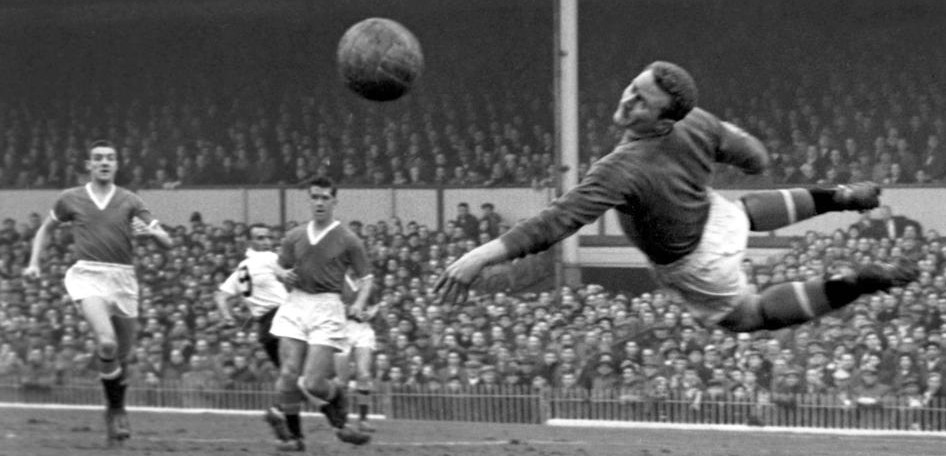
‘Big Dunc’ was already on his way to winning the inaugural 1952-53 FA Youth Cup, alongside other emerging soccer Titans in the 1953 Final; Colman, Whelan, and Pegg. Beating Wolverhampton Wanderers, on May 4th, 7-1, at Old Trafford, and on May 9th drawing 2-2 at Molineux Stadium: taking the trophy 9-3 on aggregate. Some members of the side’d ironically be greater after Munich; left winger Scanlon, debuting on November 20th, 1954, against Arsenal, 2-1, through center forward, Taylor, on 60 minutes, and inside right, Blanchflower, in the 87th, subsequent to Albert’s recovering from injuries, incurred in the disaster, and captain, center half, Ron Cope, 21 years, debuting at Highbury, on September 29th, 1956, 2-1, through inside right, Whelan, on 10 minutes, 1-0, and right winger, Berry (pen.), in the 35th, 2-0.
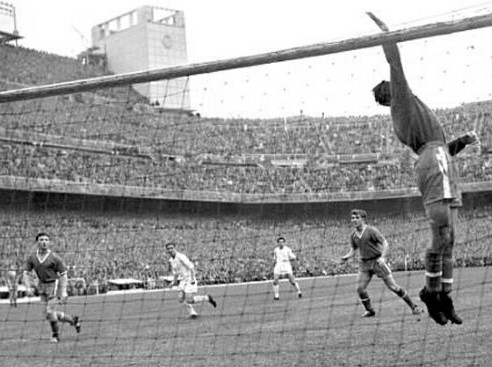
Bobby Charlton debuted, 18 years, on October 6th, 1956, against Charlton Athletic, 4-2, through Berry, in the 25th minute, 1-1, Charlton, in the 32nd and 37th, 3-1, and Whelan, in the 65th, 4-2. Charlton would become a legend after Munich, as the deep-lying center forward in the side, rising from the ashes, like the mythical Phoenix bird, to win the European Cup in 1968. With McGuinness at left half, Bobby, at outside left, had come into the team that won the 1954 FA Youth Cup, again against Wolves, 4-4, on April 23rd, at Old Trafford, and on April 26th, 1-0, at Molineux; 5-4 on aggregate.
Eire’s Shay Brennan, right back in that ‘68 Final was at inside forward in the 1954-55 FA Youth Cup Final win over West Bromwich Albion, 4-1, on April 27th, at Old Trafford, and on April 30th, 3-0, at The Hawthorns; 7-1 on aggregate. Eire’s Joe Carolan, at right half; Morgans, right winger; inside forward, Mark Pearson, and Scot’s center forward, Alex Dawson, who’d feature strongly in the immediate post-Munich hiatus, were in the side that beat Chesterfield in the 1956 FA Youth Cup Final, 3-2 on April 30th, at Old Trafford, and drawing, 1-1, on May 7th, at the Recreation Ground; 4-3 on aggregate.
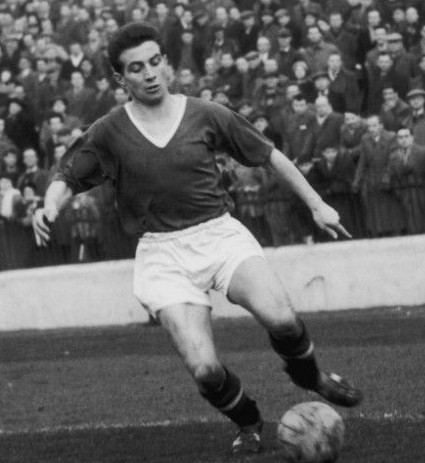
The effect of youth, on the first team squad, was startling. Called ‘Boom Boom’ by Berliners, Edwards’ first international goal came, during a Friendly defeat of Germany, 3-1, on May 26th, 1956, at Olympiastadion, Duncan, 33 (3), for the 1955-56 term, striking from the edge of the 18 yard box, past Rot-Weiss Essen ‘keeper, Fritz Herkenrath, after ‘Tank Gun’ evaded a tackle from Essen center half, Heinz Wewers; 1-0, in the 25th minute.
Colman, 25, ‘Snakehips’, for his body swerve, 19 years, debuted at Bolton’s Burnden Park, 1-3, despite Taylor’s opener in the 3rd minute, on November 12th, 1955. Eddie, right half to Duncan’s left half, was replacing Jeff Whitefoot, 15, debuting against Portsmouth, on April 15th, 1950, 0-2, then the youngest to start for the club, 16 years, 105 days. Whitefoot belonged to Busby’s first phase ‘Babes’, along with John Doherty, 5 (2), 17 years, inside right, debuting in the 1952-53 season, on December 6th, 1952, against Middlesboro’, 3-2, through Stan Pearson, on 7 minutes, at center forward, John Aston Snr, in the 23rd, and Pearson, in the 32nd, with Doherty, 16 (4), also a part of the squad that won the 1955-56 title, before Whelan’s emergence at inside right. Celebrated, for being able to find the net, with either foot, and often from difficult angles, Liam, 36 (27), top scored in 1956-57, arriving from Dublin’s Home Farm club, after a spell as a trainee, debuting on March 26th, 1955, at Preston North End’s Deepdale, 2-0, through Scanlon, 14th, and Byrne (pen.), 60th minute.
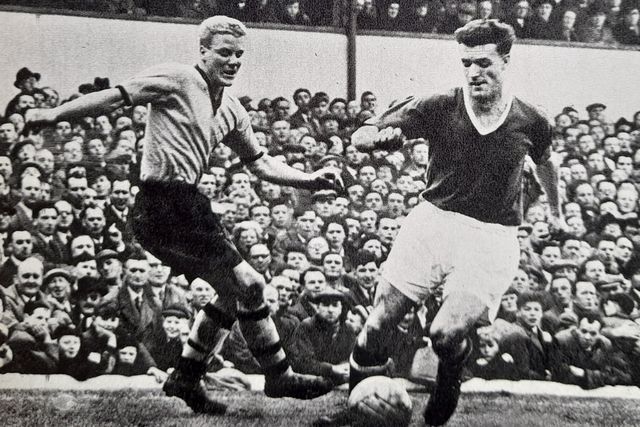
Though Jeff contributed, 3, the 1951-52 title was won by the more seasoned, apart from left full back, Byrne, 24 (7), sometime left winger that term, debuting on November 24th, 1951, 22 years, against Liverpool, 0-0. Jack Rowley, 40 (30), center forward, and Stan Pearson, 41 (22), at inside left, had been in the 1948 FA Cup Final winning side, 4-2 against Blackpool, initially through Rowley, toeing the ball away from ‘keeper Joe Robinson’s fingertips, right boot, outstretched, past Joe, right, side-footing, 1-1, on 28 minutes, and in the 70th, a cross from inside right, Johnny Morris, out on the right, level with the right corner of the 18 yard box. Jack, leaping, a header, left side of the goal area, level with the left upright, top right corner of the net, 2-2, then Stan Pearson, on 80 minutes, at inside left, right side of the penalty area, right-footed, in off the left post, 3-2, and right half, John Anderson, in the 82nd, outside the 18 yard box, right side of the ‘D’, top left corner, 4-2.
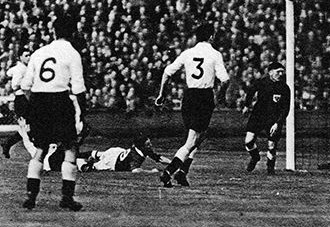
Scot, John Downie, 31 (11), joining from Bradford Park Avenue for £18,000, replaced inside right, Johnny Morris, before 1951-52’s championship success. Netting on his debut, on March 5th, 1949, at Charlton Athletic, 3-2, through Stan Pearson, on 4 minutes, 1-0, John in the 52nd, 2-1, and Pearson, 3-1, in the 62nd.
Reaching double figures, Taylor, 33 (25), and Viollett, 34 (20), debuting at Newcastle United’s Saint James Park, 19 years, on April 11th, 1953, 2-1, through Taylor, on 7 minutes, 1-0, and in the 58th, 2-1, the club won the 1955-56 title, and the FA Shield curtain raiser to 1956-57, 1-0, through Viollett, on 75 minutes, on October 24th, against Manchester City, at Maine Road. Ray Wood, ‘keeper, 39, was replaced, on 45 minutes, by David Gaskell, then the youngest ever to take the field, at 16 years, 19 days; though being in the eleven at the start is always the genuine measure of a manager’s belief.
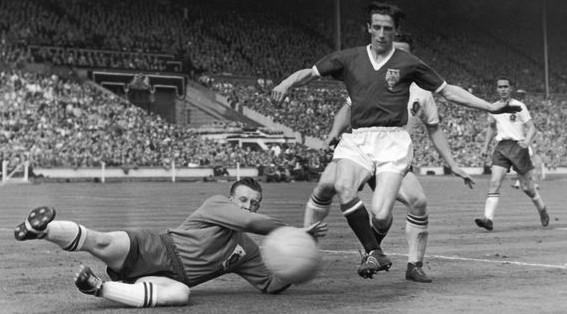
Charlton, 14 (10), and McGuinness, 13, featured in ‘56-57, with Bobby sometimes at inside left instead of Viollett, while inside forward, Nobby Lawton, coming into the side for the 1957 FA Youth Cup Final against West Ham United, would press for a while in the post-Munich aftermath. ‘The Hammers’ were beaten, 3-2, on May 2nd, at Upton Park, and on May 7th, at Old Trafford, 5-0; 8-2 on aggregate.
The side won the 1957 FA Shield ‘opener’ to the 1957-58 season, 4-0, at Old Trafford, on October 22nd, having lost to Villa in the 1957 FA Cup Final, on May 4th, at Wembley, the previous season, when going for ‘the double’ of league and cup. A collision with Villa left winger, Peter McParland, after only 6 minutes, disabled United ‘keeper, Wood, with Blanchflower taking the ‘keeper’s jersey. A hat-trick (3) in the FA Shield, on 50 minutes, 1-0, in the 54th, 2-0, and 70th, 3-0, with Berry (pen.), on 87 minutes, 4-0, Taylor got ‘hamstrung’ United’s sole reply, in the ‘57 Final, on 83 minutes, 1-2; what might have beens.
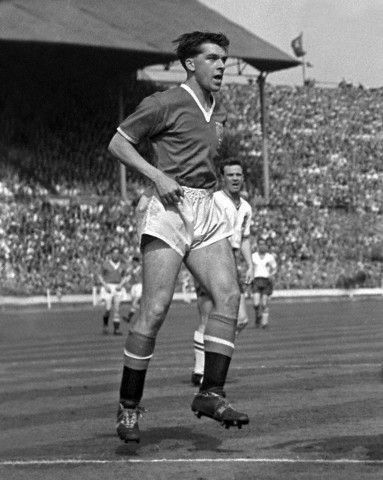
Brennan, inside forward, 5 league starts that 1957-58 season, as the usual alternative to Pegg, left winger Scanlon, had injuries, Seamus, ‘Shay’, debuted, at outside left, in the initial post-Munich game. In the 5th Round FA Cup tie against Sheffield Wednesday, at Old Trafford, on February 19th, 1958, Brennan’s corner on the left; high, in-swinging, in at the near post, beyond ‘keeper Brian Ryalls’ grasp, on 29 minutes, 1-0, and in the 70th, Shay’s right instep, just outside the 6 yard box, level with the right upright; inside the right post, low, 2-0. Dawson, 12 (5), struck again, late on; right of the penalty area, outside the 6 yard box, opposite the right upright; low shot, right-footed, bottom left corner of the net, in the 85th, 3-0.
On a peoples’ wave of non-partisan emotion, the team would reach the May 3rd FA Cup Final, at Wembley. Only to lose, at the last hurdle, to a clinical Bolton center forward, Nat Lofthouse. Receiving a low, left-footed through ball, from left half, Bryan Edwards, just outside the 18 yard box, left, Nat struck low, right-footed, from inside the penalty area, left, into the left corner of the net in only the 3rd minute; bulling ‘keeper, Harry Gregg, 19, over his own line, as he tried to keep hold of the ball, 0-2, on 50 minutes.
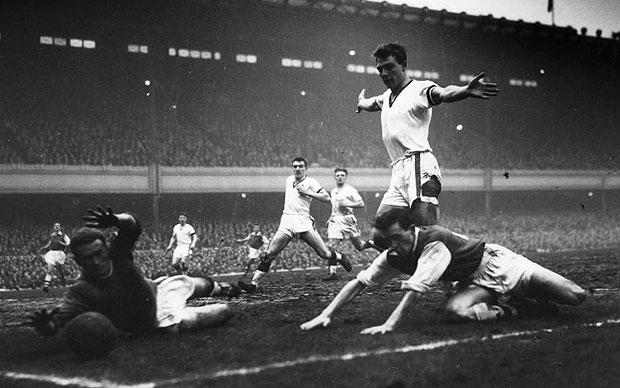
Though Brennan would go on to be a part of the side that won the 1963 FA Cup Final, at right back, 3-1, against Leicester City, as well as being regularly selected for the league title campaigns of 1964-65 and 1966-67, Bill Foulkes, 42, now as captain, was at right back in the Final, where he’d mostly been since Munich, after debuting, 20 years, on December 13th, 1952, against Liverpool, 2-1, through Aston, on 50 minutes, 1-1, and Stan Pearson in the 80th, while inside forward, Wales’ Colin Webster, 20 (6), who hadn’t made the trip to Belgrade, but had seen action in the ‘55-56, 15 (4), and ‘56-57, 5 (3), title charges, after debuting, 21 years, on November 28th, 1953, at Portsmouth, 1-1, through Taylor’s equalizer, on 70 minutes, was out on the left as the winger.
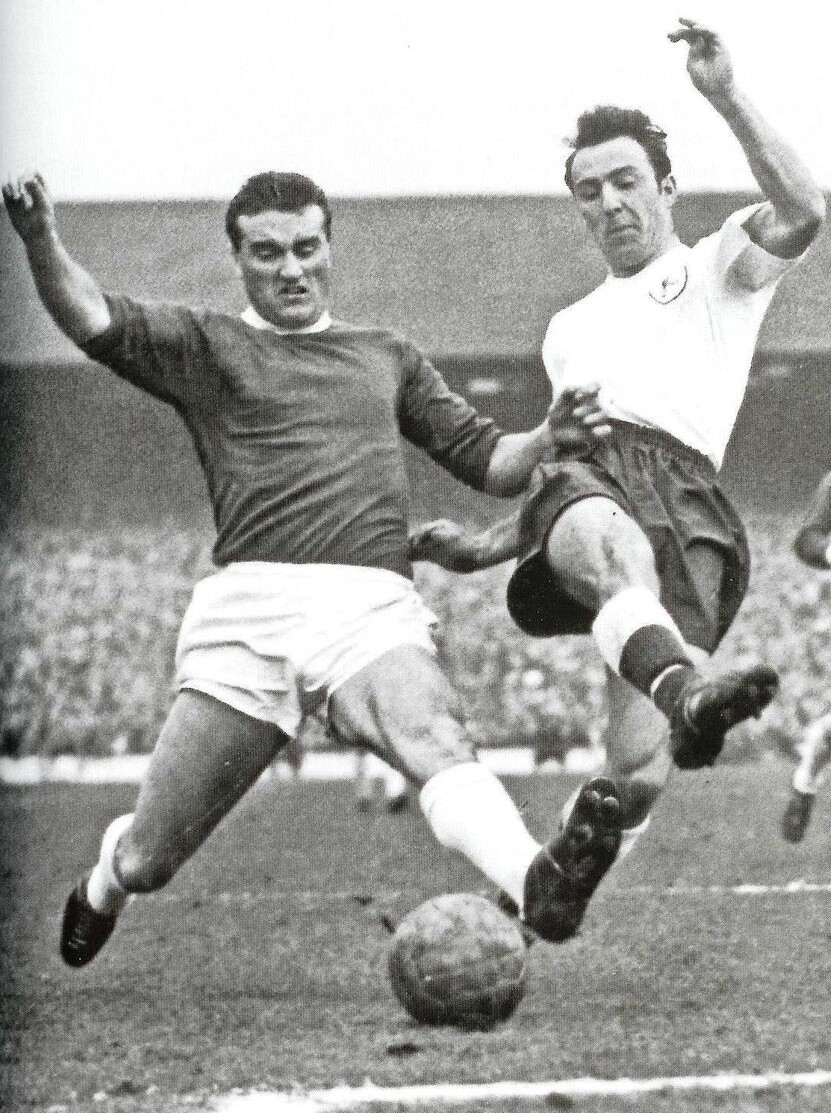
Freddie Goodwin, right ‘wing back’, defined as an attacker, in the place of the full back, supplying all of the width, rather than wingers, and also required to defend, as a full back, usually requiring an additional central defender when deploying, also wasn’t on the trip to Red Star. Debuting November 20th, 1954, 21 years, against Arsenal, 2-1, through Taylor, on 60 minutes, 1-1, and Blanchflower, in the 87th, 2-1, contributing to the ‘56, 8, and ‘57, 6, title wins, Freddie was given 16 starts in 1957-58. Stanley Crowther, 11, left half, £18,000 from Sunderland, with the thankless task of replacing Duncan, and Ernie Taylor, 11 (2), inside right, £8,000 from Blackpool, shortest player in the league, at 5’ 4”, with his defence-splitting passing ability, on a similar ‘hiding to nothing’, replacing ‘Billy’ Whelan, were both ‘emergency’ debuts, in the 3-0 FA Cup 5th Round defeat of Sheffield Wednesday, on February 19th. Having been to the Final, both were transferred, in the earlier part of the 1958-59 campaign; partly due to painful comparisons with their illustrious predecessors. Ernie, 11, to S’land for £7,000, on December 12th, 1958, and ‘Stan’, 2, to Chelsea for £10,000, on December 16th, 1958. Thanks, and farewell.
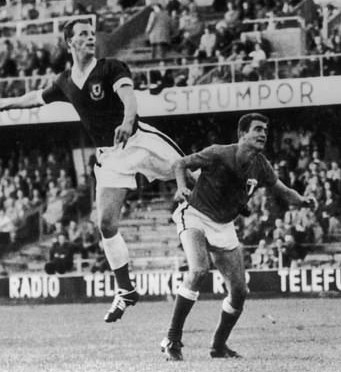
The Munich disaster had been double for England, preparing for the 1958 World Cup Finals in Sweden; losing Byrne, Colman, Jones, Berry, Pegg, and Taylor. Though Charlton was in the squad, he wasn’t selected by then manager, Walter Winterbottom, for the team. Russia beat England in a play-off for 2nd place in Group 4, at Ullevi, Gothenburg, 0-1, on June 17th, progressing to the quarter final.
Gregg was ‘keeper for the Northern Ireland team that had lost Jackie to injury, captained by his brother, Spurs’ right half, Danny Blanchflower, beaten 4-0 by France at the quarter-final stage, on June 19th at Idrottsparken, Norrköping.
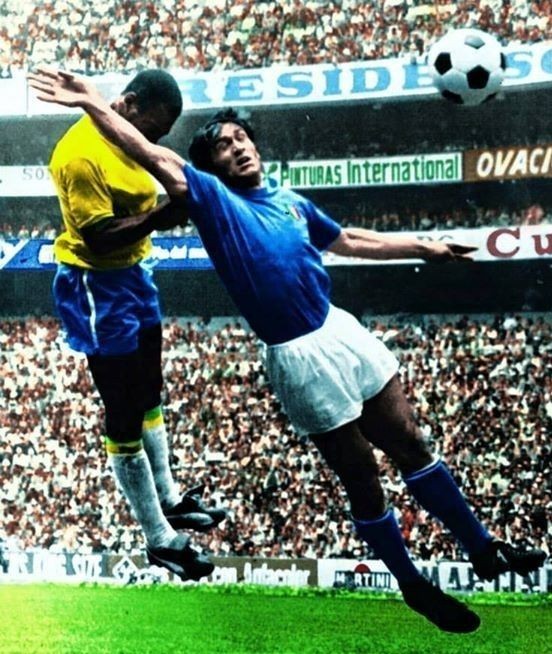
Webster, named in Wales’ squad, took the field against Hungary, 1-1, Mexico, 1-1, and the quarter-final against eventual South American winners, Brazil. In the eleven, for injured Italian Serie A club, Juventus’ center forward at center half, ‘gentle giant’, John Charles, beaten on June 19th, at Ullevi, by club Santos’ Pelé, 17 years, on 66 minutes, taking the ball on his chest, inside the 6 yard box, left, tapping the ball forward, right-footed, towards the goal, behind him, while turning to follow its path; right boot, stroking the ball, low, bobbling inside ‘keeper Jack Kelsey’s left upright, 1-0, en route to beating Scandinavia’s Sweden, in the Final, 5-2, on June 29th, 1958, at Råsunda, Solna.
Brazil’s first title, and Pelé’s first of three; in Northern Europe in ‘58, and in South America’s Chile in ‘62, against Central Eastern Europe’s Czechoslovakia, 3-1, on June 17th at Estadio Nacional, Santiago, and in Central America’s Mexico in ‘70, against Southern Europe’s Italy, 4-1, on June 21st, at Stadio Azteca, Mexico City.
A throw in, on the left wing, from Cruzeiro’s center forward, Tostão, crossed, on the bounce, left-footed, by Corinthians’ left winger, Rivellino, just outside the 18 yard box, almost level with the right corner of the 6 yard box, where there’s Pelé, heading the ball, high, inside Cagliari ‘keeper Enrico Albertosi’s right post, 1-0, in the 18th minute.
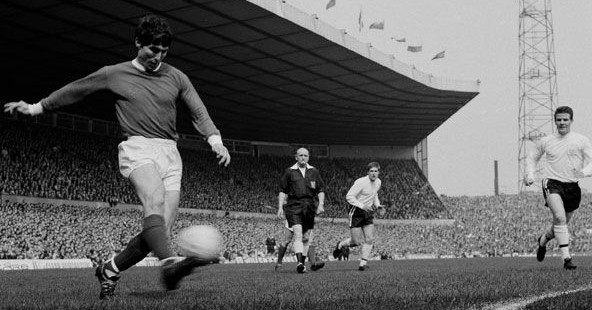
Goodwin was a linchpin of the side in 1958-59, 42 (6), more often at right half, replacing Colman, while Carolan, 23, making his debut as a ‘Babe’, 21 years, on November 22nd, 1958, at Old Trafford against Luton Town, 2-1, through Viollett in the 1st minute, 1-0, and Charlton in the 11th, 2-0, began impressively at left back, replacing the immediate choice after Munich, Ian Greaves, injured, unable to travel to Belgrade, transferred from Buxton United for 1953-54, debuting on October 2nd, 1954, 22 years, at Wolves’ Molineux, 2-4, through Viollett, on 26 minutes, and Rowley, in the 73rd. Ian, left back in the 1958 FA Cup Final defeat to Bolton, had 34 starts in 1958-59.
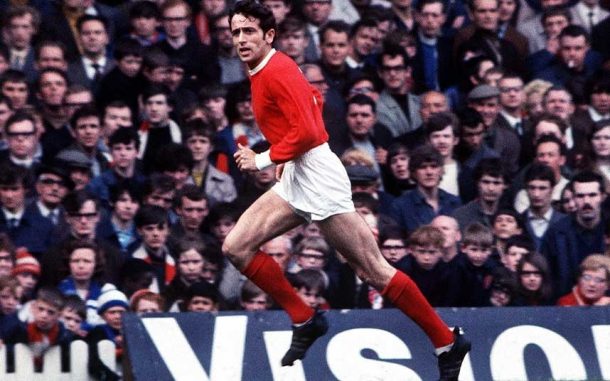
Warren Bradley, 24 (12), wasn’t, strictly speaking, a youth product, but an amateur, with Northern League club, Bishop Auckland, winning the FA Amateur Cup in ‘56 against Corinthian Casuals, 4-1, on April 12th at Middlesboro’s Ayrsome Park, after a draw, 1-1, on April 7th at Wembley, and again in ‘57 against Wycombe Wanderers on April 13th at Wembley, with Warren netting on 72 minutes, 3-1.
After his debut, 25 years, on November 15th, 1958, at Bolton, 3-6, through Dawson, on 35 minutes, 1-2, and in the 65th, 2-3, and Charlton, in the 50th, 3-3, the club’s emergency signing of Bradley, post-Munich, had immediate rewards; visibly, and tangibly, on-field, while £45,000 signing, ‘The Golden Boy’, 25 years, second striker, Albert Quixall, 33 (4), from Sheffield Wednesday, had glaringly less impact in terms of goals, although Charlton, 38 (29), gave him credit as a valuable ‘provider’. Dennis Viollet, 37 (21), and Scanlon, 42 (16), also got into double figures, with the team finishing 2nd in the title race; 5 points behind Wolves on 55.
The club finished 7th in 1959-60. Maurice Setters, brought from West Bromwich Albion (WBA), in January 1960, for £30,000, replaced McGuinness, victim of a career-ending December 1959 leg-break, during a reserve team game against Stoke City. Goodwin was sold to West Yorkshire club, Leeds United, for £10,000, on March 16th. Lawton, 3, debuted at inside left, on April 9th, 1960, at Luton’s Kenilworth Road, 3-2, through Bradley, on 20 minutes, 1-0, and Dawson, in the 30th , 2-1, and 32nd, 3-1. Eire’s legendary midfielder, ‘general’ Johnny Giles, 10 (2), for a signing on fee of £10, turning out for Dublin’s Stella Maris in 1956, began his career as a right winger, 19 years, on September 12th, 1959, against Spurs, 1-5, with only Viollett to reply, in the 43rd minute, 1-3. Mark Pearson, 10 (3), 18 years, debuting in the FA Cup 5th Round defeat of Sheffield Wednesday, in the aftermath of Munich, on February 19th, began to impact as a forward, though Viollett, 36 (32), Charlton, 37 (18), Dawson, 22 (15), and Quixall, 33 (13), got into double figures.
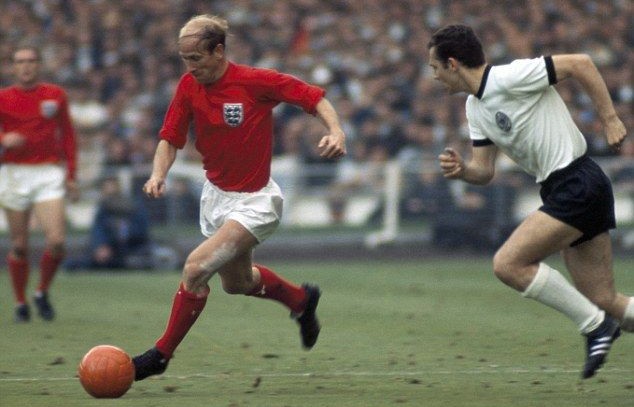
Mark Pearson, 27 (7), was how he repaid his being selected in 1960-61, while Carolan, 2, with Greaves transferred to Lincoln City in December 1960, was replaced by Eire’s Noel Cantwell, 24, at left back, brought from West Ham United for £29,500 in November 1960. Eire’s Tony Dunne, 3, 19 years, who’d be at left back for the ‘red devils’ against Portugal’s Sport Lisboa e Benfica, O Glorioso, ‘The Glorious One’, Benfica of Lisbon, in the European Cup Final of 1968, signing on April 26th, 1960, from Dublin’s Shelbourne for £5,000, as cover for Brennan and Cantwell, debuted against Burnley, on October 15th, 1960, 3-5, despite Viollett’s hat-trick, on 30 minutes, 1-1, in the 40th, 2-3, and 80th, 3-4.
Jimmy Nicholson, 31 (5), 17 years, debuting on August 4th, 1960, at Everton’s Goodison Park, 0-4, shared mainly half back duties with Nobby Stiles, 26 (2), 18 years, debuting, on October 1st, 1960, at Bolton, 1-1, through Giles’ equalizer in the 75th. Stiles’d be in the side that won the World Cup with England in 1966, alongside Bobby Charlton, and his brother, center back, Jack, at Leeds United, on July 30th, at Wembley.
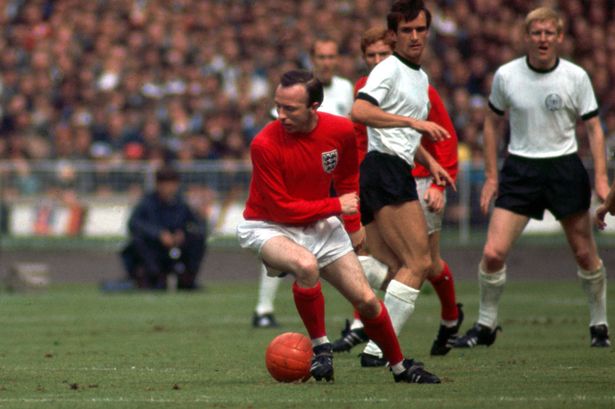
Whereas center forward, Geoff Hurst, and England captain in ‘66, center half, Bobby Moore, had been losers for West Ham, against Blackburn Rovers, 1-1, and 1-0, that is, 1-2 on aggregate, in the Final of the 1959 FA Youth Cup, it was a hat-trick (3) from Hurst of ‘The Hammers’, in the 18th, 101st, and 120th minutes, largely responsible for the defeat of Germany, 4-2 (2-2), a.e.t., although it was left wing, Martin Peters, also ‘forever blowing bubbles’ at Upton Park, 8 yards from goal, after Everton’s Alan Ball, right wing, found Hurst from a corner, who converted Geoff’s subsequently deflected strike, past ‘keeper, Hans Tilkowski, to give England the lead, 2-1, on 77 minutes.
Giles, 23 (2), and Scot’s midfielder, Ian Moir, 8 (1), 17 years, completed the 1960-61 season’s roster of ‘Busby Babes’. The team again finished 7th; Charlton, 39 (21), Dawson, 28 (16), Viollett, 24 (15), and Quixall, 38 (13), getting into double figures.
Scot, David Herd, center forward, was signed for 1961-62, at £40,000 from Arsenal, top scorer there for the four previous seasons; 24, 15, 14, and 29, while Lawton, 20 (6), and Northern Irish left winger, or center forward, Sammy McMillan, 11 (6), debuting on November 4th, 1961, in a defeat, 1-3, although Viollett reduced the deficit, 1-2, on 20 minutes, at Sheffield Wednesday’s Hillsborough, made significant contributions in terms of appearances and goals.
With Busby looking in vain at Mark Pearson, 17 (1), to replace Viollett, 13 (7), transferred to second tier Stoke, 28 years, at £25,000 in January 1962, and Dawson, 4 (2), looking as if already replaced by David, the club finished 15th, as only Herd, 27 (14), and Quixall, 21 (10), could reach double figures.
Although the 1962-63 league position didn’t improve, 19th, tempestuous Scot, Pat Crerand, 19, arrived on February 6th, 1963, from Glasgow Celtic for £56,000, as a tough-tackling, ball-distributing, and tactically thoughtful, right half. The club, still recovering from the Munich disaster, needed him, and former Manchester City center forward, returned from Italy’s Serie A club, Torino, Turin, replacing Viollett, along with the pretenders to Dennis’ throne, for £55,000, Scot, Denis Law, 38 (23), believed by most to be the best striker of a generation.
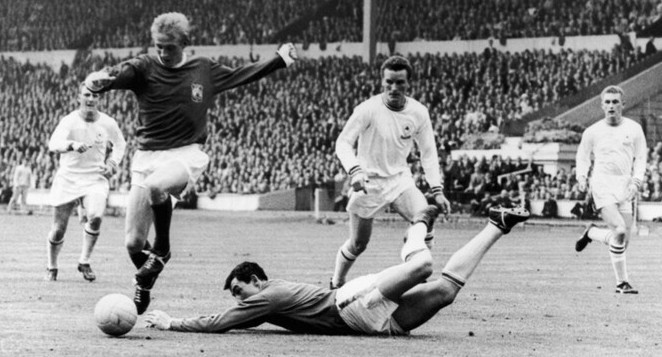
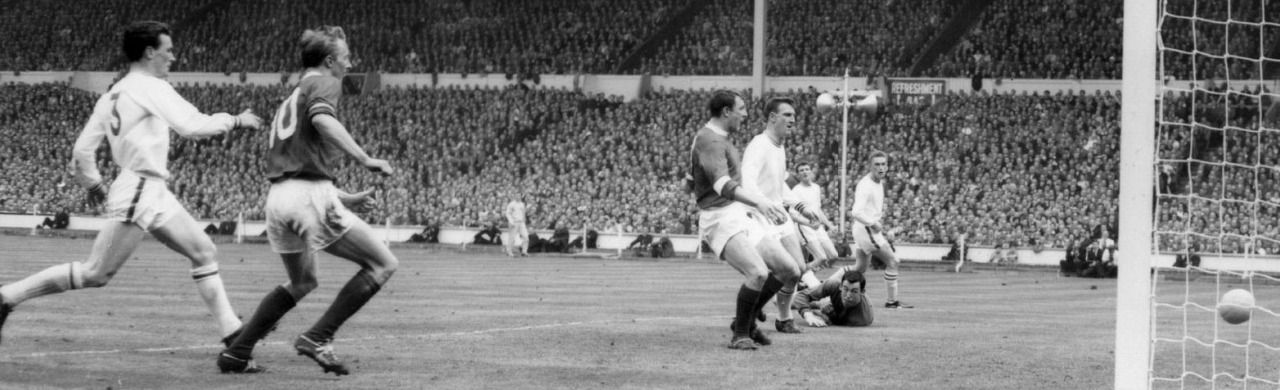
Beating Leicester City, 3-1, on May 25th, 1963, at Wembley, with Cantwell, 25 (1), captain, and an opening goal by Law, ‘The King’ to the Stretford End supporters, reestablished the club in the top tier. Leicester ‘keeper, Gordon Banks, saved a Charlton, 28 (7), effort, on the half hour. Crerand, 25 yards out, intercepting the ball, bowled out by Banks, for Scot’s inside left, David Gibson. Lifting it, over the outstretched leg of the out rushing defender, left of the ‘D’, Pat, ran into the 18 yard box; squaring the ball to Law, right, with the outside of his right boot. To deceive the defence, Denis feinted, as if accepting the pass, but allowing the ball to run on behind him; stopping it with his left foot, turning anti-clockwise, on a sixpence, at the penalty spot, striking with his right boot, left corner of the net, 1-0.
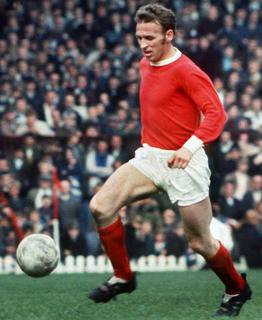
In the 57th minute, a cross-field ball from Giles, 36 (4), bursting through on the right, from inside his own half, finds an unmarked Charlton; far left of the pitch, hurtling on into the left corner of the 18 yard box: on a ‘run and shoot’. Banks parries into the path of Herd, 37 (19); a tap in, 2-0.
Banks, coming for a Giles cross, floated from just outside the right corner of the 18 yard box, the defender; trying to head away the ball. Banks, impeded; attempting to catch the ball in the air, and sweep it under his arm, in a single movement; fumbling, making it seem as if he’s punched the ball to the ground. Herd, on the bounce, turns, right-footed, low, 3-1, past the defender on the goal line, on 85 minutes.
At the traditional FA Shield, champions versus FA Cup winners, ‘showpiece’, on the opening day of the new season, the team lost, 0-4, to Everton, on August 17th. However, the 1963-64 squad gave themselves a very good chance at winning a European trophy, 4-1 against CP Sporting of Portugal, in the Cup Winners Cup quarter-final at home, on February 26th, 1964.
Law got a hat-trick (3), receiving a long ball, right-footed, from right midfield, inside the Manchester half, bouncing in front of Denis, heading it on, still well outside the 18 yard box, but ahead of Sporting’s pursuing number 2, left back, Hilário, inside the left side of the ‘D’, moving right, almost at the penalty spot; right-footed strike, low, right corner of the net, 1-0, on 22 minutes.
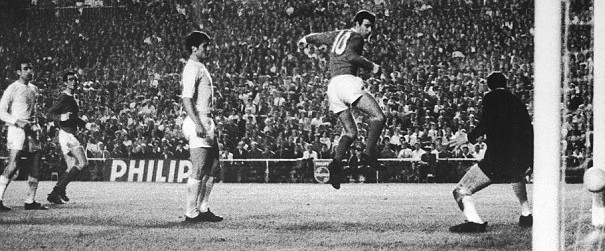
A pass, from just inside the Manchester half, outside of the right boot, Charlton chasing, catching up, well outside the 18 yard box, running on, with the ball, delivering a rocket from the right corner of the penalty area; low, right-footed. There’s an attempt to block by ‘keeper Joaquim Carvalho, but the ball’s trickling over the goal line; inside the right post, 2-0, in the 39th minute.
Brought down by defender, Alfredo Moreira, inside the 18 yard box, center, clean through on goal, Stiles is awarded a 60th minute penalty. Law’s right-footed shot, low, left corner of the net, 3-0, despite Carvalho’s correctly going to his right. After another blatant assault by midfielder, captain Fernando Mendes, on Charlton, trying to accept a ball, inside the left side of the 18 yard box, from Best outside on the left, Dutch referee, Joop Martens, awards a second penalty. With half the Sporting team pushing and shoving Martens, as they did for the first decision, and both linesmen having to come on to prevent the melée developing into something more unpleasant, the Portuguese players are fortunate to remain on the pitch. Law, right-footed, low, right corner of the net, 4-1, in the 70th minute.
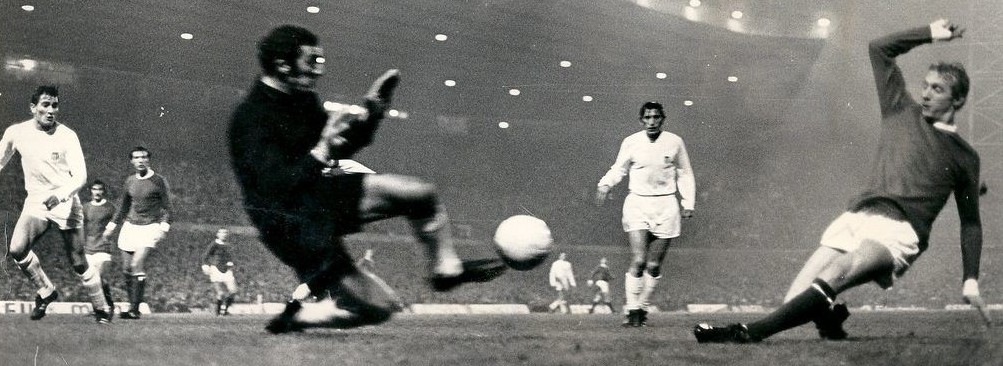
Disastrously the side lost, 0-5, away, on March 18th, at Estádio José Alvalade, named for CP’s 3rd President (1910-12), Lisbon. However, Busby’s youth policy continued. David Sadler, 19 (5), 17 years, inside forward, according to the squad roster, signing professionally, as a youth from Maidstone United, ‘The Stones’, debuting on August 16th, 1963, at Sheffield Wednesday’s Hillsborough, 3-3, through Moir, on 38 minutes, 1-2, Charlton, in the 52nd, 2-2, and in the 78th, 3-3, would become even more distinguished as a center half.
The mercurial dribbling skills of Northern Ireland’s left winger, George Best, 17 (4), 17 years, were seen for the first time against WBA, 1-0, through Sadler, on 64 minutes, on September 14th, 1963, while Willie Anderson, 2, left winger, sold to Aston Villa, on January 17th, 1967, for £20,000, because Best couldn’t be rivaled, debuted, 16 years, against Burnley, 5-1, on December 28th, 1963, through Herd, on 11 minutes, 1-0, Moore, in the 25th, 2-0, Best, in the 38th, 3-0, Moore in the 68th, 4-0, and Herd in the 70th, 5-0.
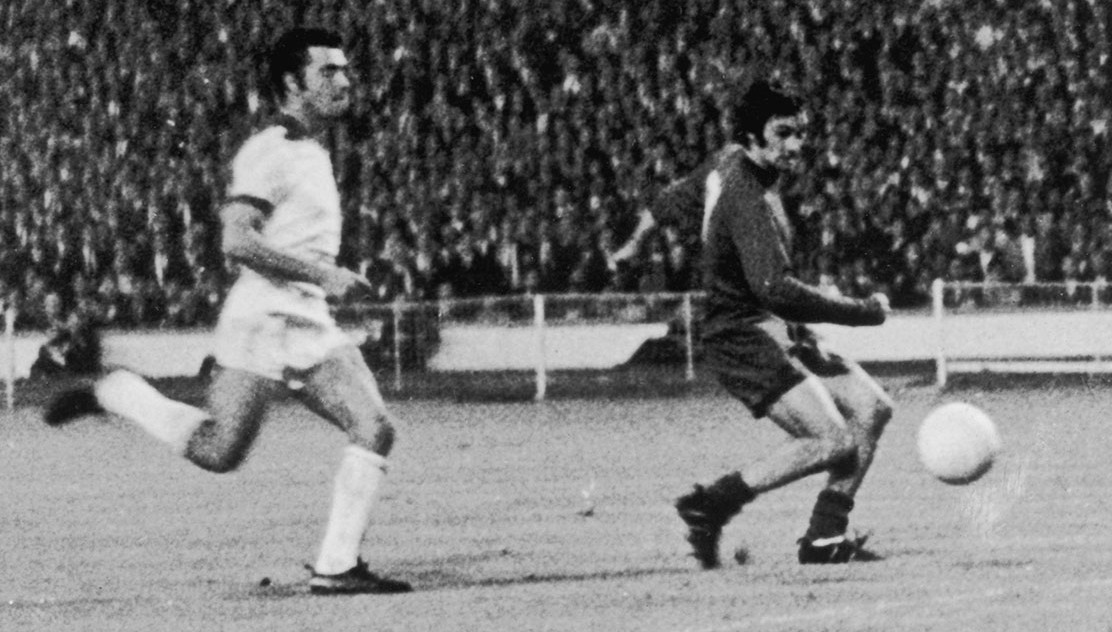
Wales’ Graham Moore, 18 (4), 22 years, at the club for only a year, through injury, £35,000 from ‘The Blues’ of Chelsea at Stamford Bridge, London, competed for a role in midfield, with the overlooked and disappointed Giles, 0 that season, transferring to Leeds for £33,000 for the 1964-65 term, saying of Matt, ‘I am going to haunt him.’2 John did, and Matt admitted his ‘mistake’, although the difference between 15th in the league in 1962-63, with Giles, and 2nd that 1963-64 term, without John, is inarguable.
Phil Chisnall, debuting on December 2nd, against Everton, 1-5, with Herd’s 60th minute consolation, 1961-62, 9 (1), 19 years, faring less well in the coaches’ estimation for 1962-63, 6 (1), made a significant contribution in 1963-64, 20 (6), as ‘probably the best passer of a ball in the country’,3 according to England manager, Alf Ramsey, displacing Quixall, at inside forward, alongside Moir, 18 (3), and Sadler. Law, 30 (30) and Herd, 30 (20), got into double figures, as the club finished runner-up in the league, 4 points behind Liverpool’s 57.
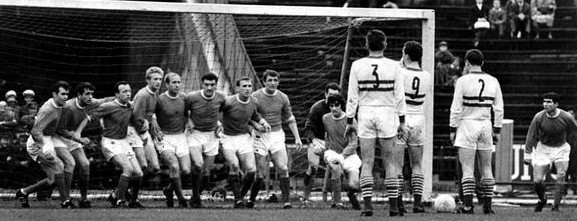
The 1964 FA Youth Cup Final was won, with a team including captain, Bobby Noble, left back; Scot, John Fitzpatrick, at left half; right winger, Anderson; inside right and captain, Best, center forward, Sadler, and left winger, John Aston Jnr, on April 27th, against Swindon Town, 1-1, at the County Ground, and 4-1 at Old Trafford, on April 30th; 5-2 on aggregate.
The team sheet; three left wingers; Anderson, Best, and Aston, is deceptive. In practice, wingers’ wings are switched; if they’re unsuccessful. Best, though a left winger, often ‘switched’ to the right, as he was an inside forward, or second striker (SS), as well as an attacking midfielder (AM), which is true for most left sided forwards, as they’re awkward for a right-sided, ‘square’, defence.
In 1964-65 the team gave themselves an even better chance at winning a European trophy, 3-2, in the first leg of the semi-final of the Inter-Cities Fairs Cup, at Old Trafford, on May 31st, 1965, against Hungary’s Nemzeti Bajnokság I club, Ferencváros. Law opened the team’s account with a penalty equalizer, 1-1, before Herd, on 61, and 69 minutes, made it 3-1.
However, in the second leg, on June 6th, at Budapest’s Népstadion, ‘Peoples Park’, the ‘Fradi’ were awarded a penalty on 44 minutes, after Stiles, 41, trying to handle left winger Máté Fenyvesi, handled the ball, and right back, Desző Novák, right-footed, right corner, struck low, past Eire ‘keeper, Pat Dunne, 0-1; 3-3 aggregate. Crerand, 39 (3), tangling with forward, Pál Orosz, in the 75th minute, both were red-carded. United lost a play off, as the match-up occurred before the ‘away goals count double’ ruling, 1-2, at Üllői úti stadion, Budapest, on June 16th, with right winger, Connelly, a consolation goal on 86 minutes, after right winger, János Karába, struck on 44 minutes, 0-1, and left winger, Fenyvesi, on 54 minutes, 0-2.
Pat Dunne, 37, was brought, £10,500 from Dublin’s Shamrock Rovers, close season, to compete with Gaskell, 5, ‘keeper in the 1963 FA Cup Final, as Busby had looked to replace Gregg. John Connelly arrived from Burnley’s Turf Moor for £56,000, as the side needed a right winger, following the hiatus surrounding the departure of Giles, while Fitzpatrick, 2, known for a high work-rate, stamina, biting tackles, off-the-ball running, touch control, and ball distribution, debuted, on February 24th, 1965, 18 years, away at Sunderland’s Roker Park, 0-1, and John Aston Jnr., 1, 17 years, left winger, son of John Snr., sometime center forward, and left back in the 1948 FA Cup Final win at Wembley, on April 24th, debuted on April 12th, 1965, against Leicester City, 1-0, through Herd, on 49 minutes. The entire forward line of Law, 36 (28), Herd, 37 (20), Connelly, 42 (15), Best, 41 (10), and Charlton 41 (10), reached double figures, as the club were champions, with a better goal average, 2.282, than Leeds, 1.596, also 61 points, before goal difference became the basis for separating clubs level on points from 1976-77.
Upon Harold Hardman’s demise, butcher Louis Edwards, ‘a fan’, in his own estimation, became Chairman. The 1965 FA Shield, ‘shared’, was drawn, 2-2, with Liverpool, at Old Trafford, on August 14th, with Anderson on for ‘out-of-sorts’ Law on 18 minutes. Best, on 29 minutes, lurking 10 yards onside, L’pool center backs, Scot, Ron Yeats and Tommy Smith, were ready to move up, and spring the ‘offside trap’. Charlton, a through Ball, for Best to run onto. L’pool ‘keeper, Scot, Tommy Lawrence fails to come out, and Best, able to see more of the goal, places the ball wide of him, 1-0, on 29 minutes. Herd, on 81 minutes, deceptively casual, struck from the edge of the 18 yard box, 2-1.
1965-66, qualifying as champions, was the club’s first stab at winning the European Cup since Munich. Having never left the competition, before the semi-final stage, the side duly progressed to an encounter with Partizan Belgrade, losing the first leg away, 0-2, on April 13th, 1966. In the second leg, on April 20th, Crerand was again red-carded, this time for fighting with center back, Ljubomir Mihajlović, and both were sent off, on 65 minutes, although it was clearly Stiles that had thrown a punch at Mihajlović.
However, Pat did throw a left hook at Partizan left winger, Josip Pirmajer, for badgering him, on his way off the pitch. On the restart, a short corner on the left, taken by left winger, Anderson. Stiles, right-footed, an in-swinging cross-shot, from out by the corner flag, beating ‘keeper Milutin Šoškić, near post, 1-0, in the 72nd minute; 1-2 on aggregate.
Noble, 2, debuted at left back, 20 years, on April 9th, 1966, against Leicester City, 1-2, through Connelly, on 81 minutes. Scot, 20 years, right winger, Jimmy Ryan, 4 (1), debuted, on May 4th, at WBA, 3-3, through Herd, on 27 minutes, 1-0, Aston in the 49th, 2-2, and Dunne, in the 70th, 3-2. Herd, 36+1 (24), Charlton, 38 (16), and Law, 33 (15), reached double figures, but not Best, 31 (9), or Connelly, 31+1 (5), and the club finished 4th in the league table.
Matt brought ‘keeper, Alex Stepney, 35, from Chelsea for £55,000 for 1966-7, as replacement for Northern Ireland’s Harry Gregg, 2, transferred from Doncaster Rovers for £23,500 in December 1957 and, ‘keeper in the European Cup quarter-final against Red Star Belgrade, on February 5th, 1958, known as ‘The Hero of Munich’ for his efforts to aid the survivors, as one of the few able bodied on the scene; immediately after the plane crash on the 6th. Law, 36 (23), Herd, 28 (16), Charlton, 42 (12), and Best, 42 (10), achieved double figures, while early in the campaign Connelly, 6 (2), was transferred to second tier B’burn for £40,000, as the club won the league title from Nottingham Forest by 4 points with 60.
The 1967-68 season began without Noble, because of injuries sustained in a car accident, on April 22nd, 1967, following a draw, 0-0, at Sunderland, while Bobby was driving home, and before the team clinched the 1966-67 title, with a 6-1 defeat of West Ham at the Boleyn ground, in the penultimate game of the campaign, on May 6th, 1967, beginning with a left-footed Charlton blockbuster, on 2 minutes, 1-0, from the right side of the 6 yard box. Dispossessed by Bobby, Jack Burkett, right back, too optimistically, had been trying to play the ball out, after Stiles’ shot was blocked. Aston delivered a high center for Crerand’s header, close in, right side of the goal area, in the 7th, 2-0.
Foulkes, and ‘keeper, Colin Mackleworth, rose to challenge for a ball; dropping at Bill’s feet, in the 10th, 3-0. Best, accepting a Stiles’ pass, on 25 minutes, 4-0. Law (pen.) in the 63rd, after center back, John Charles, was adjudged to have been pushing, 5-1, and Denis again in the 79th. Though Mackleworth parried Best’s shot, Law was left free to stab the ball back, high, into the net, 6-1.
Scot, Francis Burns, 18 years, debuting on September 2nd, 1967, against West Ham at Upton Park, 3-1, through Kidd, on 54 minutes, 1-0, Sadler in the 59th, 2-0, and Ryan, 3-1, in the 82nd, took over Noble’s left back duties, while second striker, Gowling, 4+1 (1), 19 years, had a scoring debut, on March 30th, 1968, against Stoke City, 4-2, at ‘The Potteries’, through Best, on 2 minutes, 1-0, Alan, in the 23rd, 2-1, Aston in the 69th, 3-2, and Ryan in the 78th, 4-2.
Best, 41 (28), in place of Connelly, Charlton, 41 (15), Kidd, 38 (15), replacing Herd, 6 (1), and Aston, 34+3 (11), but not Law, 23 (7), whose knee injury also kept him out of the European Cup Final, achieved double figures, as the club finished runner-up; 56 points to Manchester City’s 58.
The FA Shield, on August 12th, 1967, was notable for Tottenham Hotspur’s second, credited to Northern Irish ‘keeper, Pat Jennings; ball in hand, a long punt, bouncing in front of Stepney, and over his head into the net, 2-0, on 8 minutes; leaving United with a mountain to climb. Crerand, left side of midfield, a few yards from the touchline, midway inside the Spurs’ half; right-footed ball, inside, right, along the ground, to Charlton. In position to shoot with his right boot, left footed, Bobby instead moves forward; shifting the ball, left of Spurs’ defenders, looking to block; left edge of the ‘D’. A left-footed strike; top left corner of the net, on 18 minutes, 1-2.
Law, bursting-through, on a tremendous run, down the left, inside his own half; shimmying. The Spurs’ defender, inside the United half, uncertain which way Denis will go; Law goes left: past him. Then another defender, further left, and with a burst of electrifying pace, Denis goes past him also, but is forced out wide; onto the wing. Law, with the ball, inside the Spurs’ half; passing along the turf, low, to débutante center forward, Brian Kidd, 17 years; impressing. Kidd takes the ball forward, well outside, but level with, the left corner of the 18 yard box. A left-footed ball, right angled, low. Inch-perfect, grass-cutter; inside to Charlton: center of the field. Bobby, running onto the ball, striking with his left boot; top center of the net, on 20 minutes, 2-2.
Charlton, left of center midfield, moves right of the defender, outside the ‘D’ at the 18 yard box, center; left-footed shot, low, saved by ‘keeper Jennings, at full stretch; down, by the left upright. Law, pouncing on the loose ball, left corner of the 6 yard box; left-footed, goal, center, on 72 minutes, 3-3. Sharing the Shield earned Kidd a league debut, on the first day of the campaign, August 19th, against Everton, 1-3, at Goodison Park, with Charlton’s 86th minute consolation.
The season’s crown was also Brian’s, with Benfica beaten in the European Cup Final, 4-1 (1-1), a.e.t., at Wembley, on May 29th, although the more studious would argue that it was a rare strike from Foulkes in the 78th minute, 3-3, in the second leg of the semi-final against Real Madrid at the Santiago Berneabéu, on May 15th, that made the Munich survivor the true hero. An own goal by defensive midfielder, Ignacio Zoco, in the 43rd minute, 1-2, had given United a lifeline, although right winger, Amancio Amaro, El Brujo, ‘The Wizard’, restored Madrid’s lead, 1-3, just before half-time, leaving Sadler, in the 75th, 2-3, to again reduce the gulf between the teams.
The side were level, 3-3 aggregate, after the first leg, on April 24th, 1-0, through left winger Aston’s left-footed ball, low along the ground, on 36 minutes, inside the 18 yard box, by the byline, finding Best, near the penalty spot, left-footed strike, center; roof of the net. Until Crerand found Best, sprinting down the right wing at the Berneabéu, with a throw-in. George, inside the 18 yard box, right, near the byline, back-heeled, right-footed, finding Foulkes. Ignoring screams from the dugout to remain at the back, Bill, going far enough forward to read Best’s intent, elegantly finished the move; right-footed, just outside the right corner of the 6 yard box: low, accurate, the ball nestling inside ‘keeper Antonio Betancort’s left netting, 4-3 on aggregate.

With the score at Wembley, 0-0, after the first half, in the 53rd minute, Sadler, in for injured Law, found Crerand, with a throw-in from the left touchline. David, receiving the ball back from ‘Paddy’, right-footed, passing the ball along the left wing. Moving inside, left corner of the 18 yard box, Sadler’s right-footed cross to Charlton; a glancing header, directing the ball into the inside of the net, near post, 1-0. However, in the 79th José Augusto, winger, wide on the right, a high ball; center forward José Torres’ header, over the heads of Stiles and Sadler, center of the 18 yard box, with right midfielder Jaime Graça, running in. A powerful strike; right boot, right corner of the penalty area, left corner of the goal, 1-1, at full-time.
In extra time, a right-footed punt by ‘keeper, Stepney, back-headed by Sadler, inside Benfica’s half; halfway between the center circle and the ‘D’. Jacinto Santos, center back, aims to swing a kick at the ball, or Best. On the outside of his right heel, Best flips the ball over Santos’ leg, racing on into the 18 yard box; the ball on his right foot. Best cuts inside, around ‘keeper, José Henrique, come out beyond the penalty spot; left-footed from Best, in the 92nd, side-footed, on the edge of the penalty area, and level with the left upright, goal, center, 2-1. In the 94th, from a corner on the left, high; Sadler, right of the penalty spot, heads the ball towards the left corner of the net. Kidd, without the ball bouncing, anticipating it doesn’t have enough pace, directly heads it at goal; center. Henrique, as if protecting his face, blocks with his hands. No bounce, Kidd, 18 years that day, moves right; leaps, heads in: over Henrique, top right corner, 3-1.

In the second half of extra time, Kidd, right of the center circle, inside Benfica’s half, back to goal, finds Charlton, moving up, right of the center circle in the United half, crossing the halfway line. Bobby plays the ball back to Kidd, moving out to the right. Brian takes the ball, along the right wing, pushes the ball forward, right-footed, skips over the outstretched leg of left back, Fernando Cruz. Kidd cuts inside, right and center outside the 18 yard box; low, ball, driven along the ground, left-footed, to Charlton. Bobby, right corner of the penalty area, gives lift to the ball; right-footed, 4-1, in the 99th minute, top left corner of the net.

As clubs were permitted a substitute from 1965-66, ‘sub’ was Jimmy Rimmer, 16 years when ‘keeper for the 1964 FA Youth Cup Final, as necessary in case of injury to Stepney, rather than strategic or tactical; de rigeur only after an outfield replacement, as well as a ‘keeper, known as ‘two from five’, was allowed from 1988.
Ominously, also in season 1967-68, Leeds United won the double of League Cup, 1-0, against Arsenal, at Wembley, on March 2nd, 1968, and the Inter Cities Fairs Cup, after beating Ferencváros of Hungary, 1-0, at Elland Road, on August 7th, 1968, in the first leg of the Final, and drawing, 0-0, in the second, on September 11th at Népstadion, Budapest; 1-0 on aggregate. The specter of John Giles’ doom upon Busby’s decision to sell him had grown.

However, victory in the 1968 European Champion Clubs’ Cup gave the Manchester team the opportunity to become Intercontinental Cup champions in a match-up between the club winners of South America’s Copa da Libertadores, ‘Freedom’s Cup’, Estudiantes de la Plata, Argentina, and the champions of Europe. The first leg, on September 25th, 1968, against ‘The Students’, as Estadio Uno, in the provincial capital, La Plata, was deemed unsuitable, was staged at Primera División club, Boca Juniors, Estadio Boca Juniors, Buenos Aires. Lost 0-1, to a Marcus Conigliaro headed goal, in the 27th minute; from a corner by strike partner, Filipe Ribaudo.
Law, injured, was substituted by Youth Academy graduate from Italy, 20 years midfielder, Carlo Sartori, 11+2 that 1968-69 season, on 44 minutes. Sartori had made his league debut, substituting for Burns, 14+2, on October 9th, 1968, at Spurs’ White Hart Lane, 2-2, through Crerand, on 35 minutes, 1-1, and Law in the 53rd, 2-2. Stiles, 41 (1), described in the match program as ‘an assassin’,4 quoting Benfica coach, Otto Glória, at one point reported by the linesman for standing too close to violent midfielder, Carlos Bilardo, was sent off in the 79th minute by Paraguayan referee, Hugo Sosa Miranda, for retaliating to kicks, punches, and head butts; the team endured.

In the second leg, on 16th October, at Old Trafford, automatically missed by Stiles, because red-carded, winger Juan Ramón Verón, La Bruja, ‘The Witch’, father of right midfielder, Juan Sebastián Verón, so La Brujita, ‘The Little Witch’, who won the 2002-03 title with United, headed a goal from a free kick by defender, Raúl Horacio Madero, past Stepney, 38, on 6 minutes, 0-1; 0-2 on aggregate. In the 79th minute Best punched José Hugo Medina in the face and both were sent off.
Scot’s right winger, Willie Morgan, 29 (6), ironically brought for the 1968-69 campaign from Burnley for £117,000, as a permanent replacement for Connelly, as Morgan had ousted him there, managed to get on the end of a right-footed Crerand, 35 (1), free kick, in the 90th minute; right midfield, just inside the Estudiantes’ half. Willie, edge of the left corner of the penalty area, right-footed shot, to ‘keeper Alberto Josė Poletti’s left: bottom right corner of the net, 1-1; 1-2 on aggregate. Although the Stretford End were angered by Serbian referee, Konstantin Zečević, unsighted, not signaling a goal for a Kidd, 28+1 (1), effort that television coverage of the game showed had clearly been in the Estudiantes’ net, the club would not be blessed with the crown of Europe and South America.

Busby’s main concern was how to replace Bill Foulkes, 36 years, at center half, 10+3, with Steve James, 18 years, the earliest candidate, 21 (1), debuting on October 12th, 1968, against Liverpool, 0-2, at Anfield, while debuting, 18 years, as a substitute for Fitzpatrick, on September 9th, 1967, in a 2-2 draw at home to Burnley, through Burns, on 86 minutes, 1-2, and Crerand in the 90th, Scot, Frank Kopel, right back, 7+1, was back up to Dunne and Brennan.

The team reached the semi-final stage in defending the European Cup, losing on April 23rd, 1969, at San Siro to Italy’s Serie A club, AC Milan, 0-2, with Fitzpatrick red-carded on 80 minutes, kicking Sweden’s right winger, Kurt Hamrin, when the ball was yards away, and on May 15th, at Old Trafford, 1-0. Best, edge of the 18 yard box, right of the ‘D’, avoiding tackles to his left; ball on his right foot, inside the area, stabbing the ball to Charlton. Bobby, right, running on with the ball; a right-footed rocket, at an acute angle, right corner of the 6 yard box: near the goal line, 70th minute, 1-2 on aggregate. Best, 41 (19), and Law, 30 (14), reached double figures for the campaign; the club finishing 11th, while John Giles’ Leeds United were champions.
Busby advocated McGuinness, as his successor, and reserve coach Wilf was appointed manager for 1969-70. Scot, Ian Ure, 34 (1), center back, was brought from Arsenal for £80,000, while Paul Edwards, 18+1, right back, or center back, 21 years, debuted on August 19th, 1969, at Goodison, Everton, 0-3.

Eire center forward, 19 years, Don Givens, 4+4 (1), debuted, as a substitute for Dunne, 33, on August 9th, at Crystal Palace, 2-2. Sadler, right midfield, right-footing a ball to Morgan, on the right wing, Willie’s left-footed cross had ‘keeper, John Jackson, going to challenge for the ball with Kidd, back-heading over the Palace ‘keeper, with Charlton running on, just outside the 6 yard box, right of center; striking right-footed, bottom left corner of the net, 1-1, on 24 minutes. After Jackson failed to punch away a long, right-footed ball from right midfield, Law, just in front of the beleaguered ‘keeper, and with his back to him, laid it into the path of Morgan, with his left boot, in the 56th; Willie striking right-footed, just outside the 6 yard box, right of center, top left corner of the net, 2-2. Givens would go on to almost win the 1975-76 title with Queens Park Rangers at Loftus Road, Shepherd’s Bush, West London. Best, 37 (15), Kidd, 33+1 (12), and Charlton, 40 (12), achieved double figures, as the club finished 8th.

Although Wilf guided the team to a two-leg League Cup semi-final against Manchester City, the side lost, 1-2, at Maine Road, on December 3rd, 1969, despite Best’s efforts. In the right full back position, making for the center circle with the ball; inside the City half of the circle, center, George passes to Kidd, outside the center circle, right: taking the ball out onto the right wing. Brian crossing, right-footed, from near the right touchline, well outside the 18 yard box; a long, high ball, into the goal area. Charlton, accepting what looks like a pass from the City defender, trying to trap the ball, right-footed; instead it’s rolling towards the right of the 6 yard box: left-footed strike from Bobby, 1-1, on 66 minutes. However, center forward, Francis Lee, just outside the 18 yard box, left, collecting a long ball from Oakes; wide on the left, takes it inside the left corner of the penalty area. Ure’s reckless tackle, scything Lee down, results in the awarding of a penalty; converted by Lee, on 88 minutes, 1-2. The second leg, on December 17th, ended, 2-2; a 3-4 aggregate defeat. Nevertheless, right back, Paul Edwards, afforded Law opportunity to put the side ahead.

Ure, center back, left of the ‘D’, inside the center circle, in the United half, left-footed ball, low, along the turf, to Crerand, center midfield. A through ball, between central midfielder, Alan Oakes, nearer to Pat, and central defender, Mike Doyle, farther off. Paul, right of the ‘D’, edge of the 18 yard box, nudging the ball, right. A legitimate tackle from Glyn Pardoe now unlikely, as Edwards ran the diagonal; in front of the City left back. Pardoe now behind; left, can’t bring Paul down. Edwards, straightens his sights on goal; inside the 18 yard box, right-footed strike: high, top right corner of the net, 1-1, on 23 minutes.
Ure again, inside his own half; left of the center circle, left-footed pass to Best: inside the center circle, center. George, aggressively determined to run with the ball. Best’s basic character trait, in attack; surging forward into the City half. Shaking off pursuing striker, Ian Bowyer, with a burst of speed. Unable to avoid the next challenge, Best wins the ball, in a clash with Oakes, off his right boot. George, right-footed, right of the ‘D’, outside the 18 yard box; City ‘keeper, Joe Corrigan, parries the strike, high, both hands: can’t hold. Law, running into the 6 yard box, Corrigan diving to his right; the ball coming off his right hand. Denis pounces; left-footed, 2-1, on 60 minutes.

In a second replay, the team lost to Leeds United, 0-1, in the FA Cup semi-final, on March 26th, at Burnden Park; a left-footed strike, between penalty spot and edge of the 18 yard box, center, by Leeds’ captain, Billy Bremner; low, left corner of the net, on 7 minutes. The previous games, on March 14th, at Hillsborough, being 0-0, and on March 23rd, at Villa Park, 0-0, a.e.t., with Law, 10+1 (2), substituting for Sartori on 96 minutes in the first replay, and on 61 minutes for Carlo in the second replay; benched for much of the time in favor of Sartori: to fans’ disgruntlement.
1970-71 was similarly disappointing, as Wilf was refused the financing of transfers. Promoting youth from within, strengthened by the loss of so much rare unfulfilled talent in the Munich air crash, with Matt having retired, policy ossified. The club loathe to replace nurtured talent developed by Busby’s Academy. Prolific center forward, with a cannonball shot, and majestic heading ability, Malcolm Macdonald, from Luton Town, for example, as a replacement for Charlton; as well as Colin Todd to replace Foulkes.

Colin, Sunderland’s pace-staying, ice-cool, thoroughbred central defender, in the 1966 FA Youth Cup Final, lost, 3-5, on aggregate to Arsenal, was coached by Brian Clough, at Roker Park. Rejoining Clough, then manager at Derby County, Todd debuted on February 27th, 1971, at The Baseball Ground, against Arsenal, 2-1, and went on to win the 1972-73, and 1974-75, league titles there. Mooted as Dunne’s replacement, Ipswich Town’s left back, Mick Mills, later captained England at the 1982 World Cup Finals in Spain.
Unable to buy to improve the side, McGuinness was relieved of team duties from December 29th, 1970. In spite of Kidd’s efforts in the League Cup semi-final against Aston Villa. On December 16th, 1970, in the first home leg, Brian began a move wide on the right, passing the ball to Stiles, between the legs of Stonehouse referee, Dave Smith, then ran into the 18 yard box. Stiles passed the ball to Sartori, right touchline; a high, left-footed cross. Aston Villa left back, Charlie Aitken, failed to clear; in fact heading the ball towards Brian, right of the 6 yard box. Kidd, scissors-kick volley, left-footed screamer, both feet off the ground, top left corner of the net, on 44 minutes, 1-1.

Under threat of being replaced by Gowling, 17+3 (8), for his lack of goals, Brian, 24+1 (8), in the second leg, on December 23rd, at Villa Park, collected a long punt from the right full back position, by the penalty area, deep in the Manchester half. Well outside the 18 yard box, right side of the field, out on the right wing, ball bouncing between Villa central defenders, Fred Turnbull, and Brian Tiler, Kidd’s ahead of the ball, shielding it, back to the Villa goal. Tiler, kicking at the ball, hits Brian in the chest, and appeals for a handball. Kidd, shaping to go out wider on the right, ball on his right boot, instead turns inside Turnbull, ball on his left boot; into the penalty area at the right edge of the ‘D’, right corner of the 18 yard box. Easing the ball past Fred, with the outside of his left boot, allowing the ball to run on, Brian passes the ball back, with his right boot, onto his left, then pushing the ball ahead of him, past the lunging form of Tiler. Kidd, racing on, nudged the ball past ‘keeper, John Dunn, diving at his boots, striking low, left-footed, left corner of the net, 1-0, on 14 minutes. However, the second leg finished, 1-2; 2-3 to Villa on aggregate. Thereafter, Matt returned, as manager, until season’s end.
Leeds United’s John Giles won the 1971 Inter Cities Fairs Cup, in a rain affected Final that saw the first leg, at Italy’s Serie A club Juventus’ Stadio Comunale, Turin, on May 26th, 1971, abandoned in the 51st minute, 0-0. The replay was drawn, 2-2, while Leeds, drawing 1-1 at home, and the aggregate score being, 3-3, won the trophy on the ‘away goals count double’ rule. Manchester United approached Leicester City to release Eire’s Frank O’Farrell to be the club’s manager for the 1971-72 term.
Tommy O’Neil, 1, right back, 18 years, debuting on May 5th, 1971, 4-3, at Manchester City’s Maine Road, through Charlton on 15 minutes, 1-0, Law, in the 30th, 2-0, and Best, in the 31st, 3-0, and in the 75th, 4-3. Scot, Willie Watson, 8, right back, 20 years, debuting September 26th, 1970, at home to Blackpool, 1-1, with the opener from Best, on 29 minutes, after Morgan received a back-heeled pass on the right wing, racing upfield, cutting inside the 18 yard box, at the right corner, before crossing right-footed, parallel with the edge of the 6 yard box; the pass slightly behind it. Best, just outside the goal area, center, back-heeling the ball into the side netting of the left upright, low, 1-0. Tony Young, right wing/right back, 0+1, 17 years, debuting as substitute for Best in the 46th minute, on August 29th, 1970, at home to West Ham, 1-1, Fitzpatrick equalizing, in the 28th, a 2nd minute strike from Hurst. New faces introduced during the 1970-71 campaign. Best, 40 (18), and Law, 28 (15), got into double figures, as the club finished 8th.

The 1971-72 campaign ended with the club again finishing 8th. Though top at New Year, injury to center back James, with Paul Edwards as his stand-in, resulted in 6 straight losses, while John Giles’ Leeds won the FA Cup, at Wembley, on May 6th, 1972, against Arsenal, 1-0.
Although O’Neill, 37, secured the right back berth, Scot, Martin Buchan, 13+1, center back, and sometime right back, arrived for £120,000 from Aberdeen, on February 29th, 1972, as a long-term replacement for Sadler, debuting on March 4th, against Spurs, at White Hart Lane, 0-2, and left winger, Ian Storey-Moore, 11 (5), as a replacement for Aston, 2+7, though John effectively bowed out in 1970-71, 17+1 (3), transferred to Luton for 1972-73 for £30,000. At £225,000 from Forest, Ian’s was a scoring debut, on March 11th, 1972, against Huddersfield Town, 2-0, through Best, on 35 minutes, and Storey-Moore in the 62nd.

Northern Irish second striker, Sammy McIlroy, 8+8 (4), hoping to eventually replace Law, while overtaking Gowling, 35+2 (6), as a preferred alternative, on his debut, at Manchester City’s Maine Road, 3-3, on November 6th, 1971, with the opener, on 39 minutes. Best, beginning a move, just outside the center circle, inside the City half, finds Kidd, out on the right wing. Brian, left-footed, crosses the ball into the penalty area. George, back to goal, outside the edge of the 6 yard box, center, traps the ball, loose; leaving it for ‘Super Sam’, running on, to strike, left-footed: inside the right upright, 1-0. Charlton, center midfield, inside the City half, passing to Best, inside left position, crossing the ball left-footed, at the edge of the 18 yard box, finding Kidd, near the penalty spot, left-footed, right corner of the net, 2-0, on 46 minutes. Gowling, in the 64th, inside the penalty area, deflecting a long-range shot, well outside the 18 yard box, from Aston, half-time ‘sub’ for Dunne, at left midfield, past ‘keeper, Joe Corrigan, 3-1. Best, 40 (18), Law, 32+1 (13), and Kidd, 34 (10), made it into double figures for the season.

O’Farrell was replaced by Scotland team boss, Tommy Docherty, on December 19th, 1972, with the club finishing 18th in the league. Ted MacDougall, 18 (5), center forward, from then third tier Bournemouth for £200,000, scoring on his debut, in the 18th minute, against Birmingham City, on October 14th, 1972, 1-0, and Wales’ renowned header of the ball, center forward, Ron, Wyn ‘The Leap’, Davies, 15+1 (4), £60,000 from Manchester City, debuting against Derby County at Old Trafford, on September 23rd, 1972, bought to challenge Law, 9+2 (1), and Kidd, 17+5 (4), for their places in the team, sooner than McIlroy was able to.
Dunne, center midfield, outside the ‘D’ at the 18 yard box, finding Best with the outside of his left boot, left. George, with his back to goal, lifting the ball, right-footed, over into the penalty area, where Storey-Moore, right of the the penalty spot, outside the 6 yard box, headed into the bottom left corner of the net, 1-0, on 33 minutes.

Morgan, bursting through, from right midfield, crossing into the penalty area, well outside the 18 yard box, with the Derby defender, center, outside the 6 yard box, able only to sidefoot the ball towards the left edge of the ‘D’. Wyn, pouncing to strike, right-footed humdinger, top right corner of ‘keeper Colin Boulton’s net, 2-0, in the 66th minute.
Best, taking the ball in the left back position, running to the center circle, releasing a forward ball, right-footed, just outside the circle, in the Manchester half, for Morgan to chase. Willie, catching up with the ball, going through the circle in the Derby half, midway to the penalty area, outpacing Scot’s midfielder, Archie Gemmill, stroking a low, right-footed shot, from the edge of the 18 yard box, at the ‘D’, center; bottom left corner of the net, 3-0, in the 75th minute.

Tony Young, 28+2, had emerged as first choice at right back, although Docherty bought Scot, Alex Forsyth, 8, 20 years, for £100,000 from Scotland’s then first tier club, Partick
Thistle, to fill that position, debuting January 6th, 1973, at Arsenal, 1-3, with a consolation from Kidd, on 85 minutes, and Scot, Jim Holton, 15 (3), from Shrewsbury Town at Gay Meadow, for £80,000, to fill the problematic center back role.
At 21 years, almost unbeatable in the air, and aggressive in the tackle, though without much delicacy on the ground with the ball, Holton debuted, 6’ 1”, on January 20th, 1973, against West Ham, 2-2. Charlton (pen.), right-footed, left of the goal, on 31 minutes, 1-1, after Morgan was brought down, inside the right edge of the penalty area. Macari, in the 80th, stretching, just outside the 6 yard box, turning a right-footed cross-shot from Morgan, on the left, outside the 18 yard box, in at the left corner of the net, 2-2.
With modern soccer strategy shifting, from left half, center half, and right half backs, to twinned center backs, with a half back moving into central midfield, the fans chant was, ‘Six foot two, eyes of blue. Big Jim Holton's after you.’5 They’d have to wait for blond, blue-eyed ‘Big Gordon’ McQueen, 6’ 3”, for that, as 6’ 1” Holton’s eyes, like his hair, were brown.

With the retirement of Crerand, coach under O’Farrell, and assistant manager with Docherty, ‘The Doc’ brought Scot, George ‘Stroller’ Graham, in December 1972 to fill that midfield position, from Arsenal for £120,000, where he’d top scored for ‘The Gunners’, at center forward in 1966-67, 33 (11), and 1967-68, 38 (16), before John Radford moved from the left wing into the central striking role.
At left midfield George won the Inter Cities Fairs Cup in 1969-70, 1-3, away, in the first leg of the Final, against Belgium’s Anderlecht, at Constant Vanden Stock, on April 22nd, 1970, and 3-0, on April 28th, 1970, in the second leg at Highbury; 4-3 on aggregate.
The side from ‘the Marble Halls’ next won the 1970-71 league title, and FA Cup ‘double’. With George again at inside forward, at Wembley, on May 8th, 1971, Liverpool were beaten, 2-1 (0-0), a.e.t., though Graham lost his place in the Arsenal line-up, after the signing of Alan Ball from Everton for £220,000, on December 22nd, 1971.

Debuting for United, Graham, 18 (1), 28 years, along with Forsyth at left back, as Tony Young was in Alex’s usual right back position, on January 6th, 1973, at former club, Arsenal, 1-3, disappointed in 1972-73, with Eire’s Mick Martin, 14+2 (2), 21 years, brought for £20,000 from Bohemians, Dublin, debuting on 24th January, 1973, at home, 0-0, against Everton, challenging George for selection in the team.
Lou Macari, 16 (5), Scot’s club Glasgow Celtic’s second striker, arrived for £200,000 to replace Law, debuting, along with Holton, on January 20th, 1973, against West Ham, 2-2, securing that point in the 80th minute. Best, 19 (4), announced he wouldn’t play for Docherty, leaving Morgan, 39 (4), and Storey-Moore, 26 (5), to provide the service to the forwards from the wings. Charlton, 34+2 (6), top scored, as the club struggled to finish 18th.

In the second disaster, after Munich, the club was relegated in 1973-74 to the second tier; finishing 21st in the table, with 32 points. Birmingham City above, on 36, 20th, and Norwich City, below, on 29, 22nd, were also consigned to the second tier. The team was so diffident in front of goal that opprobrium was poured on the side, as Tommy gave Stepney, 42 (2), the task of taking penalties, although Gerry Daly, 14+2 (1), Eire’s attacking midfielder, challenging Mick Martin, 12+4, and replacing the disappointing Graham, 23+1 (1), viewed as one-paced, and so often outpaced, transferred from Bohemians (Bohs) for £20,000, debuting on August 25th, 1973, 19 years, at Arsenal’s Highbury, 0-3, missed but 1 of 19 in his subsequent career at the club.

Stewart Houston, 20 (2), Scot’s left back, replacement for the formerly irreplaceable Dunne, arrived from West London’s Brentford, ‘The Bees’, for £55,000, debuting on January 1st, 1974, at QPR, 0-3, and Scot’s attacking midfielder, Jim McCalliog, 11 (4), for £60,000 from Wolves, as support for McIlroy and Macari, 34+1 (5), debuting on March 16th, 1974, away to Birmingham, 0-1.
Jim, striking 4 times in 3 matches, against Newcastle United, 1-0, on April 13th, 1974; Everton, 3-0, on April 15th, and away at S’ton, 1-1, on April 20th, looked to have saved the side. However, there were defeats in the final games of the run-in; away at Everton, 0-1, on April 23rd; and against Manchester City at home, 0-1, on April 27th. The die-hard Stretford End were absolutely silenced, as Colin Bell, unconcernedly in control at center midfield, right-footed a pass to center forward, Francis Lee, back to goal, inside the ‘D’. Lee, taking the ball, with his right foot, going to his left, a diagonal run, across the ‘D’, inside the penalty area, outside and right of the 6 yard box, right-footed a cross-pass inside to former Old Trafford favorite, Law. Allowed a free transfer to Maine Road for 1973-74 by Docherty, Denis, at the edge of the goal area, center, almost apologetically, back-heeling the ball into the right corner of Stepney’s net, on 82 minutes, which for soccer folklorists sealed United’s fate, and although confirmed by another defeat, away at Stoke, 0-1, on April 29th, it had.

In the event of Storey-Moore, 2 (1), incurring an ultimately career-ending injury in training, the truculent Best, 12 (2), agreed to a brief resumption, though stating categorically he wouldn’t accept second tier, and didn’t, initially preferring a return to competitive action in the United States’ North American Soccer League, at Los Angeles Aztecs, 23 (15), during the NASL’s 1976 season, taking place in spring, summer, and autumn, with the Aztecs finishing 3rd in the Pacific Conference Southern Division, losing 0-2 to Dallas Tornado in the 1st Round of the championship play-offs, on August 18th, 1976, while the home game against QPR, on January 1st, 1974, 0-3, was George’s last for United.

Docherty persevered with Morgan on the right, 41 (2), and left winger, Trevor Anderson, 11+1 (1), transferred for £10,000 from Northern Ireland’s Portadown club, Armagh, 2+5 (1) in 1972-73, debuting on March 31st, 1973, 22 years, substituting for Kidd, 21 (2), on 65 minutes, at The Dell, Southampton, 2-0, through Charlton, on 16 minutes, and Holton, in the 50th, while trying out Welsh central defender, Clive Griffiths, 7, 18 years, debuting October 27th, 1973, at Burnley’s Turf Moor, 0-0, and more successfully, defensive midfielder, Brian Greenhoff, 36 (3), 20 years, debuting at Portman Road against Ipswich Town’s ‘Tractor Boys’, on September 8th, 1973, 1-2, with Trevor Anderson the consolation, on 85 minutes. McIlroy, 24+5 (6), top scored, while John Giles’ Leeds were champions.
Brian Greenhoff began to forge a career as a center back in the second tier, alongside Buchan, 42, after Holton, 34 (2), broke a leg, with Wyn ‘The Leap’ Davies substituting for him, on 15 minutes, at Sheffield Wednesday, ‘The Owls’, on December 7th, 1974. Jim never played for the team again.

The opener, on 7 minutes, at Hillsborough, came from Houston’s left-footed free kick, outside the 18 yard box, center, through the Wednesday wall, bottom right corner of the net, 1-0. A free kick, left midfield, outside the 18 yard box corner, McCalliog, left-footed; a far post header down, across the goalmouth, for Macari, opposite the left upright, inside the 6 yard box, to boot in with his left, low, in the 53rd minute, center net, 2-3. Stuart Pearson, bought from Hull City for the 1974-75 season for £200,000, on 63 minutes, turning in a right-footed cross, low, from the right, outside the 18 yard box, midway along the side of the penalty area, left-footed, at the penalty spot, inside the right upright, 3-3. A Wednesday defender adjudged to have handled, a free-kick ensued; right-footed, out on the right wing, high, into the penalty area. Macari’s strike, just inside the edge of the 18 yard box, center, blocked; Lou struck again, the ball further right, low, right boot, in the 85th minute, inside the bottom left corner of the net, 4-4.

The club won the second tier championship trophy; a cup with a lid, similar to the FA Cup in design, though distinguishedly smaller: finishing 3 ahead of Villa with 61 points. Stuart Pearson, 30+1 (17), bludgeoning Northern center forward, replacing Kidd, transferred to Arsenal for £110,000, scoring on his debut at Leicester City’s Filbert Street, on August 17th, 1-0, with Stuart, also debuting on August 17th, 1974, seeing victory at Leyton Orient’s Brisbane Road, 2-0, after Morgan, on 28 minutes, received a lobbed ball from Brian Greenhoff, right-footed; left of the center circle, inside the Orient half. Willie, wide on the right, tearing into the right corner of the 18 yard box, approaching the right corner of the 6 yard box; right-footed shot, top left corner of the net, 1-0.

A free kick awarded, outside the penalty area, after right back Forsyth was brought down from behind by Orient left back, Bill Roffey, near the right touchline. Alex taking the kick, left back Houston’s header, outside the left corner of the 6 yard box, going in off the inside of the near post, 2-0, in the 73rd minute. Macari, 36+2 (11), and Daly, 36+1 (11), also reached double figures.
The term was noteworthy for the sudden limelight shone on Arnold Sidebottom, 12, sometime seam-bowler for Yorkshire, as a cricketer, and for England in the Third Test against Australia, from July 11th to 16th, 1985, at Nottinghamshire’s Trent Bridge; taking the wicket of leg-spin bowler, Bob Holland (1 for 65). Emergency stand-in for Holton, Sidebottom, but 2 starts in the 1972-73 season, debuted on April 23rd, 1973, 19 years, against Sheffield United, 1-2, despite Kidd’s opener on 12 minutes.
The campaign was also notable for the arrival, late in the campaign, of right winger, Steve Coppell, 9+1 (1), from third tier Tranmere Rovers for £60,000, debuting at Cardiff, 4-0, 19 years, on March 1st, 1975, through Houston, on 59 minutes, Pearson, in the 62nd, McIlroy, in the 85th, and Macari, in the 88th. Coppell’s impact, on for Morgan, 32+2 (3), on 58 minutes, was instantaneous, as heir designate to captain Willie’s position in the team.

Again the side reached the semi-final of the League Cup, with a first leg against second tier, Norwich City, on January 15th, 1975. Macari netted twice, in the 51st, 1-1, and 71st, 2-1, but MacDougall, another haunting, got an equalizer in the 88th minute, drawing 2-2 at Old Trafford, before the side lost, 0-1, on January 22nd at Carrow Road; 2-3 on aggregate.
New faces, with a future at the club, were Scot’s left back, Arthur Albiston, 2, 17 years, debuting against Manchester City in the 3rd Round of the League Cup, on October 9th, 1974, 1-0, through Daly (pen.), on 78 minutes; Northern Irish right back, Jimmy Nicholl, 0+1, 18 years, debuting on April 5th, 1975, at S’ton, 1-0, through Macari, on 76 minutes, with Nicholl on for Buchan, 41, in the 85th minute, and Northern Irish, attacking (AM) and/or defensive midfielder (DM), David McCreery, 0+2, 17 years, debuting, as substitute for Morgan, in the 70th minute, on October 15th, 1974, at Portsmouth, 0-0.

Docherty added Tommy Jackson, 16+1, who ran like a barrel, but could organize from center midfield, on a ‘free transfer’ from Forest, debuting on August 16th, 1975, away at Wolves, 2-0, through Macari, in the 73rd and 79th minutes. Initially Jackson was to captain the reserve team, as a ‘mother hen’, but marshaled the first team in the early part of the season’s campaigning; like Tik-Tok in Frank L. Baum’s stories of ‘the army of Oz’.
Gordon Hill, 26 (7), left winger, in the Storey-Moore position, came from Millwall for £70,000. ’Merlin’, to ‘The Lions’ of Bermondsey, South East London; going past opposing right backs with a magician’s illusoriness. Practicing elusiveness to deliver accurate balls into the 6 yard box, for Stuart Pearson, the position’s near (phew), to get onto. As the wizard Coppell, 39 (4), did on the right, with the result that the league championship was almost won.

The fact that it wasn’t, and Givens’, 41 (13), QPR finished 1975-76 runner-up, 1 point behind Liverpool, with 60, is as thorny a subject as the hedge keeping the prince away in ‘Sleeping Beauty’. The Doc’, midway through the campaign, had determined that Stepney, 38, should be replaced by Eire ‘keeper, Paddy Roche, 4, who was there, or rather wasn’t, for a League Cup 5th Round defeat, 0-4, away to Manchester City, on November 12th, 1975.
The spell began well enough, with a defeat of Norwich, 1-0, at home, on November 1st, 1975; Stuart Pearson netting on 79 minutes. However, a 1-3 defeat to Liverpool at Anfield, on November 8th, after Houston’s left-footed cross-shot, outside the 18 yard box, midway along the left side, with ‘keeper Clemence able only to keep the ball out at the near post, finding Coppell running up to blast a half-volley, left-footed, into the back of the net, right corner, 1-2, was followed by that League Cup exit.

Although the side recovered to beat Villa at home, on November 15th, 2-0, with strikes from Coppell in the 15th, and McIlroy in the 55th minute, defeat at Highbury to Arsenal, 1-3, on November 22nd, was 4 points lost, in the period before 3 for a win from 1981-82. Coppell, wide on the right, going nearer to the right corner of the penalty area, passing the ball to right back, Nicholl, center midfield. Jimmy’s forward ball, controlled by Pearson, on his left thigh, back to goal, just inside the 18 yard box, turning to strike, right-footed, top right corner of the net, 1-2, on 58 minutes, leaving the team too much ground to make up. With Stepney restored, the side didn’t experience defeat again until, 1-2, away at also-promoted Villa, on February 21st, 1976, emphasizing Docherty’s error.

With the league title out of reach, the club progressed to the 1976 FA Cup Final, losing, 0-1, to second tier club, Southampton, ‘The Saints’, at Wembley, on May 1st, after right winger, Paul Gilchrist, wide on the S’ton right, just inside the United half, heading down a high ball, to center forward, Mick Channon, pressed by left back, Houston, on the bounce, back to goal, left-footed, across to McCalliog, transferred to S’ton by Docherty, at £40,000, for the 1974-75 term, and coming back to haunt. Jim, right edge of the center circle ‘D’, inside the S’ton half of the pitch; lobbing a right-footed ball over the defence: finding left winger, Bobby Stokes. Outside the ‘D’ of the 18 yard box, Stokes running with the ball; left edge of the ‘D’, left-footed. The ball, low, along the ground, beating Stepney, inside the right post, 0-1, in the 83rd minute. The nearly men. Pearson, 39 (13), Macari, 36 (12), and McIlroy, 41 (10), hit double figures, as the club finished 3rd, on 56 points, 3 behind runner-up QPR.
After the 1976-77 term began, Docherty made the decision to drop McIlroy, 39+1 (2), from the front line. Daly, 16+1 (4), would lose out, transferred to Derby County, on February 15th, 1977, for £175,000, while Sam would be at center midfield with Macari, 38 (9), rather than second striker. Brian Greenhoff’s, 40 (3), second striker brother, Jimmy, 27 (8), was transferred from Stoke City for £100,000, debuting at Leicester City’s Filbert Street, 1-1, through a Daly (pen.), in the 84th minute, on November 20th, 1976. Although Nicholl, 39, replaced Forsyth, 3+1, at right back, the unspoken belief was that the team would return to Wembley and win the FA Cup in the Final; the dream that became reality.

Giles, departing to become player-manager of WBA, after the Yorkshire club’s loss to German Bundesliga club, Bayern Munich, in the 1975 European Cup Final, 0-2, at Parc des Princes, Paris, France, on May 28th, Leeds were beaten, 2-1, in the FA Cup semi-final, on April 23rd, 1977. With early goals; from Jimmy, in the 6th minute, after an in-swinging corner on the right. Taken left-footed by Hill, finding Coppell, by the right corner of the 6 yard box; a back header. Leeds’ right midfielder, Frank Gray, unable to clear; the ball, ricocheting off his leg, it falls to Jim. Leaning back, with the instep of his right boot; top of the net, right corner, 1-0. In the 14th, Hill, outside the left edge of the ‘D’, at the 18 yard box; shot charged down by left back, Peter Hampton, rebounds right, to Coppell. Just inside the 18 yard box, parallel with the right corner of the 6 yard box; a right-footed hooked volley: top left corner of Scot’s ‘keeper David Stewart’s net, 2-0.

‘The Reds’ went on to defeat Liverpool in the May 21st, 1977 FA Cup Final, 2-1, after McIlroy’s headed ball, going a long way forward, from left of the ‘D’ in the center circle, inside the L’pool half. Headed determinedly on by Jimmy, central midfield; captain Emlyn ‘Crazy Horse’ Hughes, central defender, challenging. Ball over his head, Pearson running onto it; between Liverpool’s Welsh left back, Joey Jones, and central defender, Tommy Smith: right of the 18 yard box ‘D’. Jones closing, to Stuart’s right. Pearson, heading the ball down, forward, and right; leaving Jones behind, left: making an angle for the strike. Inside the right corner of the 18 yard box, Stuart, right-footed, low; the ball squeezing under ‘keeper Ray Clemence, on 51 minutes: left corner of the net, 1-0.

An equalizing goal; a right-footed half-volley. From just inside the 18 yard box; left of the ‘D’. L’pool midfielder, Jimmy Case; on the turn. Collecting a long through ball, on his right thigh, back to goal. Off the right boot of left back, Jones, wide on the left; inside the United half, on 53 minutes. Case, moving the ball, a yard to his left, with his right boot; a yard in from the 18 yard line: center. Jimmy, turning, strikes; top right corner of the net, 1-1.
Nicholl, wide on the right; a ball, long and high. Macari, Hughes close on his heels, back-heading; the ball finds Jim: inside the right corner of the 18 yard box. A tussle, won by the L’pool defender, but Lou, running in, before the ball can be controlled; striking, right-footed, deflecting off Jim’s chest, past ‘keeper Clemence: inside the right post, 2-1, on 55 minutes.

The occasion was noteworthy for the inclusion of Albiston, 14+3, at left back, Houston, 36 (3), being absent through torn ankle ligament damage, which ultimately ended his career at the club, with Arthur taking over the position permanently, and defensive midfielder McCreery’s, 9+16 (2), substituting for Hill, on 81 minutes, become a feature of the team’s defensive strategy.
Pearson, 39 (15), and Hill, 38+1 (15), made double figures, as the club finished the campaign 6th in the league. Docherty was sacked before the 1977-78 season, after it was revealed he was having a love affair with Mary, the wife of the club’s physiotherapist, Laurie Brown.
Some supporters felt Tommy was the third disaster after Munich, but he managed in the period before 1988, when 2 outfield substitutes from 5 on the bench, were permissible, and in those circumstances, as Alex Ferguson would later prove, ‘resting’ squad members, like the unluckily surplus Daly, as an aspect of a ‘rotation system’, similar to American Football’s changes from ‘offense’ to ‘defense’, where the benched professional would expect to give 100% effort, while appearing 50% of ‘game time’, was far preferable to disposing of useful talent on the transfer market.

Dave Sexton, appointed as manager from QPR from 1977-78, shared the FA Shield with Liverpool, at Wembley, on August 13th, 0-0, then examined the available members of the squad, before turning to the transfer market; ‘keeper, Roche, 19; former Spurs’ right winger, transferred for £30,000; Northern Irish, Chris McGrath, 9+9 (1), debuting October 23rd, 1976, at home to Norwich, 2-2, through Daly (pen.), 1-0, on 38 minutes, and Hill, in the 42nd, 2-0. Although Chris’ introduction, substituting for McIlroy, on 46 minutes, coincided with City’s resurgence. Eire’s left winger, Ashley Grimes, 7+6 (2), from ‘Bohs’ for £35,000, as cover for Hill, debuted on August 20th, 1977, 20 years, substituting for Pearson, on 55 minutes, at Birmingham City’s St. Andrew’s, 4-1, with Macari, level with the left upright, inside the 6 yard box, heading in a right-footed corner on the left from Coppell, on 5 minutes, 1-0.
Coppell, in the 22nd minute, a long throw-in, from the right touchline, opposite the 18 yard box, center, finds Macari’s back header, inside the penalty area, outside the right corner of the 6 yard box, with the defender unable to clear; heading the ball left and down: Lou volleying into the roof of the net, 2-0.

Hill, seizing upon a ball lofted by left back Albiston, left-footed, in the left midfield position, into the penalty area; Gordon volleying, left-footed, just outside the corner of the goal area: top right corner of the net, 75th minute, 3-1.
Macari’s hat-trick (3), in the 83rd, from a left-footed Hill corner on the right. A header, center, just outside the 6 yard box, down and across the goalmouth. McIlroy, trying to keep the ball down, while directing it at goal, right-footed, outside the goal area, right, bouncing into Lou’s path. Macari’s header. City’s ‘keeper, Jim Montgomery, reflexively saves, arm outstretched; left handed. Lou strikes at the fallen ball, right-footed; acute angle: far left corner of the net, 4-1.
Youth Academy graduate, center forward, Andy Ritchie, 4, 17 years, debuted December 26th, 1977, at Everton, 6-2, through Macari, on 27 minutes, 1-0, Hill, in the 41st, 2-0, Lou, in the 53rd, 3-0, Coppell, in the 58th, 4-0, Jimmy Greenhoff, in the 68th, 5-0, and McIlroy, in the 75th minute, 6-1.

Sexton brought center half, Scot, ‘Big Gordon’ McQueen, 14 (1), £500,000, on January 4th, 1978. A defender in the Holton mold, 6’ 3”, as replacement for the perceivably ‘height-challenged’, 5’ 9”, Brian Greenhoff, 31 (1), and clever enough, on the ground, with the ball, to allay any fears over his ability to distribute; after breaking up an attack. Also Scot, ‘Big Joe’ Jordan, 14 (3), £350,000; a no-nonsense center forward in the same mold, 6’ 1”, aiming to be unbeatable in the air: initially conceived as a replacement for Jimmy Greenhoff, 31 years, 22+1 (6). Both Gord’ and Joe came from Leeds United. Jimmy and Jordan were paired, however, as center forward and second striker. ‘Pancho’ Pearson, the ‘bandit’, nicknamed for Mexico’s Pancho Villa,6 incurred a knee injury that, sidelining him for 1978-79, eventually resulted in his transfer, 30 years, to West Ham.

Before season’s end it was revealed, perhaps unwisely, that Hill would be transferred for £250,000 to Derby County. Hill, 36 (17), and Pearson, 30 (10), were the strikers that got into double figures, as the club finished 10th in the table. Dave was beginning to look like the fourth disaster after Munich.
Taking over from Roche, 14, Gary Bailey, 28, 20 years, born in South Africa, ‘keeper for Wits University, Johannesburg, paying his own airfare from there to try out at the club, successfully, debuted on November 18th, 1978, against Ipswich at Old Trafford, 2-0, through Coppell, on 7 minutes, and Jimmy Greenhoff, in the 85th, while Stepney left for Texas’ Dallas Tornado in the NASL.
Mickey Thomas arrived from Wales’ Wrexham, Y Dreigiau, ‘The Dragons’, as Hill’s replacement. However, 1 goal from 25 starts, debuting on November 25th, 1978, at Chelsea, 1-0, crossing at the goal line, outside the 6 yard box, for Jimmy Greenhoff, center and edge of the goal area, to head down into the left corner of the net, on 68 minutes, compared to Gordon’s prolific scoring rate, from out wide on the left, raised a few eyebrows. Thomas required a subtle but essential delineation, as to performance criteria in the role of providing from midfield as a wing, Mickey, or attacking up front as a winger, Hill.

Only a fanfare was needed to emphasize the club’s luck in persuading a ‘standout’ 15-a-side Gaelic football star with Dublin to join. As a center, Kevin Moran was revolutionary, because atypically he wasn’t static. More attack-minded, and mobile, through Kevin, ‘Dubs’ were All-Ireland Champions against Kerry, 3-8, goals and points, to 0-10, in 1976, at Croke Park, Dublin, on September 26th, and 5-12, that is, 5 goals in the net, and 12 points over the cross bar, between the posts above the goalmouth, to 3-6 against Armagh, in 1977, on September 25th. The future of Eire’s soccer at center back, Moran, 1, 22 years, debuted on April 30th, 1979, at S’ton, 1-1, after Ritchie’s opener, on 13 minutes, 1-0.

The team reached the FA Cup Final, losing, 2-3, against Arsenal, at Wembley, on May 12th, 1979, after being, 0-2, down, then coming back late on in the match to make it, 2-2. A right-footed free kick from Coppell, over near the right touchline; Jordan, left of the 18 yard box, driving the ball into the six yard box, right-footed, low, and McQueen, relatively disabled through cramp, and therefore a liability in defence, so playing up front, as substitute Brian Greenhoff had been injured, warming up by the touchline, turning the ball, left-footed, into the right corner of the net; 1-2, on 86 minutes.
Coppell, near the center circle, a long ball; left-footed. McIlroy, shaping as if to run on with the ball, instead holding up its progress, on his left thigh, Arsenal center back, Eire’s David O’Leary, unable to challenge inside the penalty area, losing his balance, slides to the ground, without troubling Sam’s progress. Steve Walford, defender, on 83 minutes, in for David Price, central midfielder; a decision by manager, Northern Ireland’s Terry Neill, blamed for Arsenal’s losing their pattern: in pursuit. Sammy nutmegs him, right-footed, Walford slipping to the turf. Pat Jennings, now Arsenal’s ‘keeper, transferring from relegated Spurs, on August 6th, 1977, comes out to dive at the ball at McIlroy’s feet, but unerringly Sam slips it past Jennings, left-footed, a yard to the right of the penalty spot, before Scot’s center back, Willie Young, arriving, left, can intercept, and the ball is nestling in the left post’s side netting, 2-2. Wide on the left, however, in the 89th minute, left winger, Graham Rix, at the corner flag, crossing for second striker, Alan Sunderland, to nod the ball in; almost on the goalmouth, 2-3.
Jimmy Greenhoff, 33 (11), Coppell, 42 (11), and Ritchie, 16+1 (10), made double figures, as the club finished 9th in the table. Sexton’s big buy for the 1979-80 season was Chelsea’s midfield orchestrator, Ray Wilkins, 27 (2), for £750,000. McQueen’s commanding presence had improved the defence; 35 goals conceded, while Liverpool, champions that term, conceded 30. However, where United scored 65, L’pool struck 80 times. The Manchester side, 58 points, runner-up to the Merseysiders’ 60. Though Thomas’ figures improved, 35 (8), Jordan’s, 32 (13), were the only double figures; indicating the team’s lack of penetration, as well as the disproportionate amount of team effort expended in assisting Joe to improve his tally.

On the day that Martin Edwards, Louis’ son, became Chairman, on March 22nd, 1980, following his father’s demise, the home team beat Manchester City, in the ‘derby’, 1-0, with McIlroy, having chased a long ball, outside the left corner of the City penalty area, right-footed, passing it back to Albiston, out on the left wing. Arthur, left-footed, finds right winger, Coppell, with a forward ball. Steve, with his back to goal, inside the left corner of the 18 yard box, back-heeling, left-footed, for left wing Thomas’ strike, with his left boot, over City ‘keeper Corrigan’s head, into the roof of the net, on 48 minutes. The first win in 8 and 2 defeats, with the side losing, on the last day of the season, 0-2, to Leeds at Elland Road, dropping 2 points; 2 behind champions, L’pool. Moreover, Sexton’s credibility had suffered; 0-6, at Ipswich’s Portman Road, on March 1st, 1980.
1980-81 followed the same pattern. Sexton brought Forest center forward, Garry Birtles, 25 (0) that season for United, as a replacement for Jimmy, but 9 (6) for Forest before his transfer for £1.25m. In the 1979 European Cup Final, Birtles was center forward for Forest, 35 (14) against Sweden’s Malmö FF, at Olympiastadion, Munich, 1-0, on May 30th, and in the 1980 European Cup Final, Garry was again # 9, 42 (12), against German Bundesliga club, Hamburger SV, at the Berneabéu, Madrid, 1-0, on May 28th, so hopes were high. Birtles debuted for United, on October 22nd, 1980, at the Victoria Ground, Stoke, 2-1, through Jordan, on 15 minutes, 1-0, and Macari in the 58th, 2-0. Garry’s inability to score at all that season for United became frustrating.

Nikola Joyanović, 19 (4), £300,000 from Red Star Belgrade, only the second non-Briton at the club, after Sartori, debuted February 2nd, 1980, at Derby, 3-1, replaced in the 73rd by Grimes, with the opener down to center forward Jordan’s persevering run down the left wing, then along the left goal line, crossing left-footed for ‘Super Sam’ at the far post. McIlroy’s header, having hit the right upright, bounced across the goalmouth, where Thomas struck, left-footed, on 38 minutes, 1-1, inside the left post. Alhough Derby ‘keeper, David McKellar, looked to have saved, Mickey’s appeal for a goal to be awarded was upheld.
McIlroy, right side of the 18 yard box, squaring the ball into the center of the goal area, with the heel of his right boot, where the defender, attempting to clear, succeeded only in directing the ball back into Sammy’s path. McIlroy netting, at close range, right-footed, inside the right upright, 2-1, in the 89th minute, as the defender collided with ‘keeper McKellar, in his anger to atone.

A Barry Powell own goal, in the 90th, at the 6 yard box, center line, inadvertently directing a cross, from out by the left goal line, past ‘keeper McKellar, made it 3-1, ironically after midfielder Powell had given ‘The Rams’ the lead in the 33rd minute, 0-1.
Jovanović, with Moran, 32, Buchan, 26, and McQueen, 11 (2), shared responsibility at the center of defence, with sometime center back, Mike Duxbury, 27+6 (2), and sometime center back, Nicholl, 36 (1), though more often right backs, paired with Albiston, 42 (1), or sometime left back, Grimes, 6+2 (2), meant few goals conceded. Jordan, 33 (15), made double figures, but only Macari, 37+1 (9), shared some of the responsibility for what had become the onerous burden of scoring enough goals to stay at the club; finishing in 8th position.

Sexton was replaced for 1981-82 by flamboyant WBA manager, Ron Atkinson, lampooned by the press as ‘Big Time Charlie’, because of his larger than life persona; suited to publicity, television appearances, and the media generally; helpful to a club with such a long history, and tradition of greatness: achieved with flare and style. ‘Big Ron’ moved quickly to secure the aerial power of Frank Stapleton, center forward, from Arsenal, for £950,000, with excellent ball control technique, and a striker’s instinct on the move. Unlike the air power of Jordan; laboring to control the ball on the ground: moved to Italy’s Serie A club, AC Milan, for £325,000. Also, right back, John Gidman, 36+1 (1), came; displacing Nicholl, 0+1, at £450,000 from Everton, with Thomas moved on to Goodison in the ‘swap’ deal.
Remi Moses, 20+1 (2), central midfielder, for £500,000, as competition for Macari, 10+1 (2), and left-footed central midfielder, Bryan Robson, 32 (5), for £1.5m arrived from Atkinson’s former club, WBA. While McIlroy, 12 (3), on February 2nd, 1982, was transferred to Stoke for £350,000, Robson was widely believed the best of his generation, as ‘Big Dunc’ had been.

Youth Academy graduate, Northern Irish, Norman Whiteside, 1+1 (1), 17 years, on 44 minutes, 2-0, the youngest ever to score for the club, on his full debut, May 15th, 1982, against Stoke, 2-0, with Robson also scoring in the 44th, 1-0, though Whiteside had appeared, as a 46th minute substitute for Duxbury, when 16 years, at Brighton & Hove Albion’s Goldstone Ground, on April 24th, 1982, with Norman passing left-footed, just inside the Brighton half, on the right touchline, a long ball to Stapleton, showing blistering speed, down the left wing. By the right corner of the 18 yard box, Frank left-footed infield to Wilkins, center midfield, outside the penalty area ‘D’, center. Ray’s left-footed strike, low, inside the right post, 1-0, on 87 minutes.

Norman, together with Youth Academy graduate, Scot, Scott McGarvey, 10+6 (2), were emerging as potential second strikers to Frank, while Ron, ‘Bojangles’, because of the clanking gold jewelry he wore, had gotten Birtles, 32+1 (11), to put on his goalscoring boots. Scott’s debut, 17 years, was as a substitute for Macari, in the 75th minute, on September 13th, 1980, against Leicester, 5-0, through Coppell, on 3 minutes, Grimes, in the 43rd, Jovanović, in the 49th, Macari, in the 59th, and Jovanović, in the 67th.
Birtles and Stapleton, 41 (13), made double figures, as the team, though winning 7 out of their last 9 games, and having led for much of the campaign, finished 3rd. The determining results were, 0-1, against Liverpool, on April 7th, 1982, and 1-2 at Ipswich’s Portman Road, on April 20th, as L’pool were champions, with 87, and Ipswich 2nd, on 83, to United’s 78.

Birtles, with McGarvey and Whiteside pressing for places in the side, and unselected for the team, at the beginning of 1982-83, in September 1982 returned to Forest for £250,000. Ron had moved pre-season to bring, in McIlroy’s former positional role, Dutch midfielder, Arnold Mühren, 32 (5), on a free transfer from Ipswich, because of his vision, allied to his ability to control the tempo of a game, and as an accurate passer of the ball; short or long.
Eire’s Paul McGrath, 14 (3), moving from Saint Patrick’s Athletic, ‘the black pearl of Inchicore’, Dublin, stood in with equanimity for Robson, and at center back, where Buchan, 3, was being brought to the end of his career by Moran, 29 (2). Paul would replace McQueen, 37, making him ‘the pearl of great price’ (Matt: 13. 45-6) at Old Trafford.

Laurie Cunningham, also called ‘the black pearl’ by devotees of Spain’s La Liga club, Real Madrid CF, was brought on loan. Ron had sold him for £950,000, as manager of WBA, but Laurie, 3+2 (1), with injury issues, reducing his speed and effectiveness as a left winger, though debuting on April 19th, 1983, and on for Whiteside, 46 minutes, at Everton’s Goodison, 0-2, wasn’t to be.
The side reached the 1983 League Cup Final, 1-2 (1-1), a.e.t., to Liverpool, at Wembley, on March 26th, with Whiteside, 39 (8), 17 years, the youngest, on 12 minutes, ever to score in a League Cup Final. Norman, well outside the 18 yard box, back to goal, left of the ‘D’, taking a long ball from center back, McQueen, left of the center circle, just inside the L‘pool half, on his chest, sticking out his left leg, around the ball, dragging it forward with his left boot, away from the L’pool defender; moving right, across the ‘D’, center, at the edge of the penalty area, right-footed shot, low, inside Zimbabwean ‘keeper Bruce Grobbelaar’s right upright, 1-0. Whiteside, also the youngest to score in an FA Cup Final, against Brighton, after a draw at Wembley, on May 21st, 2-2 (2-2), a.e.t. Norman, 18 years, having replaced Birtles, as ‘the cynosure of all eyes’, getting the second, on 30 minutes, 4-0, in the replay on May 26th.

In the initial Final, after right back Duxbury’s, 42 (1), right-footed cross, midway along the right of the 18 yard box, and outside of it, headed on by Whiteside, at the near post, spiting the efforts of Brighton’s Eire captain, midfielder Tony Grealish, to circumvent, Frank stabbed the ball high into the net, with his left boot, at the far post, ‘The Seagulls’ center back, Steve Gatting, despite being almost in Stapleton’s shorts to wear his boots, unable to prevent it, 1-1, on 55 minutes. In the 72nd minute, a Wilkins’, 26 (1), trademark curler; left-footed, edge of the 18 yard box, right, 2-1, top left corner.
Wales’ right winger, Alan Davies, 2+1, was in the side for a recurrent injury to Steve Coppell, 29 (4). A vicious, high challenge, from Hungarian left back, József Tóth, of Nemzeti Bajnokság I club, Újpesti Dózsa, shattered Steve’s knee, on 67 minutes, in the Group 4 qualifier for the 1982 World Cup, on November 18th, 1981, at Wembley, in a defeat, 1-0, for Hungary, while leaving Steve prey to knee problems.

In the replay, inside the Brighton area, back to goal, Davies laid the ball on to Robson; a left-footed drive, past Brighton ‘keeper Graham Moseley, low, into the right corner of the net, 1-0, on 25 minutes. Whiteside, left edge of the six yard box, headed Davies’ right-footed cross, from outside the 18 yard box, at its left side, midway, down into the bottom right corner, on 30 minutes, 2-0. In the 44th minute, Robson, heading on a left-footed free-kick from Mühren, left of the 18 yard box; headed again, down by Stapleton at the far post: Robson, tapping in at the near post, 3-0.
The game was over, after Robson was brought down by Brighton center back, Gary Stevens, with Mühren, converting the spot-kick in the 62nd minute, 4-0. Stapleton, 41 (14), and Robson, 33 (10), got into double figures for the league season, as the club reached 3rd, 12 points behind Liverpool on 82.
Liverpool were beaten at Wembley, on August 20th, 2-0, in the FA Shield, with goals from Robson, rounding ‘keeper Grobbelaar, at the 18 yard box ‘D’, forced right, right-footed; low, back of the net, center, from right edge of the ‘D’, 1-0, in the 23rd. From a corner on the left, 2-0, in the 60th minute. The ball, on its way to being headed in, saved by Bruce, and again kept out by Bruce on the goal line, but not from Robson’s trusty left boot.

During the 1983-84 campaign emerged Youth Academy graduates; Wales’ Mark Hughes, 7+4 (4), center forward, 19 years, debuting October 26th, 1983, at Port Vale, substituting for Whiteside during the League Cup 2nd Round, second leg, 2-0, through Whiteside, on 15 minutes, and Wilkins (pen.), in the 84th, and Wales’ right winger, 19 years, Clayton Blackmore, 1, debuting May 16th, 1984, at Forest’s City Ground, 0-2. Giving Moran a variety of center back partners, as well as McQueen, 20 (1), and Paul McGrath, 9 (1), Scot, Graeme Hogg, 16 (1), 19 years, debuting January 7th, 1984, at Bournemouth, in the FA Cup 3rd Round, 0-2.
From the transfer market, Ron brought left winger, Scot, Arthur Graham, 33+4 (5), for £45,000 from Leeds United, with his league debut, on August 27th, 1983, against QPR, with Mühren (pen.), on 10 minutes; low, bottom left corner, 1-0, after right back, Duxbury, was brought down, right of the penalty area: looking to cross the ball.

Stapleton, in the 17th, heading in a cross at the edge of the goal area, center, 2-0, from Mike, just outside the penalty area, by the goal line, before Arnold again, after Frank, inside the QPR half, center midfield, controlling a punt from ‘keeper Bailey, right-footed a pass to Graham, out on the left wing. Arthur, by the left corner of the 18 yard box, crossing the ball for Mühren’s right-footed strike, center of the ‘D’, edge of the penalty area, top left corner of the net, 3-1 in the 90th.
On loan from Spurs came center forward, Garth Crooks, 25 years, 6+1 (2), though somewhat lacking in the original deceptive teenage pace that had given him the ‘cocky arrogance’ opposing fans chanted racist abuse at him for. Debuting, on November 19th, 1983, against Watford, 4-1, through Stapleton, in the 9th, 1-0, and 31st minute, 2-0, Robson, on 73 minutes, 3-0, and Stapleton again, in the 83rd, 4-0, a hat-trick (3), Garth’s casual Jamaican looseness, allied to ‘Jack Flash’ bursts of energetic firepower, put further pressure on Whiteside to fight for a berth in the team, upfront, alongside Stapleton.

The side reached the semi-final of the European Cup Winners Cup. In the first leg, with Italy’s Serie A club, Juventus, on April 11th, 1984, after a long high ball from Albiston, left-footed, from the left wing, just inside the Juventus’ half; over the heads of the defence, and the attack, as they rise to head the ball: in vain. Whiteside, in the 6 yard box, controlling it with his knees, the ball on the turf; left-footed strike at goal, parried by Juvé ‘keeper, Stefano Tacconi. Davies, 10th minute substitute for Gidman; ball bouncing gently in front of him, center of the 6 yard box. Alan, seizing his opportunity; right-footed, into the net, 1-1, in the 36th minute.
The second leg away, 1-2, on April 25th; 2-3 on aggregate. In the 63rd minute, 0-1, Whiteside comes on, as a substitute for Stapleton and, in the 70th, left winger, Graham, by the left touchline, level with the left corner of the 18 yard box, dinking the ball into that left corner; finds McGrath. Turning this way and that, now level with the left corner of the 6 yard box, Paul back-heels; low, slow, sleight of foot. The Juventus’ defence, made somnolent, for moments, by some Irish black magic. Norman collects, on 70 minutes, left corner of the 6 yard box; left-footed strike, top right corner of the net, 1-1. Stapleton, 42 (13), Robson, 33 (12), and Whiteside, 30+7 (10), amassed double figures, as the club ended the season 4th in the table.

Macari, 0+5, was ‘freed’ to become Swindon Town’s player-manager, Graham scoring on 50 minutes for Lou at his Testimonial, 1-1, against former club, Glasgow Celtic, ‘The Bhoys’, on May 13th, 1984. A portion of gate receipts, traditionally is awarded to a retiring player, as an honorific. Macari wore the red shirt in the first half, and the green and white hoops in the second.
After selling Ray Wilkins to AC Milan for £1.5m close season, while McGarvey was sold to Portsmouth for £85,000, with Whiteside, 23+4 (9), moved into midfield, and Hughes in attack, Ron brought in wingers for 1984-85; Scot’s right winger, Gordon Strachan, £600,000 from Aberdeen, and Denmark’s left winger, Jesper Olsen, 36 (5), £350,000 from Dutch Eredivisie club, Ajax of Amsterdam, ‘Sons of the Gods’, together with striker, Alan Brazil, 17+3 (5), £625,000 from Spurs, to press Stapleton, 21+3 (6), for a place in the side: a complete attack.

The team reached the quarter-final of the former Inter Cities Fairs Cup, rebranded from 1971, as the Union of European Football Associations (UEFA) Cup, only to lose out to Hungary’s Videoton, 4-5 on penalties, after a first leg win, 1-0, on March 6th, 1985. Stapleton, 21+3 (6), on 60 minutes, just outside the 6 yard box, center, heading in a right-footed cross from Strachan, by the right side of the 18 yard box, midway; followed by defeat, 0-1, away, in the second leg, on March 20th, at Sóstói Stadion, Székesfehérvár; 1-1 on aggregate.
The team reached the 1985 FA Cup Final against Everton, at Wembley, on May 18th. A game marked by Moran’s, (19 (4), being red-carded on 78 minutes; for fouling midfielder Peter Reid’s clean through run on goal. Whiteside’s left-footed, curling shot, inside the left post; from the right corner of the 18 yard box, beat Wales’ ‘keeper, Neville Southall, in the 110th minute, 1-0 (0-0), a.e.t.

Albiston, 39, a tidy, compact left back, and a useful crosser of the ball on the overlap; three times FA Cup winner, for Scot’s manager Docherty in 1977, and Ron in 1983, and 1985, now had the dubious distinction of being the only player to have a medal from all of the club’s successful trophy hunts over 22 years. Between European Cup victory in 1968, and Robson’s, 32+1 (9), lifting of the FA Cup at London’s Wembley in 1990. Hughes, 38 (16), and Strachan, 41 (15), got into double figures, as the term ended with the club 4th.
The FA Shield was lost to Everton, 0-2, at Wembley, on August 10th, with Duxbury, 21+2 (1), normally a right back, or center back, preferred as a defensive midfielder (DM) to Moses, 4, though Remi replaced Mike, on 61 minutes, with the score, 0-1. With the adeptness of Graham lost to Bradford City, transferred, added to the squad for 1985-86 was much admired, former Manchester City left winger, Peter Barnes, 12+1 (2), languishing at Coventry City, for £30,000, debuting on August 31s, 1985, at Forest, 3-1.

Hughes opened, on 2 minutes; a strike from just outside the left corner of the 18 yard box, top right corner of Dutch ‘keeper Hans Segers’ net, 1-0. Barnes, in the 5th, after a run with the ball by Robson, down the right wing, cutting inside the penalty area, crossing from the right side of the goal area, close in, with the defender unable to clear; Peter right-footing into the right side of the net, 2-0. A cross, high, by the right corner of the 18 yard box, on 41 minutes, finding Stapleton, left corner of the 6 yard box, heading the ball into the inside netting of the right upright, 3-0, as the team began the campaign with 10 straight wins. 13 out of 15, with 2 draws, and top of the league until February 2nd, losing at West Ham, 1-2, United had looked like champions elect.

Colin Gibson, 18 (5), an attacking left back, who could switch to being an attacking midfielder (AM), had transferred from Aston Villa for £275,000, debuting on November 30th, 1985, against Watford, 1-1, through Brazil, on 68 minutes, 1-0, and right back, John Sivebæk, 2+1, £285,000 from Danish club, Vejle BK, debuting on February 9th, 1986, at Liverpool, 1-1, despite Gibson’s opener, on 15 minutes, 1-0, with a left-footed shot, from left of the inside of the ‘D’, that ‘keeper Grobbelaar couldn’t hold, down by the left post. Colin, running on into the goal area, booted into the net, with his left, right corner, as Bruce tried to reclaim it.
With the club 2nd in the league table on March 1st, defeated at S’ton, 0-1, within a month fans of the team received the demoralizing news. Hughes, 40 (17), would be joining Spain’s Catalan La Liga club, FC Barcelona, for £2m for the 1986-87 season. Managerial suicide; the fifth disaster after Munich.

Atkinson moved to secure center forward, Terry Gibson, 2+5, £600,000 from Coventry City, debuting on 69 minutes, as a substitute for Robson, on February 2nd, 1986, at Upton Park, West Ham, 1-2, despite Robson’s opener in the 26th, accepting a right-footed, lobbed through ball, from Stapleton, beyond the center circle, left of center midfield, over the Hammers’ defence, Bryan running onto it, between central defenders, Tony Gale and Alvin Martin, and inside the edge of the penalty area, center, lobbing, right-footed, over ‘keeper, Phil Parkes, as he came out, 1-0. Ron also recruited center forward, Peter Davenport, 11 (1), from Forest, £750,000, debuting on March 15th, 1986, at QPR, 0-1, but the sale of Hughes would be Atkinson’s bane, as philosopher George Santayana wrote, ‘Those who repeat the mistakes of history are doomed.’7
As evidenced by the dearth in front of goal, and Alan Brazil’s stats, 1+10 (3), forwards who could score goals for Manchester United were rare. Stapleton, 34+7 (7), was nearing the end of his illustrious career; joining Ajax for £100,000 for 1987-88. Only a madman would have relinquished a goalscoring machine, like Hughes. Apart from Mark, only Olsen, 25+3 (11), coming inside, from out wide on the left, made double figures, as the club again finished 4th.

The 1986-87 term began with defeat, 0-1, at Arsenal on August 23rd, 1986. The team lost the first three games; leaving the club 21st of 22. Although the first league win, September 13th, against S’ton, was a demolition, 5-1, through Olsen (pen.), on 22 minutes, Davenport in the 25th, Stapleton, in the 36th, Whiteside, in the 53rd, and Stapleton in the 83rd. Gidman joined Manchester City, ‘on a free’ in October, with Sivebæk earmarked to take over at right back, and Barnes, 7, provider for Hughes the previous term, would also go back to City, on January 14th, 1986, for £20,000.
Against Chelsea, on September 28th, 1986, latching onto central midfielder, Nigel Spackman’s through ball, running into space between Sivebaek, 27+1 (1), and McGrath, 34+1 (2), center forward, Kerry Dixon, struck the ball past United reserve ‘keeper, Chris Turner, 0-1. However, Olsen, 22+6 (3), having substituted for Moses, 17+1, on 58 minutes, in the 59th United were awarded a penalty for a push on Robson, 29+1 (7), by ‘keeper Tony Godden, who didn’t move from his central position, and saved with his legs, as Olsen struck the ball straight at him, 0-1; then, in the 61st minute, Scot’s central midfielder, John McNaught, brought Olsen down in the area, and Strachan, 33+1 (4), struck the awarded penalty to Godden’s right. Luck out United, as Chelsea’s ‘keeper saved; diving to stop the ball, with his outstretched hand, 0-1.

The career of United’s ‘keeper Bailey, 4, was at an end, because of a knee injury, incurred during training, at the 1986 FIFA World Cup in Mexico. England, captained by S’ton ‘keeper, Peter Shilton, lost to eventual winners Argentina, 1-2, in the quarter-final, after attacking left midfielder (AM), Aston Villa’s Steve Hodge, miscued a clearance, at Stadio Azteca, Mexico City, on June 22nd. Diego Maradona of Italy’s Serie A club, SSC Napoli, ‘the hand of God’, punched the ball into the net, in the 51st minute, as it came down inside the penalty area, 1-0.
Despite Ron bringing Turner, 23, from Sunderland for £275,000 for 1985-86, to challenge Bailey for the goalkeeping jersey, Youth Academy graduate ‘keeper, Gary Walsh, 14, 18 years, debuting on December 13th, 1986, at Villa, 3-3, through Davenport, on 18 minutes, 1-0, Whiteside, in the 54th, 2-1, and Peter again, in the 55th, 3-1, became first choice.

Ron’s last signing, central midfielder, Eire’s Liam O’Brien, 22 years, brought from Shamrock Rovers for £50,000, 9+2 that term, debuted, but for new manager, Alex Ferguson, on December 20th, 1986, against Leicester, 2-0, through Colin Gibson, on 11 minutes, and Stapleton in the 67th. Liam, red-carded for a late tackle on left back, Mark ‘Psycho’ Dennis, after only 85 seconds, on January 3rd, 1987, at S’ton, where Olsen, on 11 minutes, left-footed, low, outside the 18 yard box, almost opposite the right upright, inside the post there, made it nevertheless, 1-0, was an indication of Alex’s own belief in success through determination. ‘Psycho’ Dennis earned his nickname, after being straight red-carded, without a yellow warning card, 10 times, with O’Brien’s lateness meant, as an early warning for Dennis, about his behavior for the ensuing 90 minutes; plus time added on: for injuries and stoppages.

Scot, Ferguson, who’d sold Strachan, adequately exciting replacement for ‘crocked’ Coppell, to Atkinson, on November 6th, while manager of Aberdeen, was appointed, after Ron’s side lost, 1-4, at S’ton, in a League Cup 3rd Round replay, on November 4th, 1986, with Davenport, on 88 minutes, the late consolation, after a lackadaisical defender’s back pass at the left corner of the 18 yard box. Davenport, chasing the ball, catching up with it, before ‘keeper, Peter Shilton, could collect, and after taking it left, away from Shilton, turning the ball back, with his left foot, as ‘Shilts’ dove. Davenport then going right, right-footing the ball into the net, center, 1-4. Only Davenport got into double figures, 34+5 (14, and 4 of them penalties), as the club ended the term 11th in the league; they’d been 19th, and fourth from bottom, when Ron was dismissed.
1 ‘Kenny Morgans’, The Telegraph, November 19th, 2012, https://www.telegraph.co.uk/news/obituaries/sport-obituaries/9688932/Kenny-Morgans.html?msockid=0d9dc40815ff6c030867d27214816d0b .
2 ‘Interview: Leeds Legend John Giles’, The Scotsman, November 13th, 2010.
3 ‘United Pay Tribute to Phil Chisnall’, March 4th, 2021, https://www.manutd.com/en/news/detail/man-utd-tribute-as-phil-chisnall-sadly-passes-away .
4 Tyrrell, Tom, and David Meek The Hamlyn Illustrated History of Manchester United 1878-1996, London: Hamlyn, 1968, p. 81.
5 Neal, Toby ‘Big characters brought to mind with memories of sporting glory. Footballing greats grace county history’, Shropshire Star, July 24th, 2013, p. 27.
6 Francisco ‘Pancho’ Villa, born José Doroteo Arango Arámbula (1878-1923), was a Mexican revolutionary, described as a ‘bandit’ by the revolted against.
7 Santayana, George The Life Of Reason, Vol. 1, Reason in Common Sense, 1905, p. 284.
Alex Ferguson: A Legacy Ignored
When Scot, Alex Ferguson, took over, as Manchester United’s manager, from ‘Big Ron’ Atkinson, on November 6th, 1986, it’d be 27 years before he retired. What he left, as a legacy, was a simple formula and format that his successors ignored at their peril. Tactical analysis of team play focuses on where the players take up their starting positions, for example, 4-3-3; a goalkeeper behind four defenders, three midfielders, and three forwards. ‘Fergie’ reduced the strategic planning to positional types, that is, two full backs; two central defenders; two in central midfield; two center forwards, and two wingers. A 2-2-2-2-2 system, or 5 x 2s, incorporating the basic philosophy of having left-sided players, on the left side of the field, and right-sided players on the pitch’s right side.
The incontrovertible result was 13 league titles, beginning with 1992-93, and concluding with 2012-13, after which triumphant season Alex retired, with the short-lived appointment of Everton boss, David Moyes, tenure teminated, on April 22nd, 2014. His team selection failed to reach the 2014 League Cup Final; losing the January 22nd second leg, semi-final penalty ‘shoot-out’, at home to Sunderland: finding the net in one out of five attempts, 1-2. With the club ending the season 7th, Ferguson protégée, left-wing, Welshman Ryan Giggs, was appointed as interim player-manager, prior to the coach’s reins being taken up, at the beginning of the 2014-15 season, by the Netherlands’ Louis van Gaal. Before the advent of Ferguson, the Manchester club of Trafford hadn’t won a league championship since 1966-67; 19 years before his appointment, and 26 years before his first league title success in 1992-93.
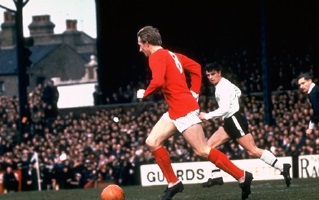
The club had won the European Champions Clubs’ Cup on May 29th, 1968, a knockout tournament, inaugurated in 1955, and restyled in 1992 as the UEFA Champions League (UCL), though commonly known as, ‘the European Cup’. With group stages of four teams from 1993, and from 2024 a league format, requiring the contesting of a ‘play off’, after the United States’ ‘conference’ model for the Superbowl of American Football, to reach the Final. However, three FA Cup successes, in 1977, 1983, and 1985, the last two under Atkinson’s stewardship, were all there was to show in the trophy cabinet for 23 years’ endeavor. Until Alex’s May 17th, 1990, FA Cup Final replay win against Crystal Palace, 1-0. Largely attributable to the 59th minute goal from big-boned, and gawky-appearing, but precise, and with determination to use what skill he had, left full back, Lee Martin.
The first game, on May 12th, 1990, had ended, 3-3 (2-2), after extra time (a.e.t.), with England captain, by then craggily impactful, at 33 years, left sided midfielder, Bryan ‘Captain Marvel’ Robson, equalizing on 35 minutes. A strong header, down, left edge of the six yard box, following a cross, right-footed from Scot’s goal-poaching center forward, Brian McClair, by the touchline, outside the 18 yard box, deflecting off Palace right back, John Pemberton’s shin; inside the left upright, 1-1. Wales’ center forward, persistently pressing, Mark Hughes, put the team ahead, on 62 minutes; right midfielder, soothing controller, Neil Webb, having charged down an attempted clearance by Palace central defender, Andy Thorn. The ball coming to Hughes, outside the left edge of the six yard box; a left-footed strike, wrong-footing ‘keeper Nigel Martyn, angled into the top right corner, 2-1. The second, equalizing goal, in the 113th minute of extra time, coming after jinking left winger, Danny Wallace, center midfield, stroked the ball low, along the turf, between two defenders; left back, Richard Shaw, and center back, Andy Thorn. Hughes, left, and shadowed by Palace central defender, Gary O’Reilly, ran on and collected the ball, center of the ‘D’; into the 18 yard box, right side, striking past onrushing ‘keeper Martyn; right-footed, low, net bulging: inside the right post, 3-3.
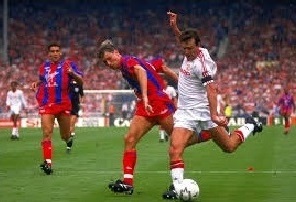
After just four FA Cup successes in 22 years, since the club’s defeat of Portugal’s Primeira Liga club, Benfica of Lisbon, at England’s national Wembley Stadium, London, 4-1 (1-1), a.e.t., the name of Manchester United lay registered in the minds of the non-partisan as a ‘cup team’. At Aberdeen, Alex had been responsible for breaking the stranglehold that the Glasgow clubs, Rangers and Celtic, had over football in Scotland. Culminating, on May 11th, 1983, in the defeat of Spanish La Liga club giants Real Madrid CF, 2-1 (1-1), a.e.t., that is, 2 additional halves x 15 minutes, at Gothenburg’s stadium, Nya Ullevi, Sweden, Ferguson guided ‘The Dons’ of ‘the granite city’ to title success in 1979-80, 1983-84, and 1984-85; successive Scottish Cups in 1982, 1983, and 1984, including the Scot’s ‘double’ of league and cup in 1983-84; as well as the European Super Cup of 1983, 2-0, at Pittodrie Stadium on December 20th, 1983, against German Bundesliga club, Hamburger SV, over two legs. The first at Hamburger’s Volksparkstadion, on November 22nd , 1983, finishing 0-0. Alex had enough granite.
Gordon Strachan, Scot’s right winger, had been transferred from Aberdeen to Manchester United, in August 1984, for £500,000. At London’s Wembley, on May 18th, 1985, ‘the wee man’ was in the team that won the FA Cup against Everton, 1-0 (0-0), a.e.t., with the 50s ‘throwback’ stylishness of 20 years of age Northern Ireland international Norman Whiteside, whose left-footed, curling shot, inside the left post, from the right corner of the 18 yard box, beat Wales’ ‘keeper, Neville Southall, in the 110th minute. Despite Eire’s center back, Kevin Moran, being red carded on 78 minutes, sent off, having brought down midfielder, Peter Reid; fearing he’d be clear through. Gordon, 41 starts (15 goals) that 1984-85 season, was there when Alex arrived to build on previous success.
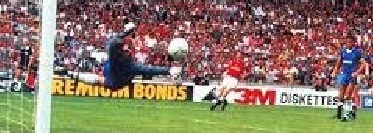
Ferguson moved quickly to secure the transfer of Celtic center forward McClair, 40 (24) that 1987-88 season, for £850,000, also bringing right back, Viv Andersen, 30+1 (2) that term, from Arsenal for £250,000, and returning Hughes, 38 (14) for the 1988-89 campaign, for £1.8m from Spain’s La Liga club, FC Barcelona, Catalonia, whence he’d been sold by Atkinson at £2m, before the start in 1986-87; despite being the club’s top scorer for successive terms, 1984-85, 38 (16), and 1985-86, 40 (17). Ferguson then had twin center forwards, and a right winger, Strachan, who’d now been with him, ever since his arriving at Aberdeen, as manager, for Scotland’s 1978-79 Premiership competition.
Denmark’s left winger, Jesper Olsen, a contributor to the 1985 FA Cup win, 36 (5) that 1984-85 term, along with Gordon, constituted Alex’s initial pair of wings, while paired with Eire’s center forward, Frank Stapleton, 21+3 (6), bought by Atkinson from Arsenal for £900,000 for 1981-82, 41 (13) that campaign, was Whiteside. The youngest debut, age 16, since 1953’s l’enfant terrible, Duncan Edwards, and resembling the panache and swashbuckling of manager Matt Busby’s ‘Babes’ of the period, coming on as a 77th minute substitute for defender, Mike Duxbury, in an away win at the Goldstone Ground of Brighton & Hove Albion, 1-0, on April 24th, 1982.
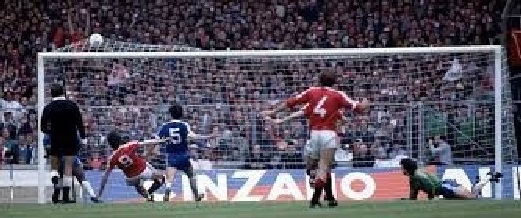
Title winners in the 1951-52, 1955-56 and 1956-57 seasons, Manchester United’s plane, British European Airways Flight 609, crashed on takeoff at 15.03 pm from Munich-Riem airport, Germany, on February 6th, 1958, killing 8; left full back and captain, Roger Byrne, 26, left full back, Geoff Bent, 0, center half, Mark Jones, 10, right half, Eddie Colman, 24, Eire inside right, Billy Whelan, 20 (12), center forward, Tommy Taylor, 25 (16), and left winger, David Pegg, 21 (4), while left half, Duncan Edwards, 26 (6), died at Rechts der Isar hospital 15 days later, and injury ended the careers of inside forward, Northern Irish Jackie Blanchflower, 18, and right winger, Johnny Berry, 20 (4). The squad was returning from a 3-3 draw, on February 5th, against Serbia’s Red Star Belgrade, in the quarter-final of the European Cup, qualifying the team to contest a semi-final with Italian Serie A club, AC Milan. The first team decimated, a makeshift side won, 2-1, on May 8th at Old Trafford, but collapsed on May 14th at San Siro, 0-4, losing 2-5 on aggregate.
Stapleton and Whiteside were Ferguson’s initial twin strikers, who’d won the 1983 FA Cup for ‘Big Ron’, as a pair, against Brighton, although the first Wembley game on May 21st, 1983, ended, 2-2 (2-2), a.e.t., with Frank, 41 (14) that season, getting an equalizing first goal on 55 minutes, after right back Duxbury’s, 42 (1), right-footed cross, midway along the right of the 18 yard box, and outside of it. Headed on by Whiteside, 39 (8), at the near post, spiting the efforts of Brighton’s Eire captain, midfielder Tony Grealish, to circumvent, Frank stabbed the ball high into the net, with his left boot, at the far post, ‘The Seagulls’ center back, Steve Gatting, unable to prevent it.
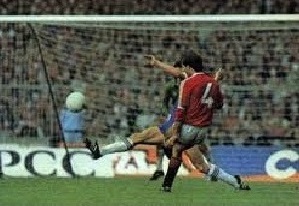
England captain in 1976, before Robson, loosely comfortable on the ball, Ray ‘Butch’ Wilkins, brought for the 1979-80 term, 37 (2) that season, from Chelsea for £750,000 to give some purposeful calm to the midfield by Dave Sexton, manager after ‘The Doc’, in the 72nd minute jiggered a second, with a trademark curler, left-footed, edge of the 18 yard box, right, 2-1, top left corner, but would be sold to AC Milan of the San Siro for £1.5m for the 1984-85 season by Atkinson; a contributory factor in Ron’s eventual dismissal. The replay, on May 26th, 1983, was won, 4-0.
Wales’ right winger, Alan Davies, 2+1, that season, was in the side for a recurrent injury to Steve Coppell, 29 (4), who’d been there since his debut, as a substitute, in a defeat of Cardiff City, 4-0, on March 1st, 1975, after Docherty bought him from third tier Tranmere Rovers for £60,000, with the Manchester club returning to the first tier, as second tier champions in 1974-75, after being relegated in 1973-74, with Northern Ireland’s Sammy, ‘Super Sam’, McIlroy then top-scoring, 24+5 (6).
A vicious, high challenge, from ‘hostage to fate’, Hungarian left back, József Tóth, of Nemzeti Bajnokság I club, Újpesti Dózsa, who’d go on to win the Magyar Kupa on April 4th, 1982, 2-0 against Videoton, at Városi Stadion, Szekszárd, had shattered Steve’s knee for Hungary, on 67 minutes, in the Group 4 qualifier for the 1982 World Cup, on November 18th, 1981, at Wembley, in a defeat, 1-0, for the Magyar, while leaving Steve prey to knee problems affecting his reliability.
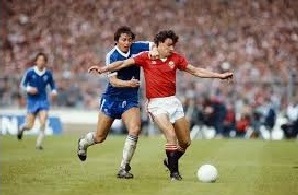
Inside the Brighton area, back to goal, Davies laid the ball on to Robson, 33 (10) that 1982-83 season’s campaign; a left-footed drive, past Brighton ‘keeper Graham Moseley, low, into the right corner of the net, 1-0, on 25 minutes. Whiteside, 39 (8), left edge of the six yard box, headed Davies’ right-footed cross, outside the 18 yard box, left side, midway, down into the bottom right corner, on 30 minutes, 2-0. In the 44th minute, Robson, heading on a left-footed free-kick from Dutch midfielder, Arnold Mühren, 32 (5), left of the 18 yard box; headed again, down by Stapleton at the far post: Robson, tapping in at the near post, 3-0. The game was over, after Robson was brought down by Brighton center back, Gary Stevens, with Mühren, converting the spot-kick in the 62nd minute, 4-0.
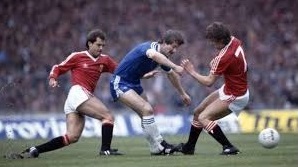
England captain, 1980-91, what had to be resolved for Alex was the position of right midfield, alongside Robson, who’d remain the creative and destructive dynamo of the team until Ferguson’s first English Premier League title and FA Cup ‘double’ success of 1993-94, when the players known as ‘Fergie’s fledglings’ began unassumingly to come to the fore to graciously assume the roles of their fading predecessors. Helped, from 1988, by UEFA’s 2 substitutes allowable from 5 on the bench ruling, including a ‘keeper, Alex could try youth, and make adjustments off the bench to suit his opinion. From West Ham United, East London, Stratford, just after the commencement of the 1989-90 season, came ‘never say die’, strong tackling, ball distributor and winner, with an opportunist’s eye for a goal, and long-range ‘shooting’, Paul Ince, ‘the Guv’nor’. A shrewd buy for £1m, ‘Father’ Ince wouldn’t accept any nonsense from juniors.
Scot, Arthur Albiston, tidy and compact, and a useful crosser of the ball on the overlap, was three times FA Cup winner, for Scot’s manager Tommy Docherty in 1977, and Ron in 1983, and 1985. Still turning out at left full back, when Ferguson arrived, with Duxbury, exponent of the sliding tackle, but also niggling at opponents’ ankles, like his predecessor, Northern Ireland’s Jimmy Nicholl, making them wary and awkward, paired with him at right full back. Arthur had the dubious distinction of being the only player to have a medal from all of the club’s successful trophy hunts over 22 years. Between European Cup victory in 1968, and Robson’s lifting of the FA Cup at London’s Wembley in 1990.
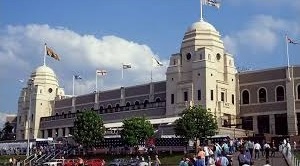
The cornerstone of the twin center back partnership, ‘Dolly and Daisy’, would form the core of the defense. Arriving from Norwich City on December 17th, 1987, for £825,000, in the shape of Steve Bruce, 21 (2) that 1987-88 season, although Gary Pallister’s arrival, from Middlesborough for £2.3m, wouldn’t transpire until August 29th, 1989, during Ferguson’s early days in pursuit of silverware for the cabinet. Bruce and Pallister replaced Ron’s preferred Eire duo, Paul McGrath, 21+1 (2) for that 1987-88 term, sometime rival for Robson’s central midfield berth, 36 (11), because of his appetite for the ball, and aggressive demands of it, as well as the players about him, and Kevin Moran, 20+1, gritty in the air and dour on the ground, but signing for Spain’s La Liga club, Sporting Gijón for the 1988-89 campaign, ‘on a free’.
Although expectations ran high that Ferguson and Strachan would renew their productive relationship at ‘the theater of dreams’, Alex sold Gordon to second tier Leeds United for £300,000 in March 1989, and Whiteside to Everton for £750,000 for the 1989-90 term, while McGrath signed for Aston Villa for £400,000. Ferguson had Webb, the Rolls Royce of midfield smoothers, transferred from Nottingham Forest to fill Strachan’s slot, on the right side, at £1.5m for the 1989-90 campaign, 10+1 (2). Though the pairing of left and right wingers lay close in future terms, left wingers; Scot’s Ralph Milne, bought in November 1988 from third tier Bristol City for £170,000; precocious at 18 years, Lee Sharpe, transferred from Torquay United for £200,000 for season 1988-89, 19+3, and sardonic Wallace, brought from Southampton for £1.2m in September 1989, were Ferguson’s moves in the direction of out-and-out wing play along the forward line.
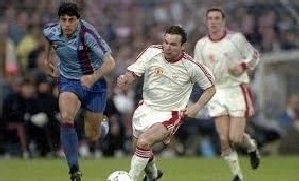
Wallace, bubbly and effervescent, in the course of the club’s winning of the FA Cup in 1990, the longer, fast legs of Sharpe, were on the left wing for the May 15th, 1991, European Cup Winners’ Cup Final defeat of Barcelona, 2-1, at Stadion Feijenoord, ‘De Kuip’ (‘The Tub’), Rotterdam, the Netherlands. Hughes, from a Robson free-kick, half-way inside the Barça half, center, left-footed, found Bruce there to direct a header, right of center of the 18 yard box. Mark racing in, to tap the ball, left-footed, into the net; inside the left post, as it fell, 1-0, in the 67th minute. Hughes, rounding ‘keeper, Carles Busquets, well outside the 18 yard box, forced out wide, to its center; right edge, acutely angled, the ball low, right-footed, inside the post, far left, 2-0, in the 74th minute. Before Dutch defensive midfielder, Ronald Koeman’s free-kick on 79 minutes, 2-1.
The pattern of replacing tired legs with fresh, without disturbing the 5 x 2s pairing format, became a hallmark of Ferguson’s approach to tactics, strategy, and transfers ‘in’. Freed to sign for Blackburn Rovers’ 1990-91 season, right back, Duxbury, with feisty left back, Colin Gibson, £750,000 from Villa, bought by ‘Big Ron’ in November 1985, signing for Leicester City for £100,000 on December 20th, 1990, and right back Andersen, freed to Sheffield Wednesday on January 9th, 1991, signaled Alex’s belief in renewing a stale squad.
On November 19th, 1991, at Old Trafford, in the European Super Cup Final, Red Star Belgrade were beaten, 1-0. McClair, edge and center of the 6 yard box, right-footed, left corner, low, in the 67th minute, after Webb’s strike hit the right post, midway up, and rebounded. Not until the emergence of Giggs, Wales’ left wing, elegant dancer by the bylines, coming on as a 71st minute substitute, would Alex feel comfortable with the idea of selecting paired wingers.
Russia’s Andrei Kanchelskis, Ukrainian born right wing wizard, arriving from Ukraine’s Premier League club, Shakhtar Donetsk, for £650,000, on March 26th, 1991, started the Super Cup Final. Andrei and Ryan would be the right and left wing pairing in the side that defeated Forest, in the League Cup Final, on April 12th, 1992, with Sharpe substituting for Kanchelskis on 75 minutes, as an inverted left footed right winger.
In front of ‘the Gary Baldies’, re-named for 80s Forest goal-hero Birtles, after Gary once took the field, shaven-headed, in front of supporters, known as ‘the Garibaldis’, because those of Guiseppe Garibaldi, Italy’s 19th century republican revolutionary, were ‘Redshirts’, Giggs, left of center edge of the 18 yard box, squared a ball inside to McClair, center edge, who ran in and scored with a ball hit low, into the right corner of the net, left-footed, close by the penalty spot, 1-0, in the 14th minute.
France’s Eric Cantona, arriving from Leeds for £1m for the 1992-93 campaign, defender Mal Donaghy left for Chelsea for £150,000, before the season began, and center forward, Mark Robins, for Norwich for £800,000, while Webb returned to Nottingham Forest for £800,000 on November 23rd, 1992. Leeds’ manager, Howard Wilkinson, had narrowly taken the 1991-92 title ahead of Alex, with the ‘ghost’ of Strachan come back to haunt, and Cantona, signed by Howard for £1m in January ‘92 from French club Nîmes Olympique, 17 (2), inspirational and instrumental.
For Leeds, in 1991-92, Eric started 8+7 substitute appearances; scoring 3 goals. Leeds’ first on 57 minutes, substituting in the 46th for Danny’s center forward brother, Rodney Wallace, in the match against Luton Town, at Elland Road, on February 27th, 1992. Scot’s midfielder, Gary McAllister, broke through, into the 18 yard box, from center midfield, and chesting the ball on, looked to have been brought down by ‘keeper, Steve Sutton. The ball, breaking right to Cantona; lashed delightedly into the top right corner of the net: right boot, 2-0. Leeds’ fourth on 74 minutes was Eric’s second, at home to Wimbledon, 5-1, on March 14th, robbing Wimbledon’s center half, while chasing a long ball, just over the halfway line. Tearing into the 18 yard box, left; releasing a left-footed howler: top right corner, 4-1. Leeds’ third, in the 89th minute, was Cantona’s third, after coming on in the 85th for Rod Wallace, against Chelsea, in the April 11th home game. Moving with the ball, at the right corner of the 18 yard box, right foot; flicking it left, turning center back, Paul Elliott, this way; then flicking the ball right, left foot, turning Elliott that way ... inside the 6 yard box, unleashing a strong, right footed, volley from his instep: far corner, top right, 3-0.
Eric, beginning his senior career at AJ Auxerre, 1986-87, 36 (13), where in 1987-88, 32 (8), he was in the side that won the Coppa delle Alpi (Cup of the Alps), 3-1, scoring the first goal on 49 minutes, in the second half of the Final against Swiss Super League club, Grasshopper Zurich, on July 8th, 1987, had been transferred to Nîmes, ‘The Crocodiles’, because of his temper, from Olympique de Marseille, despite having helped that Ligue 1 club to the 1988-89, 22 (5), French title, before being loaned, first to Girondins Bordeaux, 11 (6), then Montpellier HSC, 33 (10), where he won the Coupe de France, 2-1 (0-0), a.e.t., against Racing Club, at Parc des Princes, Paris, on June 2nd, 1990, before returning to Marseille, where he again helped the club to win in 1990-91, 18 (8), the French title.
Alex saw Cantona’s athletic, imperiously upright style; shoulders back, chest out, preparing to direct other players, seemingly telepathically aware of where the ball at his feet was, without a downward glance, to impeccably locate teammates with the lofted ball, or calculated shorter pass, and find the target, with head or feet, as the difference between the sides. After Leeds took the 1991-92 title by 4 points on 82, Ferguson remained impressed. Cantona, scoring a hat-trick (3) in a 4-3 defeat of Liverpool to secure the Charity Shield at Wembley, on August 8th, 1992, scored another, on August 25th, in a home defeat of Spurs, 5-0.
On September 6th, Eric’s coming off the bench to almost score, with a bicycle-kick, in a 2-0 defeat to ‘the red devils’ at Old Trafford, seemed to reactivate an indelible imprint on Ferguson’s psyche. Cantona, 14+1 (6) at Leeds, was duly coaxed into signing on November 26th, as a striking complement to Hughes, 41 starts, and top-scoring on 15, with the probings of McClair, 41+1 (9) that season, withdrawn into a midfield role beside Ince. Alex’s team then lost only twice in the league, Eric starting 21+1 (9 goals), and finished the season as 1992-93 champions, 10 points clear of Villa on 84.
Eire’s right central midfielder, Roy Keane, rugged in dispossessing and possession, and a maker and taker of extraordinary goals, was brought for £3.75m from Forest to start alongside Ince from 1993-94. The club nearly won the domestic treble, but lost, 1-3, to Villa in the Wembley Final of the League Cup on March 27th, 1994. Hughes with the sole reply, after left back Denis Irwin’s right-footed corner, finding captain Keane, right of the 18 yard box, ball struck right-footed first time, deflected on its way to goal. Trapped by Hughes, right side of the 6 yard box, stabbing it into the left corner of the net, past Australian ‘keeper, Mark Bosnich, ‘too little too late’, in the 82nd minute, 1-2. Although the FA Cup, 4-0, against Chelsea, on May 14th, 1994, was won, as well as the league, 92 points, 8 ahead of Blackburn Rovers.
The team took an unassailable lead from two penalties at Wembley, converted by Nistelrooy, in the 60th minute, after Irwin was scythed down by midfielder, Eddie Newton, and Kanchelskis, deliberately tumbled over by Jamaican left back, Frank Sinclair, in the 66th. Ruud, on both occasions, low, and to the right corner, sent Russian ‘keeper Dmitri Kharine the same wrong way. An error by Sinclair, leaving Hughes a clear run, Mark struck the ball into the left corner, 3-0, in the 69th minute. With the game effectively over, as a contest, Cantona, wide right, found Hughes inside, who set Ince to chase a through ball. Rounding ‘keeper Kharine, with a defender looming, Paul unselfishly squared the ball to McClair for a simple tap in, 4-0, in the 92nd minute. The ‘double’ of league championship and FA Cup was won, for the first time in the history of Manchester United, with Cantona, 34 (18), Giggs, 32+6 (13), and Hughes, 36 (12), achieving ‘double figures’, in terms of goals scored.
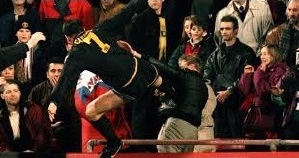
Robson, midfielders, Clayton Blackmore and Mike Phelan, left at the end of the 1993-94 season. Brian to manage Middlesboro’; Clayton to play for him and coach on a free transfer, and Mike on a free to West Bromwich Albion. The 1994-95 term was a disappointment. Eric, sent off, in the 48th minute at Crystal Palace, on January 25th, 1995, with the score, 0-0, for kicking at Palace defender, Richard Shaw, was suspended by the FA for launching into the crowd. Delivering a martial arts, ‘kung-fu’, style kick, and punches at a fan on the terrace, Matthew Simmons, Cantona alleged provocation, ‘Fuck off back to France, you French bastard.’1 The match ended, 1-1, with calculatingly efficacious center half, David May, 15+4 (2) that season, squad stalwart at the far post, heading down a left-footed cross from left winger Sharpe, 26+2 (3), from left of the 18 yard box, by the touchline, and Palace ‘keeper Martyn able only to push it into his net; giving United the lead in the 57th minute, 1-0.
Cantona would have the role of France’s ambassador, Paul Le Foix, to actress Cate Blanchett’s Queen Elizabeth I, in the 16th century period movie, Elizabeth (1998), who was wooed by actor Vincent Cassel, as Henry, Duke of Anjou, and rejected by Liz for ‘cross-dressing’, as fans do. Reading a carefully composed statement, off a sheet of paper he held, at the media conference that ensued, following his altercation with the fan, Eric declared, ‘When the seagulls follow the trawler, it's because they think sardines will be thrown into the sea.’2 He juxtaposed newspaper reporters with Sardinia, an island in the Mediterranean, below the Côte d'Azur, South of France, and off the knee of the ‘boot’ of Italy, with its ‘sardine sea’ of economic support for its king.
Victor Emmanuel II was the supporter of Garibaldi’s ‘red shirts’ for the unification of Italy as a kingdom; taking place on March 17th, 1861. ‘Le god,’ as Cantona was labeled by soccer news reporters, and its supporters, though he’d been shaven-headed for a while, and wearing a red shirt, like the Forest ‘Gary Baldies’, named for Birtles, wasn’t ‘packed in’, like a sardine in a tin, as Liz had spurned Anjou, who’d boasted to Le Foix, as fans do, although the stadium, that is, the ‘tin’, isn’t theirs, of possessing, ‘Une très grosse clé!’3 Cantona’s mild observation was that, as a key to Sardinia, that is, fandom, fanning was a matter of respect, while sparks of genius can become fires; if enflamed by fans.
English newspaper journalism, characterized by the ‘Page 3’ ethos of The Sun, ‘topless’ photos of partially nude teenage girls could be seen from the early 1970s onwards. By commenting that ‘seagulls’ follow a ‘big key’, Eric was indicating that he wasn’t a girl to be seen, and that he didn’t just see, girls; sardines caught in a trawl.
Blackburn took the title by 1 point on 89, while Ferguson’s squad had a superior goal difference of +49 to +41. Hughes failed to reach double figures, and finishing on 8 league goals, was transferred for £1.5m to Chelsea at Stamford Bridge for 1995-96, with lethal opportunist, Newcastle United striker, Andy Cole, signing for £6m on January 10th, 17+1 (12 goals), equal with Cantona, 21 (12), while lightning quick right winger, Kanchelskis, 25+5 (14), top-scored, as the side reached the May 20th, 1995, FA Cup Final at Wembley, only to lose, 0-1, to Everton, with Hughes and McClair as the twin strikers.
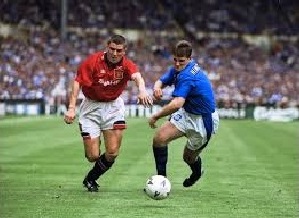
1995-96 saw the emergence of ‘the famous five’; coolly aloof right winger, and specialist free-kick taker, David Beckham, 26+7 (7); hard-tackling central midfield ball-distributor, Nicky Butt, 31+1 (2); technically outstanding full backs, Phil, 21+3, and Gary Neville, 30+1, and attacking midfielder, Paul, ‘he scores goals’, Scholes: the head of the diamond. That Alex had great faith in these young stars was evident from his sale of bruiser Ince to Italian Serie A club, Internazionale of Milan, for £7.5m, and Kanchelskis to Everton for £5m. The league was won by 4 points from Newcastle United on 82, with Cantona, 30 (14), Giggs, 30+3 (11), Cole, 32+2 (11), and Scholes, 16+10 (10), the contributors in double figures, while the club’s second ‘double’ was completed at Wembley, in the May 11th, 1996, FA Cup Final against Liverpool, 1-0, after ‘keeper, David James, on 86 minutes, failed to punch a corner away, and through a crowded penalty area Cantona volleyed the ball into the net.
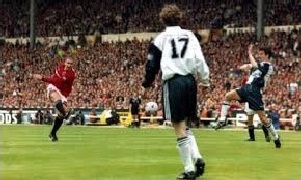
Throughout Alex maintained the team’s pattern. Andy and Eric were twinned as strikers, and right winger Beckham was paired with Giggs; a winger on the left of the park too affording more balanced attacking options. Though Phil Neville appeared at right back in the ‘96 Final, brother Gary would make that position his own, with Phil having to accept a midfield role, when selected, or the left full back position, as #2 to Gary, held by right footed Denis Irwin, 31 (1) that 1995-96 season. Although Denis’ transfer from second tier, Oldham Athletic, 42 (1), for £625,000 for the start of the 1990-91 term, 33+1, having impressed in the 1990 FA Cup semi-final, had been for the right back role, that had been filled instead by Paul Parker, bought by Ferguson from Queens Park Rangers (QPR) for £2m, on August 8th, 1991.
The first FA Cup semi-final had been drawn, 3-3 (2-2), a.e.t., at Manchester City’s ‘neutral’ Maine Road, on April 8th, 1990. A cross from midfielder, Rick Holden, right edge of the 18 yard box, pushed away by Scot’s ‘keeper, Jim Leighton, only got as far as center back, Earl Barrett; tapping in on 5 minutes, 0-1. Bruce, sliding in decisively near the halfway line to beat center forward, Ian Marshall, to a loose ball, it ran on to Webb, who angled a pass into space, behind the defence. Robson, marauding, striking the ball, right-footed. Despite ‘keeper Jon Hallworth’s almost blocking it, trickling over the line; inside the left upright, on 29 minutes, 1-1, at half-time.
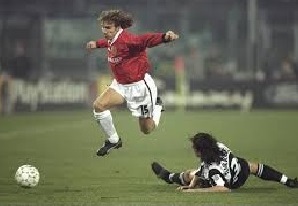
Midway through the second half, on for Robson in the 71st minute, Wallace, right corner of the 18 yard box, crossed, left-footed. Colin Gibson, outside the left corner of the 6 yard box, headed it inside. Webb met that with a header that looped over ‘keeper Hallworth into the net, 2-1, in the 72nd minute. Wallace, escaping from his marker, left back Andy Barlow, ran onto a ball from McClair, stroked right-footed down the pitch’s middle. Danny, left edge of the ‘D’, slipped the ball past outrushing Hallworth: left-footed, into the net, right corner, 3-2, in the 92nd minute.
The first semi-final ending, 3-3, United won the Maine Road replay, 2-1 (1-1), a.e.t., on April 11th, 1990. A ball, from out on the left wing, crossed by Ince, left-footed, threading through, to the far post, where McClair tapped in, made it 1-0, on 50 minutes. The 114th minute strike, by ‘fledgling’ center forward, Robins, on for Martin in the 100th minute, from a Phelan through ball on the right, between Rick Holden and Barrett, struck right-footed, low, at the left edge of the ‘D’, inside the left post, making it 2-1, is usually credited with having saved Ferguson’s job.
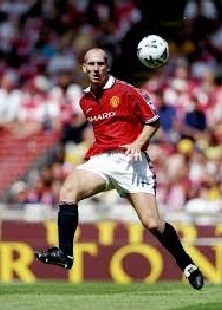
Phelan, a holding midfield player, deployed as a right back, after his transfer from Norwich for £750,000 for 1989-90, 38+1 that season, was at right midfield for the 1991 European Cup Winners’ Cup Final defeat of Barça, with right footed Youth Academy graduate, Wales’ Blackmore, at left back, although both were central midfielders. Eire’s Irwin, and Parker, replaced by Gary and/or Phil, were brought to ensure Phelan, and Blackmore, preferred at left back to Martin, scorer of the incredible goal that won the 1990 FA Cup Final replay against Crystal Palace, 1-0, were available for selection in midfield.
Lee, perhaps the unluckiest of ‘Fergie’s fledglings’, had emerged, despite central defender, Donaghy, being brought in October 1988 from Luton Town’s Kenilworth Road for £650,000, filling the left back slot in 1988-89, 30 starts that term, while Martin, 20+4 in 1988-89, was similarly first choice at left back, 28+4, for only the 1989-90 season, although his left wing run to chest down, inside the left corner of the 18 yard box, a right-footed crossfield ball from Webb, right and center midfield, to drive a right-footed shot, high inside the left post, remains an indelible imprint on grateful fans’ memories.
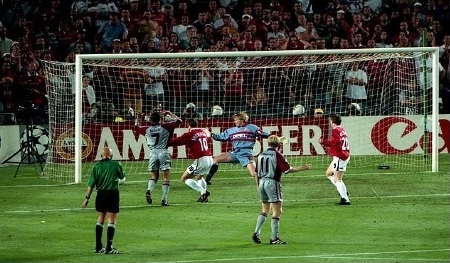
Both Paul Parker (Derby County), and Steve Bruce (Birmingham City), were given free transfers, before the 1996-97 campaign, with Norwegian defensive midfielder or center back, Ronny Johnsen, bought for £1.2m from Turkey’s Süper Lig club, Beşiktaş J.K., Istanbul, in the summer, and May, central defender, bought from Blackburn for £1.2m, as cover for Bruce and/or Pallister, before the 1994-95 term, sharing twin central defensive duties with ‘Pally’.
Karel Poborský’s arrival, a Czech right winger, from Liga 1 club, Slavia Prague, for £3.5m, 15+7 (3), demonstrated Ferguson’s determination to keep his team’s pattern of play in the event of injury to Beckham, 33+3 (8), for example; or simply to have options. Sharpe had been transferred to Leeds for £4.5m before the season commenced. Keeping pressure on the incumbent to perform increased expectations. Norwegian center forward, quicksilver Ole Gunnar Solskjaer, 25+8, brought from Molde of Norway’s Eliteserien for £1.5m, top-scored with 18 pounced, and striking partner, now also captain, Eric, age 30, retired, 36 (11), with the club champions on 75 points; 7 beyond Newcastle.
Season 1997-98 was disappointing, although a shrewd taker of chances, second striker Teddy Sheringham, arrived from Spurs for £3.5m, 28+3 (9), as McClair was freed to Scotland’s Motherwell, while Poborský was sold to Benfica of Portugal for £2m on December 30th, 1997, and another tough central defender, Norwegian Henning Berg had arrived from Blackburn for £5m, 23+4 (1). However, Arsenal, ‘The Gunners’ of Highbury Stadium, North London’s Islington, took the title with 78, 1 point more than ‘the reds’. Only Cole, 31+2 (15), got into double figures.
In contrast 1998-99 was overwhelmingly triumphant, with the club winning both league, by 1 point from Arsenal on 79, and FA Cup ‘double’, on May 22nd, 1999, beating Newcastle, 2-0, at Wembley, and the European (UCL) Cup, 2-1, against German Bundesliga club, Bayern Munich, for a then unique ‘treble’, on May 26th, 1999, at Barcelona’s Nou Camp. Cole’s strike partner was Trinidad and Tobago’s happy-go-lucky Dwight Yorke, who struck like a cobra, and was transferred from Villa on August 20th, 1998, for £12.6m, while Sweden’s ice-cool Jesper Blomqvist, 20+5 (1), a £4.4m left winger, arrived from Italian Serie A side Parma, to apply pressure on left wing Giggs, to improve his performance, according to ‘Fergie’, in the delivering of more accurate crosses to the goal area. Dutch defender, Jaap Stam, 30 (1), arguably the best of a generation, from PSV Eindhoven of the Netherlands’ Eredivisie, £10.6m, would twin as a central defender with adaptable Johnsen, 19+3 (3), Berg 10+6, or Wes Brown, 11+3, who’d joined the club’s Youth Academy age 12. Yorke, 32 (18), Cole, 26+6 (17), and Solskjaer, 9+10 (12), got into double figures.
The 1999 FA Cup Final was salutary. Johnsen and May were paired as central defenders, although Stam came on in the 78th minute for Scholes, which meant Johnsen assuming a central defensive midfield role. Roy Keane, captain, alongside Scholes in center midfield, sustained an injury on 9 minutes to his left ankle, after being in a tackle with Newcastle central midfielder, Wales’ Gary Speed.
Beckham moved into center midfield alongside Scholes, with Solskjaer moving out onto the right wing. Sheringham, substituting for Keane, took over as the striker partnering Cole, replaced by Yorke on 60 minutes, and on 11 minutes, passed with the outside of his right foot, to Beckham, center midfield. Running onto David’s low, along the turf, right-footed through ball, inside the ‘D’, midpoint, ‘Sheri’ struck the ball, right-footed, low, along the ground, center goal, 1-0.
On 53 minutes, Teddy, with his back to goal, inside the 18 yard box, laid the ball into Scholes’ path, inside the ‘D’. Paul, low, left footed, right side of the net, 2-0. Such flexibility, always implicit in the quality of the playing staff, became demonstrable; through the implementation of 1995’s ruling that 3 substitutes could be deployed from 7 permitted on the bench.
The 1999 European Cup Final against Bayern Munich was similarly illuminative. Beckham started in right midfield, alongside central defensive midfielder, Nicky Butt. Both Keane and Scholes having incurred suspensions, in the semi-final against Italian Serie A side Juventus, La Vecchia Signora, ‘the Old Lady’ of Turin.
As yellow cards are shown on the pitch by a referee for a rule infringement, if a red is shown, signifying a second infringement, the player’s ordered off the field of play. With quality replacements available for each ‘2’, Ferguson’s system repeatedly demonstrated its flexibility in coping with such exigencies of fate. Enough yellow, and/or a red card, and a player’s effectively sent off from a game he’s expecting to play in, but isn’t allowed to start. Alex’s 5 x 2s ‘spare part surgery’ system encouraged both hopeful and entrenched squad members to be ‘where angels fear to tread’; giving their all.
United drew, 1-1, on April 7th, 1999, at home in the first leg against Juventus, i bianconeri, ‘the black and whites’, although that wasn’t on until 90+2 minutes, when the defence’s headed clearance of Beckham’s overhead kick, into the penalty area, could only reach Giggs, left corner of the 6 yard box; striking past Juvé ‘keeper, Angelo Peruzzi, left-footed into the top right corner.
In the second leg in Turin, on April 21st, 1999, United were down, 0-1, to a 6th minute strike by ‘Zebras’ center forward, Filippo Inzaghi. From a corner, taken short by France’s attacking midfield (AM) genius, Zinedine Zidane, returned by left winger, Angelo Di Livio, and crossed to the far-post, Inzaghi volleyed in, right-footed; ignoring the despairing attempt of Gary Neville to manhandle him. Five minutes later, left back, Gianluca Pessotto, past the halfway line, on the left-wing, right-footed, forward to Inzaghi, left edge of the area. Filippo, left corner, outside the 6 yard box, left-footed, deflecting off center back Stam’s outstretched boot; looping over ‘Great Dane’, ‘keeper Peter Schmeichel, 0-2.
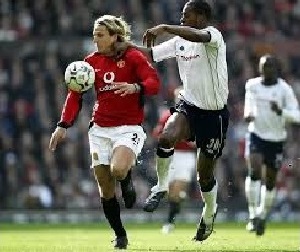
Keane marshaled a fightback. From a Beckham corner on the left, getting between Pessotto and Zidane, parallel with the left upright, just outside the 6 yard box, on 24 minutes Roy directed the ball with his head into the top right corner, 1-2. Keane was then yellow carded by Swiss referee Urs Meier, in the 33rd minute, for bringing down Zidane, le directeur, right of the United halfway line, and would miss the Final. Gary Neville, taking the ball away from Di Livio, in a professional, perfunctory way, that bordered on the disdainful, drove a long, straight pass, towards the 18 yard box edge, where Beckham headed down to Cole. A half-volleyed pass, curled over the defence, from outside the right corner of the box; met on 34 minutes by Dwight Yorke’s flying header: just outside, and left of the 6 yard box, low, bottom right corner, 2-2. United ahead on the ‘away goals count double’ rule.
Late on in the second half, Scholes coming on for Blomqvist, in the 68th minute, yellow carded for a two-footed challenge on French central midfielder, Didier Deschamps, in the 76th, was also suspended for the Final. With the Juvé fans in the Stadio Delle Alpi aghast, Uruguayan defender, substitute Paolo Montero, goonishly booted United ‘keeper Schmeichel’s kick into the night, on its reentry, to Yorke, 35 yards out, who burst between Montero and central defender, Ciro Ferrara, at the ‘D’. Inside the 18 yard box, Peruzzi coming out to trip him, Yorke rounded the ‘keeper, right, with referee Meier playing ‘advantage’, rather than award a penalty, and Cole, magnetic inside the 6 yard box, right; right boot, left corner of the net, low, 3-2, in the 83rd minute: 4-3 on aggregate.
FC Bayern took the lead on 6 minutes in the UEFA Champions League Final, through a direct free kick from right forward (RF) Mario Basler, bending the ball around the ‘wall’ formed by the red shirts of Manchester. On 67 minutes Blomqvist was substituted by Sheringham, and on 81 minutes Cole was substituted by Solskjaer. Both Teddy, redirecting a low shot from Giggs into the net, and Ole, almost on the goal line at the far post, after a Beckham corner, headed on by Sheringham, scored from close in, in the 90+1 and 90+3 minutes, 2-1, showing not only how Ferguson’s reinvigoration of attacks, from the 5/7 substitutes on the bench, depended on his astute wheeling and dealing in the transfer market, as well as his promoting of talent from within, but the virtue of the 5 x 2s system, where any single member of a twinned pair could be removed and replaced; reestablishing and renewing team effort.
To unduly complicate soccer is to try to play with your foot up your arse. Alex’s system was beautiful in its symmetry. All that was required were adequate replacements. Both 1988’s 5 substitute permission, and 1995’s 7 substitute permission, were conducive to Alex’s temperament, which was to optimize the effectiveness of the team on the pitch. Post-Ferguson coaches largely ignored the picture UEFA had drawn for them; neglecting the exciting attacking possibilities afforded by replacements; in preference for greater defensive coordination; for example, three-at-the-back.
Instead of the half back line, in front of left and right full backs, traditional for almost 100 years at the club, since its 1878 inception, as Newton Heath, ‘the Heathens’, and mutating only in the modern era, after the single substitute permitted from 1965, into twin center backs, and a holding midfielder, three central defenders were advocated by Ferguson’s successors; taking up positions behind left and right full backs. This, in spite of Alex’s 5 x 2s ‘blueprint for success’.
1999 was the beginning of three successive league title triumphs, with the club taking the 1999-2000 championship by 18 points from Arsenal on 91. Defeat at Stade Louis II, Monaco, on August 27th, 1999, in the Super Cup to Italian Serie A club SS Lazio, 0-1, on Argentinian ‘playmaker’ Juan Verón’s debut for ‘The Eagles’, and despite Keane and Scholes being restored to center midfield, was balanced by the side’s defeat of Brazil’s Palmeiras, representing Campeonato Brasileiro Série A, and the other clubs of South America’s league championships, as winners of their Copa da Libertadores, ‘Freedom’s Cup’, in the November 30th, 1999, National Stadium, Tokyo, Japan, Final of the Intercontinental Cup, 1-0. A fine run and cross from Ryan Giggs along the left wing, finding Keane on 35 minutes, at the far post, stretching out his right; to boot the ball gleefully past Brazilian ‘keeper, Marcos, into the net.
On August 21st, 1999, South African winger, Quinton Fortune, on the bench for the Intercontinental Cup Final, had arrived for £1.5m from Spain’s La Liga club, Atlético Madrid. The match was most noteworthy for the selection of France’s Mikaël Silvestre at center back, Pallister having re-signed pre-season for Boro’ for £2.5m, alongside Stam; Brown being out for the entire campaign through injury. Brought from Italian Serie A club Internazionale of Milan for £4m, on 10th September, 1999, an adaptable and capable left-sided defender, Silvestre, 30+1 that 1999-2000 season, would compete with Irwin, 25 (3), for the left back position too. Yorke, 29+3 (20), Cole, 23+5 (19), and Solskjaer, 15+13 (12), got into double figures.
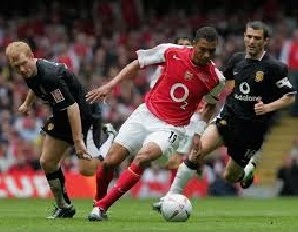
In 2000-01, the club finishing 10 points clear of Arsenal on 80, with Berg leaving for B’burn for £1.75m on December 15th, 2000, only Sheringham, 23+6 (15), freed to join Spurs at season’s end, and Solskjaer, 19+12 (10), made double figures, while Stam, age 29, was sold to Lazio early on in 2001-02 for £16.5m, with Brown, 25+3, having recovered from injury. Blomqvist was freed to join Everton on November 8th, 2001, and Cole left for B’burn for £8m on December 29th. Ferguson brought from Inter Milan for £2.5m the prescient anticipations of France’s center half, Laurent Blanc, ‘Le Presidente’, age 35, 29 (1). Dutch center forward, Ruud van Nistelrooy, came from PSV Eindhoven for £19m, with a killer’s instinct for goals, and Argentina’s sophisticated ball-playing central midfielder, Juan Sebastián Verón, from Lazio for £28.1m.
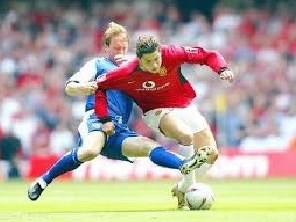
Nistelrooy, 29+3 (23), Solskjaer, 23+7 (17), and Beckham, 23+5 (11), got into double figures. The club finished 3rd, with the European Cup semi-final against German Bundesliga club, Bayer Leverkusen, commanded by Germany’s captain, central midfielder, Michael Ballack, all-important. However, an unconvincing draw ensued, 2-2, at Old Trafford, on April 24th, 2002.
A 30th minute own goal by Croatian defender, Boris Zivkovic (o.g.), deflecting past ‘keeper, Hans-Jörg Butt, inside the right post, off his chest, a Solskjaer effort, following Ruud’s cross, midway along, and outside the right edge of the 18 yard box, 1-1, and a 67th minute Nistelrooy penalty, top left corner, 2-1, having been tripped by Brazilian midfielder, Zé Roberto, near the right corner of the 6 yard box, after receiving a pass from Beckham, center midfield, outside the 18 yard box, could have been enough, but wasn’t.
Keane, through from a pass by Nistelrooy, left of the ‘D’, and outside the 18 yard box, rounded ‘keeper, Butt, just forward of the penalty spot. From the acute angle, Roy, left-footed, left corner of the 6 yard box, into the right corner of the net; taking the lead in the 28th minute, 1-0, but the second leg was drawn, 1-1, on April 30th, 2002, away at BayArena. Eventual runners-up in the tournament, ‘The Factory XI’, 1-2, to Spain’s Real Madrid, Leverkusen went through to the May 15th , 2002, Final at Hampden Park, Glasgow, Scotland, on the ‘away goals rule’. In the event of the aggregate score being equal, 3-3, Bayer had scored more away goals (2).
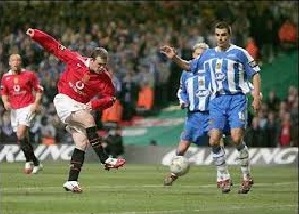
Irwin and Johnsen were released, and Yorke left for £2.6m for B’Burn for 2002-03, but Nistelrooy’s goals were enough to take the title by 5 points from Arsenal with 83, while the signing of a mature center back, with a honed intuition to intercept, Rio Ferdinand, from Leeds for £29.3m, 27+1 that campaign, was ‘gilt edged security’, although with the physical capacity for endurance, and appetite for the fight, emerging Eire defender, and central midfielder, John O’Shea, 26+6, would eventually rival him. Ruud, 33+1 (25), and Scholes, 31+2 (14), got into double figures, while Ferguson’s ‘Supersub’ was Uruguayan Diego Forlán, 7+18 (6) that season, brought from Independiente of Argentina’s Primera División for £6.9m on January 22nd, 2002.
Although the 2003 League Cup Final was lost, 0-2, to Anfield club, Liverpool, held on March 2nd, at the Millennium Stadium, Cardiff, Wales, while London’s national Wembley Stadium, opened on April 28th, 1923, as ‘Empire Stadium’, was being demolished, prior to the new building of Wembley Stadium, opening in 2007, Ferguson’s team sheet was a perfect description of his 5 x 2s system. Left and right paired full backs, (# 1) were Gary Neville, 19+7 that 2002-03 term, and Silvestre, 34+1 (2), with twinned center backs, (# 2) Rio Ferdinand, and Wes Brown, 22, and in central midfield, Verón, 21+4 (2), and captain Keane, 19+2, were twinned (# 3). Beckham, 27+4 (6), right wing, and Giggs, 32+4 (8), left wing, were paired (# 4), with Scholes (SS) and Nistelrooy as twin strikers (# 5), completing the picture, while Solskjaer, 29+8 (9), came on as an attacking substitute in the 74th minute for central defender, Brown. Illustrated was the value of fresh, quality insertions, and the necessity for preparing a balanced 5 x 2s squad, with sufficient depth to stand being rotated; without noticeable deterioration in terms of results.
The beauty of the 5 x 2s system was that it encouraged a manager to want 5 of everything, that is, 5 full backs; 5 center backs; 5 midfielders; 5 wingers, and 5 forwards, to cover all the exigencies of fate, which is what Ferguson did. Before the 2003-04 campaign, May was released, and Blanc retired, while Alex signed for £12.24m Portuguese right wing magician, with his ‘step-over’ illusoriness, and eluding super strength, Cristiano Ronaldo, 15+14 (4), from Portugal’s Primeira Liga club, CP Sporting of Lisbon, as Beckham was sold to Real Madrid for £17.25m, and Verón to Chelsea for £15m. During the season the deceptively graceful power of French center forward, Louis Saha, 9+3 (7), came from Fulham, West London, for £12.82m, on January 23rd, 2004, while the term was also significant for the graduation of ‘braw’, brave and courageous, Scot’s right midfielder, with all the penetrating skills of a forward, Darren Fletcher, 17+5, at the Youth Academy since 11 years.
Despite the club finishing 3rd, the team won the 2004 FA Cup Final at the Millennium Stadium on May 20th, 3-0, against ‘The Lions’ of Millwall, Bermondsey, South East London, with Fletcher in central midfield alongside Keane. Ronaldo, center, just outside the 6 yard box, headed in a Gary Neville chip from outside the 18 yard box, right, to give the side the lead in the 44th, 1-0. Nistelrooy, scoring the second goal on 65 minutes, from the penalty spot, top left corner, after Millwall’s central midfielder, Dave Livermore, ended a right wing run by Giggs, bringing him down inside the 6 yard box, right side, also got the third in the 81st. After a ball from Scholes, along the left touchline to left winger, Giggs, who cut inside, running into the 18 yard box, left, before driving a low cross into the penalty area, finding Ruud three yards out; a ‘surgical strike’, 3-0. Nistelrooy was the only goalscorer into double figures in the league that season, 31+1 (20).
Before the 2004-05 season began Nicky Butt signed for Newcastle for £2.5m, and Forlán for Spain’s La Liga club, Villarreal, ‘The Yellow Submarine’, on August 21st, 2004, for €3.2m. Ferguson moved to sign 18 years center forward; if not prolific, industrious Wayne Rooney, from Everton for £27m; center forward, right winger, or central midfielder; Alan Smith, 22+9 (6), ‘Jack of all trades’, from Leeds for £7m, and the silky skills at left back, or center back, of Argentina’s Gabriel Heinze, 26+1, from French Ligue 1 club Paris Saint-Germain for £6.9m. The club finished 3rd, with only Rooney making double figures, 24+5 (11), and the team lost to Arsenal in the May 21st, 2005, FA Cup Final in Cardiff, 0-0 (0-0), a.e.t., 4-5 on penalties, with Scholes failing to convert.
Apparently inexhaustibly attacking South Korean midfielder, Ji Sung ‘Three-Lung’ Park, 23+11 (1), arrived for £4m from PSV Eindhoven, for 2005-06, with Phil Neville transferred to Everton on August 4th, 2005, for £3m, and Keane, 4+1, released on November 18th, 2005. Ferguson, shoring up the defense, on December 25th, 2005, brought Serbia’s ‘stopper’ center back, Nemanja Vidić, 9+2, from Russia’s Premier League club, Spartak Moscow, for £7m, and France’s left back, Patrice Evra, 7+4, on January 6th, 2006, from Ligue 1 club, Monaco, ‘The Rock’, for £5.5m. The club finished 2nd, 8 points behind Chelsea, ‘The Blues’ of Stamford Bridge, on 91, but won the Final of the 2006 League Cup, on February 26th, in Cardiff against Wigan Athletic, 4-0.
Latics’ ‘keeper, Mike Pollitt, having incurred an early injury, Aussie ‘keeper, John Filan, came on as a 14th minute substitute. Rooney opened the scoring on 33 minutes, after Dutch ‘keeper Edwin van der Sar's long punt downfield, headed on by Saha. Dutch center back, captain Arjan de Zeeuw, nutmegged by Wayne, and colliding with French right back, Pascal Chimbonda, left Rooney with only Wigan ‘keeper Filan to beat. Wayne ran into the 18 yard box, center, right-footed; delivering a clinical, low, dipping shot, 1-0. In the 55th minute, Giggs, eluding tackles in midfield, threaded a pass out to Ronaldo. The right winger, finding captain, Gary Neville, overlapping, with the ball; Saha connected with his cross. Though Filan saved, the ball rebounded to Louis, bundling it into the net, inside the left post; almost on his knees, 2-0. In the 59th minute, Swiss center back, Stéphane Henchoz, cleared the ball, center edge of the 18 yard box, only as far as Saha; right midfield. Louis’ pass to Ronaldo, inside and right of the 18 yard box; opposite the right upright. Cristiano rifled the ball in; low, left corner of the net, 3-0. In the 61st minute a Giggs’ free-kick, outside the right edge of the 18 yard box, initially won in the air by Saha, outside the 6 yard box; directed at goal. Headed on by Ferdinand, inside the 6 yard box, towards Wayne, on the proverbial ‘sixpence’, Rooney, turning anti-clockwise, directed the ball into the Wigan net with his right boot, 4-0. Only Nistelrooy, 28+7 (21), and Rooney, 34+2 (16), got into double figures in the league’s season.
Quinton Fortune was released; before the start of the campaign. Nistelrooy, disappointed at losing his place to Saha, and ‘benched’ for the 2006 League Cup Final, was sold to Real Madrid for £10.2m, and Michael Carrick, 29+4 (3) that 2006-07 season, perfectionist, and hypercritical central defensive midfielder, given the number 16 shirt worn by Keane, indicating no-change in the 5 x 2s system, was signed from Spurs for £18.6m. The season also saw the signs of a knee injury that would curtail the career effectiveness and accelerate the retirement of ‘Three Lung’ Park, 8+6 (5), although the club won the league title 6 points clear of Chelsea on 89. Only Ronaldo, 31+3 (17), and Rooney, 33+2 (14), got into double figures, and at Wembley, on May 27th, the 2007 FA Cup Final was lost, 0-1, a.e.t., to a 116th minute strike from Ivory Coast’s center forward, Didier Drogba, after a ‘sucker punch’; edge of the 18 yard box, ‘one-two’ with midfielder Frank Lampard.
2007-08 was a pre-season chiaroscuro, with Smith sold to Newcastle for £6m, before the start, and Heinze to Real Madrid on August 23rd, 2007, for £8m, while Solskjaer retired, on August 28th, 2007. German polish added to the techniques used by solid, half-winger, Owen Hargreaves, 16+7 (2), signing from Bayern Munich for £17m; Brazil’s left midfielder, Anderson, 16+8, perhaps ‘moving to the rhythms of a different samba beat’, from Portugal’s Primeira Liga club, FC Porto for £20m; scintillating right winger, Nani, 16+10 (3), from Sporting Lisbon for €25.5m, and pugilistic Argentine striker, Carlos Tevez, leaving the Boleyn Ground of West Ham, and loaned through Media Sport Investment (MSI) for two years, making his debut in the second game of the season against Portsmouth, 1-1, away at Fratton Park, on August 15th, 2007. Ronaldo, 31+3 (31), Tevez, 31+3 (14), and Rooney, 25+2 (12), got into double figures, as the club won the league title by 2 points from Chelsea on 87.
In the UCL Final of May 21st, 2008, at Moscow’s Luzhniki Stadium, Russia, ‘keeper Edwin saved French center forward Nicolas Anelka’s penalty to give the club its third victory in the competition, 1-1 (1-1), a.e.t., 6-5 on penalties, after Cristiano, almost at the penalty spot, had headed Brown’s cross from close to the right corner flag into the net; beating Chelsea’s Czech ‘keeper, Petr Čech, to give the team the lead, 1-0, on 26 minutes.
Qualifying for the world governing soccer body, Federation of International Football Associations’ (FIFA) World Club Cup, by virtue of winning the UCL, in accordance with ‘seeding’ the side entered the contest at the semi-final stage against Gamba Osaka of Japan’s J1 league, winners of the 2008 Asian Football Confederation (AFC) Champions League. At Yokohama’s Inter national Stadium, on December 18th, 2008, the team took the lead from a Giggs’ corner, on the right. Vidić, center of the 6 yard box, outjumping his opponent, Gamba captain, Satoshi Yamaguchi, powering a header past ‘keeper, Yosuke Fujigaya, into the bottom right corner of the net, in the 28th minute, 1-0. Ronaldo, similarly outjumping midfielder, Tomokazu Myojin, with a header, from near the penalty spot, inside the left post, on 45+1 minutes, 2-0, before forward, Masato Yamazaki, struck from the right, well outside the penalty area, 2-1, in the 74th minute.
Rooney, having just been brought on as a substitute, restored the lead, after latching on to a defence-splitting, long through ball from Fletcher, in the 75th minute, at the edge of the ‘D’, left. Edge of the 18 yard box, shrugging off defender, Sota Nakazawa, to his right, Rooney, left-footed, now inside the box, left, striking low, into the bottom right corner of the net, 3-1. Evra’s cross, midway along the edge of the 18 yard box, left-footed; slightly behind Patrice, finding Darren. A header, left of the penalty spot; inside the left post, 4-1, on 78 minutes. Rooney, inside the area, accepting a left-footed pass from Giggs, center midfield, stroked forward to Wayne, inside the ‘D’, left, running with the ball into the 18 yard box; left-footed, low, evading Osaka ‘keeper, Fujigaya: center of the net, 5-1, in the 79th. Gamba, awarded a penalty, after Gary Neville was adjudged to have handled a cross from the left, midfielder Yasuhito Endō converted the 85th minute spot-kick, 5-2. Hideo Hashimoto, striking in a way almost identical to Yamazaki for Gamba’s first, the midfielder made it 5-3 on 90+1 minutes.
United had earned an encounter, in the December 21st, 2008, Final in Yokohama, with LDU Quito of Ecuador’s Serie A, Copa da Libertadores winners, South America’s club championship. Despite ‘Vida’ elbowing Argentine center forward, Claudio Beiler, and being sent off in the 49th minute, a sideways pass from Ronaldo, outside of his left boot, center edge of the 18 yard box, to Rooney’s right, waiting at the area’s left corner, struck right-footed, right corner of ‘keeper José Cevallos’ net, on 73 minutes, 1-0. Brazil’s Rafael da Silva, 12+4 (1), was selected at right back; arriving in January with twin brother, Fabio, both unavailable for selection until July; having, then, 18 years.
Just after the 2008-09 season began, Silvestre was sold to Arsenal for €3.50m, on August 20th, 2008, with Saha going to Everton for €7.50m. Two games into the campaign, on September 1st, Ferguson secured the unorthodox services of brilliant, and maverick, Bulgarian center forward, Dimitar Berbatov, 29+2 (9), from Spurs for £30.75m. The club won the 2009 League Cup Final against Spurs, at Wembley on March 1st, 0-0, a.e.t., 4-1 on penalties. In a relatively inexperienced team, in accordance with the club’s policy of giving youth a chance in the EFL Cup, gangly Northern Irish Jonny Evans, 17, was at center back; Eire’s heartful Darron Gibson, 3+1, at center midfield, and multiple skills in thirst of a goal, Danny Welbeck, 1+2 (1), at center forward.
The club won the league title by 4 points from Liverpool on 90, but only Cristiano, leaping like a salmon with dynamite in his boots, 31+2 (18), and Rooney, crafting each of his goals with the craftiness of the devil red, 25+5 (12), got into double figures. Although the team made the UCL Final again, on May 27th, 2009, at Stadio Olimpico, Rome, Italy, the side lost to Barça, 0-2. Alex inexplicably selected Park, 21+4 (2), probably for his enthusiastic openness about wanting to be included, and omitted the master, Scholes, 14+7 (2), who’d scored from long range, in the 14th minute of the second leg of the 2008 semi-final at Old Trafford, on April 29th, after the first leg, away on April 23rd, at Nou Camp, 0-0. An attempted clearance by Italian right back, Gianluca Zambrotta, reached Paul, left of center midfield, well outside the 18 yard box, and left of the ‘D’. Scholes’ right-footed rocket swang right to enter at the top right corner of ‘keeper José Manuel Pinto’s net, 1-0; Barça beaten on aggregate.
Before the 2009-10 season began Cristiano was sold to Real Madrid for £80m, while Ferguson moved to bring Ecuador’s right winger, Antonio Valencia, 29+5 (5), often utilized as a left/wing back, from Wigan Athletic for £16m, and Michael Owen, 5+14 (3), England center forward, out of contract, and given a free transfer by Newcastle. The club finished 2nd to Chelsea by 1 point on 86. Only Rooney, 32 (26), and Berbatov, 24+9 (12), got into double figures.
The side won the 2010 League Cup Final, on February 28th at Wembley, against Villa, 2-1. With goals from Owen in the 12th minute, right-footed, low, left corner of the net, 1-0, after Berbatov’s running with the ball, down the right flank, tackled at the left corner of the 18 yard box; the ball loosed, left, to Michael, and Rooney in the 74th. ‘Three Lung’ Park, passing the ball, along the ground, towards Berbatov; right corner of the 18 yard box. Dimitri, back heel, returning the ball. Park, crossing right-footed, closer to the goal line. Wayne’s header, almost at the penalty spot, over US’ ‘keeper Brad Friedel; bottom right corner of the net. Canceling out a successful spot kick from center midfielder, James Milner, side-footed, bottom right corner, following Vida’s pulling down center forward, Gabriel Agbonlahor, by his shirt, inside the left corner of the 18 yard box; in the 5th minute.
Before the 2010-11 season began, Ferguson moved to bring center back, Chris Smalling, 11+5, from Fulham for €8m, and ebullient and incisive Mexican center forward, Javier Hernández, Chicharito, ‘little pea’, from Mexico’s Liga MX club, C. D. Guadalajara for €7.5m. Gary Neville, 3, retired undefeated on February 2nd, 2011, with Vidić appointed captain. The club won the title by 9 points from Chelsea on 80, with Berbatov, 24+8 (20), Hernández, 15+12 (13), and Rooney, 25+3 (11), getting into double figures.
Paul Pogba dominated at center midfield at 18 years, as the club won its tenth FA Youth Cup. The Youth Academy side beat Sheffield United, over the two-leg Final, 2-2, on May 17th, 2011, at Bramall Lane, and 4-1 on May 23rd, 2011, at Old Trafford; 6-3 on aggregate. At right midfield, Jessie Lingard, who’d get the 2016 FA Cup Final winner, 19+6 (4) that 2015-16 season. A 110th minute volleyed goal, right-footed, from inside the 18 yard box, right; top left corner of the Crystal Palace net, 2-1, (1-1), a.e.t., for manager van Gaal, while substituting in the 90th minute for Spain’s Juan Mata (RW), 34+4 (6) that term. Harry Maguire, at left back for Sheffield, was signed for £80m, as captain, and center back, from Leicester City, on August 5th, for 2019-20, 38+1, by then manager, from Norway’s Eliteserien club, Molde, former striker-hero in the 1999 UCL Final, Ole Gunnar Solskjaer.
The first team squad again reached the UCL Final, on May 28th, 2011, at Wembley Stadium, London, again losing to Barça, 1-3, despite Rooney’s 34th minute equalizer. Wayne, outside the 18 yard box, right corner; a right-footed ball, eliding a challenge from center back, Gerard Piqué, to Giggs inside the box. Controlled by Ryan, on his left thigh; Argentine center back, Javier Mascherano, coming over to challenge him. The ‘one-two’, Giggs left-footed; back to Rooney, now inside the 18 yard box. French left back, Eric Abidal, arm and hand up in the air, instead of defending: unappealing to Hungarian referee, Viktor Kassai. Wayne, right-footed; ignoring Brazilian right back Dani Alves’ last gap lunge: top left corner of ‘keeper Victor Valdés’ net, 1-1.
Piqué, signed for United from Barça’s youth team, debuted on October 26th, 2004, as a 67th minute replacement for O’Shea, in a 3-0 League Cup 3rd Round win at Crewe Alexandra, had qualified for a UCL winners’ medal in 2008. Gerard, 9 league starts in 2007-08, returned to the Catalan club for 2008-09 for £5m, where he won the UCL in 2009, and 2011, against Ferguson’s side, and the UCL again, versus Italy’s Juvé, 3-1, in Germany, on June 6th, 2015, at Berlin’s Olimpiastadion.
Fabio da Silva was at right back in the 2011 UCL Final, as brother Rafael had been in 2009, but Scholes, 16+6 (1) that season, and 24+4 (3) in 2009-10, was again omitted. Alex’s preference for ‘crocked’ Ji Sung Park, 13+2 (5) that term, and 10+7 (3) in 2009-10, appeared more than sentimental. Influenced by false enthusiasm, surrounding one of Asia’s supposedly indomitable spirits. A sign of dementia, or the implementing of a belief that Ferguson was senile and manipulable by a shaman.
Edwin retired at the end of 2010-11. Phil Jones, 25+4 (1), a colossus of a central defender, arrived from B’burn for £16.5m, and Ashley Young, 19+6 (6), a box-to-box left winger, utilized often as a left/wing back, from Villa for £17m, before the 2011-12 season commenced. Brown, €6.m, and O’Shea, €6.5m, were transferred to Sunderland, ‘The Black Cats’. Though Scholes, doubtless disappointed at being left out of consecutive UCL Finals, retired, results conspired to alter Ferguson’s thinking. After being beaten at home by B’burn, 2-3, on December 31st, 2011, despite a Berbatov brace, in the 52nd, after an attempt from Rafael, drifting over the 6 yard box, headed in, and in the 62nd, inside ‘keeper Mark Bunn’s penalty area, stroking in the ball, bottom right corner, following Valencia’s cross, United lost away, on January 4th, 2012, at Newcastle’s Saint James Park, 0-3; persuading Alex to beg Paul back.
While midfielder, Darron Gibson, was transferred to Everton for €3.5m on January 13th, 2012, Paul duly resumed the red shirt, 14+3 (4), opening the scoring, on 45+1 minutes, against Bolton Wanderers, 3-0, at Old Trafford, on January 14th, and the club almost recovered to win the title, with Park’s concluding statistics, 10+7 (2). Finishing 2nd in the league, equal on 89 points with Manchester City, but a goal difference of +56 to City’s +64, statistics suggest Berbatov, 5+7 (7), would have scored more, and more frequently than Welbeck, 23+7 (9), if selected. Only Rooney, 32+2 (27), and ambitiously driven Hernández, with a Central American’s insatiable desire to forever escape the barrio, 18+10 (10), got into double figures.
Paul Poga, out of contract, signing for 2012-13 for Juventus, would be at center midfield against Piqué in Barça’s 2015 UCL Final defeat of ‘the Old Lady’. Not all roses in the garden. Paul would be returned by Portuguese manager, José Mourinho, from Juventus for £89m, 29+1 (5) that 2016-17 term. Winning the 2017 League Cup Final against Southampton, ‘The Saints’, 3-2, on February 26th at Wembley, and the 2017 Europa Cup Final, against Dutch Eredivisie club, Ajax of Amsterdam, ‘Sons of the Gods’, 2-0, on May 24th at Friends Arena, Solna, Stockholm, Sweden, with Pogba credited with the first goal, 1-0, after his struck ball, on 18 minutes, looping over ‘keeper, André Onana, deflected off Columbian center back, Davinson Sánchez. However, out of contract, Paul returned to Juvé for 2022-23.
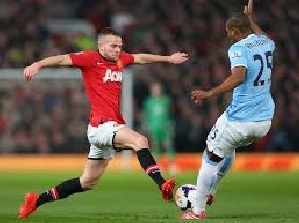
Park left, before the 2012-13 term started, for QPR at €6.5m, and Berbatov for Fulham for £5m, on August 31st, 2012, while Owen was released. Japan’s ‘shadow striker’, Shinji Kagawa, 17+3 (6), arrived from German Bundesliga club, Borussia Dortmund, for £17m, and the piercing vision of center forward, Robin van Persie, former Feyenoord, Rotterdam, Eredivisie striker, 2001-04, coached into a finished product by Arsenal’s French manager, Arsène Wenger. The Netherlands’ finely tooled goal-machine, Robin, added before the campaign’s commencement; for £24m. The club finished 1st, Alex’s 13th league title, 11 points clear of Manchester City on 89, with van Persie, 35+3 (26), Rooney, 22+5 (12), and Hernández, 9+13 (10), getting into double figures.
A ‘fledgling’, midfielder Tom Cleverley, 18+4 (2), Youth Academy product, since 12 years, flared briefly, and imaginatively, as the heir to Scholes’ engine room, and imaged again for a season, 2013-14, 18+4 (1), under the managership of Ferguson’s successor, Moyes, but ultimately Alex retired ignored. The 5 x 2s system abandoned in favor of the inverted magi, who defer to play with their opposite foot up their arse at the park’s other side.
1 Meade, Samuel, ‘What happened to Crystal Palace fan Eric Cantona wished he'd kung-fu kicked harder?’, Mirror, January 18th, 2023, 10.51 am, https://www.mirror.co.uk/sport/football/news/what-happened-crystal-palace-fan-28984640 .
2 Midgley, Simon The Independent, April 1, 1995.
3 Cassel, Vincent as Henry, Duc d’Anjou, ‘A very big key!’ (transl.), Elizabeth, Gramercy Pictures; Kapurfilm; Working Title Films; Channel Four Films; Proson Film, 1998.
Disabled United
Even 13 times English Premier League title winning Scot’s manager, Alex Ferguson, experimented with three-at-the-back, which was presented by one of his successors, Dutch manager of the national team at the 2014 World Cup Finals, Louis van Gaal, as novel, but Manchester United had been deploying a half back line well before the 1908 league title triumph with Dick Duckworth, Charlie Roberts, and Scot’s Alex Bell at right half, center half, and left half. It wasn’t until the short-lived era of former reserve team coach, Wilf McGuinness, replacing Matt Busby, on his recommendation, for the 1969-70 season, and the club finishing 8th, that the team sheet represented the distinction between the defensive midfielder and the central defensive partnership, for example, Scot’s right half, Pat Crerand, center half, Bill Foulkes, and ‘Nobby’ Stiles, nominally left half, but twinned with Foulkes in the center of defense, was finally acknowledged in the match day program, United Review, with Crerand #4 indicated as deployed alongside deep-lying center forward, Bobby Charlton #9, in center midfield, while Foulkes and Stiles were clearly marked as the twin central defenders; flanked by left and right full backs.
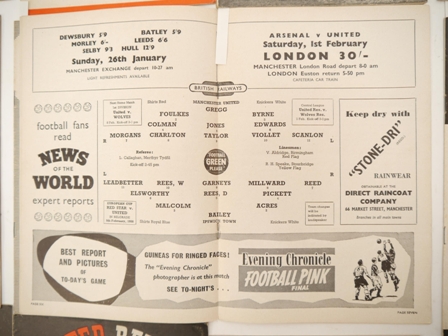
An analysis of the club’s difficulties of the period provides some illumination on the problems associated with three-at-the-back, which focuses primarily on disability. Invariably a team sheet containing a half back line without a central defensive midfielder was a sign of a team disabled, for example, without Paddy Crerand, the manager could chose David Sadler, billed either as a center half or center forward. An alternative at half back was Scot, John Fitzpatrick, and Steve James at center half, but in the days when there weren’t any substitutes, injuries to key players were genuinely disabling for a team, which functioned as ‘the first eleven’, with a single substitute allowed only after 1965, and up until 1988, when a second outfield player was permitted to substitute, that was the rule.
As substitutions were either not allowed, or for injuries only, with tactical substitutions permissible as a later afterthought, squads were much smaller; approximately 16 regulars with 30+ games. Utility players, like Sadler, who could deploy in midfield, as well as center back, and as a forward, were highly desirable members of the playing staff. The rise of the utility player, as single substitute, meant a concomitant demise in importance of the specialized position, which ultimately resulted in make-do, fudge, and degeneration. The club was relegated in 1973-74, 21st of 22, with Sammy McIlroy top-scoring on 6 goals, largely because of a plethora of defenders, who could play in midfield at a pinch, and with little change in the forward line since Busby’s European Cup win over Portugal’s Benfica, 4-1 (1-1), a.e.t., at London’s national stadium, Wembley, on May 29th, 1968.
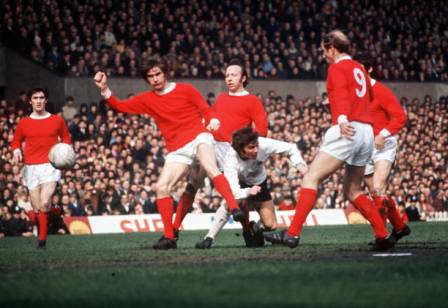
Because of the desirability of the utility midfield player as ‘twelfth man’, the club’s squad came to consist almost entirely of half backs. In 1970-71, after Busby replaced McGuinness on 29th December, 1970, until season’s end, due to a run of poor results, including a second successive defeat, 2-3, on aggregate to Aston Villa, at the League Cup semi-final stage, the club finished 8th again. Apart from Crerand (24), Sadler (32), and Stiles (17), Scot’s John Fitzpatrick (35), David Sadler (32), Paul Edwards (29+1), Scot’s Francis Burns (16+4), Steve James (13), Scot’s Ian Ure (13), Scot’s Willy Watson (8), Tommy O’ Neil (1), Tony Young (0+1), and Scot’s Ian Donald (0), loosely construed as ‘defenders’, were essentially strung out somewhere along with the half back line. Excluding goalkeepers, Alex Stepney and Jimmy Rimmer, 13 out of 21 outfielders were backs, with only Alan Gowling (17+3), Brian Kidd (24+1), and Scot, Denis Law (28), labeled ‘forwards’.
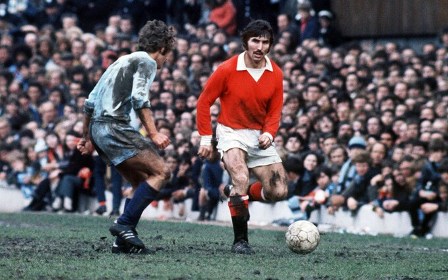
The scramble to be the utility player that was first choice on the single substitutes’ bench disabled the club. In 1970-71, Law top scored on 15, with Gowling and Kidd on 8 apiece. With Leicester City manager, Eire’s Frank O’ Farrell, appointed for 1971-72, and McIlroy scoring on his November 6th, 1971, debut in a 3-3 draw at Old Trafford against Manchester City, the squad recovered, but largely through the resurgence of left winger, George Best, 18 goals in 40 games, and the March 7th, 1972, ₤200,000 transfer of right winger, Ian Storey-Moore from Nottingham Forest, 5 in 11, while again the club finished 8th. It wouldn’t be until two substitutes, allowable from five on the bench from 1988, that the utility back would be replaced by a selection of specialized replacements, based on strategy and tactical requirements more suitable to an attack-minded squad. O’Farrell was replaced on December 22nd, 1972, by Scotland national team manager, Scot’s Tommy Docherty, the club barely avoiding relegation, after finishing that 1972-73 season 18th, and Charlton top scoring on 6, while Docherty was again held totally responsible for relegation in 1973-74.
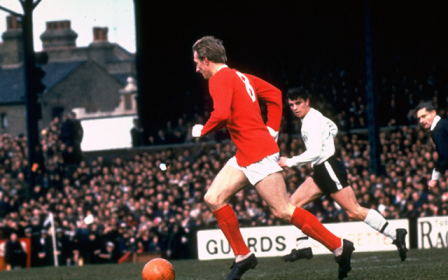
The club had almost no success, between the introduction of the single substitute in 1965, and the two substitutes of five on the bench rule change from 1988, coinciding with the tactical movement of a half back into midfield, together with the perceived need for a single substitute that could be deployed as a utility back, primarily because squad competition focused mainly on that role. In consecutive FA Cup Finals under Docherty, for example, against Southampton, lost 0-1 in 1976, and Liverpool, won 2-1 in 1977, speculation was rife as to whether substitute, Northern Irish utility midfielder, David McCreery, would be needed. As it transpired, McCreery substituted for left winger, Gordon Hill, top scorer in 1976-77 (38+1) 15, and 1977-78 (36) 17, in both matches, while manager after ‘The Doc’, Dave Sexton, had Hill transferred for £250,000 to Derby County for 1978-79, questioning his work-rate and subsequent value to the team. Not a joke with the board, Dave brought Garry Birtles from Forest for £1.25m. Makiing 28 appearances for but a single goal, after his debut on October 22nd, 1980, at Stoke City's Victoria Ground. fans' disappointment in center forward, '2 'r's Garry', contributed to Sexton's dismissal.
Promotion, as champions, was won in 1974-75, with Stuart Pearson, bought from second tier Hull City for £200,000, the first in three seasons to get into double figures for goals scored with 17. Perhaps the yardstick for the period was England’s victory in the 1966 World Cup Final at Wembley, 4-2 (2-2), a.e.t., without substitutes, and where the half-back line was captain, West Ham’s Bobby Moore, Leeds United’s Jack Charlton, and Nobby Stiles, because injury or a sending off, especially in the case of Moore or Charlton, would require replacing from the players on the pitch, necessarily producing a defensive approach, whereas the single substitute rule afforded the possibility of replacing off the bench, which contributed to the movement of a half back into midfield, as it was no longer necessary for a reserve central defender to be on the field of play from the kick-off.
At Manchester United the difficulty had been in replacing Bill Foulkes at center back. Foulkes, a right back in the 1955-56 and 1956-57 title winning teams, was moved into the center by Busby, after the February 6th air disaster that devastated the team on its way back from a quarter final draw, 3-3, against Red Star Belgrade in the European Champions Clubs’ Cup of 1958. Steve James, product of the club’s youth policy, aged 19, had been the first to try, debuting at Liverpool on October 12th, 1968, followed by Scot’s Ian Ure, transferred from Arsenal for 1969-70 by McGuinness for £80,000, while Docherty had brought Scot’s center back, Jim Holton, 6 ft 1 in, from third tier Shrewsbury Town for £80,000 on January 10th, 1973. Ever present at #6 for over a decade, after the departure of Stiles (1960-71) to Middlesbrough for £20,000, was Scot’s Martin Buchan, brought by O’Farrell from Aberdeen for £120,000 on February 29th, 1972, and initially deployed as a right full back, Buchan (1972-1983) would become the mainstay of the side’s defense alongside a variety of center halves.
Least likely beneficiary of the single substitute system had been central defensive midfielder, Brian Greenhoff, alongside Buchan and Northern Irishman Tommy Jackson, in a half back line that had begun Docherty’s 1975-76 season’s campaigning. Greenhoff, 5 ft 9 in, had been tried, since his debut at Ipswich Town’s Portman Road ground on September 8th, 1973, and not found wanting. Before Sexton moved to sign Scot’s center back, Gordon McQueen, 6 ft 3 in, from Leeds United in February 1978 for £500,000, Brian’s half back role had been secure. McQueen, alongside Buchan, set a precedent, dividing defense from midfield, with twinned, tall, strong, central defenders, at the back, whereas Greenhoff had represented the distinct possibility of a return to the half back line.
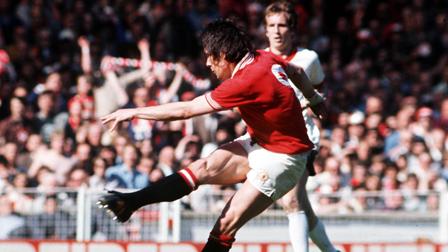
Sexton was replaced as manager by ‘Big Ron’ Atkinson of West Bromwich Albion, who endeared himself immediately by bringing his captain there, ‘Captain Marvel’, left footed Bryan Robson, transferred on October 1st, 1981, for £1.5m, increasing the distinction between defense and midfield, where Robson would excel as captain for England too. However, despite winning the FA Cup Finals of 1983, 4-0 against Brighton and Hove Albion in a replay, following a draw, 2-2 (2-2), a.e.t., and 1985, 1-0 (0-0), a.e.t., against Everton, and Eire center back, Kevin Moran, sent off in the 78th minute, bringing down ‘Toffees’ captain, Peter Reid, through on goal, and the midfielder almost certain to score, with a 110th minute curler in at the far left post from the left foot of Northern Ireland’s Norman Whiteside from right of the 20 yard box, after a run down the wing, 1-0, Ron alienated the supporters by selling to Spain’s Barcelona, for £2m, top scorer in successive seasons, 1984-85 (38) 16, and 1985-86 (40) 17, Wales’ Mark Hughes. In the final analysis that led to the appointment of Scot, Alex Ferguson, from Aberdeen on November 6th, 1986, who promptly transferred Hughes back from Barça for the 1988-89 term for £1.8m.
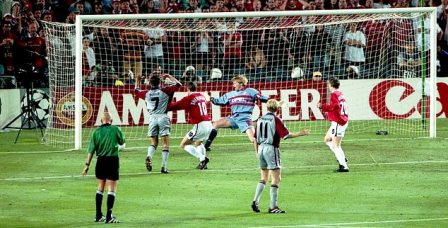
The ruling on substitutes being two from five from 1988, and in 1995 increased to three from seven on the bench, freed Ferguson from having to think only in terms of replacements for injured players, or those clearly out-of-sorts on the field, and perhaps out-of-their-depth also. Thoughts were now of a strategic and tactical sort, with a variety of change available for an attack-minded coach. The apotheosis was 1999’s European Champions Clubs’ Cup Final defeat of Germany’s Bundesliga side, Bayern Munich, at Barça’s Camp Nou stadium, on May 26th, with Swedish left wing, Jesper Blomqvist, and center forward, Andy Cole, replaced late on by forwards, who scored both goals, Teddy Sheringham on 90+1 minutes, 1-1, and Norway’s Ole Gunnar Solskjaer on 90+3 minutes, 2-1.
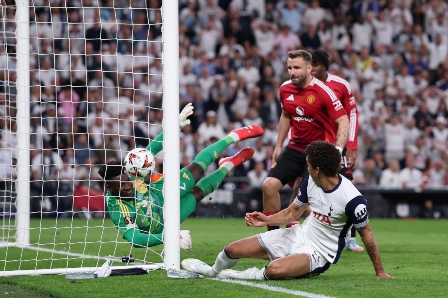
Ferguson’s 13 Premier League titles (1993-2013) were undoubtedly won on the basis of a solid back four, with twin center halves, that is, from Eire’s Kevin Moran (1978-88), Eire’s Paul McGrath (1982-9), Scot’s Graeme Hogg (1984-88), Steve Bruce (1987-96), Gary Pallister (1989-98), Mal Donaghy (1988-92), Paul Parker (1991-6), David May (1994-03), Norway’s Ronny Johnsen (1996-02), Norway’s Henning Berg (1997-2000), the Netherlands’ Jaap Stam (1998-01), Wes Brown (1996-2011), France’s Mikaël Silvestre (1999-08), France’s Laurent Blanc (2001-03), Rio Ferdinand (2002-14), Eire’s John O’Shea (1999-2011), Argentina’s Gabriel Heinze (2004-07), Spain’s Gerard Piqué (2004-08), Serbia’s Nemanja Vidić (2006-14), Eire’s Jonny Evans (2006-15), Chris Smalling (2010-20), and Phil Jones (2011-23). Twin strikers, together with an astute eye for a game-changing substitution, aligned with Alex’s approach to goal-getting; depending on service for the forwards in the six yard box: balls precisely delivered there from the left and right wingers. That Ferguson experimented with three-at-the-back was a sign of his interest in what Busby’s half back line did, whereas van Gaal, and his successors, deploying three center backs, were retrograde; given the possibilities for proactive intervention from the subs’ bench. Defensive; it required substitutions to mount an attack.
From title challengers, the club degenerated, with van Gaal, winner of the FA Cup in 2016, replaced from London’s Chelsea by Portuguese José Mourinho, winner of the League Cup and Europa Cup in 2017, and after a spell from Molde of Norway’s ‘99 hero Ole, appointed December 19th, 2018, which saw the team lose the May 26th, 2021, Europa Cup Final at Stadion Gdańsk, Poland, 1-1 (1-1), a.e.t., and 10-11 on penalties, from April 21st, 2022, Erik ten Hag of the Netherlands’ Ajax of Amsterdam; winning the 2023 League Cup, and 2024 FA Cup. Distrust of the three center backs’ system, increasingly favored by ten Hag and his predecessors, but representing a half back line that wasn’t any good, because central defenders aren’t half backs, greeted Portuguese Ruben Amorim’s appointing on November 1st, 2024, from Lisbon’s CP Sporting. Defeat to Spurs, 0-1, on May 21st in the 2025 Europa Cup Final, at Athletic Club of Spain’s stadium, Nuevo San Mamés, Bilbao, with France’s Leny Yoro at right center half, Harry Maguire at center half, and Luke Shaw, at left center half, concurred. Shaw, chesting on a right footed cross from the left by Senegal’s Pape Mate Sarr for Welsh right wing, Brennan Johnson, to poke it in by the left post in the 42nd minute, agreed.
The Manchester United Christmas Tree
Much has been written about Manchester United’s Portuguese manager Ruben Amorim’s team formation, and its three-at-the back, together with wing backs; at left and right. Instead of what the Italians call the English sistema, with defending full backs at left and right, and central defenders, twinned in the center; in front of the ‘keeper, Belgium’s Senne Lammens, after his £18.1m September 1st, 2025, transfer from Belgian club, Royal Antwerp, and behind the midfield. The importance of Harry Maguire, as a left sided central defender, is essential to understanding Amorim’s formation. That it’s crucial to have a left footed defender on the left of the three was underscored in Ruben’s having Ayden Heaven transferred from Arsenal for £1.5m on February 1st, 2025, with the subsequent loss of left sided Argentine center back, Lisandro Martínez, to a cruciate ligament injury, after his colliding with Senegal winger, Ismaïla Sarr, during the home defeat to Crystal Palace, 0-2, on February 2nd, 2025, and the score, 0-1, in the 82nd minute.
Although left back, Luke Shaw, and Noussair Mazraoui, left back at the 2022 World Cup in Qatar for Morocco, and in their third place play off against Croatia, lost 1-2, on December 17th at Khalifa International Stadium (KIS), Al-Rayyah, were given the role of left central defender on occasion, Shaw is a left full back, while Mazraoui, a ‘devout Moslem’, in accordance with Islamic belief about the haraam nature of the left, that is, it’s ‘forbidden’, remained adamant on his preference for his right foot, after his transfer from German Bundesliga club, FC Bayern Munich, on August 13th, 2024, for €15m, which is problematic for a left back/left center back required to use the left foot against prejudice.
Amorim’s system relies on defensive and attacking wing backs, where defensive wing backs are required to defend in the role of full backs, in the event of the flanks being threatened by a winger, for example, Chelsea’s Cole Palmer, with too much pace, and ball control, for United’s Portuguese right full back, Diogo Dalot, to be able to deal with comfortably. If attacked down the right flank in Ruben’s United system, Dalot drops back from the right wing back position to assume the right full back role, which is according to his nature, as he’s a right full back by trade, and Maguire shifts over into the left full back position on the left flank, while the other two central defenders of the three-at-the-back system take up the familiar role of twinned center halves, flanked by left and right full backs.
With Denmark’s Patrick Dorgu, as the left wing back, Amorim’s system is to have Dorgu drop back to defend, in the event of an attack down the left flank, which means Maguire moving into the center, twinned with Holland’s Matthijs de Ligt, for example, while French center back, Leny Yoro, for example, moves into the full back position on the right. However, if Ruben selects attacking wing backs, either from the start, or from the substitutes available during the course of a game, the team shapes up as a ‘Christmas tree’, with inverted wing backs, and inverted inside forwards, funneling the ball towards the opposition goalmouth. Ivory Coast’s Amad Diallo, as a left footed inverted right wing back, or inside right, is crucial to this aspect of the system, while Brazil’s Matheus Cunha, as a right footed inverted inside left, and Moroccan Bryan Mbeumo, as a left footed inside right, with Slovenia’s Benjamin Šeško at center forward, defines the funnel.
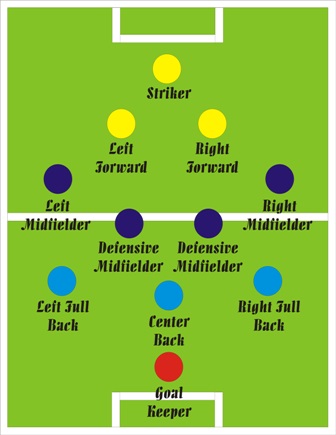
The logic of selecting Diogo Dalot, as a right footed left wing back, in the absence of a genuine inverted attacking left wing back, is due to the requirements of the funnel system of inversion. Although the ‘Christmas tree’ will often appear ‘lopsided’, and function in a way seemingly ‘unbalanced’, with the left, or right side, preferred as the attacking option, Amorim’s is a systematic formation, with the ball funneled down either flank, assisted by the midfield pairing of ‘playmaker’ and captain, Portugal’s Bruno Fernandes, with either a defensive midfielder, for example, Brazilian Casemiro, Uruguayan Manuel Ugarte, or Kobbie Mainoo; or inverted left, right footed Mason Mount; the available attacking midfielder.
Apart from center forward Marcus Rashford’s season-long loan to Spain’s FC Barcelona, the decision to transfer Argentine out-and-out right winger, Alejandro Garnacho to Chelsea on August 30th, 2025, for £40m, and not to retain Danish playmaker Christian Eriksen, reduced Fernandes’ midfield support options in attack for 2025-26. An attribute of the ‘Christmas tree’ is that the presents to be opened can usually be discerned by December 25th.
Losing the 2025 Europa Cup Final, 0-1 to Spurs, on May 21st, 2025, at the stadium of Athletic Club, Nuevo San Mamés, Bilbao, Spain, and failing to qualify for European competition, through league standing, the club finishing the 2024-25 season 15th, or by success in the EFL or FA Cup, meant only the EFL Cup, FA Cup, and Premier League title were achievable in 2025-26, and the club went out of the EFL Cup at the second round, 2-2, and 11-12 on penalties, at fourth tier Grimsby Town’s Blundell Park on August 27th, 2025. With the FA Cup beginning for the Premier League clubs at the third round stage on January 10th, 2026, if Amorim couldn’t improve the side, and its league position, that would be all there’d be to play for.
Comparisons are useful. In manager Ernest Mangnall’s successful sides of the 1900s, the half back line, with full backs, meant five-at-the-back, with five across the park, in what was called the ‘forward line’. The three-at-the back were Dick Duckworth, Charlie Roberts, and Scot, Alex Bell, with the formation winning the league title in 1908 and 1911, and the FA Cup in 1909. Essentially the team contained no midfield players, but lined up as left and right wingers, left and right inside forwards, and a center forward, with the half back line flanked by left and right full backs.
Scot, Matt Busby’s 1948 FA Cup winning team’s half backs were John Anderson, Allenby Chilton, and Henry Cockburn, and the manager’s preference for a half-back line would win him the 1968 European Champions Clubs’ Cup on May 29th at London’s national Wembley stadium, 4-1 (1-1), a.e.t., against Portuguese club, Benfica of Lisbon.
Not until the 1969-70 season, when reserve team coach, former left half back, Wilf McGuinness, and ‘Busby Babe’, the collective name of players coached by Busby, inherited the squad as manager, did the half back line disappear from the match program. Where fans were used to seeing the names of Scot, right half Paddy Crerand, center half Bill Foulkes, and left half Nobby Stiles, as a threesome between the full backs, Foulkes and Stiles were made distinct as a defensive partnership in the center, with Paddy’s role, as a central midfielder, being indicated on the team sheet, alongside deep-lying, ‘false center forward’, Bobby Charlton, formerly part of the forward line.
Amorim’s three-at-the-back signaled a return to the half-back line, flanked by left and right wing backs, though not a renewal of the forward line, with Cunha, Šeško, and Mbeumo a front three, and Fernandes and Mount in central midfield. An improved half-back line would mean finding a center back, who could augment the midfield and attack, in the style of Harry Maguire’s April 10th, 2025, winning header, on 120+1 minutes, in the Europa Cup quarter-final, second leg, at Old Trafford against French club, Lyon, 5-4 (2-2), a.e.t., aggregate 7-6, or using the two half backs, usually found alongside the center half as defenders only, in midfield, with the two wing backs able to drop back, as full backs, and the center half between, to maintain the three-at-the-back formation. Although changes to the playing staff would be required.
The late 20th century demanded differentiation in terms of position. The abandonment of five-at-the-back, and five-up-front, was a logical concomitant of the rise of the utility midfielder, but 21st century soccer, demanding a further degree of specialization, meant a return to the back five and the front five, with players able to move more easily between defence, midfield, and attack.
Less restricted in their role, requiring more flexibility, ability became more important than identifying with the position in which it was nominally exercised. Though defending and attacking are distinct concepts, that’s soccer. The distinction isn’t so rigorous as to deny ability to the back line. It’s the key to forward movement.
Noussair Mazraoui’s Starting Right Back Again
Manchester United’s then Dutch manager, Eric ten Hag, appointed April 21st, 2022, signing international left back, Noussair Mazraoui, on August 13th, 2024, for €15m from German Bundesliga club, FC Bayern Munich, caused the Moroccan to reiterate unprompted, ‘I prefer my right foot.’1 However, with devout Moslems of the nations of Islam, for whom handedness and sidedness is an issue, left footed players are under a lot of pressure to say the same, because it’s the tradition that the left hand is ‘unclean’,2 so food is eaten only with the right.
It’s an issue for Moslems that left footed and left sided full backs and wingers are prevalent, as are left sided midfield players, and left footed center forwards. In the modern game of soccer, tactical movement has been towards left footed wingers, inside forwards, and wing backs on the right side of the pitch, and vice versa, which can be impacted upon by the Moslem desire to hide their sidedness and/or foot preference.
The current trend is for players to declare that they have no preference in terms of foot or sidedness, but that they’re ‘two-footed’, and therefore can play anywhere along the back line, forward line, or midfield; if required. Apart from hubris, such declarations are Islamic influenced, where converting ‘others’ is a basic tenet of the Moslem religion, deriving from the teaching of their Prophet Mohamed and the Koran (610-30 C.E.), dictated to him by the angels, and according to their beliefs about handedness.
Islam devolved from Ishmael, the second son of Abraham, whose first was Isaac, from whom Judaism devolved, although the Jews’ injunctions about cleanliness include no prohibitions against the left hand, or left sidedness. In fact God’s ‘strong arm’ (Ex: 13. 9) is the left, according to the Torah and Talmud, which is the Old Testament to the Christians, containing the law of the Jews and early history of their battle with slavery.
Apart from the populist understanding of ‘sinister’, as associated with ‘the left hand path’, or ‘witchcraft’, and that politically ‘left wing’ people are socialists, Christianity, which arose from the teaching of the rabbi, Jesus, during the period of the Roman occupation of Jewish Palestine, in the reign of the Emperor Tiberius Augustus (14-37 C.E.), recorded as the New Testament, has no negative opinions with regard to those who can’t demonstrate right sided dexterousness only, ‘Love your neighbor as you love yourself.’ (Matt: 12. 31) That Jesus was killed, like a sacrificial animal, after Judas told him that a woman’s perfume was ‘too expensive’ for him, constituted an attack on God’s supportive strength; the left.
Mazraoui won the Dutch Eredivisie and KNVB Cup double at Stadion Feijenoord, De Kuip, Rotterdam, against Willem II, 4-0, on May 5th, in center midfield with AFC Ajax of Amsterdam in 2018-19, and as an unused substitute, the Johann Cruyff Shield XXIV. A match-up usually between Eredivisie champions and Koninklijke Nederlandse Voetbalbond (Royal Dutch Football Association) KNVB Cup winners. However, as Ajax had won both league and cup, PSV Eindhoven, runner-up in the title race, were the opposition, beaten 2-0, on July 27th, at Ajax’s home stadium, the Johann Cruyff Arena, Amsterdam, named for their legendary three times (1971, ‘72, and ‘73) European Champion Clubs’ Cup winning captain, and center forward; as indeed was the Johan Cruijff Schall, inaugurated in 1991.
Noussair won the double of Eredivisie and KNVB Cup with Ajax again at Feyenoord Rotterdam’s stadium, De Kuip, versus Vitesse Arnhem, 2-1, in 2019-20, on April 18th, at right back, and the Eredivisie again in 2021-22, before being freed to join Bayern for the 2022-23 season, where the München club then won, 5-3, the DFL-Supercup, a match-up on July 30th, 2022, at Red Bull Arena, Leipzig, between the winners of the Bundesliga, that is, Bayern in 2021-22, and RB Leipzig, winners of that season’s German cup, the DFB-Pokal, with Mazraoui substituting on 78 minutes, when the score was 4-1, for French center back, Dayot Upamecano. Before winning the 2022-23 Bundesliga, Mazraoui, praised for his performances at left back for Morocco, in the 2022 World Cup Finals in Qatar, again stated clearly his preference for the right full back position; or the less contentious, from the perspective of an Islamic culture obsessed with the left side as haraam, ‘forbidden’, right center back role.
Harry Maguire, left sided center half at Manchester United, since his signing by former reds’ center forward (1996-2007), then manager, Norwegian Ole Gunnar Solskjaer, on 5th August 2019, from Leicester City for £80m; 2019-20, 38 starts, and 2020-21, 34, whose doom after Solskjaer, replaced by former RB Leipzig manager, Ralf Rangnick, from December 3rd, 2022, until season’s end, seemed as a ‘sub’; 2021-22, 28 and 2 appearances; 2022-23, 8 (8); 2023-24, 18 (4), and 2024-25, 19 (8), was revealed by statistical analysis to touch the ball with his right 86% of the time,3 which is highly approvable to Moslem perceptions, and indeed might explain the origins of the emphatic statistic. Given the fact that ten Hag’s replacement, Manchester United’s Portuguese manager, from November 11th, 2024, Ruben Amorim, was used to fielding three center backs, along with left and right wing backs, Maguire’s and Mazraoui’s sidedness was important for the side.
A type righter, Ruben’s 3-4-3 system requires a left footed center back at the left of the three, and a left wing back, for example, Denmark’s Patrick Dorgu, bought by Amorim from Italian Serie A club US Lecce for £25m, on February 2nd, 2025, dropping back to defend; in the event of pressure being applied down the flank by the opposing team. When that happens, the result is equivalent to the RETURN key being pressed in the middle of a paragraph, that is, Dorgu assumes the left full back position, whereas the objective is to finish the paragraph, that is, score, when the referee then blows the whistle and the teams RETURN to their starting positions on the pitch: new paragraph. If the RETURN occurs, after the opposing team score, that is, the referee indicates a restart, then Manchester United’s left wing back has essentially contributed to the side’s failure to write a successful paragraph, broken, but written in the club’s history.
Of course the same is true of the other side of the field, where it’s the role of Portuguese right wing back, Diogo Dalot, for example, to cover for the right sided central defender as a right full back, in the event of an attack down that flank, while the three central defenders SHIFT across the field; until the left sided central defender, for example, Maguire, is in the left full back position.
United’s obsession with right sided left wingers, and left inside right forwards, could extend to left wing backs, and left full backs. After all, bought from, then second tier, Oldham Athletic, by Scot’s manager Alex Ferguson, for £650,000, Eire’s Denis Irwin (1990-2002), perhaps the greatest of all the left backs ever to put on the ‘red devils’ strip, was right footed, and also excelled in the right back role.
However, such a preoccupation with inversion at left, as well as right sides of the field, is significantly Islamic. When everyone is right sided, and the left sacrificed, it’s a successful Moslem conversion. Despite Mazraoui’s ability as a defender, 34 (3) games for United in 2024-25, the club finished 15th out of 20 in the Premier League, losing 14 games, and score-drawing all but one of 6 draws, after Amorim’s appointment, before defeat in the Final of the Europa Cup, 0-1, on May 21st to England’s ‘Lilywhites’, North London’s Tottenham Hotspur, at the stadium of Athletic Club, Nuevo San Mamés, Bilbao, Spain, with Noussair at right wing back. Not a good season defensively, the danger of a successful conversion for Islam being dependent upon having sacrificed the left hand of God (Ex: 13. 16), leaving an empty trophy cabinet, and looming unrecognized as a shadow upon minds unconcerned.
Mazraoui was at left back for Morocco, in their December 17th third place play off defeat to Croatia, 1-2, at Khalifa International Stadium (KIS), Al-Rayyah, in the World Cup Finals of 2022, while turning out at right back, left back, and center back, for Ajax and Bayern, but Islam has a hidden agenda, which is that converting others to Islam is an obligation, and sidedness is an aspect of that process.
Although for the secular being right, linguistically, is about correctness, for Moslems it’s also about handedness, which is called chirality, that is, sidedness, as basic to morality, for example, the left hand, unclean per se, is immoral, whereas for Christians it’s a part of human nature; acceptingly: as what it means to be human.
With regard to the population globally, 10% are left sided,4 and approximately 3% of those, as age-qualified, could choose soccer as a profession; amounting to less than 0.1%. Though the ratio of left to right at clubs is usually high, as left footed players are highly sought after for the balance of the team, the Moslem desire, that the left be right, has become strong, and influential enough to reintroduce the idea of the defending/attacking left wing back, as a ‘whipping boy’ for managers’ unhappiness over a team’s goal difference. Citing a need to improve ‘work rate’, the Islamic solution is slavery down the left side.
Although Denis Irwin was a great right footed left back, selecting right footed left backs shades into inhumanity, when left footed left backs are rationally what’s available and needed, and Denis was duly replaced by left footed French left back, bought by Ferguson from Italian Serie A club, Inter Milan, for £4m, Mikaël Silvestre (2000-08).
Ivory Coast’s Amad Diallo, selected as an attacking left footed Moslem right wing back, poses a dilemma, as defending at right back, which is what a defensive right wing back is expected to do, is less feasible for a left footed right wing back. Dalot, as a right full back, and a right wing back, who’s right footed, is naturally a defender of the right side, whereas Diallo, as a left sided attacking right wing back, can’t to be expected to be able to defend as well as a right footed, right full back, which weakens the team.
The usual solution is increased workload, where the wing back has to both attack and defend, that is, a demand that one becomes two, which amounts to sacrificing the best for the inadequate. Dalot, right footed, loaned to AC Milan of Italy’s Serie A for 2020-21, 10+11, by Solskjaer, after being used but sporadically, subsequent to his predecessor, Portuguese manager, José Mourinho, signing fellow countryman Diogo from FC Porto of Portugal, for £19m, on June 6th, 2018; 2018-19, 12+4, 2019-20, 1+3, became indispensable to ten Hag, 2021-22, 19+5, 2022-23, 24+2, 2023-24, 35+1, but selected as a left wing back by Amorim, 2024-25, 31+2, represented another team weakness.
Artificially created, perhaps, by an unwary Amorim, but attributable to Islamic influence. Being selected on the right, as a left footed forward, is Islamic, as much as being selected on the left, as a right footed left back. Having one do the work of two is a form of human sacrifice; resulting in slavery and pointless degeneration.
Losing at home, in the first game of the 2025-26 season, to Arsenal, on August 17th, 2025, Moslem Turkish ‘keeper, Altay Bayindir, trying, left-handed, to push away, and behind him, a viciously in-swinging 13th minute corner from the left, failed. As the left hand is forbidden in Islam, that is, God’s, so Altay’s attempt was weak, because it’s irreligious to use it, whereas ‘Allah’, the Islamic equivalent of the name of God, is served; if the weakness of the left hand is demonstrable to unbelievers. When asked if soccer was a religion, Liverpool FC manager (1959-74), Bill Shankly, was used to saying, ‘No, it’s more important than that.’5 Italian left back, Riccardo Calafiori, headed in at the back post, 0-1.
1 FCRatings, https://www.fcratings.com/noussair-mazraoui .
2 Alba, Jessica ‘Why Is The Left Hand Considered Unclean?’, 23/07/23, https://learnmethods.com/why-is-the-left-hand-considered-unclean/ .
3 O’Neill, David ‘Why Switching Sides is the Best Thing for Harry Maguire’, The People’s Person, 15/07/22, https://thepeoplesperson.com/2022/07/15/why-switching-sides-is-the-best-thing-for-harry-maguire-249375/ .
4 Nield, David Science Alert, 09/08/20, ‘Why Are Only 10% Of People Left Handed?’, https://www.sciencealert.com/why-are-only-10-of-people-left-handed-here-s-what-scientists-know-so-far .
5 Mirror Football, ‘Some people believe football is a matter of life and death ... The wit and wisdom of Bill Shankly’, 02/09/2010, https://www.mirrorfootball.co.uk/opinion/blogs/mirror-football-blog/Liverpool-legend-Bill-Shankly-Football-more-important-than-life-and-death-plus-his-other-great-quotes-article570339.html .
Mbeumo’s Bar
The informed opinion, amongst soccer experts, seems to have been that Manchester United manager, Ruben Amorim, former right midfielder for Portugal (14 caps) and Benfica (2008-17), had a system, but didn’t have the players. Despite obtaining, for around £200m, from Germany’s Bundesliga club, RB Leipzig, Slovenia’s right footed center forward, Benjamin Šeško; Wolves’ right footed Brazilian center forward, or inverted left wing/inside left, Matheus Cunha, and Brentford Town’s left footed winger; often inverted right winger/inside right, Cameroon’s Bryan Mbeumo: before the commencement of the 2025-26 season.
On August 27th, 2025, on its south bank, where the Humber river estuary joins the North Sea, the Trafford club, looking to build New Trafford Stadium for the 2030-31 season, at a cost of £2 billion for 100,000 fans, were summarily dumped out of the League Cup, 2nd round, by fourth tier Grimsby Town, ‘The Mariners’, at their North East Lincolnshire ‘fishing hole’, Blundell Park, Cleethorpes, with a squad valued at £3.6m in toto,1 watched by a near capacity, 8,647(9,546), crowd.
The team had gone behind, 0-2, at half-time, with eyebrows already having risen at Amorim’s inability to win his first league game of the season, on August 17th at ‘the theater of dreams’ stadium, Old Trafford. Losing at home to Arsenal of London’s Islington, after Turkish ‘keeper, Altay Bayindir, in for Cameroon’s injured, and also at times hapless, André Onana, trying left-handed to push away, and behind him, midfielder Declan Rice’s right-footed, viciously in-swinging 13th minute corner from the left, failed. Italian left back, Riccardo Calafiori, headed in at the back post, 0-1.
United had just a single point out of a possible six, following upon the side’s second match, on 24th August, away, at London’s Fulham, 1-0, after an own goal credited to Brazilian center forward, Rodrigo Muniz, on 58 minutes, giving United the lead, although central defender Yoro looked to have headed home the corner on the right from Fernandes. It’d be a start to the league campaign as ignominious for the forward line as the end to the previous term’s had been. Losing 6 out of 8, and failing to score in 5, before defeat to London’s Tottenham Hotspur, 0-1, in the Europa Cup Final on May 21st, 2025, at the stadium of Athletic Club, Nuevo San Mamés, Bilbao, Spain.
The defence, caught square by a left wing cross on the left, right-footed, from Nigerian midfielder, Alex Iwobi, with Yoro and de Light ball-watching, as attacking midfielder, Emile Smith Rowe, on for central midfielder, Joshua King, on 71 minutes, ran in at the near post, ahead of his opponent, left footed Luke Shaw, left side of the United defence; square, watching Emile level, right-footed to ‘keeper Bayindir’s right, 1-1.
In that first home game against Arsenal, Shaw, left back by trade, had begun on the left of the three-at-the-back defensive formation, favored by Amorim, with Portugal’s Diogo Dalot, as a right wing back, which made tactical sense; though emphasizing the loss of left sided Argentine center back, Lisandro Martínez, ‘The Butcher’, to anterior cruciate ligament (ACL) damage, after colliding with Senegal winger, Ismaïla Sarr, during the home defeat to Crystal Palace, 0-2, on February 2nd, 2025. Martínez, replaced by de Light on 82 minutes, with the score 0-1, was the defender United needed, with Shaw as the alternative wing back to Denmark’s Patrick Dorgu.
A defensive wing back, like Shaw on the left, in the event of a fit Martínez, as a left sided central defender, Dalot could function as a right full back; in the face of pressure being applied down the flank there. Without Martínez, selecting a defensive right wing back, Dalot, and a left full back, that is, Shaw, permitted of four at the back, as required, while having the option to attack down the right, or left side, from the wing back position. Ruben’s 1-3-4-3 system depended on the selection of either a left back with two central defenders, or a right back with the same, where Martínez, or similar (Ayden Heaven, for example), was central and left sided; together with complimenting defensive/attacking left/right wing backs.
However, Amorim’s invariable selection was of three center backs, whose sidedness often seemed largely incidental; though reminiscent of a half-back line: most familiar to supporters from the 1968 European Cup Winning side that beat Benfica, 4-1, (1-1), a.e.t., at London’s national Wembley stadium on May 29th. Scot, Pat Crerand, right half; Bill Foulkes, center half, and ‘Nobby’ Stiles, left half. As good left and right half backs are generally the equivalent of ball-playing midfielders, only the central back (in that ‘68 team, ex-right full back, Bill Foulkes), is an out-and-out defender; flanked by no-nonsense, strong-tackling, full backs to left and right. Without that ball-playing ability, as what are essentially half-backs, Amorim’s three, out-and-out center backs, were redundant; without even being anachronistic. Twin center backs, and a left or right sided central defender/full back, with a defensive wing back, and perhaps an attacking wing back on the other flank, were the manageable system; unless the central defensive trio had enough skill, which wasn’t in evidence.
With substitutes being of paramount significance within such a system, Amorim’s bear examination. Leaving aside Amorim’s replacing top-scorer, Marcus Rashford, at inverted inside left, with right-footed attacking midfielder, Mason Mount, which older fans have seen before. In the summer of ‘78, manager Dave Sexton similarly replaced top-scorer, left wing, Gordon Hill, with the ultimately unproductive industry of Wales’ Mickey Thomas from Wrexham. Similarly indicative of Ruben as a defensive personality was his discarding of goalscoring Argentine right winger, Alejandro Garnacho, in preference for Ivory Coast’s left footed, inverted right winger, Amad Diallo, as a right wing back.
The selecting of inverted winger, Amad, joint top-scorer with Portugal midfielder, Bruno Fernandes, on 8 for 2024-25, as a left wing full back, on the right side of the pitch, seemed a punishment on Diallo, by a sadistic pervert, rather than team strategy. Amorim’s first change on 55 minutes against Arsenal, 0-1 after 13 minutes, was to bring on Diallo, an attacking wing back, for Dalot, a defensive wing back. The other change in the back line was to take off Shaw, after 80 minutes, for left sided center back, Harry Maguire, alongside France’s Leny Yoro, and the Netherlands’ Matthijs de Ligt, which gave the side three out-and-out central defenders, designed to compensate the incorporation of Amad on the right, while the covering left back/left wing back was Dorgu.
The technical description for Manchester United’s problem was, ‘square’, that is, central defenders, positioned in a straight line across the field, parallel to the goal-line, are easily beaten by through balls, because they’re ‘too square’, whereas particularly left, and naturally right sided, full backs, or left sided central defenders, like Martínez, Maguire, and Heaven, aren’t ‘square on’, but designedly ‘zonal’.
Amorim began against Fulham at Craven Cottage, with Diallo as an attacking right wing back, although the side were ahead after 58 minutes, through Muniz’s own goal, albeit subsequent to defensive right wing back Dalot’s replacing Amad on 52 minutes. However, United couldn’t recover from the defensive change, designed to achieve a draw, and drew, 1-1. Center halves, Tyler Fredricson, age 20, Maguire, age 32, and left sided Heaven, age 18, started as a ‘flat back three’ at Blundell Park, with Dalot as the right wing back, and Diallo as inverted inside right. United were down, 0-2, after half an hour, because of a largely inexperienced back three, and the propensity of such a formation to be ‘caught square’.
In the 22nd minute, Ayden had gone across to counter Irish right winger, Darragh Burns. Crossing, left-footed, right side of the 20 yard box, and in front of it, over and beyond Maguire in the center, and Fredricson on the right. The defenders, caught square, forced to turn, look for the ball, and run. Arriving, inside the 20 yard box, left corner of Onana’s penalty area, left winger, Charles Vernam, fiercely shoots; striking low, right-footed. Inside ‘keeper André’s right post, 0-1, with United’s right wing back, Dalot, significantly absent. In the 30th minute, Onana faps ineffectually at a right-footed Vernam cross, left corner of the 20 yard box, following a short corner; leaving right back, Tyrell Warren, a simple task: footing the ball over the line with his right boot. Behind the mistake-prone African, 0-2.
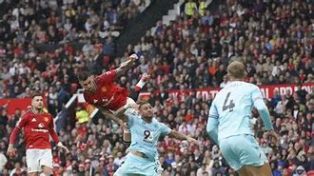
With a Premier League squad, comprised of rare talent from Europe, Africa, South America, and the British Isles, United unsurprisingly recovered, 2-2, late on. Inside right, Mbeumo, coming on for left wing back, Dorgu, in the 46th minute, curling a low, left-footed ball, from the right of the ‘D’, on the edge of the 20 yard box, into the bottom left corner of Christy Pym’s net, 1-2, on 75 minutes, before Maguire’s equalizing header, inside the far post right, following an 89th minute corner, on the left, right-footed, from Mount, coming on for Heaven in the 64th minute, 2-2.
Cunha could have won the tie, 5-3, on penalties, but fourth tier, Second Division Town ‘keeper Pym saved; low to his left. The penalty decider went on, 4-4. With penalties at 11-12, Mbeumo hit the bar; ‘sudden death’ and humiliating defeat for the first tier outfit.
1 Transfermarkt, https://www.transfermarkt.co.uk/grimsby-town/kader/verein/1034 .
Amorim’s Plan?
No one can really doubt that Manchester United manager Eric ten Hag’s sale, for a risible £25.7m, of Scots’ midfielder, Scot McTominay, starting 18+14 substitute appearances, for 7 goals, in season 2023-24, to Società Sportiva Calcio Napoli of Italy, on August 30th, 2024, as the 2024-25 season began, was a straightforward professional suicide, on a par with manager Ron Atkinson’s decision to sell Welsh top-scorer, Mark Hughes, for £2m to FC Barcelona of Spain’s La Liga, for the 1986-87 season, after Mark had top-scored in 1984-85, 38 (16) and 1985-86, 40 (17), precipitating the dismissal of ‘Big Ron’, and the arrival on November 6th, 1986, from Aberdeen, ‘The Dons’, of Scots’ manager, Alex Ferguson, where the former ‘Gers center forward (1967-69) won for the ‘Granite City’ the 1982-83 European Cup Winners’ Cup Final, 2-1 (1-1), a.e.t., on May 11th, at Nya Ullevi, stadium of GAIS, IFK Göteborg and Örgryte IS; Gothenburg, Sweden, against Spain’s Real Madrid CF, while breaking the stranglehold Scotland’s Glasgow clubs, Celtic and Rangers, had on winning trophies there.
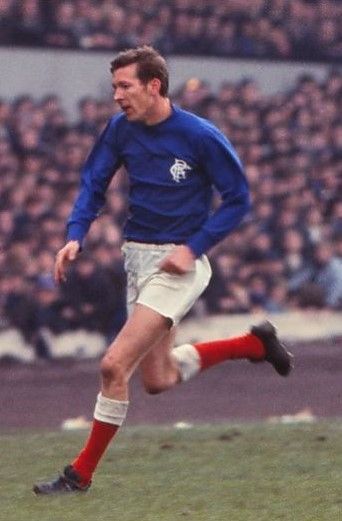
The Union of European Football Associations (UEFA) confusingly describe both its cup competitions as leagues, UCL being an acronym for UEFA Champions League, whereas the European Champions’ Clubs Cup, inaugurated in 1955, and abbreviated as European Cup, is what UCL actually is, a cup competition, that is no longer competed for by the champions of each country, but through qualifying stages that, in the case of the Premier League, extends to those clubs finishing fourth.
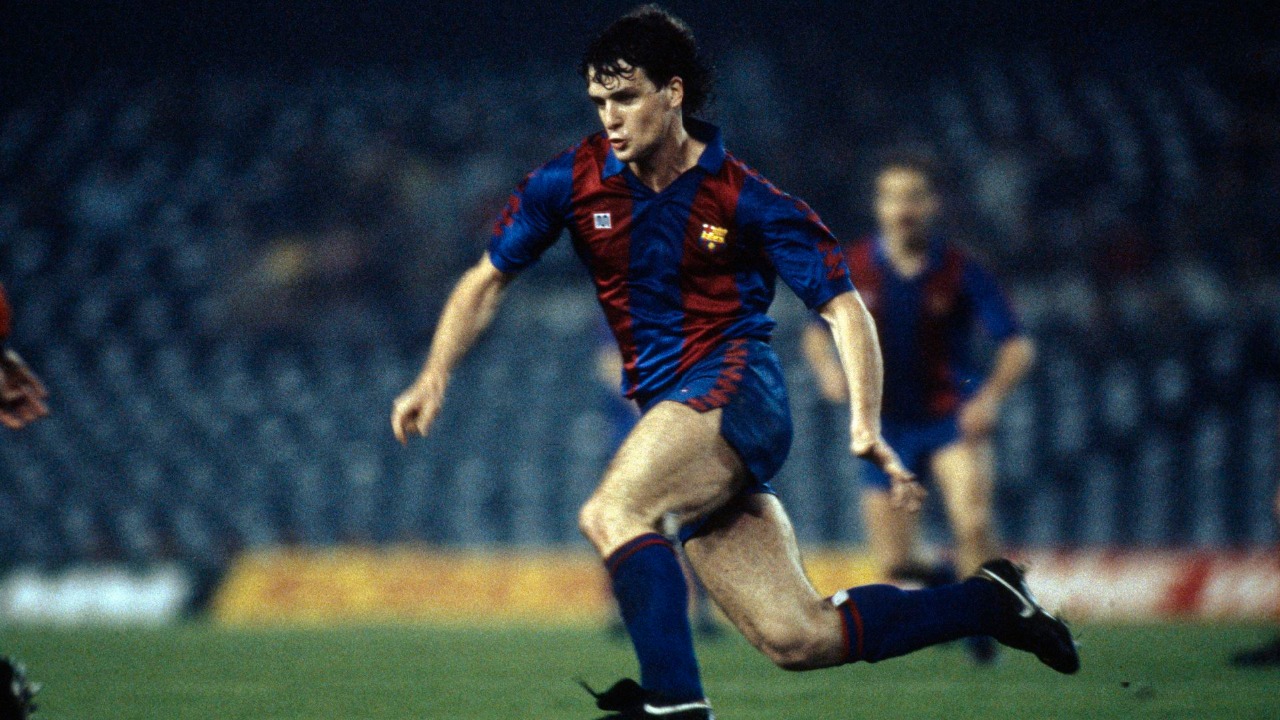
French manager, Arsène Wenger, winning Ligue 1,1978-79, as a ‘sweeper’, with Racing Club de Strasbourg Alsace, in 2012 said to Arsenal chairman, Peter Hill-Wood, and the board there, who’d appointed him from Japan’s Nagoya Grampus Eight, guiding them to the 1995 Emperor’s Cup, 3-0, against Sanfrecce Hiroshima, on January 1st at the National Stadium, Tokyo, and the Super Cup there on March 9th, 1996, against Yokohama Marinos, 2-0, ‘For me there are five trophies every season: Premier League, Champions League, the third is to qualify for the Champions League ..’.1 Fourth and fifth, of course, are FA Cup, and League Cup, in Wenger’s estimation, which was financially astute, and Arsenal achieved UCL qualification from 1997-98, Wenger’s first season in charge, to 2016-17, while Arsène retired, after the 2017-18 season, despite Arsenal’s qualifying for that season’s similarly lucrative Europa League.
The Europa League, replacing the UEFA Cup, conceived as a cup competition for those clubs that had finished second, or lower, in their country’s respective leagues, is also not a league, which is the reason for it being known as the Europa Cup.
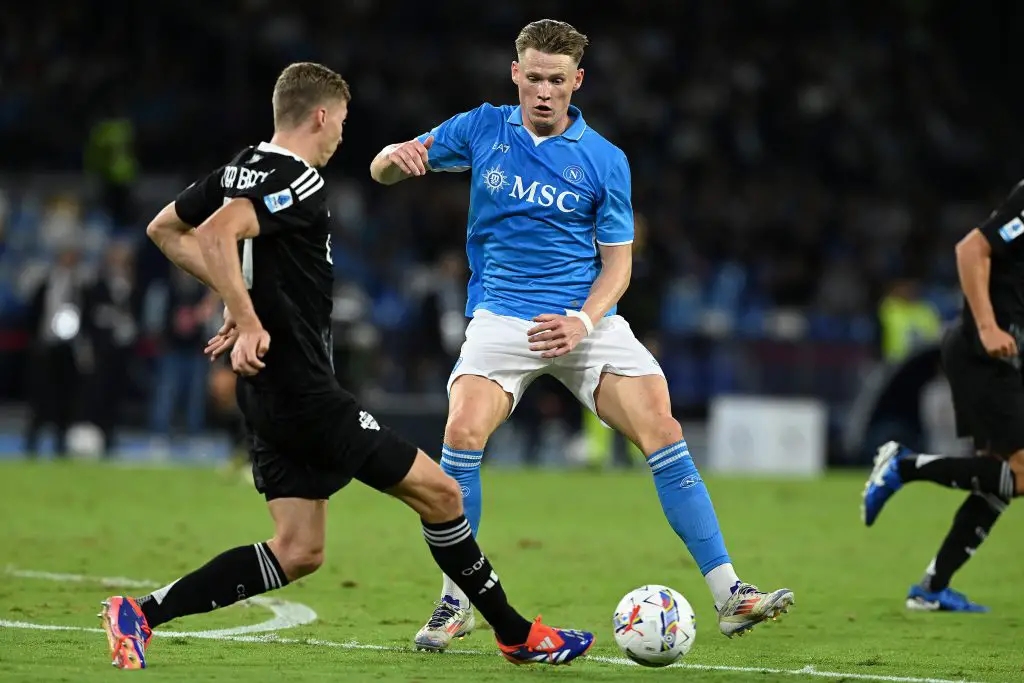
The cup competition, UEFA’s Cup Winners’ Cup, was competed for by the cup winners in each country, as their equivalent of the FA Cup winners, that is, it was actually a cup, but UEFA’s ‘legal egals’ abolished it in 1999, replacing it with their more egalitarian league cups. The European Conference League, inaugurated in 2021, for ‘lower ranked UEFA member countries’, as a cup, jeered, speaking volumes, but at a level high enough for supporters to stand still for it.
With asperity allied to alacrity, Alex re-bought the failing Hughes, 28 starts for 4 goals, and nicknamed ‘El Toro’ by the Barça fans, because of his bullish inability to deal with the Spaniards’ offside trap, known as matador, so re-loaned by Barcelona’s manager, Londoner Terry Venables. Born in Dagenham, January 6th, 1943, winning the League Cup, as a midfielder, with West London’s Chelsea in 1965, and the FA Cup with ‘Spurs, North London’s Tottenham Hotspur, in 1967, ‘El Tel’, as he was nicknamed by the media, had managed Barça to the European Cup Final of 1986; then that club’s first European Champions’ Clubs Cup Final since May 31st 1961, losing, 2-3, to Sport Lisboa e Benfica, at Wankdorf Stadium, Bern, Switzerland.
The 1986 Final took place at the stadium of Sevilla FC, Estadio Ramón Sánchez-Pizjuán, Seville, Spain, on May 7th, with Venables’ team losing to Romania’s CSA Steaua București, 0-0, a.e.t., 0-2 on penalties. Hughes’ difficulties, re-loaned to Fußball-Club Bayern München e. V. of the German Bundesliga, for 1987-88, remained. Chasing the ball, while defenders tauntingly passed it back and forth between them, along the back four, and back again, if the refereeing match official didn’t intervene, and show the yellow card for time-wasting. Hughes, given 17 starts +1 substitute appearance by legendary FC Bayern manager, Jupp Heynckes, returned 6 goals.
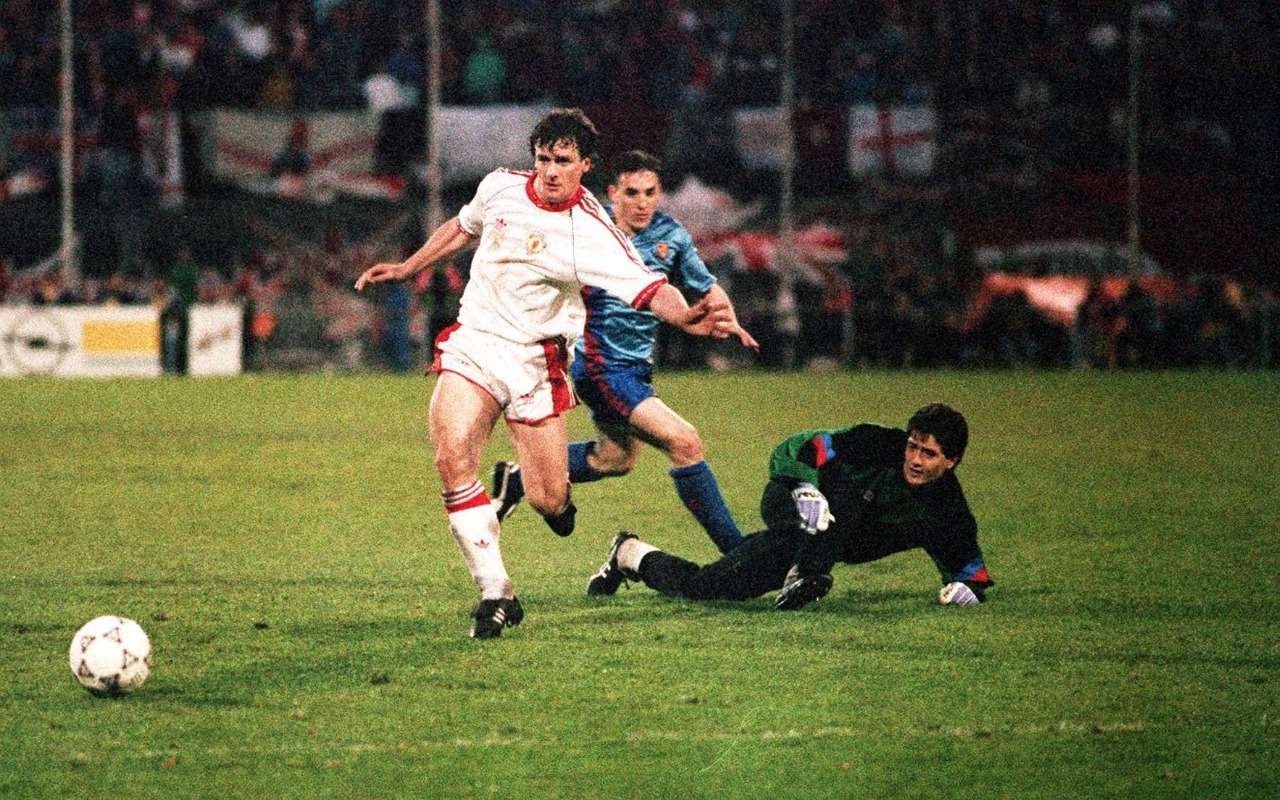
Heynckes, at center forward, won the Bundesliga with Borussia Mönchengladbach in 1970-71, 1974-75, 1975-76, and 1976-77; losing to Liverpool in the 1977 European Cup Final, 1-3, on 25th May, at Stadio Olimpico, Rome, Italy. As manager, Jupp saw Real Madrid to the European Cup in 1998, 1-0 against Juventus of Italy, at Amsterdam Arena, the Netherlands, on May 20th, and on May 25th, 2013, oversaw Bayern Munich’s victory, 2-1, against Borussia Dortmund, also of the German Bundesliga, at London’s national Stadium, Wembley.
Back for United’s 1988-89 season, Ferguson paid Barcelona £1.8m, and Hughes’ first reward to Alex was the May 12th 1990 FA Cup Final, won in the May 17th replay, 1-0, against ‘The Eagles’ of Crystal Palace, with Mark giving United the lead in the initial encounter, 2-1, after central midfielder, Neil Webb, charged down center back Andy Thorn’s attempted clearance. The ball, finding Hughes slightly off balance, left corner of the six yard box, standing on his left leg, volleying right-footed, top right corner of the net, at London’s Wembley, on 62 minutes, and on 113 minutes the goal that forced a Wembley replay, left winger, center midfield, Danny Wallace’s through ball to Hughes, inside the 20 yard box, right edge of the ‘D’, right-footed, driven low, inside onrushing ‘keeper Nigel Martyn’s post to Mark’s left, 3-3.
In the May 15th 1991 Cup Winners’ Cup Final, Hughes scored in the 67th minute, after a free kick half way inside the Barça half, center, left-footed from Robson, finding the head of center half, Steve Bruce, right of center of the 20 yard box, with Mark running in to tap the ball, left-footed, into the net inside the left post, as it fell there, 1-0, and again in the 74th minute, rounding the Spanish ‘keeper, Carles Busquets, well outside the 20 yard box, but Hughes being forced out wide, to its center right edge, angling the ball low, right-footed inside the post, far left, 2-0, before Dutch defensive midfielder, Ronald Koeman’s free-kick on 79 minutes, 2-1, at Stadion Feijenoord, ‘De Kuip’ (‘The Tub’), Rotterdam, the Netherlands.
In the 1991 Super Cup Final, scheduled to take place over two legs, home and away, but played in a single game at Old Trafford, as at that time the break-up of the former ‘super state’ of Yugoslavia, into several independent entities, for example, Belgrade became the capital of Serbia, resulted in conflicts producing an environment unsafe for visitors, United having qualified as European Cup Winners’ Cup Winners, contesting the trophy, against European Cup Winners, Red Star Belgrade, ‘The Star’, on November 7th, Webb’s strike in the 67th minute, rebounding from midway up the right post, finding Scots’ center forward, Brian McClair, edge and center of the 6 yard box, right-footed, left corner, low, 1-0, was enough.
Mark was also in the side for the 1992 League Cup Final, won after Welsh left wing, Ryan Giggs, left of center edge of the 20 yard box, squared a ball inside to McClair, center edge, who ran in and scored with a ball hit low, into the right corner of the net, left-footed, close by the penalty spot, in the 14th minute, 1-0, against Nottingham Forest, ‘The Garibaldis’, on April 12th.
In 1992-93 the Premier League was won, and in 1993-94 the League and Cup double; Mark getting the third in the May 14th, 1994, FA Cup Final at Wembley on 69 minutes, after two penalties from French center forward, Eric Cantona. Dispossessing left back, Frank Sinclair, right edge of the 20 yard box ‘D’, Hughes angled the ball past onrushing Russian ‘keeper, Dmitri Kharine, into the left corner, low, 3-0, and United eventually ran out victors over ‘The Blues’, Chelsea, 4-0. However, as Mark’s goal tally went below double figures in 1994-95, 33+1 for 8, Alex sold him for £1.5m to Chelsea, for the 1995-96 season at their Stamford Bridge ground in the borough of Fulham and Hammersmith.
‘Those who repeat the mistakes of history are doomed’,2 to paraphrase Spanish philosopher, George Santayana. Ron Atkinson’s treatment of Hughes merely aped the rude savvy of his predecessors. The intelligence and wisdom of Dave Sexton, however, replacement for former Scotland boss, Tommy Docherty, United manager since December 22nd, 1972, who hadn’t been able to keep his hands off physiotherapist Laurie Brown’s wife, Mary, before the team won the May 21st, 1977, Wembley FA Cup Final, 2-1, against Liverpool, had been much vaunted by soccer’s cogniscenti.
‘Barmy’ Dave sold left wing, Gordon Hill, top-scorer for consecutive seasons, 1976-77, 38+1 for 15 goals, and 1977-78, 36 appearances for 17 goals, to ‘The Rams’, Derby County for £250,000, buying instead for 1978-79, from Wales’ Wrexham, Y Dreigiau, ‘The Dragons’, for £300,000, industrious Mickey Thomas, 25 appearances for 1 goal, and a May 12th losing appearance in the Wembley 1979 FA Cup Final to ‘The Gooners’ of Arsenal, 2-3.
Dave, unknowingly, owed his appointment, in the summer of 1977, to the fact that England captain, Gerry Francis (1974-76), was captain of ‘The Hoops’ at Sexton’s previous Shepherd’s Bush club, West London’s Queens Park Rangers (QPR) of Loftus Road, whereas Ron Atkinson, labeled ‘Bojangles’ by the media, because of the amount of chunky gold jewelry he wore, which reputedly clanked, replacing Dave in the summer of 1981, knowingly knew, and on October 1st, 1981, paid £1.5m for England captain (1980-91), ‘Captain Marvel’ Bryan Robson, to his former club, ‘The Baggies’ of Hawthorn Road, West Bromwich Albion (WBA).
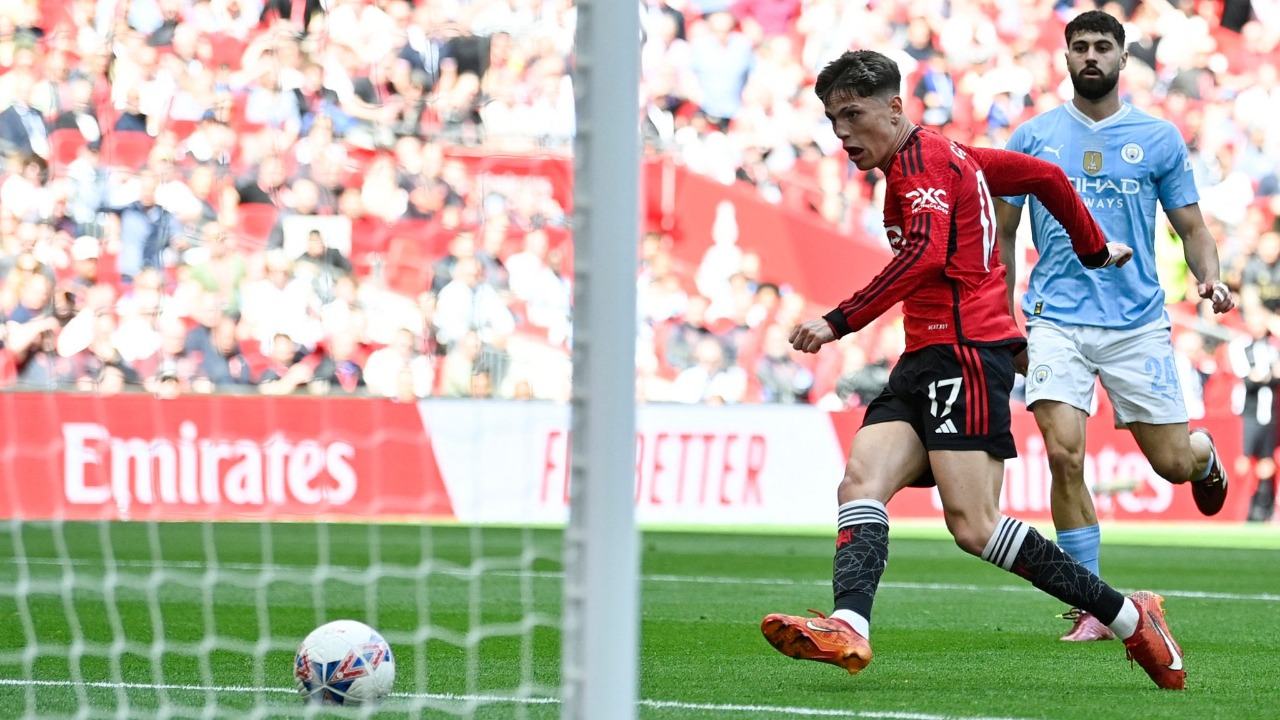
McTominay had been instrumental in United’s winning the May 24th 2024 FA Cup Final, during which campaign he’d featured strongly, with opening goals, on 10 minutes in the quarter-final, 4-3, at home to Liverpool, with Eire ‘keeper, Caoimhín Kelleher, only able to parry South America’s Argentine right winger Alejandro Garnacho’s shot, left, near the corner of the six yard box, leaving the onrushing Scot the relatively simple task of putting the ball over the goal line with his upraised right boot, 1-0, and on 23 minutes against Coventry City, ‘The Sky Blues’, in the semi-final at Wembley, 3-3 (3-3), a.e.t., 4-2 on penalties, after Portuguese right back, Diogo Dalot, driving in a low cross, hard, center right edge of the 20 yard box, found Scot, almost on the goal line, running in, left-footed, high into the net, 1-0.
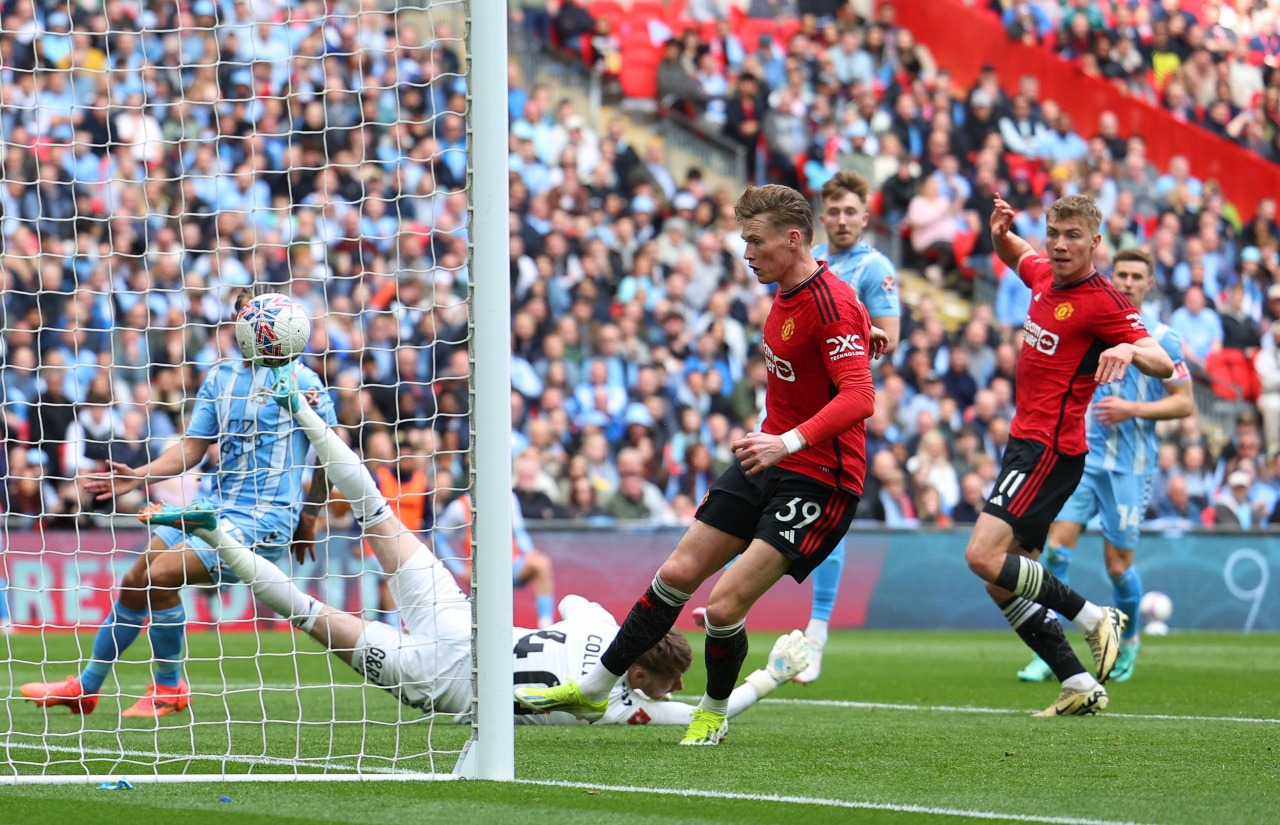
Deployed tactically, in the role of ‘false center forward’, Scot’s lying deep in midfield, drawing defenders away from the defensive line, and linking up with those making forward runs, led to defensive midfielder Kobbie Mainoo’s passing the ball into the net on 39 minutes against Manchester City, ‘The Citizens’, in the 2024 Final at Wembley; the team’s second, 2-0, before a late right-footed shot, inside Central Africa’s Cameroon ‘keeper André Onana’s right hand post, from the edge of the penalty area on 87 minutes, from Belgian winger, Jérémy Doku, on for Croatia’s central midfielder, Mateo Kovačić, on 46 minutes, made the final score, 2-1.
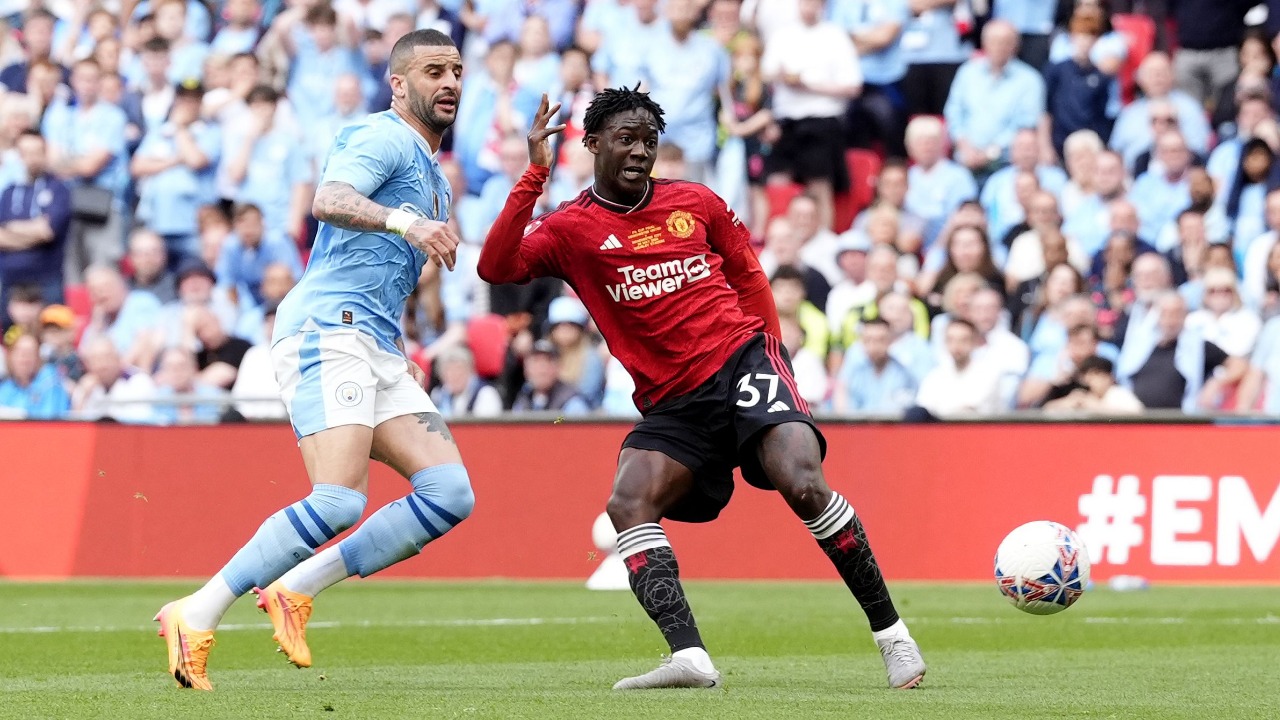
Scot, 33+1 appearances for 12 goals, alongside Belgian center forward, Romelu Lukaku, 35+1, and 14 goals, went on to win the 2024-25 scudetto with SSC Napoli, at home in their Stadio Diego Armando Maradona, as well as away; the trophy being the Coppa Campioni d'Italia, awarded to the successful club in the Italian Serie A league title race, with the players entitled thereafter to wear ‘the small shield’, the scudetto, with the green, white, and red tricolor of Italy’s national emblem on their shirts for the following season.
For a club used to being also rans to Internazionale of Milan, A.C. Milan, Il Diavolo, ‘The Devil’, and Juventus, of Turin, Piedmont, McTominay’s highly attuned football brain and athleticism compensated for what was lacking in vision and skill. Scot couldn’t compare with legendary irrepressible forward, Diego Maradona, Argentina’s 1986 World Cup winning captain, 3-2 against Germany, on June 29th at Mexico City’s Estadio Azteca, and who’d been their ‘best in the world’ striker for Naples in 1986-87’s title win, with 29 appearances for 10 goals, and again in 1989-90, with 26+2 appearances for 16 goals.
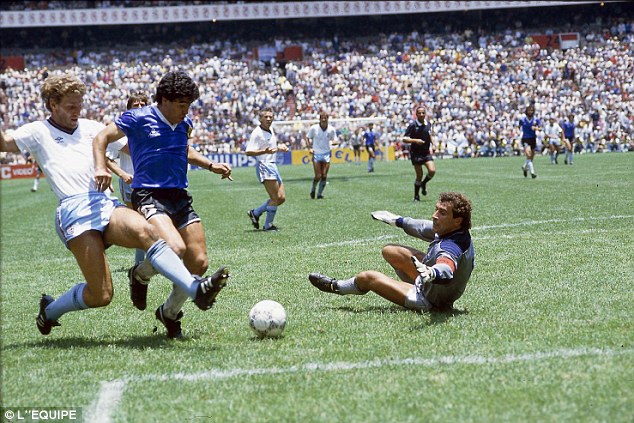
However, wrestling the 2024-25 championship away from the Milan giants of Lombardy, and the ‘Old Lady’ of Turin, Scot did contribute goals and driving inspiration; another attacking midfield presence seemingly unable to be denied. That ten Hag let Scot leave, on the understanding that Manchester United couldn’t afford him, was a sideswipe at the club; indicative of a flawed character. A lame excuse, jeering at the disabled, was the unannounced reason for ten Hag’s contract termination.
That ten Hag looked to be constructing the nucleus of a team that could challenge for the Premier League title, with Kobbie as the central defensive midfielder; Scot as a deep lying center forward, or ‘false 9’; Alejandro on the right wing; Marcus Rashford at center forward, or on the left wing, Amad Diallo of West Africa’s Côte d'Ivoire, on the left or right wing, or in the wing back role, and Diogo at right back/right wing back, or anywhere along the back line, saw the Dutch manager’s usually self-absorbed mien transformed to that of a tragic actor. Loss # 4, from 9 league games, left the club in 14th position. Eric was sacked on October 28th, 2024, following defeat, 1-2, at West Ham’s, ‘The Hammers’, London Stadium; the team officially deemed to have been performing poorly: consequent to Scot’s departure.
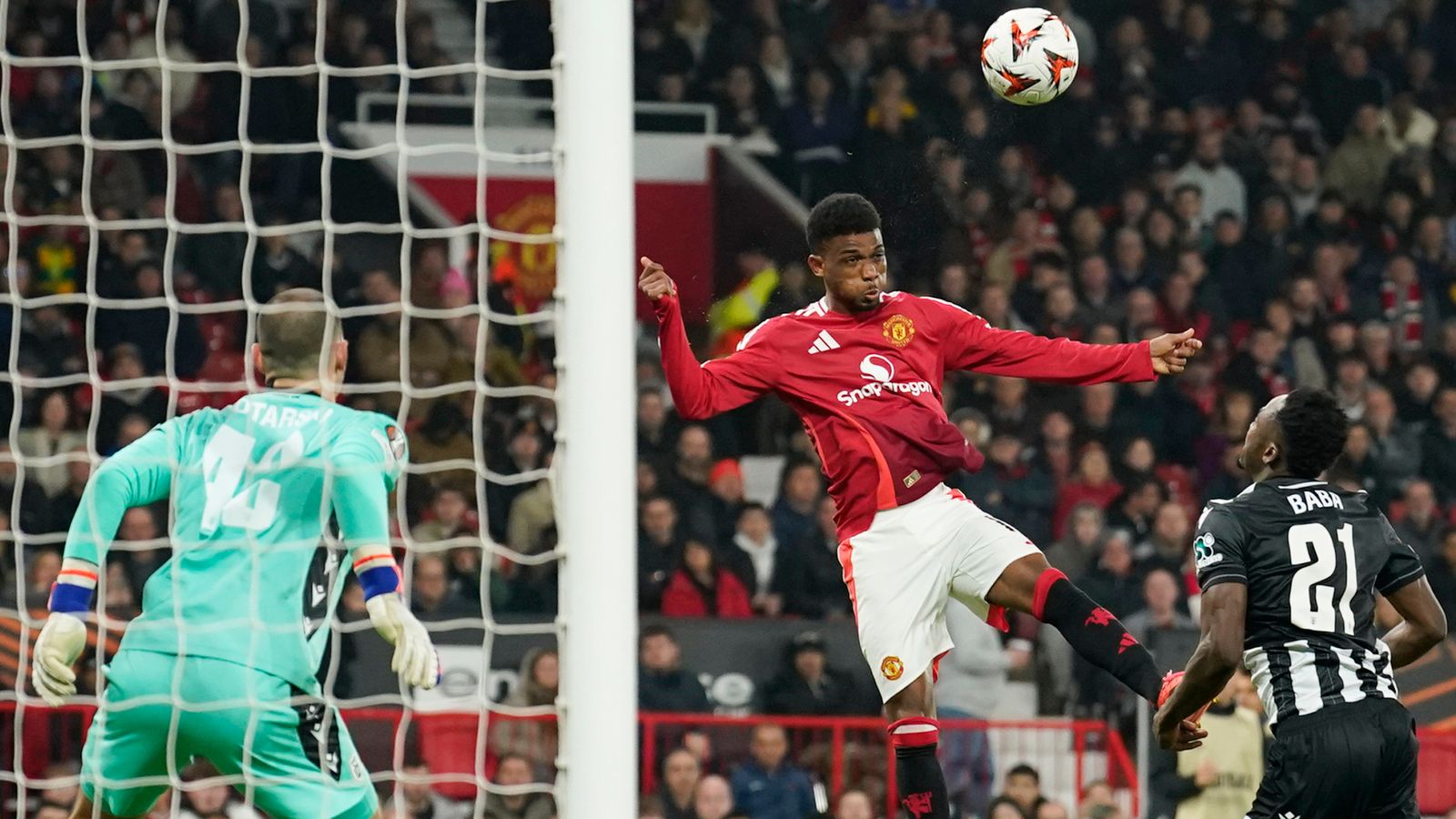
McTominay’s end-of-season delight was in high contrast to ‘The Red Devils’ losing in the Basque region of Spain to Spurs, ‘The Lilywhites’, in the Final of the Europa Cup, 0-1, on May 21st, 2025, at the stadium of Athletic Club, Nuevo San Mamés, Bilbao, with a 42 minute goal from close-in by Welsh right wing, Brennan Johnson, subsequent to a right-footed cross on the left from Senegal’s West African central midfielder, Pape Matar Sarr.
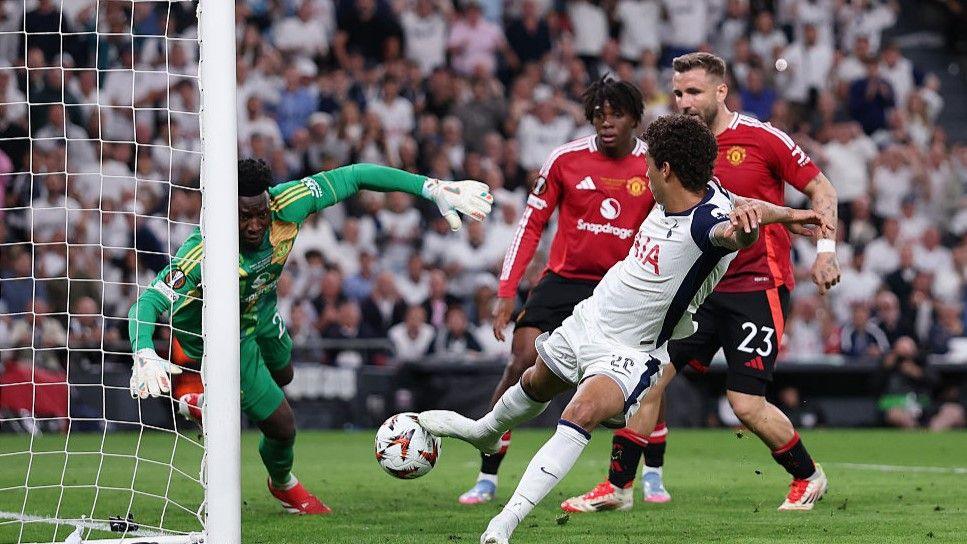
Ill-starred left-back, Luke Shaw, chesting the ball, willing it past ‘keeper Onana’s right hand post, as if he had telekinesis, instead found he’d laid it on for the Spurs’ winger, as Johnson ran on. Carefully side footing neatly, low down, with his right boot, though falling leftwards onto the pitch, away from the upright, Brennan’s stretch was careful; guiding the ball inside the post, with Onana despairingly trying to push it out.
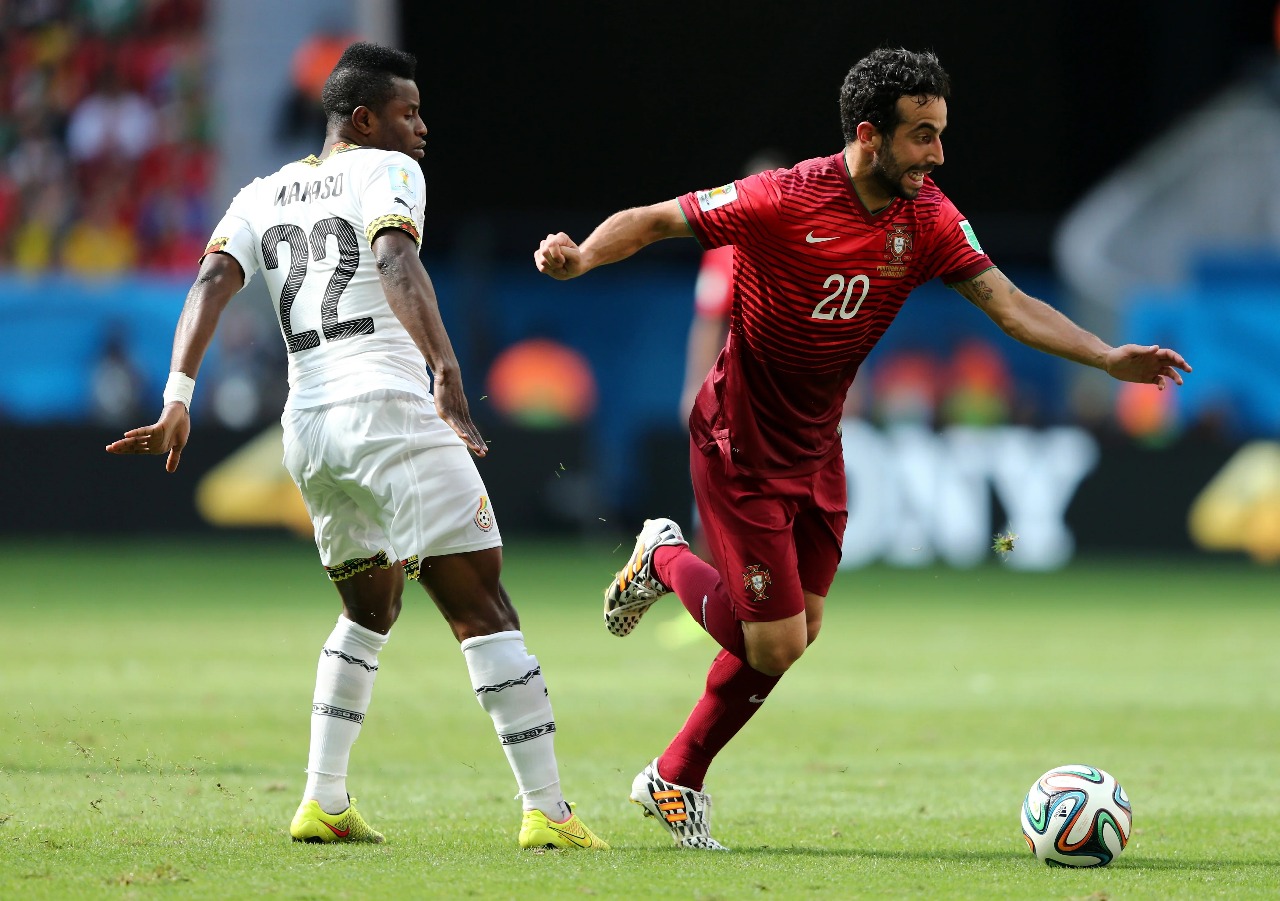
Ten Hag’s soccer suicide meant that he wasn’t there, but rather Portuguese manager, Ruben Amorim, winning, as a manager, the Portuguese title, in 2020-21, and 2021-24, with Sporting CP’s Leões, ‘Lions’. At right midfield, he was runner-up, with S. L. Benfica, in the Europa Cup Final of 2014, to Spain’s Sevilla, 0-0, a.e.t., and 2-4 on penalties, in Juventus Stadium, Turin. But won the Primiera Liga for Benfica, O Glorioso, ‘The Glorious One’, at home in Estádio da Luz, ‘The Stadium of Light’, in 2009-10, 2013-14, and 2014-15, while representing his country 14 times.
Ruben appeared for Portugal on June 15th at the 2010 World Cup in South Africa, replacing central midfielder, Raul Meireles, of Futebol Clube do Porto against Ivory Coast, on 85 minutes, in the opening Group G match, 0-0, at Nelson Mandela Bay Stadium, Port Elizabeth, though Portugal lost, 0-1, to Spain in the round of 16, and in the last Group G match at South America’s 2014 World Cup in Brazil on June 26th, Amorim featured in all 90 minutes against Ghana, 2-1, at Estádio Nacional Mané Garrincha, Brasilia, though Portugal were eliminated on a goal difference of -3, while the United States of [North] America, ‘The Stars and Stripes’, progressed to the round of 16.
Losing another 14 games, over and above ten Hag’s 4, with United being described as a ‘pub team’, Amorim’s appointment looked more disastrous to some. Introducing his strategy, and tactical system used at Sporting CP, with its three center backs, and two wing backs, left many of United’s soccer fans baffled. They were wary of what to hope for, after Ruben’s taking over team selection from November 11th, 2024, following a brief successful interlude from former reds’ Dutch striker, trainer of the forward line, Ruud van Nistelrooy, as caretaker manager, who’d effectively saved the side’s season by coaching the players to victory, 2-0, at Old Trafford, over Greece’s Pan-Thessalonian Athletic Club of Constantinopolitans (A.C. PAOK), ‘Double-Headed Eagle’, on November 7th, 2024, during the league phase of the Europa Cup.
Mononymously known as ‘Amad’, the left-footed inside/outside right struck twice against PAOK. Much favored by Amorim, after loan periods during ten Hag’s tenure at Scots’ club Glasgow Rangers of Ibrox Stadium, 2021-22, 4+6 appearances for 3 goals, and Championship club, Sunderland, ‘The Black Cats’, 2022-23, 34 starts for 13 goals, Diallo was a tricky winger, brought from Italy’s Atalanta BC, ‘The Goddess’, La Dea, Bergamo, Lombardy, where he won, in successive 2018-19 and 2019-20 seasons, the U-19 youth championship, Campionato Primavera. Signing for United on 7th January, 2021, after scoring on his full debut, as a 79th minute substitute for Atalanta at home to Udinese, ‘The Little Zebras’, 7-1, on October 27th, 2019-20, Amad made 0+3 appearances for that goal, and 0+1 in 2020-21, before going to ‘the Theater of Dreams’ for €21.3m. Capable of making the wing back position his own too, he made 3+6 appearances for ten Hag in 2023-24; scoring 1 goal, but 20+6 appearances for Ruben, ousting by turns, Rashford, whose declared favored position was the left wing; winger, Jadon Sancho, returning to his native land, bought for £73m, on July 1st, 2021, from Borussia Dortmund, ‘The Prussians’; Brazil’s winger, Antony, bought from Dutch club AFC Ajax, ‘Sons of the Gods’, on September 1st, 2022, for £82m, and Netherlands’ winger, and center forward, Joshua Zirkzee, bought from Italy’s Bologna FC 1919, ‘The Greyhounds’, 24th July, 2024, for £36.5m. Amad was joint top-scorer for the 2024-25 campaign; 8 alongside Portugal’s midfield goal-getting, ball-playing, creative genius, Bruno Fernandes.
However, the fact that no player reached double figures was symptomatic of a true malaise. It was the lowest overall total of goals (44), with a goal difference of -10, chalked up by a United squad since the club’s relegation season of 1973-74 (38), again with a goal difference of -10. Then Northern Ireland’s Sammy McIlroy, similarly deployed as a ‘false 9’ at times by Scots’ manager Tommy Docherty, and as Paul Scholes would be by his manager, Ferguson, top-scored, with 6.
Diallo’s strikes, in the second half against PAOK, were typical of his playing style. Running onto an infield cross, behind him, and then in front of him, from Bruno, left, center midfield, to the right corner of the penalty box, Amad rose on 50 minutes to loop a header over Croatia’s Dominik Kotarski, the ball falling inside the ‘keeper’s right hand post, 1-0, and after winning a midfield tussle deep in the PAOK half, with West Africa’s Ghanaian left-back, Baba, Diallo curled a left foot shot on 77 minutes at the right edge of the 20 yard ‘D’, low into the bottom left corner of the net, 2-0.
After Rashford and Zirkzee got two apiece against Everton, ‘The Toffees’, on December 1st, 2024, it left United in 9th place in the Premier League, with Marcus top-scoring on 4 goals for the season. Striking a right-footed corner from Fernandes, right-footed, side-footed, low along the turf, right side of the ‘D’, inside the 20 yard box; the ball deflecting into the net from Everton center back Jarrad Branthwaite’s outstretched left boot, on 34 minutes, 1-0, and Amad, right of Marcus, inside the center circle, running from inside the United half, collecting a through ball from Zirkzee, to his right; Joshua, right-footed, back to goal, left edge of the United half of the center circle. Rashford, keeping pace, right of Amad, tearing down the right side of the field. Darting between Everton defenders, center back, James Tarkowski, and Ukraine left back, Vitally Mikolenko, inside the 20 yard box, Marcus receives the ball forward from Diallo, left-footed, along the turf, right edge of the ‘D’, from behind, the ball delivered to the right of Mikolenko, with Tarkowski to Vitally’s left, and Marcus’ dart between them, through on ‘keeper Jordan Pickford, by his post, near right, narrowing the angle, but unable to prevent the right-footed strike, on 46 minutes, at the right corner of the six yard box; the ball hitting the back of the net: squeezed inside the right post, 3-0.
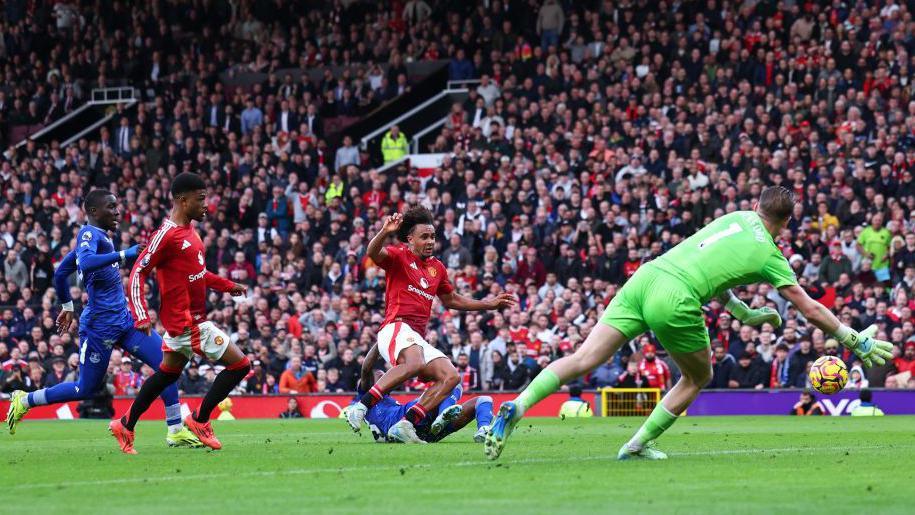
His first home game in charge, Amorim’s first win, Rashford had got the 2nd minute goal in the previous game, drawn at Portman Road, 1-1, against Ipswich Town’s ‘Tractor Boys’, on November 24th, 2024. Amad, steaming down the right flank, bursting into the 20 yard box at the right corner, firing a dipping ball, with Swiss ‘keeper, Arijanet Muric, looking to collect, but Marcus, nipping in to bundle the ball past him, 1-0, in Ruben’s first ever game in charge, going on as he had under previous managerial regimes.
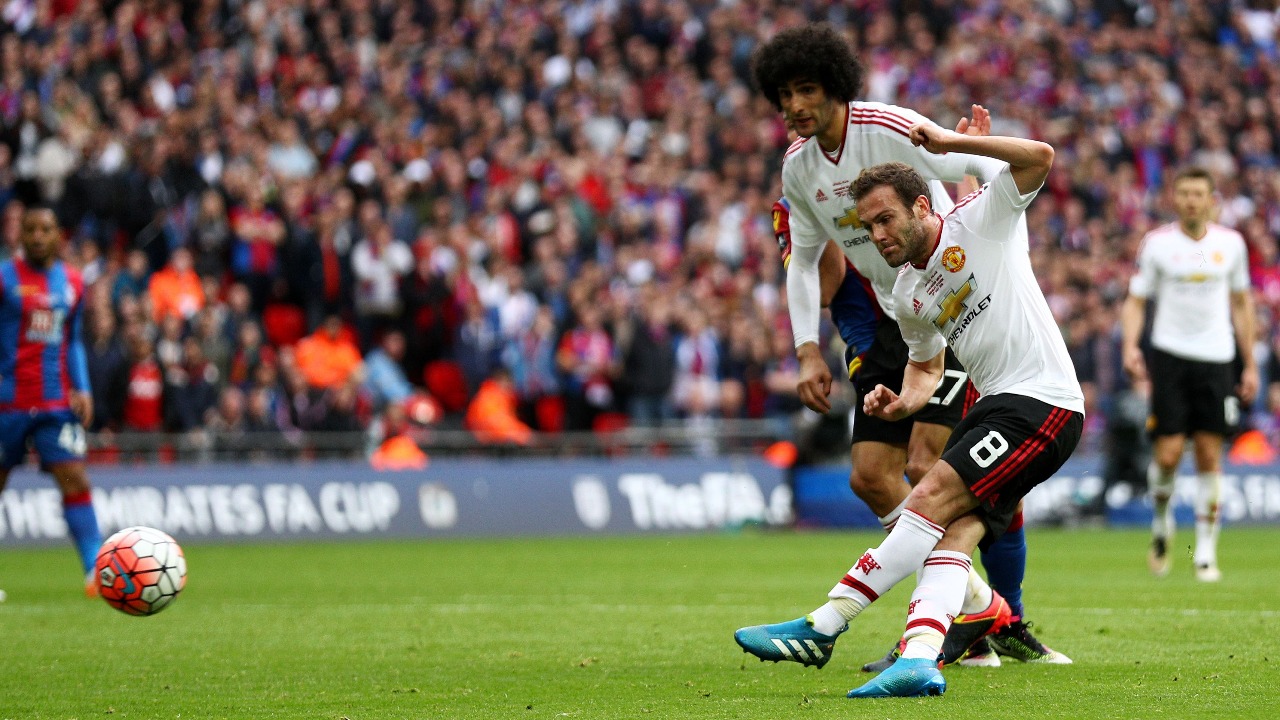
Beginning with Holland’s Louis van Gaal, under whose direction Rashford was a part of the team that won the 2016 FA Cup Final on May 21st, 2-1 (1-1), a.e.t., against Crystal Palace at Wembley, before the appointment of Portugal’s José Mourinho, who coached Marcus to be a winner in the sides that won the League Cup, 3-2 on February 26th against Southampton, ‘The Saints’, at Wembley, and the Europa Cup in 2017, 2-0 against Ajax of Amsterdam at Friends Arena, Solna, Stockholm, Sweden, on May 24th.
Under the stewardship of Ole Gunnar Solskjaer, Rashford reached the Final of the 2021 Europa Cup against Spain’s Villarreal CF, ‘The Yellow Submarine’, 1-1 (1-1), a.e.t., before losing 10-11 on penalties, # 4 converted by Marcus, after Uruguay center forward, Edinson Cavani, had given United hope, close-in on 55 minutes from 5 yards; having the ball laid into his path by McTominay, center edge of the six yard box, right-footed, 1-1, after a 20 yard Rashford effort, deflecting off left back, Alfonso Pedraza, and center back, Pau Torres’ lunging, right leg outstretched to dispossess Edinson, unavailingly; Scot directing a short ball forward, and Cavani’s strike, low, direct, making sure it hit the back of Argentine ‘keeper Gerónimo Rulli’s net.
Legendary Norwegian striker for United, Solskjaer doubtless didn’t see Spanish ‘keeper David de Gea’s missing of his spot kick, at Stadion Gdańsk, Poland, on May 26th, as tragicomic. As an 81st minute substitute for center forward, Andy Cole, to win the 1999 European Cup Final, 2-1, against FC Bayern Munich, on May 26th at Barcelona’s stadium, Camp Nou, Ole had raised his right boot to connect with the ball, sending it high into the net, almost on the goal line, at the far post, on 90+3 minutes, following an in-swinging corner by right wing, David Beckham, that found center forward, Teddy Sheringham, who’d already re-directed a Giggs effort into the Bayern net on 90+1 minutes, to equalize right midfielder Mario Basler’s 6th minute direct free-kick, from outside the 20 yard box, awarded by Italian referee, Pierluigi Collina, after center forward, Carsten Jancker, was deemed to have been impeded by United’s Norwegian center back, Ronny Johnsen; low, bending around the United wall, 1-1. But Sheringham, on as a substitute on 67 minutes for Sweden’s left winger, Jesper Blomqvist, headed the ball from Beckham’s cross down, across the goalmouth, where Solskjaer, known as ‘the baby faced assassin’, stuck out his foot, 2-1.
Marcus went on to win the 2023 League Cup with ten Hag, 2-0 against Newcastle United, ‘The Magpies’, on February 26th, with Netherlands’ center forward, Wout Weghorst, on a season’s loan from Burnley, since January 13th, starting. Wout, left and front of the 20 yard box, ball along the ground to Rashford; running on, left corner of the six yard box, lofting the ball, left-footed, over advancing German ‘keeper, Loris Karius, high into the top of the net: United’s second on 39 minutes.
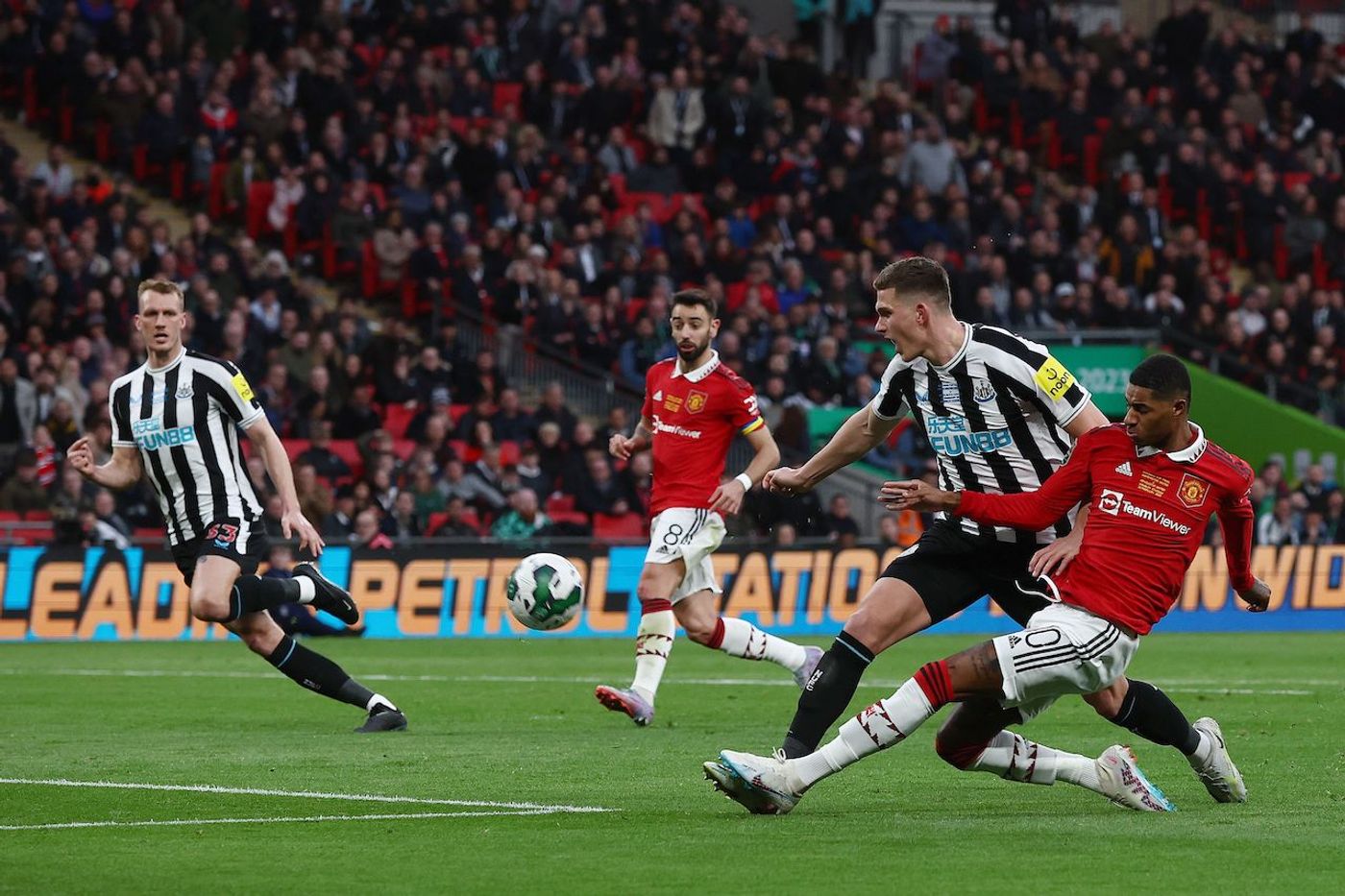
Marcus would win the FA Cup again, this time against near neighbor, Manchester City, a year later; turning inside at the left touchline, crossing a high ball, right-footed, over to Garnacho on the right wing, bearing down on the right corner of the 20 yard box, finding Fernandes to his left, edge and center; a ball all along the ground. Bruno, similarly, slipping a first-time pass along the pitch, through to Mainoo, left of the six yard box. Kobbie, outside City ‘keeper Stefan Ortega’s penalty area, opposite the left post; passing, the ball to the German’s right: into the net, 2-0, on 39 minutes.
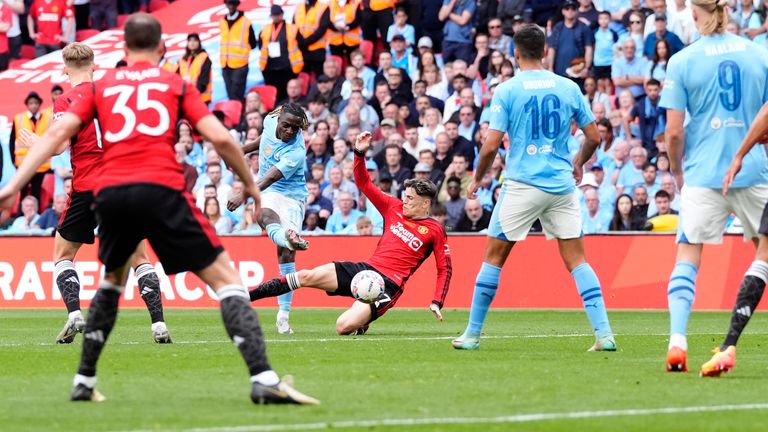
However, after the team lost at the Emirates Stadium of Islington’s Arsenal, ‘The Gunners’, 0-2, on December 4th, and at home to Nottingham Forest, 2-3, on December 7th, with Rashford coming on only for the last 30 minutes in each game, and the club having slipped to 13th place, before ultimately finishing 15th, on 42 points, Amorim summarily dropped him from the squad, citing ‘work rate’ as the issue; sending Marcus on loan to Aston Villa, ‘The Lions’, on February 2nd, 2025, until season’s end.
That backfired, with Marcus remaining joint top-scoring center forward, with Dane, Rasmus Højlund, also finishing on 4, despite the fact that the last of Rashford’s goals, (2) in 2024-25, were against Everton at home on December 1st, 4-0, while Rasmus had until May 25th, 2025, to get his 4, and a 27th April, 2025, goal at Bournemouth, ‘The Poppies’, 1-1, on 90+6 minutes, obviously representing a lot more effort, was it. That draw at Victoria Park was the second in 8 games; the other being goalless at home to Manchester City, on April 6th, 2025, with United losing 6, 4 without reply, before the Europa Cup Final, taking place after the last match of the regular season, at home to Villa, on May 25th, 2025, won 2-0. Losing 6 out of 8, and failing to score in 5, wasn’t adequate preparation.
Zirkzee finished the term on 3, his last league goals (2) of the season taken alongside strike-partner Rashford in that December 1st win over Everton, 4-0. Seemingly only a pulled hamstring, during training, keeping Marcus out of Villa’s losing FA Cup semi-final on April 26th, 2025, at Wembley, 0-3, to eventual winners, Crystal Palace, on May 17th, 2025, 1-0, against Manchester City, prevented a hero’s return, after Rashford’s 58th minute opening goal in the quarter final. Latching on to a fast grass-cutter, from French left back, Lucas Digne, across the 20 yard box, following a through ball from Belgian central midfielder, Youri Tielemans, that found Digne at its left corner, Marcus side-footed, right-footed, close to the penalty spot, along the turf, into the right corner of the net. It had the decisive impact in the March 30th, 2025, win over Preston North End (PNE), ‘The Northenders’, away at Deepdale, 3-0, with a Rashford penalty on 63 minutes, bottom right corner, low, sending ‘keeper, David Cornell, the wrong way, 2-0, pursuant to Preston’s Welsh left back, Andrew Hughes, back-heeling a kick at left wing, Morgan Rogers, at the right corner of the 20 yard box. However, injury left Marcus unable to face Spurs, or play in the latter stages of the Europa Cup; even if Ruben had relented, and recalled him to restore bite to the forward line, which he couldn’t.
Having seen ten Hag’s managerial suicide bid fulfilled, after his sale of McTominay to Naples, speculation at the Stretford End was that Marcus’ departure to Villa Park was Ruben’s own version of turning the gun upon himself. What was clear from ten Hag’s tenure was a move away from twin center forwards to inside forwards, with left sided players, or wingers, being deployed on the right, and vice versa; as it were a turning inwards upon the strikers’ ambition. The modern method was to use a lone center forward, supported by an inside left and right, in a way that resembled a spear thrust at goal.
Whereas previous United squads had been successful with left footed wingers on the left, and right footed wingers on the right, which widening of the pitch afforded twin strikers opportunities for plundering in the goalmouth from the crosses that came in, the modern model was inversion, with inverted wingers, like Amad, left footed, on the right, or Rashford, right footed, on the left, as inside forwards. That the left winger was right footed, and vice versa, might have looked curious to old-fashioned punters going through the turnstiles, but such inversions as inside forwards were spear-heading the future.
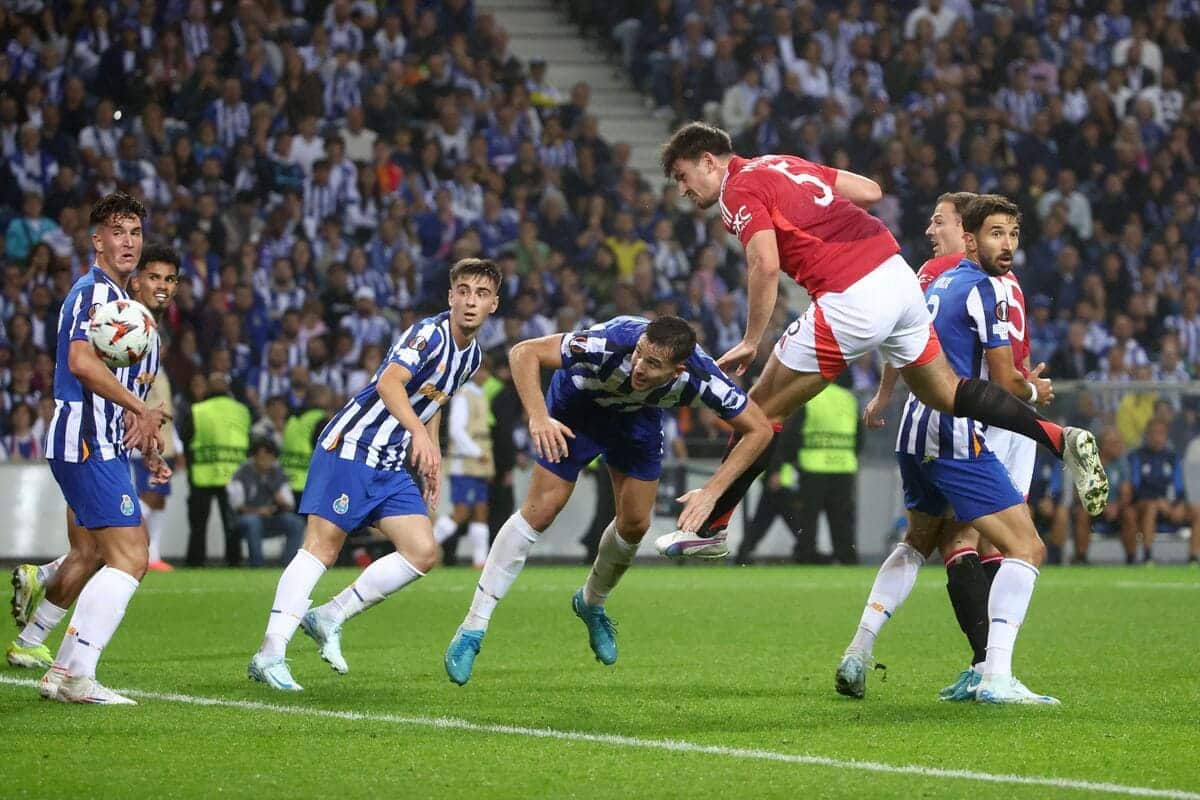
Ten Hag and Amorim envisioned wing backs in support of the strike force, a midfield of two, and three central defenders; effectively abandoning the full back concept in favor of center halves at left and right, and with a further central defender between them. The repercussions and ramifications were singular. Despite the old-fashioned ‘never say die’ efforts of center half, Harry Maguire, scorer of the equalizing headed goal, center of the six yard box, on 90+1 minutes, from Danish midfielder Christian Eriksen’s corner on the right, away in Portugal at FC Porto’s Estádio do Dragão, ‘the stadium of dragons’, 3-3, in the league stage of the Europa Cup, on October 3rd, 2024, and another winning headed goal, center right of the six yard box, on 120+1 minutes, from a ball stroked forward by Brazilian Casemiro, left of center midfield, half way inside the Lyon half, 5-4 (2-2), a.e.t., in the April 10th, 2025, Europa Cup quarter-final, second leg, at home to the French Ligue 1 club, aggregate 7-6, it was evident that United didn’t have the personnel, and not excluding center half Maguire, to keep the ball out of Onana’s net.
Tactically there’d been significant issues since Louis van Gaal, the Netherlands’ 2014 World Cup manager in Brazil, attempted to deploy the 1-3-4-3 formation at United, after his being appointed to replace failed former Everton manager, David Moyes, effectively inviting the sack, as Ferguson’s replacement for 2013-14, after losing on January 22nd, 2014, at home on penalties in the semi-final second leg of the League Cup to Sunderland, 2-1 (1-0), a.e.t., 3-3 aggregate, with central midfielder for Scotland, Darren Fletcher, the only successful spot kicker, 1-2.
Van Gaal’s appointment, following the Netherlands’ defeat of Canarinho, ’Little Canary’, Brazil, 3-0, at Estádio Nacional Mané Garrincha, Brasilia, in the July 12th play off for third place overall, while Germany won the 13th July Final, 1-0, at Estádio Maracanã, Rio de Janeiro, against Argentina, began the introduction and implementation of a system fraught with choosing the requirements of defensive adaptivity; mobile or static center backs: attacking or defensive wing backs.
Matteo Darmian, full back for Italy’s Azzurri, ‘The Blues’, and on June 14th, 2014, World Cup debuting at right back, in a defeat of England, 2-1, at Arena da Amazônia, Manaus, substituted for Argentine left back, Marcos Rojo, on 66 minutes, in van Gaal’s FA Cup winning team of 2016, after arriving for ₤12.7m on July 11th, 2015, from Torino FC, Turin, and later returned to Italy at Inter Milan, La Beneamata ‘The Well-Cherished One’, where he’d be a part of the squad that won Serie A in 2020-21, alongside ex-United greats; Armenia’s right wing and captain, Henrikh Mkhitaryan, winner of the League Cup and Europa Cup of 2017 with Mourinho; left wing and/or full back, Ashley Young, who’d been in the squad that won the 2012-13 title for Ferguson, # 13 in his retirement season; South America’s Chilean forward, Alexis Sánchez, who’d had what looked like a perfectly good equalizing goal ruled out for offside in the May 19th 2018 FA Cup Final, lost 0-1 to Chelsea, and Romelu Lukaku, who’d also played in that game for José.
Most notably, in the case of center back Chris Smalling’s sending off on 105 minutes for wrestling to the pitch Congo’s left wing, Yannick Bolasie, in the 2016 FA Cup Final, Darmian, on occasion, was deployed by van Gaal as a libero or ‘sweeper’, which is a possibility for a defensive wing back, called by the Italians terzino volante (or vagante); patrolling the rear. Either from the left wing back, or right wing back position, called vianema, the Italian sweeper system was named for Giuseppe Viani, manager in the 1940s of Unione Sportiva Salernitana 1919, ‘The Maroons’, Salerno, Campania, winners of Serie B in 1946-47.
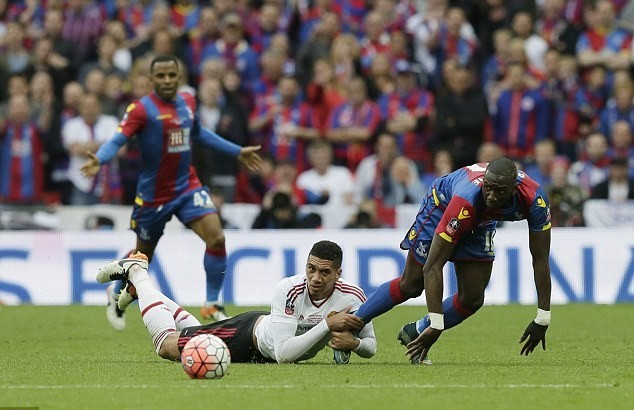
If Amorim had the ‘door bolt’ system in mind, it’d been initially developed in the 1930s and 40s by Karl Rappan, Austrian manager of Swiss club, Servette FC, Geneva, and Switzerland’s national team; called catenaccio by the Italians’ smaller clubs. Using the withdrawn center back of three half backs between the full backs; leaving two in midfield: right and left halves. Primarily, ‘the ‘chain’ was a means of protecting younger players from injury in the brutal rigors of competition; as UEFA’s 2 regulation substitutes weren’t adopted by all members of the Federation of International Football Associations (FIFA) until 1967-68. The future of wing backs at Manchester United was of a high degree of technical virtuosity unavailable to most defenders; of the type of full/wing back: or of the type of their center backs/wing halves.
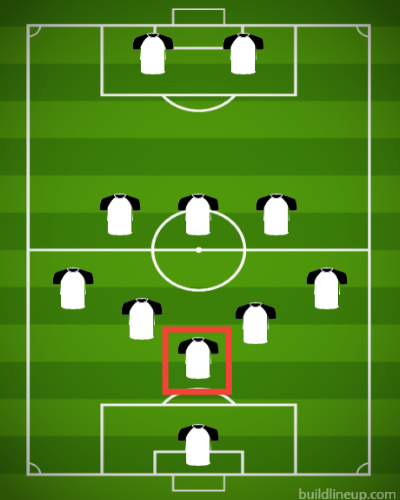
Apart from the fact that the side would have to have a player of the quality of Sergio Ramos at Real Madrid, four European Cups and four World Club Cup doubles, in 2014, ‘16, ‘17, and ‘18, and the World Cup with Spain, La Furia Roja, ‘The Red Fury’, in 2010, 1-0 in the July 11th Final at Soccer City, Johannesburg, South Africa, against the Netherlands’ Oranje, at the center of their three at the back, they’d also need a variety of wing full backs, who could attack and/or defend, and fulfill the role of sweeper, as Darmian could; if that role wasn’t being fulfilled by the central back of the three.
If that was in the mind of Amorim, that’s what the club needed. A libero of the caliber of Ramos, or even better, Germany’s ‘Kaiser’, Franz Beckenbauer, captain of the Bundesliga’s three-time European Cup winners (1974, ‘75, and ‘76), Bayern Munich, ‘Star of the South’, and of the national side at their successful World Cup campaign of 1974, beating the Netherlands, 2-1, in the July 7th Final at Olympiastadion, Munich, while Jupp Hynckes, an unused substitute, watched the match from the bench.
A consummate defender, as well as a box-to-box midfield-striker, with the ‘free man’, centromediano metodista, ball winner, and deep lying playmaker, attacking, as Juvé manager Felice Borel (1942-46) used center back, Carlo Parola, after winning possession. The wing back, for example, Dalot, taking the sweeper’s role, center, and back, while the ‘free man’ roams upfield, presupposes a reconfiguration of sistema; team rotation: the Italian method. A further assault on the opposition goal, through the newly revised center; or re-entrenchment after scoring.
What’s presented is often a falsehood; three central defenders at the back: whereas they’re a half back line, which devotees of the United team of the 1960s that won the European Cup on May 29th 1968 against Benfica, 4-1 (1-1), a.e.t., at Wembley on May 29th, would appreciate. Bill Foulkes, at center half, was capped for England on October 2nd 1954 against Northern Ireland, 2-0, at Windsor Park, Belfast, County Antrim, as a right back, whereas Nobby Stiles, in the England team that beat Germany in the World Cup Final, 4-2 (2-2), a.e.t., on July 30th at Wembley in 1966, with Leeds United’s Jack Charlton, and captain Bobby Moore of West Ham as center backs, was a left half, as Scot, Paddy Crerand, was a right half in United’s ‘68 team, and is what’s expected in a sweeper system.
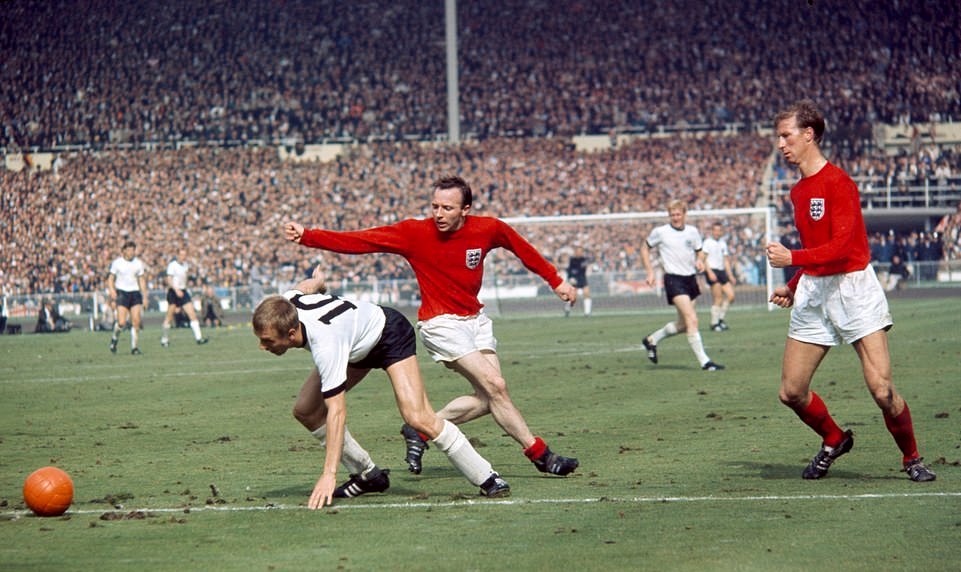
If left half and right half move up into midfield, as wing halves/inside forwards, left and right wing full backs remain with the center half; left back, center back, and right back. If the center half moves up, as a threatening ‘loose cannon’, the left, or right wing full back, moves up with him, and the other remains; three at the back; left half, right half, and full back/sweeper, which Foulkes’ position as center half, in the ‘68 side, presupposes, as United’s right back, in the 1950s.
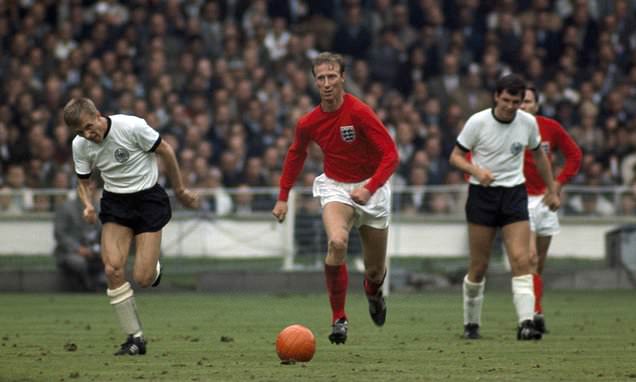
The confusion amongst English coaches is the inability to recognize the fluidity of sistema, which is the Italians’ term for the English system, that is, the three at the back mutate from being left half, right half, and center half, to left back, right back, and center back, with variants; for example, five at the back, where the full backs are zonal defenders, and the half back line is similarly static.
Backs and halves have to be well coached to be adequate to their roles’ demands; if there’s a rotation of halves and backs. Although ‘three-at-the-back’ is usually presented as three center backs, it’s composed of a rotation of left and right wing full backs, half backs/inside forwards, and a deep lying center forward, like Leeds United’s Welshman John Charles, who enjoyed this center back/center forward role at Juventus, as Il Gigante Buono, ‘The Gentle Giant’, transferring for £65,000 for 1957-58, winning the scudetto with 29 goals, and again in 1959-60, with 11 goals, and 1960-61, with 16.
Amorim signaled his intentions with the purchase of ‘Dynamite’ Denmark’s left wing back/left back, Patrick Dorgu, on February 2nd, 2025, from Italian Serie A club Unione Sportiva Lecce, ‘The Wolves’, for £25m, which signal was reinforced, post-season, by the arrival from South America of left wing back/left back, Diego León, and Paraguay’s Primero División club, Cerro Porteño, ‘The Cyclone’, for £3m, on July 5th, 2025.
Although ten Hag’s trio with Rashford, and Garnacho, didn’t succeed with Amorim, Højlund and Zirkzee were worse. Ruben’s solution was to spend big on improving his spear head, and Amad’s place in the team, despite his emergence as a left footed force to be reckoned with on the right, wasn’t guaranteed. Inside left, Brazilian Matheus Cunha, on June 12th, 2025, for £62.5m from Wolverhampton Wanderers, ‘Wolves’, where he netted 15 times in 2024-25; inside right, Cameroon’s Bryan Mbeumo, on July 21st, 2025, for £65m from West London club, Brentford, ‘The Bees’, Hounslow borough, ‘stinging’ 20 times in 2024-25, and Slovenia’s center forward, Benjamin Šeško, on August 9th, 2025, for £74m from German Bundesliga club, RasenBallsport Leipzig e.V., ‘The Red Bulls’, finding the net 13 times in 2024-25, duly arrived.
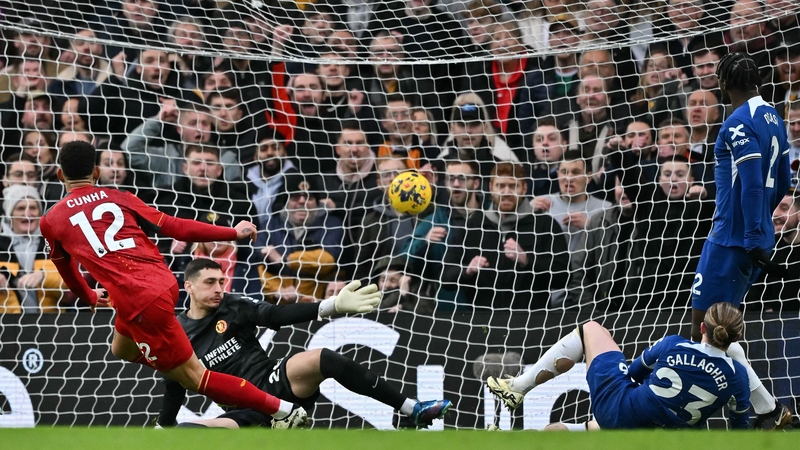
As an attacking wing back, Amad had reflected climate change. Ruben’s squad, with seven or more substitutes available for each outing, was beginning to look like those of American football in the United States, where ‘special teams’ played a large part in a coach’s thinking in getting to their season’s culminating Super Bowl. Amorim’s bringing on a defensive wing back for an attacking wing back, and moving the central defensive coordinator at the back, that is, the center half, up into midfield, was an option amongst several, with the fluidity afforded by insertions from the bench, and that future was now.
When United beat Merseysider’s Everton, 4-0, at home, on December 1st, 2024, with Rashford scoring twice, and the team at 9th place in the table, it was Amorim’s inexplicable decision to bench him that had resulted in subsequent successive defeats away to North London’s Arsenal, 0-2, on December 4th, 2025, and at home to Forest, 2-3, on December 7th, 2025, that saw the club slip to 13th, and eventually finish 15th. Over £200m, with add-on clauses, based on performance, was an awful lot of money to spend for someone whose judgment seemed that shaky, but only time could tell.
The majority of die-hard United fans felt that Alejandro’s scintillating zest as a winger should have starred against Spurs in the 2025 Europa Cup Final. Ruben preferred the midfield industry and guile of injury prone, Mason Mount, 5+9 appearances in 2023-24, and 8+9 in 2024-25, after being bought from Chelsea for 55m on July 5th, 2023, but then lately recovered from his most recent sojourn to the treatment room; though winger Alejandro finished the season with the second best total of league goals, 6, behind top scorers Bruno and Amad, with 8 apiece. As 6 wasn’t enough from McIlroy to prevent United’s relegation in 1973-74, with a total of 38 goals (-10), it’s arguable that Garnacho’s 6, creditable for a winger, was the difference between staying up and being relegated in 2024-25, with a total of 44 goals (-10).
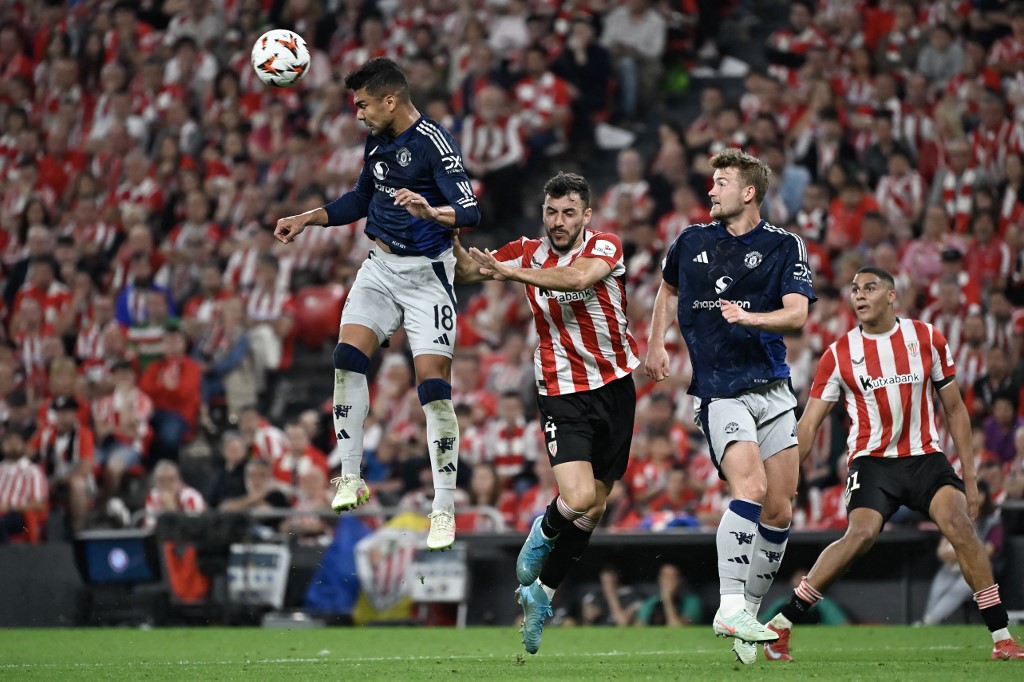
Mount netted twice in the May 8th semi-final second leg defeat of Bilbao, Lehoiak, ‘The Lions’, 4-1, at Old Trafford, but the team had already done the job in Bilbao, winning there on May 1st, 3-0, with Garnacho starting, 23+13 league appearances that term; replaced only after 84 minutes by defensive midfielder Mainoo, as the players from the bench consolidated the win.
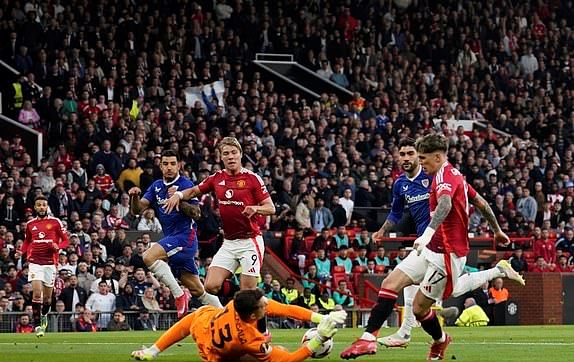
In the 72nd minute of the home leg, back to goal, turning a ball from French center back, Leny Yoro, inside the Bilbao penalty area, onto his left foot from his right, Mason holds it there. Spinning near the penalty spot, right-footed, finding the bottom right corner. Then again, the fourth of the night, on 90+1 minutes, aggregate 7-1. A long range shot, left-footed, from out on the left flank, catching Spanish ‘keeper, Julen Agirrezabala, off his line, pushing up, with Athletic Club seeking an impossible comeback. Ruben’s eye caught; and Alejandro’s out. Rejected, along with the other winners; McTominay and Rashford.
1 Mannion, Damian, ‘Arsenal’s Trophy Cabinet’, Talksport, Friday, October 26th, 2012, https://talksport.com/magazine/virals/121026/picture-arsenals-trophy-cabinet-redesigned-include-new-fourth-place-trop-183898 .
2 Santayana, George The Life of Reason, Vol. 1, Reason in Common Sense, 1905, p. 284.
Crerand in Midfield
Scot, Patrick ‘Paddy' Crerand, was the central midfield general that broke the half back line at Manchester United, but who played alongside him in midfield often defies analysis. A center half, flanked by a right half, and a left half, was how teams shaped up until the end of the Matt Busby era at United. The earliest successful variant being that of Dick Duckworth, Charlie Roberts, and Scot, Alex Bell, in the Ernest Mangnall managed side that won the league title in 1908 and 1911, as well as the 1909 F.A. Cup Final, 1-0, against Bristol City; (GK) Harry Moger, (RB) George Stacey, (LB) Vince Hayes, (RH) Dick Duckworth, (CH) Charlie Roberts (c), (LH) Alex Bell, (RW) Billy Meredith, (IR) Harold Halse, (CF) Jimmy Turnbull, (IL) Sandy Turnbull (1), (LW) George Wall.
The line held throughout the First and Second World Wars, with John Anderson, Allenby Chilton, and Henry Cockburn, of the team that won the 1948 F.A. Cup Final, 4-2, against Blackpool; (GK) Jack Crompton, (RB) Johnny Carey (c), (LB) John Aston, (RH) John Anderson, (CH) Allenby Chilton, (LH) Henry Cockburn, (RW) Jimmy Delaney, (IR) Johnny Morris, (CF) Jack Rowley, (IL) Stan Pearson, (LW) Charlie Mitten. Scot, Busby, began to field the youngsters known as ‘The Busby Babes’, with Eddie Colman, Mark Jones, and Duncan Edwards, the half back line that won the championship in 1955-56 and 1956-57, after the class of ‘48 had finally become champions in 1951-52, although with Don Gibson at right half, after being runners up in 1946-47, 1947-48, 1948-49, and 1950-51.
Though Edwards replaced Jackie Blanchflower at left half, Busby’s selecting him at center half, before the emergence of Mark Jones, and afterwards as an inside forward, demonstrated the versatility needed by a player in the period when there weren’t any substitutes, and flexibility had to be demonstrated by the eleven pitchside. Blanchflower’s pricelessness was as a left sided defender who could be deployed successfully as an attacking midfielder. In 27 starts in 1953-54 he scored 13 goals, 10 in 29 games in 1954-55, 3 in 18 in 1955-56, and with a further 11 starts in 1956-57, barely missing out on a title winners’ medal.

While United looked like winning the championship again in 1957-58, with Blanchflower on 18 starts for the season’s campaign, the club was devastated by an aircrash at Munich airport, Germany, as the squad returned from qualifying for a European Champions Cup semi-final against Real Madrid, drawing 3-3 with Red Star Belgrade. Reserve full back, Geoff Bent, England captain, and left back, Roger Byrne, right wing-half, midfielder Eddie Colman, left half, Duncan Edwards, who died 15 days later, center half, Mark Jones, left winger, David Pegg, center forward, Tommy Taylor, and Irish inside forward, Liam 'Billy' Whelan, all lost their lives, while right winger, Johnny Berry, and Northern Irish inside forward, Blanchflower, were too badly injured ever to play again.
After the single outfield substitute was introduced in 1965-66, and additionally the substitute ‘keeper in 1987, the onus was upon the flexible utility of the player on the bench, whereas before the spotlight had been on those fielded, irrespective of injury, that is, the quality of the players selected had to allow for flexibility, epitomized by Blanchflower, and also Edwards, who could play at center half, as he did in the lost 1957 F.A. Cup Final, 1-2, to Aston Villa, when injury to ‘keeper Ray Wood resulted in Jackie’s taking over between the goalposts, as well as at center forward. (GK) Ray Wood, (RB) Bill Foulkes, (LB) Roger Byrne (c), (RH) Eddie Colman, (CH) Jackie Blanchflower, (LH) Duncan Edwards, (RW) Johnny Berry, (IR) Liam Whelan, (CF) Tommy Taylor, (IL) Bobby Charlton, (LW) David Pegg. Roger Byrne, left back, as a left winger in 1951-52, scored 7 times.

What this meant for tactics and strategy was important, especially as what the Italians called sistema, that is, the English system, was changing from a half back line to twin central defenders, and a hard man in midfield. While the European teams adopted the libero, or 'free back', after the fashion of the Italian catenaccio, with the ‘sweeper’ playing behind the back four of twin center backs and two full backs, having freedom to move into midfield, or support the attack, soccer in England came to be based on a holding player in midfield, ahead of two central defenders, and the right and left full backs.
The role of sweeper was exemplified by Germany’s Franz Beckenbauer, captain in their 1974 World Cup Final defeat of Holland, 2-1, with center forward, Gerd Müller, Bomber der Nation, the decisive goal, on 43 minutes, at Olympiastadion, Munich. Central midfielder, Rainer Bonhof, released by right winger, Jürgen Grabowski, pass right footed, close by the touchline, inside his own half. Bonhof racing down the right, past sweeper, Arie Haan, right footed cross-pass, right of the 18 yard box, to Müller at the right corner of the penalty area. Gerd knocking the ball behind him, while the Dutch defenders surge ahead of him, stepping back for the ball, swiveling, and left back, Ruud Krol, turning back also, stretching his left leg to block, but Gerd’s right boot, striking the ball low, along the ground, into the left corner of the net, in an otherwise game of clumsy defending and two penalties.

What remained of the United squad, bolstered by Stan Crowther for £18,000, right half for Villa in the ‘57 F.A. Cup Final, and inside right from Blackpool, Ernie Taylor, for £6,000, lost the F.A. Cup Final of 1958 to Bolton Wanderers, 0-2, with a half back line of Goodwin, Cope, and Crowther, after defeat to Real Madrid in the semi-final of the European Cup, 1-3 away in the first leg and 2-2 at Old Trafford, 3-5 on aggregate; (GK) Harry Gregg, (RB) Bill Foulkes (c), (LB) Ian Greaves, (RH) Freddie Goodwin, (CH) Ron Cope, (LH) Stan Crowther, (RW) Alex Dawson, (IR) Ernie Taylor, (CF) Bobby Charlton, (IL) Dennis Viollet, (LW) Colin Webster.

The inaugural F.A. Youth Cup was won in 1952-53 by United against Wolves, 7-1 at home and 2-2 in the second leg away, 9-3 on aggregate, with Cope at center half as captain, alongside right half Coleman and left half Edwards. The Youth Academy won again against West Ham in 1956-57, 3-2 at Upton Park, 5-0 at home, 8-2 on aggregate, giving the club the first five F.A. Youth Cups, and enough young talent to carry the club to the ’58 F.A. Cup Final and runners up in the 1958-59 championship; (GK) David Gaskell, (RB) Barry Smith, (LB) Ray Maddison, (RH) Bob English, (CH) Reg Holland, (LH) Harold Bratt, (RW) Kenny Morgans (1), (IR) Nobby Lawton (1), (CF) Alex Dawson (3), (IL) Mark Pearson (2), (LW) Reg Hunter (1).
Wales’ Morgans, captain of the 1957 F.A. Youth Cup Final winning side, made 13 starts in 1957-58, and Pearson 8, while Scot, Dawson, 5 goals in 12 starts was at outside right in the '58 F.A. Cup Final, and scored 4 times in 11 starts in '58-59, while Pearson would net 3 times in 10 starts in 59-60, to Dawson’s 15 in 22, who’d tally 16 in 28 to Pearson’s 7 in 27 in 1960-61. Lawton would notch 6 in 20 starts to Pearson’s 1 in 17 and Dawson’s 2 in 4 in 1961-62, and would make another 12 starts in 1962-63 as ‘the Busby Babes' continued to carry the torch for their fallen predecessors.
The club wouldn’t win the F.A. Youth Cup again until 1964, with the first leg away, 1-1, at Swindon Town’s County Ground, followed by the home leg at ‘the Theater of Dreams’, 4-1, 5-2 on aggregate; (GK) Jimmy Rimmer, (RB) Alan Duff, (LB) Bobby Noble (c), (RH) Peter McBride, (CH) David Farrar, (LH) John Fitzpatrick, (RW) Willie Anderson, (IR) George Best (1), (CF) David Sadler (3), (IL) Albert Kinsey, (LW) John Aston (1).

Wilf would go on to be part of Busby’s coaching staff in charge of the reserve team, after a career ending leg break, causing Maurice Setters’ transfer from West Brom in January 1960 for £30,000, who’d score 12 goals in 159 league appearances, before transferred to Stoke City for £30,000, with his final game against Villa at home, 7-0, on October 24th, 1964. By then the team were on their way to winning the league title of 1964-65, with Nobby Stiles at left half. Although the permanence of the half back line seemed unchallengeable, especially after a glance at the program sheet, where names and positions invariably indicated the full backs as wing backs, and left and right halves as wing halves, the winning of the 1966 World Cup at London’s national Wembley Stadium, by Alf Ramsey’s ‘wingless wonders’, 2-2, and 4-2 a.e.t., against Germany, with a 4-4-2 formation, clarified the issue; (GK) Gordon Banks, (RB) George Cohen, (LB) Ray Wilson, (DM) Nobby Stiles, (CB) Jack Charlton, (CB) Bobby Moore (c), (RM) Alan Ball, (CF) Roger Hunt, (AM) Bobby Charlton, (SS) Geoff Hurst (3), (LM) Martin Peters (1).

Before his demise at Munich, Duncan Edwards was widely held to be the greatest of his generation. At left half he was amongst the top 33% of 10% left sided people in the population as a whole. Of the 3000 eligible to be selected at left half, left back, or left wing, in every million, Duncan was viewed as the best in his position, that is, one of a thousand in a million, or one in a million. As left sided players are at a premium, it makes no sense to confine them to defensive duties, while psychological studies show the left sided use the right side of their brain, that is, the creative side, which underscores the value of the left half as a creative midfielder, rather than a stopper center back. The advent of the utility midfield player, as substitute from 1965-66, gave further impetus to the freeing of the left half into midfield, as coaches experimented, with an inside forward dropping back to make a midfield pair.
In United’s case Bobby Charlton, former left wing, categorized as a deep-lying center forward, behind twin strikers, renowned for his long-range shooting. Brother Jack at Leeds United, and captain, Bobby Moore of West Ham, were the center backs in England’s World Cup win, with Bobby Charlton in the same role he had with United, while myopic Nobby Stiles was the rugged tackling ball distributor in midfield, whose loss of a contact lens was often cited as the reason for some rather horrendous lunges at moving objects on the pitch identifiable by shirt color alone. Nobby would continue at left half for the 1966-67 league title success, and the 1968 European Cup Final defeat of Benfica, 1-1, and 4-1 a.e.t., at Wembley; (GK) Alex Stepney, (RB) Shay Brennan, (LB) Tony Dunne, (RH) Pat Crerand, (CH) Bill Foulkes, (LH) Nobby Stiles, (RW) George Best (1), (CB) David Sadler, (AM) Bobby Charlton (2), (CF) Brian Kidd (1), (LW) John Aston.
The most telling observation is of David Sadler, who like Jackie Blanchflower could play center back, or center forward, as well as anywhere across the midfield, indicated on the program sheet as being a center back, tacitly accepting that Crerand and Stiles, as right half and left half, were central midfielders, rather than defenders alongside center back, Bill Foulkes, former right back, pressed into service there after the Munich aircrash. However, as Sadler could play in midfield, or at center forward, labels were misleading. United could play a half back line of Crerand, Foulkes and Stiles, or a center back pairing of Foulkes and Sadler, with Stiles in midfield, or Sadler and Stiles, or Sadler as a second striker (SS), or as a midfielder, even during a game, underlining the cleverness of manager, Sir Matt Busby, knighted by queen Elizabeth II after the European Cup win, as Sir Alf Ramsey was knighted, subsequent to his managing England to the World Cup, utilizing the players on the field fluidly, and without recourse to substitutions.
If Sadler played in midfield, it’d be alongside Crerand, with center back duties devolving upon Stiles, presupposing the flexibility of the half back line, and similarly if David played as a second striker, Crerand and Charlton would be the midfield, or Crerand, Charlton and Stiles, if Foulkes wasn’t under any pressure. Busby’s formula made for a fluid pattern of play, owing a lot to his experience with Blanchflower and Edwards in the left half role, as either could play in central defence, run the midfield, and attack as a second striker. Busby retired after the 1968-69 term, which was disappointing in that the side failed to beat South America’s champions, Estudiantes de La Plata of Argentina, in the 1968 Intercontinental Cup Final, held between the winners of the Copa Libertadores and the European Cup, defeated in the first away leg, 0-1, and drawing the home leg, 1-1, despite a Crerand right footed free kick, on 90 minutes, right midfield, just inside the Estudiantes' half, finding right winger, Willie Morgan, edge of the left corner of the penalty area, right footed shot to ‘keeper, Alberto José Poletti’s left, bottom right corner of the net, losing, 1-2 on aggregate; (GK) Alex Stepney, (RB) Shay Brennan, (LB) Tony Dunne, (RH) Pat Crerand, (CH) Bill Foulkes, (LH) David Sadler, (RW) Willie Morgan (1), (SS) Brian Kidd, (AM) Bobby Charlton (c), (CF) Denis Law (C. Sartori, 44 mins), (LW) George Best. Also failing to progress beyond the semi-final stage of that season’s European Cup, the team lost to Italian Serie A club A.C. Milan at the San Siro stadium, 0-2, before winning at home, 1-0; (GK) Jimmy Rimmer, (RB) Shay Brennan, (LB) Francis Burns, (RH) Pat Crerand, (CH) Bill Foulkes, (LH) Nobby Stiles, (RW) Willie Morgan, (SS) Denis Law, (AM) Bobby Charlton (1), (CF) Brian Kidd, (LW) George Best..
Best, wriggling past two Milan defenders on the right of the ‘D’, edging the ball past them with the outside of his right boot, inside the 18 yard box, prodding it wider right and forward to Charlton, running in, elevating his shot, narrow angle, right of the penalty area, close to the goal line, back of the net, 70 minutes, followed by a Law goal, disallowed, a yard out, right of the goalmouth, turning in a similar low cross shot, from the right side of the 18 yard box, ball yards over the line, ‘keeper Fabio Cudicini beaten, back in play, back heeled, by Cudicini, French referee Machin turning, a blind eye, 1-2 on aggregate.

Busby was replaced by Wilf McGuinness for 1969-70, and Scot, Ian Ure, arrived from Arsenal to replace Bill Foulkes as a partner for Sadler in central defence for £80,000, effectively signaling the end of the half back line, as more than a nominative concept, relating to right sided defensive midfielders, and left sided creative midfielders, in favor of twinned center halves. Foulkes appeared on only three occasions for Wilf, and his last before retirement, age 37, was in a defeat, 1-4, to Southampton at Old Trafford on August 16th, 1969. McGuinness, in fact, revolutionized the sistema at United, where wingers were henceforth understood to be midfield players, as distinct from defenders, that is, center backs and full backs, and forwards.
Success on the field didn’t transpire, with the team failing to progress beyond the semi-final stage in the League Cup, losing to Manchester City, 1-2 at Maine Road; (GK) Alex Stepney, (RB) Paul Edwards, (LB) Tony Dunne, (RH) Francis Burns, (CH) Ian Ure, (LH) David Sadler, (RW) George Best, (CF) Brian Kidd, (AM) Bobby Charlton (1), (DM) Nobby Stiles, (LW) John Aston. Although Charlton leveled the score, after Kidd, wide and deep on the right, inside the City half, lofted a ball with his left boot that right back, Tony Book, center of the 18 yard box, tried to trap, but inadvertently played into the path of Bobby instead, running in right of the penalty area, left foot strike, 1-1, on 66 minutes, the team drew 2-2 at home; (GK) Alex Stepney, (RB) Paul Edwards (1), (LB) Tony Dunne, (RH) Nobby Stiles, (CH) Ian Ure, (LH) David Sadler, (RW) Willie Morgan, (CM) Pat Crerand, (AM) Bobby Charlton (1), (CF) Denis Law (1), (LW) George Best.

Ure, inside his own half, center circle, left footed pass forward to Crerand, left of center midfield, outside of his right boot, between Alan Oakes, nearer, in a central position, relative to the ‘D’ of the City 18 yard box, and center back, Mike Doyle, further off, in positional terms, relative to the right edge of the 'D', finds Paul Edwards, nudges the ball past left back, Glyn Pardoe, runs on into the 18 yard box, right of the 'D', level with the right edge of the penalty area, ball struck, right footed, top right corner of the net, on 23 minutes, 1-1. Ure, again inside his own half, left of the center circle, left foot pass to Best, inside the center circle. Best surges forward into the City half, shrugs off pursuing striker, Ian Bowyer, wins the ball off his right boot in a tackle with midfielder, Alan Oakes, shoots right footed from outside the 18 yard box, left of its right corner, ‘keeper Joe Corrigan parries, can’t hold. Law, inside the penalty area, pounces on 60 minutes, left footed strike, 2-1, but 3-4 on aggregate. Similarly, in the F.A. cup semi-final, the team lost a third replay, 0-1, with ‘The King’, as goal scoring legend, Law, was known to the die hard terraced fans at the Stretford End, benched for the single goal affair; (GK) Alex Stepney, (RB) Paul Edwards, (LB) Tony Dunne, (RH) Pat Crerand, (CH) David Sadler, (LH) Nobby Stiles, (RW) Willie Morgan, (CF) Brian Kidd, (AM) Bobby Charlton, (CM) Carlo Sartori (D. Law, 61 mins), (LW) George Best.

There was a chance of silverware for the Old Trafford trophy cabinet straightaway in 1970-71, with the club reaching the Final of the Watney Mann Invitation Cup, contested four times from 1970-73, pre-season, before discontinued, sponsored by the brewery, and known as the Watney Cup, held for teams scoring most goals in each of the four divisions of the Football League the previous season, who had not been promoted, or admitted to a European competition.
Two teams from each division took part, that is, eight participants, in a knockout format, each match a one-off, with no replays. The final took place at the home ground of one of the finalists, rather than a neutral venue. In the August 5th, 1970, semi-final, United defeated Second Division, Hull City, on penalties, 4-3, a.e.t., 1-1, the first ever penalty shoot out in English soccer, with Denis Law equalizing on 78 minutes an 11th minute headed opener from Chris Chilton, later substituted by Stuart Pearson, who’d be United’s center forward during their Second Division championship winning season of 1974-75, bought for £200,000 by then Scots’ manager, Tommy Docherty, after the club were relegated in 1973-74, and scoring 17 goals, as the team returned to the First Division; (GK) Alex Stepney, (RB) Paul Edwards, (LB) Tony Dunne, (CM) Pat Crerand, (CB) Ian Ure, (CB) David Sadler, (RW) Willie Morgan, (SS) Denis Law (1), (AM) Bobby Charlton, (CF) Brian Kidd, (LW) George Best. City goalkeeper, Ian McKechnie, turned from hero to villain in front of Bunkers Hill at Boothferry Road, saving from fellow Scot, Law, but hitting Stepney’s bar as ‘The Tigers’ outfield players bottled it and Ian was forced to step up. Best, Kidd, and Charlton completed their spot kicks successfully, 3-3, before Denis’ failure, but Hull striker, Ken Wagstaffe, also failed, leaving Morgan to ensure that McKechnie had no one to talk to in the dressing room afterwards.
The Final took place on August 8th, 1970, at The Baseball Ground; (GK) Alex Stepney, (RB) Paul Edwards, (LB) Tony Dunne, (CM) Pat Crerand, (CB) Ian Ure, (CB) David Sadler, (RW) Willie Morgan (N. Stiles, 57 mins), (SS) Denis Law (J. Fitzpatrick, 25 mins), (AM) Bobby Charlton, (CF) Brian Kidd, (LW) George Best (1). Fitzpatrick, winning a tackle, left footed, with Wales’ midfielder Alan Durban, edge of the ‘D’, center, ball breaks to Best, on 32 minutes, a yard or so in front of the penalty spot, left footed strike, despite left back John Robson’s attempt at a block, low into the bottom left corner of the net, 1-2, but not enough. Derby manager, Brian Clough, secured his first trophy, 4-1.
The club 18th in the league, failed to beat Aston Villa in the 1970-71 League Cup semi-final at home, despite a 44th minute equalizer from Kidd, beginning the move on the right, a pass through the legs of Stonehouse referee, David Smith, to Stiles, Kidd runs on into the 18 yard box. Stiles to Sartori, right touchline, a high ball from Carlo, left footed, header at the edge of the 18 yard box, Scots' right back, Charlie Aitken, towards Brian, rather than cleared upfield, leapt at by the striker, right corner of the penalty area, struck off the ground, left footed scissors-kick, screamer, 1-1, far left corner of the net; (GK) Jimmy Rimmer, (RB) John Fitzpatrick, (LB) Tony Dunne, (RH) Pat Crerand, (CH) Ian Ure, (LH) David Sadler, (RW) Willie Morgan, (CF) Brian Kidd (1), (AM) Bobby Charlton, (SS) Denis Law, (LW) George Best.
It was 1-2 at Villa Park, despite taking a 14th minute lead through Kidd; (GK) Jimmy Rimmer, (RB) John Fitzpatrick, (LB) Tony Dunne, (RH) Pat Crerand, (CH) Ian Ure, (LH) David Sadler, (RW) Willie Morgan, (CF) Brian Kidd (1), (AM) Bobby Charlton, (SS) Denis Law, (LW) George Best.
A long, hoofed ball, from the right full back position, by the United 18 yard box, bouncing ahead of Brian, deep inside the Villa half, between central defenders, Fred Turnbull and Brian Tiler. Kidd gets ahead of the ball, shielding it, back to the Villa goal. Tiler kicks at the ball, hits Kidd in the chest, appeals for a handball. Kidd shapes to go out wider on the right, ball on his right boot, instead turns inside Turnbull, ball on his left boot, right corner of the 18 yard box, easing the ball past Fred, with the outside of his left boot, allowing the ball to run on, then passing the ball back, with his right boot, again onto his left, pushing the ball ahead of him, past the lunging form of Tiler, racing on, nudges the ball, left of diving ‘keeper, John Dunn, by the penalty spot, left footed strike low, along the turf, left side of the net, 1-0. Losing 2-3 on aggregate meant a brief return to the manager’s reins for Busby from December 29th, 1970, before the appointment of Leicester City’s Frank O’ Farrell for 1971-72.
McGuinness had begun the 1970-71 season’s campaign with a defeat, 0-1, to Leeds United, fielding a side containing seven defenders, including the ‘keeper, which was indication enough that there’d be problems ahead; (GK) Alex Stepney, (RB) Paul Edwards, (LB) Tony Dunne (CM) Pat Crerand, (CB) Ian Ure, (CB) David Sadler, (DM) John Fitzpatrick, (DM) Nobby Stiles (A. Gowling, 46 mins), (AM) Bobby Charlton, (CF) Brian Kidd, (SS) George Best. Only Northern Ireland's Best, Charlton, and Kidd weren’t recognizably concerned with defence, and in the following 0-0 home draw with Chelsea, center forward Kidd was replaced by Scots’ right wing, Morgan, brought for £110,000 from Burnley for 1968-69, after John Aston, son of John Aston, left back in the ‘48 F.A. Cup Final winning team, was carried off before half time by coach, Wilf McGuinness, and trainer, Jack Crompton, in the course of a 0-0 draw at Manchester City’s Maine Road, on August 17th, 1968, suffering from a leg break; (GK) Alex Stepney, (RB) Frank Kopel, (LB) Tony Dunne (RH) John Fitzpatrick, (CH) David Sadler, (LH) Nobby Stiles, (RW) George Best, (SS) Alan Gowling, (AM) Bobby Charlton (c), (CF) Brian Kidd (LW) John Aston (F. Burns, 45 mins.).
Crerand was initially replaced by Scot, Fitzpatrick, as invariably the first seven players on Wilf’s team sheet were defensive, while his disciplining of legendary contributors, Charlton, for example, made to do 10 press ups, and his inclusion of try outs, for example, Scots' right back Willie Watson, in preference to seasoned campaigners, didn’t serve his cause. Although Scot, Francis Burns, who’d featured in six of the European games, as the club progressed to the '68 Final, was restored to favor, defeat at St James’ Park, Newcastle, 0-1, on October 31st, 1970, suggested Wilf’s teams were too defensive to create anything for the forward line; (GK) Jimmy Rimmer, (RB) Paul Edwards, (LB) Tony Dunne, (DM) John Fitzpatrick, (CB) Steve James, (CB) David Sadler, (RW) George Best, (DM) Francis Burns, (AM) Bobby Charlton, (CF) Brian Kidd, (LW) John Aston.

What seemed to have obsessively attracted McGuinness was the idea that the right back, for example, Paul, together with a defensive half back line, for example, Sadler, Foulkes, and Stiles, where Stiles, or whoever was selected at left half, in fact had the left back role, leaving Dunne, for example, or Fitzpatrick, nominally at left back, as sweeper. Whereas Busby had thought of it as an option, within the fluid interchangeability he’d conceived, for example, Sadler moving from center back to center forward, with Paul moving to center back, while Fitzpatrick, and/or Burns, in the side selected to play Newcastle, that is, moving to full back/sweeper, Wilf’s selecting of upwards of seven defensive outfield players suggested the libero as basic to his thinking as a coach.
For a while Watson replaced Paul Edwards at right back, while Italian inside forward, Carlo Sartori, and Gowling were given their chance. Crerand was restored to the team for the game on December 19th, 1970, at home to Arsenal; (GK) Jimmy Rimmer, (RB) Willie Watson, (LB) Tony Dunne, (CM) Pat Crerand, (CB) Steve James, (CB) John Fitzpatrick, (RW) Willie Morgan, (CM) Carlo Sartori, (AM) Bobby Charlton, (CF) Brian Kidd, (SS) George Best.

A crossfield move begun by Charlton, right, deep in his own half, long ball, right footed to Sartori, left wing, moving out of the United half up the left touchline, level with the left corner of the 18 yard box, cross right footed, Kidd back-heading the ball on, left edge of the penalty area, left winger George Armstrong trying to hoof the ball clear, rebounds to Best off the legs of center back, Peter Simpson. Best stabs the ball towards the goalmouth, stifled by the defenders, trying to control the ball again, kicked away by right back, Pat Rice, not far enough. Sartori, running in right of the penalty area, before left back, Bob McNab to Carlo's left can react; left foot, on 41 minutes, high into the right side of the net, 1-3.
It was mene tekel upharsin for McGuinness, with the club 18th, following a draw, 4-4 against Derby County at their Baseball ground, on December 26th, 1970; (GK) Jimmy Rimmer, (RB) John Fitzpatrick, (LB) Tony Dunne, (CM) Pat Crerand, (CB) Ian Ure, (CB) David Sadler, (RW) Willie Morgan, (SS) Denis Law (2), (AM) Bobby Charlton, (CF) Brian Kidd (1), (LW) George Best (1).
. At 0-2 Law headed a goal, on 55 minutes, into the top left corner of the net from a Morgan cross, to the right of the 18 yard box, and outside of it, that found Law, center of the 18 yard box, by the penalty spot, 1-2. Charlton, corner on the right, taken right footed, back-header by central defender, David Sadler, right corner of the penalty area, parried by ‘keeper, Les Green, falls to Best, a yard from the goal line, on 57 minutes, swept in right footed, 2-2. Charlton, corner on the left, taken right footed, diving header from Law, right of center of the penalty area, bottom of the net, 3-2 up on 59 minutes, and 4-3 down, Charlton corner on the right, taken right footed, Kidd header just outside the penalty area, left of center, top left corner of the net, 4-4, on 75 minutes, guaranteeing Busby’s return.

Until the end of season 1970-71 the ghost of the half back line returned to haunt, beginning with a win at Chelsea, 2-1, on January 9th, 1971; (GK) Alex Stepney, (RB) John Fitzpatrick, (LB) Tony Dunne, (RH) Pat Crerand, (CH) Paul Edwards, (LH) Nobby Stiles, (RW) Willie Morgan (1), (SS) Alan Gowling (1), (AM) Bobby Charlton, (CF) Denis Law, (LW) John Aston. Although Paul Edwards had impressed as a full back, scoring from long range against City in the 1969-70 season's League Cup semi-final, in 1970-71 he was often deployed as a center back, while Gowling, in the team for Best against the Stamford Bridge club, and who’d later be second striker alongside Malcolm Macdonald at Newcastle, in the side for Aston against Southampton, netted four for Busby alongside Best, at The Dell, in a home defeat of ‘The Saints’, on February 20th, 1971, 5-1; (GK) Alex Stepney, (RB) John Fitzpatrick, (LB) Francis Burns, (CM) Pat Crerand, (CB) Paul Edwards, (CB) David Sadler, (RW) Willie Morgan (1), (SS) George Best, (AM) Bobby Charlton, (CF) Alan Gowling (4), (LW) John Aston. Stiles played what proved to be his last game away at Coventry, 1-2, on April 13th, 1971, with Sadler preferred thereafter, as Nobby was transferred to Middlesboro for £20,000; (GK) Alex Stepney, (RB) Tony Dunne, (LB) Francis Burns, (CM) Pat Crerand, (CB) Paul Edwards, (CB) Nobby Stiles, (RW) Willie Morgan, (SS) Alan Gowling, (AM) Bobby Charlton, (CF) Brian Kidd, (LW) George Best (1). Half backs to begin with, and center backs to the end, Foulkes and Stiles were gone, while Sir Matt had engineered a recovery to 8th primarily by limiting the number of defensive players to the back four.


Manchester United’s faith in utility players is demonstrably embodied in the rather slight and diminutive figure of Northern Irish central defensive midfielder, David McCreery, who was what was euphemistically called ‘the twelfth man’, before more than one substitute was permitted in soccer. During a game of 90 minutes, with 45 each half, there was the possibility of extra time, that is, 30 minutes, in cup competitions, where normal time hadn’t produced a winner. A manager in the early 21st century had a list of seven substitutes available to choose from. The options would have amazed 19th century teams, like the Lancashire and Yorkshire Railway Football Club (LYR FC), founded by the Carriage and Wagon department in the area of Newton Heath in 1878, known as ‘The Heathens’, with games against other departments and rail companies at their North Road ground, Manchester, before they were ‘The Red Devils’ of Manchester United from 1902.

Newton Heath won the Manchester and District Challenge Cup in 1886, 1888, 1889, 1890, 1893, and 1902, renamed as the Manchester FA Senior Cup, known as the Manchester Cup, contested annually within the Manchester Football Association of professional clubs, that is, Ardwick, which became Manchester City in 1894, Bolton Wanderers, Bury, Oldham Athletic, and Stockport County. By 1888 the club was a founding member of a regional football league, The Combination, for clubs across Northern England and the Midlands that weren’t accepted into the Football League, with Small Heath Alliance, Walsall Town Swifts, Derby Midland, Notts Rangers, Burslem Port Vale, Leek, Crewe Alexandra, Newton Heath LYR, Witton, Blackburn Olympic, Mitchell St George's, Halliwell, Derby Junction, Northwich Victoria, and Bootle as founder members. Dissolved before season’s end, with teams only completing fixtures they agreed to, Newton Heath LYR, along with Bootle, Crewe, Grimsby, and Small Heath, founded the Football Alliance, original title Northern Counties League, which continued for three seasons, until merger with The Football League for the 1892-93 First and Second Division campaigns. Independent of the rail company, ‘LYR’ was dropped and Newton Heath FC moved to Bank Street, in neighboring Clayton township.
With an injured participant, or even reduced by numbers on the field of play, if the injured couldn’t continue, in the late 19th century, and before the 1965-66 single substitute rule, the club that moved to the borough of Trafford in 1910, containing the area, Old Trafford, from which the soccer ground takes its name, had to deal with the physically debilitating effects of intimidation, and a win at all costs attitude, as soccer trophies were approached in a fashion similar to that of prizes awarded to bare knuckle fighters.

In 1902, under the new ownership of John Henry Davies, chairman of Walker and Homfray Brewery, the club name was changed to Manchester United. Their original green and gold harlequinade quartered strips, having undergone change to white shirts in 1896-97, the now legendarily familiar red and white strip was adopted, harmonizing the red and white roses of Lancashire and Yorkshire, symbolizing the resolved conflict between cadet branches of the royal houses of Lancaster and York, which had resulted in the English Civil War (1455-87), fought to determine the house that would have the throne, until both male lines were extinct.

The terraced fans at the Stretford End of the Old Trafford Stadium, after his arrival from Italy’s Torino, Turin, for the 1962-63 season for £115,000, proclaimed their own king, former Manchester City striker, Denis Law, a Scot, despite the house of Tudor's Elizabeth I having executed Mary, ‘Queen of Scots’, on February 8th, 1587, as her rival. As the Tudors inherited the throne, after ‘The War of the Roses’, Law’s enthronement symbolized unity in difference, as the club rejected neither Lancashire nor Yorkshire, or ‘the flower of Scotland’, which was an epithet of the Scots’ fallen, after the battle of Flodden field, September 9th, 1513, as the English army of Elizabeth’s father, Henry VIII, defeated the army of James IV of Scotland, Mary’s father, there.

Before the First World War (1914-18) Manchester United were league title holders by virtue of finishing 1st in the First Division in 1908 and 1911, with the F.A. Cup won in 1909, 1-0, against Bristol City, at Crystal Palace, London, despite left back Vince Hayes being injured and having to leave the field, before returning as a makeshift forward, after manager, Ernest Mangnall, had adjusted the team so that the defence remained strong; Moger, Stacey, Hayes, Duckworth, Roberts, Bell, Meredith, Halse, S. Turnbull, J. Turnbull, Wall. Captain and center half, Charlie Roberts, endorsed the inclusion of inside left, Sandy Turnbull, although he was struggling with a knee injury. As Turnbull was a renowned goal scorer, Roberts argued with Mangnall that the side could afford to ‘carry’ him. Sandy duly rewarded the team by netting the ball on 22 minutes, after inside right Harold Halse’s shot had rebounded to him off Bristol ‘keeper Harry Clay’s crossbar.

The peculiar ethos of forcing the injured off, or to continue, was a mind set that perhaps contributed to the outbreak of the First World War, and the Second World War (1939-45), as the fields of battle became a surrogate arena for those who could continue amidst the fallen, who were effectively carried off without the possibility of resumption. If soccer was conceived as a battle between two sides, it was hardly surprising if the mind set translated perfectly into injured and slain, that is, the period of play without substitutes was understandable as a psychosis.
After the First World War, ambitions in terms of success suitably declined, as it was evident that avoiding injury was more important to professionals, who’d witnessed what it was to be maimed. WWI began because Serbia wouldn’t apologize in the right way, after ‘freedom fighter’, Bosnian Serb, Gavrilo Princip, shot dead the heir to the Austro-Hungarian Empire, Archduke Ferdinand, and his wife, Sophie, in Sarajevo, capital city of Austrian-occupied Bosnia, on June 28th, 1914. In psychological terms, there wasn’t a substitute for the injured. Austria-Hungary declared war, while Russia was determined to defend Serbia. Britain and France sided with Russia, while Germany, aiming at establishing a greater Empire, sided with Austro-Hungary. The mind set was that there was no substitute for war.

Before and after WWII emphasis shifted towards fitness and resilience. How to maintain the ability to perform replaced emphasis upon performance, which rapidly deteriorated, if the resources available to the physique were mismanaged in the immediate pursuit of goals, and at levels of sustained endeavor ultimately unattainable in the course of a demanding season. In psychological terms, the lack of trophy success in the period between the wars was a consequence of professional footballers taking care more of themselves, and as a consequence playing ability came more to the fore in the fans’ consideration when making the financially significant decision of supporting the club by going to the ground to watch a game.

As well as the First Division title, Manchester United won the Manchester Senior Cup in 1908, a feat repeated in 1910, and 1911, when the club again won the league, and once more before WWI in 1913, but after WWI ‘The Reds’ were ‘yo-yo', with periods in the Second Division, subsequent to relegation, which is where the club was for 1931-32, then bought by James W. Gibson, clothier, after the death in 1927 of previous owner, Davies, followed by periods in the First Division, which is where the club were at the commencement of hostilities against German territorial ambitions at the outset of WWII.

Although the playing staff still won the Senior Cup on several occasions, that is, in 1920, 1924, 1926, 1931, 1934, 1936, 1937, and 1939, the likely issue of unparalleled slaughter of youth in WWI was that young talent was nurtured to see what had been lost, which was a radical shift in emphasis away from competition and towards reverence for outstanding genius, attracting paying spectators through the turnstiles, regardless of the prize.
After WWII new talent was again seen as integral to mounting a future challenge, with the appointment of former Manchester City wing half, Matt Busby, as manager in October 1945, replacing Walter Crickmer, appointed club Secretary in 1927, and managing the team during the seven year period of the War League. As one of the German bombers over industrial Trafford Park on March 11th, 1941, dropped a bomb that hit the stadium, the team had to use Manchester City’s Maine Road ground until Old Trafford was rebuilt by 1949, which is often cited as the inspiration for their winning the North Regional League Second Championship in 1941-42.
On April 26th, 1941, Arthur Rowley, age 15, appeared on the wing against Liverpool at Anfield, alongside brother, center forward, Jack, who scored in a defeat, 1-2. Released, after just 7 games in 1944, Arthur became the highest scorer of league goals, 434 in 629 games, including 303 in 251 games for Second Division Leicester City, though Arthur’s goals got them promotion twice, 1953-54, 1956-57, and 152 in 236 games for Fourth Division Shrewsbury Town. Although Arthur seemed the young talent that got away, many of his goals weren’t in the top flight, which suggested that he wasn’t. Crickmer was responsible for instituting the club’s Youth Academy development program, along with owner Gibson, and Busby would become famous for the ‘Busby Babes’, dominant in the early years of the F.A. Youth Cup, winning the first five (1952-57) and bringing that same quality to consecutive league championship triumphs in 1955-56 and 1956-57.

While in Italy the introduction of the libero, ‘sweeper’, resulted in more protection for the continent of Europe’s young players, in England the half-back line, that is, left half, center-half, and right-half, would morph into twin center backs and a midfield, with the center back becoming a central midfield playmaker between wing half backs, who’d been inside left and inside right forwards, or two in midfield, with twin strikers and a left and right wing, which is how Manchester United won their next national trophy, the 1948 F.A. Cup Final, 4-2 against Blackpool.

Allenby Chilton, on 15 minutes, brought down, right leg, hooking around his ankles, Blackpool center forward, Stan Mortensen, with a tackle from behind, ‘which endangers the safety of an opponent’, that would have got him sent off, in the period following its outlawing for the 1998 World Cup in France. Stan, through on goal, inside the 18 yard box, with only the ‘keeper, Jack Crompton, to beat, Blackpool were awarded a penalty, while Chilton wasn’t even booked, although yellow warning cards, red for a second offence, and sending off, weren’t introduced until the 1970 World Cup in Mexico. Eddie Shimwell, right back, managed to squeeze the ball under Crompton, diving to his right, 0-1, on 15 minutes. Jack Rowley, nicking the ball away from ‘keeper Joe Robinson’s grasp, right boot, outstretched, past Joe, right, sidefoot, goal, on 20 minutes, 1-1, but Blackpool captain, and right half, Harry Johnston, from a free kick on the right, passes back and left; center field, an attempted shot, half charged down, still finds Mortensen, right edge of the penalty area, level with the right upright, right footed, on 35 minutes, into the left corner of the net, 1-2. A cross from inside right, Johnny Morris, out on the right, on 70 minutes, level with the right corner of the 18 yard box, Jack leaps, left side of the penalty area, level with the left upright, a header, 2-2, top right corner of the net. Stan Pearson, inside left, right side of the penalty area, right footed, in off the left post, on 80 minutes, 3-2. From well outside the 18 yard box, right side of the ‘D’, John Anderson, right half, top left corner, on 82 minutes, 4-2.

Width was important, as it represented an opportunity for left and right full backs, and wingers, to get off the field under physically intimidating challenge, while sustaining brutality off the pitch was likely to merit the referee’s booking, and sending off for persistent assault, the perpetrator of an attack, seen as criminally illegal, if continued beyond the touchline. As before WWII is conceivable in terms of a developing youth system, with the focus on entertainment, rather than trophy glory, the period after WWII is conceivable as Manchester United’s developing a strategy of left and right sided play to counter aggression and injury.

Blackpool were beaten by a United side that had John Aston at left back, often called upon as a somewhat prolific center forward, 15 goals in 1950-51, Eire captain Johnny Carey at right back, an inside left before WWII, Scot, Jimmy Delaney on the right wing, credited with an ‘assist’ for Rowley’s second, and Charlie Mitten on the left wing. Widening the pitch afforded respite from biting tackles, as the players running off the turf beyond the touchline, after making a pass infield, crossing the ball, or putting it out of touch, were less likely to incur injury from vengeful opponents looking to deter the skillful from utilizing their know-how.

The effects upon the public consciousness of the meaningless loss of life, during the war years, resulted in more concern for the playing staff, than success, in terms of silverware for the boardroom, reflected in the number of times the club finished runner-up in the league title race, before becoming champions in the 1951-52 season. Finishing second in 1947-48, 1948-49, and 1950-51, indicated the value of playing the game, well, for the club’s supporters, more than the rewards from competing, which became traditional with the coaches and the team.

In the 1957 F.A. Cup Final, Aston Villa left wing, Peter McParland, who went on to score from a header inside the penalty area on 68 minutes, after inside left and captain Johnny Dixon’s center, 0-1, and on 73 minutes from the rebound, when Dixon’s shot hit the bar, 0-2, had collided with United’s England 'keeper, Ray Wood, after 6 minutes, leaving Ray unconscious, with a broken cheekbone, while Irish center half, Jackie Blanchflower, kept goal. Wood returned to play on the wing after half time, demonstrating the appalling need driving soccer in those days, when the eleven on the pitch risked life and limb in the absence of replacements. In the last seven minutes, Wood even returned in goal for the champions of that 1956-57 season, going for the ‘double’ of cup and league, as England center forward, Tommy Taylor, heading over Villa ‘keeper Nigel Sims, and into the net on 83 minutes, from a corner by England left half, though then switched to center half, Duncan Edwards, gave the side a lifeline, 1-2, which was how it stayed.

WWI’s stately walks towards the German machine guns, which is how the supposedly English officer classes martialed the young boys, volunteering to defend France from the towns and villages of a green and pleasant land they didn’t own, as if they were still the lords of feudal serfdom, taught the professional football players at the club that comradery was of more value than conflict over prizes, masquerading as decency in competition, while the real truth was that the combatants were being prepared for injurious maimings, entertaining to the sadists that bred them, as the beasts of the fields of Flanders, Ypres, and Verdun, to be slaughtered there like pigs for Bacon, as by Elizabeth I plays were legally devoid of references to oik's expensiveness, 'Once more unto the breach, dear friends, once more; or close the wall up with our English dead.’ (Henry V, III, I, l. 1-2) Between the wars, enjoyment surpassed victory in the companionship of play, as a human response to the baying for more blood that was evidently behind the refusal to allow anything but a stretcher on the field for the wounded.

With European soccer looming like a specter, after WWII’s Jews from the plates of meat to the ovens of Belsen, Dachau, and Auschwitz, the spirit of battle and camaraderie were ambivalently mingled, as a game against a brutal Albion ranked less favorably to a match with a side of cultivated Hungarians, defeating at Wembley on November 25th, 1953, an English team that had never been beaten before at home, 3-6, by legendarily skillful and prolific, Real Madrid striker, Ferenc Puskás, and the ten other ‘mighty Magyar’ bereft of adequate medical concern.
Aroused by the desire to compete for human pride and self-worth, with the like-minded, Manchester United, with a new Chairman from 1951, Harold Hardman, outside left for Manchester United, 1908-09, and England, after Gibson’s demise, prepared for Europe, where club competition began with the Challenge Cup (1897-1911), as a respected aspect of culture in the Austro-Hungarian Empire (1867-1914), won, 2-1, against Wiener Sport-Club, by Hungary’s Ferencváros in 1909, and succeeded by the Mitropa Cup (1927-92), as an international trophy, contested by clubs in the Middle European region, assuming nationhood, following upon the defeat of the German Empire and that of Austria-Hungary in WWI.

Ferencváros, a Nemzeti Bajnokság I club from the capital, Budapest, beat Italy’s Juventus, 1-0, in the Final of the 1964-65 Inter-Cities Fairs Cup (1955-71), organized with the approval of business interests, centered around Trade Fairs, held in Europe, giving clubs a Europe-wide trophy to compete for, along with UEFA’s European Cup Winners Cup (1960-99), and the European Champions’ Club Cup (1956-) for league title winners. Ferencváros, after defeating United in the 2nd leg of the semi-final away, 0-1, as ‘The Red Devils’, having won, 3-2 at home, before the ruling that away goals should count double, in the event of an aggregate draw, 3-3, forced a third match in which the Manchester outfit lost, 1-2, 4-5 on aggregate.
English clubs, believing their own national competitions were more important, boycotted the formative years of European competition. Apart from Manchester United, as Hardman, and manager Busby, believed in the growth, and success of Europe, as peace through friendship. A philosophy later applied by the club to South America, where the national clubs competed for the Copa Librtadores (1960-), and the rest of the world, witnessing similar revolutions, although the winners of the Intercontinental Cup (1960-2004), contested between the champions of South America and Europe, before the inaugural World Club Cup (2000-), were tacitly understood to be world champions.

Devastated by Munich, the players and coaching staff nevertheless persevered with Jimmy Murphy, assistant manager, not on the plane, but in charge of Wales for a World Cup match against Israel at Cardiff’s Ninian Park, 2-0, qualifying for the 1958 World Cup in Sweden, which England had expected to win, but didn’t qualify for the knockout stage from Group 4, taking charge of team affairs until Busby had recovered from his own injuries to take the helm again for 1958-59. On a wave of national sympathy, an almost entirely home grown team, made up of Academy players, and reserve team members of the depleted squad, apart from Stan Crowther, reluctantly agreeing to leave Aston Villa for £18,000, as a humanitarian act, and inside right, Ernie Taylor, 32 years old from Blackpool for £6,000, reached the 1958 F.A. Cup Final, losing, 0-2, to center-forward inspired Bolton Wanderers. Bryan Edwards, left half, a low ball to captain, Nat Lofthouse, inside the penalty area, center, on 3 minutes, left footed, from just outside the 18 yard box, left, struck low into the bottom left corner of the net by Nat, past ‘keeper, Harry Gregg, with his right boot. On 50 minutes, Nat was awarded a second, unceremoniously dumping ‘keeper, Harry Gregg, onto his arse in his own goalmouth, illustrating the English tolerance for bullies, perpetrating attacks upon the unarmed, under the spurious guise of training a civil defence force; Gregg, Foulkes (c), Greaves, Goodwin, Cope, Crowther, Dawson, E. Taylor, Charlton, Viollet, Webster.

Although the club finished 2nd in the league in 1958-59 on 55 points to Wolverhampton Wanderers 61, when 42 games were played, as there were 22 clubs, 2 points for a win, and 1 for a draw, then only champions entered the European Champions Cup, before the reduction of the English First Division to 19 clubs, renamed the Premier League for 1992-93, and runner-ups permitted to enter. Top scorers were Bobby Charlton, 29, Dennis Viollet, 21, left winger, Albert Scanlon, 16, and Warren Bradley, 12, an England amateur international, signed by Busby, after being loaned from Bishop Auckland in the wake of Munich.
Transferred from Sheffield Wednesday for £45,000 from 1958-59, 'Golden Boy’, Albert Quixall, was the cornerstone of Busby’s rebuilding, credited by center forward, Charlton, with most of the ‘assists’ for his goals, after Matt converted him to the central striker’s role from the left wing. Scot, David Herd, was signed from Arsenal for £35,000 for 1961-62, as Bobby, dropped deeper into midfield, adjusted his shooting boots, and got used to his deep-lying center forward role.

The Final of the 1963 F.A. Cup was won in 1963, with a mix of familiar and fresh faces, 3-1, against Leicester City, with Herd, 19 goals, and newly repatriated Scot, Law, 23 goals, after signing from Italy’s Torino, only just keeping the club from being relegated, finishing 19th; Gaskell, Dunne, Cantwell (c), Crerand, Foulkes, Setters, Giles, Quixall, Herd, Law, Charlton.
United took the lead on 30 minutes, after a Charlton effort, saved comfortably by Gordon Banks, then bowling the ball towards Scots’ inside left, David Gibson. Scots' hard-tackling right half, Pat ‘Paddy’ Crerand, a £56,000 signing from Glasgow Celtic on February 6th, 1963, the 5th Munich anniversary, intercepts, 25 yards distant, lifting the ball past the outstretched leg of an onrushing defender, left of the ‘D’, running with the ball into the 18 yard box, passing to Law, right, outside of the right boot. Deceiving the defenders, Law feints, as if to accept the pass, instead allowing the ball to run on behind him, stops the ball with his left foot, spins right to left, on the penalty spot, striking the ball with his right foot, left corner of the net, 1-0.

After 57 minutes, a cross field ball from Eire’s right wing, Johnny Giles, bursting through on the right from inside his own half, and sold for £33,000 to Leeds for 1963-63, inexplicably to many, where he was ‘midfield general' in their European Cup Final defeat, 0-2, to Bayern in 1975, finding an unmarked Charlton, far left of the pitch, hurtling on into the left corner of the 18 yard box, on a ‘run and shoot’. Banks parries into the path of Herd, a tap in, 2-0.
In the 85th minute, Banks coming for a Giles cross, floated from just outside the right corner of the 18 yard box, the jumping defender, trying to head the ball away, instead impeding Banks, attempting to catch the ball in the air, looking to put it under his arm in one sweeping movement, but fumbles, making it look as if he’s punched the ball down onto the ground, where Herd, one bounce, turns and strikes, right footed, low, 3-1, past defenders on the goal line.

Victory qualified the side to contest the European Cup Winners Cup, reaching the quarter finals, beating Sporting CP of Portugal, Lisbon, 4-1, at Old Trafford, before losing astonishingly, 0-5, in the away leg, aggregate, 4-6. Northern Irish, George Best, irrepressibly dribbling everywhere, made his debut on September 14th, 1963, at home to West Bromwich Albion, 1-0, making 17 appearances for 4 goals that season, while Law, 30, and Herd, 20, scored enough to place the club 2nd to Liverpool at the finish, 57 to 53 points.
Louis Edwards, a lifetime supporter, inheriting the family’s meat packaging and processing business, upon the passing of his father, Louis Snr, on February 13th, 1943, while he was a desert rat in Egypt, during WWII, joined the board after Munich, after becoming vice-Chairman in December, 1964, and Chairman, upon the passing of Harold Hardman, on June 9th, 1965, began to oversee the club’s re-emergence.

Champions in 1964-65, the single substitute rule, from 1965-66, seemed to buoy United up. After finishing runner-up in the league that season, while reaching the semi-final of the European Cup, losing on aggregate, 1-2 to Serbia’s Partizan Belgrade, 0-2 away, and 1-0 at home, the squad won the title again in 1966-67, and finishing runner-up to Manchester City in the 1967-68 league championship, finally secured the European Cup in 1968, against Portugal’s Benfica, 1-1, a. e. t., 4-1, at London’s national Wembley Stadium.
At half-time, 0-0, on 53 minutes of the second half, Academy graduate David Sadler, in the injured Law’s position, though he also played at center back, found Crerand, with a throw-in from the left touchline. Receiving the ball back from Crerand, right footed, passing the ball, forward, along the left wing, Sadler moving inside, left corner of the 18 yard box, right footed cross to Charlton, glancing header, directing the speed of the ball’s power, settling into the inside side netting near post, 1-0. José Augusto, winger, wide on the right, high ball, center forward José Torres’ header, over the heads of Academy alumni, Nobby Stiles and Sadler, center of the 18 yard box, right midfielder Jaime Graça, running in, powerful shot, right boot, right corner of the penalty area, left corner of the goal, 1-1.

In extra time, 15 minutes each half, right footed punt by ‘keeper, Alex Stepney, signed from Chelsea for £55,000 for 1966-67, back header by Sadler inside Benfica’s half, halfway between center circle and ‘D’, Jacinto Santos, center back, aims to swing a kick at ball or George Best, second striker, on the outside of his right heel, flips the ball over Santos’ leg, races on into the 18 yard box, the ball on his right foot, cuts inside, around ‘keeper, José Henrique, who’s come out beyond the penalty spot, left footed, on 92 minutes, side footed, on the edge of the penalty area, level with the left upright, goal, center, 2-1.
From a corner on the left, high, Sadler, right of the penalty spot, heads the ball towards the left corner of the net. Brian Kidd, without the ball bouncing, anticipating it doesn’t have enough pace, heads it towards goal, center. Henrique, as if he’s protecting his face, blocks with his hands, no bounce, on 94 minutes, Kidd moves right, leaps, heads in over Henrique, top right corner, 3-1.

Kidd, center forward, most recent graduate of the Academy, right of the center circle, inside Benfica’s half, back to goal, finds Charlton, moving up, right of the center circle in the United half, crossing the halfway line, plays the ball back to Kidd, moving out to the right, takes the ball, along the right wing, pushes the ball forward, right footed, skips over the outstretched leg of left back, Fernando Cruz, cuts inside, right and center outside the 18 yard box, low, ball, driven along the ground, left footed. Charlton, on 99 minutes, right corner of the penalty area, gives lift to the ball, right footed, 4-1, top left corner of the net; Stepney, Brennan, Dunne, Crerand, Foulkes, Stiles, Best, Kidd, Charlton, Sadler, Aston.

The substitute wasn’t then seen as strategic or tactical, but necessary in case of injury. United made only 4 substitutions in the 1965-66 league campaign, and 7 in 1966-67, most notably left wing John Aston Jnr (4), his father being at left back in the club’s 1948 F.A. Cup Final win. There were 10 in 1967-68, with tigrish defender and utility midfielder, John Fitzpatrick (3), figuring as a fresh pair of legs in an ageing squad, and 14 in the 1968-69 season, losing the Intercontinental Cup Final, held annually between the winners of the European Cup and South America’s Copa Libertadores, ‘the cup of the liberators’, to Estudiantes de La Plata of Argentina, 1-2 on aggregate, 0-1 away at Estadio Boca Juniors, Buenos Aires, as Estadio Uno, in the provincial capital, La Plata, was deemed unsuitable, and 1-1 at home, with winger, Juan Ramón Verón, La Bruja, ‘The Witch’, father of right midfielder, Juan Sebastián Verón, La Brujita, ‘The Little Witch’, winner of the 2002-03 title with United, heading a goal from a free kick by defender, Raúl Horacio Madero, past England ‘keeper, Stepney, on 6 minutes, 0-1, while the side also lost to Italy’s Serie A club, AC Milan, in the semi-final of the European Champions Cup, 1-2 on aggregate, 0-2 away at the San Siro Stadium, and 1-0 at home. With the club finishing 11th in the title race, Scot, Sir Matt Busby, knighted after the '68 triumph, decided to retire as manager, leaving the coaching staff of the future to select the twelve.

Former F.A. Youth Cup winner, 1953-54, ’54-55, and ‘55-56, captain of the U-18s, and later reserve team coach, Wilf McGuinness, was appointed manager to succeed Busby for 1969-70. Wilf, a left wing-half, had been amongst those players who’d filled the gaps after the February 6th, 1958, Munich air crash, when reserve full back, Geoff Bent, England captain, and left back, Roger Byrne, right wing-half, midfielder Eddie Colman, left half, Duncan Edwards, who died 15 days later, center half, Mark Jones, left winger, David Pegg, center forward, Tommy Taylor, and Irish inside forward, Liam Whelan, all lost their lives, returning from what was then Yugoslavia, after a 3-3 draw, with Serbia's Red Star Belgrade, which meant the club reached the semi-final of the European Cup that term, while right winger, Johnny Berry, and Northern Irish inside forward, Jackie Blanchflower, never played again, because of their injuries.

Wilf, thought to have the ‘right stuff’, acted quickly to strengthen an ageing defence, bringing center half, Ian Ure, from Arsenal for £80,000, although keeping legendary Scots' goal scorer, Denis Law, on the bench, for successive draws, on March 14th, 1970, 0-0, at Sheffield Wednesday’s Hillsborough ground, and March 23rd, 1970, 0-0, a.e.t., at Villa Park, with Leeds United, before losing the second F.A. Cup semi-final replay, 0-1, on March 26th, 1970, at Bolton Wanderers’ Burnden Park, in season 1969-70, together with League Cup semi-final defeats on aggregate, 3-4, to Manchester City, 1-2 away at Maine Road, on December 3rd, 1969, and 2-2 at home, on December 17th, 1969, and against Aston Villa in 1970-71, 1-1 at home, on December 16th, 1970, and 1-2 away, on December 23rd, 1970, at Villa Park.

Wilf did use Eire's Don Givens as a striking substitute, and Don would later top score with 13 for Queens Park Rangers, runner-up in the 1975-76 league title race. In 1969-70, Givens made 4 starts for McGuinness and 4 appearances for 1 goal, out of a total of 17 substitutions made that term, while striker, Alan Gowling, who'd later top score for First Division Newcastle with 30 goals in 1975-76, made 17 starts for Wilf and 3 further appearances from the subs’ bench for 8 goals out of a total of 16 substitutions overall during 1970-71’s league campaign.
Although Sir Matt agreed to resume as manager from December 29th, 1970, until season’s end, Givens being allowed by Wilf to leave for the 1970-71 term at Luton Town, where he forged a successful strike partnership with Malcolm Macdonald, 11 goals to ‘Super Mac’s’ 24, before top scoring in QPR’s 1975-76 runner-up season in the First Division, 13 goals, playing alongside Stan Bowles, both 19 goals in 1976-77, left fans with almost permanently raised eyebrows.

Gowling’s own successful combining with Malcolm Macdonald at Newcastle United, after going there from Huddersfield Town for £70,000, where he’d signed from Old Trafford for 1972-73 for £65,000, 17 goals, though relegated from Division Two, resulted in his top scoring at St James’ Park, with 32 goals in 1974-75. If the club let Givens and Gowling go, fans might be excused for observing, they didn’t bring players like Bowles and Macdonald in, which didn’t sit well with paying spectators, who then, still, had to stand.

Impressions can be false, and Denis Law’s replacement in the McGuinness side, midfielder Carlo Sartori, born Caderzone municipality, Trentino province, Italy, whose post-war émigré family, moving in 1948 to the Italian ghetto in the Ancoats area, before opening a knife-sharpening business in the Colleyhurst area, didn’t last, and neither did Wilf. With 13 starts, and 4 appearances for 2 goals in 1969-70, and 2 starts, and 5 appearances, for 2 goals in 1970-71, while Denis made 10 starts, and 1 appearance, for 1 goal in 1969-70, largely due to a knee injury, and 28 starts for 15 goals in 1970-71, 8 of those after ‘the night of the long knives’ and Busby’s return, including a hat-trick (3) at Crystal Palace, 5-3, on April 17th, 1971, selecting inside forward Sartori ahead of a fit Law, who was outrageously transfer listed without offers in April 1970 at £60,000, was a mistake.

Irish Leicester City manager, Frank O’ Farrell, took over for 1971-72, finally buying left wing, Ian Storey-Moore from Nottingham Forest in March 1972 for £200,000, 11 starts for 5 goals, to bolster a coaching and playing staff that was essentially failing to support home grown talent. Despite some astute usage of substitutes. Out of Frank’s 24 substitutions, 17 years Northern Irish striker, Sammy McIlroy, ‘the last of the Busby Babes’, as he was Matt’s last signing, would play for ten years at ‘the theater of Dreams’, making 8 starts, and 8 substitute appearances, for 4 goals in 1971-72. Including the first on 39 minutes, on his November 6th, 1971, full debut at Manchester City, 3-3, after Best, with his back to goal, in the 18 yard box, trapping the loose ball, from a cross on the right, leaving it for McIlroy, running on, to strike it, left footed, inside the right upright, 1-0. Injections of youth from the bench, however, masked the fact that the squad was old and stale.

Top of the table at Christmas 1971, injury to 21 years center back, Steve James, was followed by seven consecutive defeats. The club finished 8th, despite the mercurial maverick brilliance of Northern Irish striker Best’s 18 goals, Law’s 13, and Kidd’s 10. United barely escaped relegation in 1972-73, finishing 18th, and O’ Farrell, dismissed on December 19th, 1972, after a defeat, 0-5, away at Crystal Palace, leaving the club 21st out of 22, was replaced from December 22nd, 1972, by Scotland team manager, Scot, Tommy Docherty.

In search of a good permutation, the substitute option was used 27 times, with McIlroy (6) most called upon. Nevertheless, deep-lying center forward, Bobby Charlton, 1966 World Cup Winner with England against Germany, 4-2, at Wembley, and in his retirement season, was top scorer in the league, with only 6, and the following 1973-74 campaign saw United relegated to Division Two, after finishing 21st of the 22 First Division clubs, with McIlroy top scoring, with 6, and United’s ability to appropriately deploy resources, called seriously into question. Again Mcilroy (5) was the most used substitute, although he also made 24 starts, and the concept of the ‘supersub’, as the striker called upon to get the needed goals in the last 20 minutes, clearly hadn’t penetrated the consciousness, inside the thick skulls of the coaching staff; reserve striker Paul Fletcher, transferred to Hull City, in part exchange to the club at Boothferry Park for center forward, Stuart Pearson, for the 1974-75 term, called on only 3 times.
Pearson got 17 league goals, as United returned to the First Division for the 1975-76 campaign, Second Division champions, and the fact that former Welsh Southampton striker, Ron Davies, 37 goals in 1966-67, and used 8 times, out of 33 substitutions made by Docherty, suggested that the idea of a goal getter as sub was beginning to register on atrophied soccer imaginations as usable. However, received wisdom was the utility player, and defensive midfielder, David McCreery, making 12 starts, out of the 27 substitutions made that term, was utilized 16 times, and the following season, McCreery again, 9 starts and 16 appearances, out of 31 substitutions made, was preferred to a recognizable goal poacher.

David, a Northern Ireland international, came on as substitute for Gordon Hill, in both the losing F.A. Cup Final of 1976, which United lost to Southampton, 0-1, and the winning F.A. Cup Final of 1977, 2-1, against Liverpool. Gordon was a left winger, 7 league goals in 1975-76, who top scored for the team in successive seasons, 1976-77 (15), tying with Pearson, and 1977-78 (17), after Queens Park Rangers’ manager, Dave Sexton, replaced Tommy, who despite guiding the club out of the Second Division, overseeing relegation, and coaching the side to successive F.A. Cup Finals, was unable to bring the then coveted First Division title to Old Trafford, which led to the appointment of Dave.

Northern Irish, Chris McGrath, right winger, bought from Tottenham Hotspur by Docherty for £30,000 in October 1976, 9 starts, and 9 substitute appearances in 1977-78, was the most used sub in the season’s total of 21, illustrating Sexton’s supposedly more forward thinking, while McCreery, 13 starts and 4 appearances, remained a valuable squad member, because he could fill in at full back, as well as in midfield.

Sexton sold Gordon to Derby County for the 1978-79 season for £250,000, preferring to buy the industrious talents of left sided Welsh midfielder, Mickey Thomas, from Wrexham for £300,000. For Northern Ireland, David was regularly detailed to man mark whoever represented the main danger to the nation's progress in European and World competition. Most notably, before the Group 4, World Cup qualifier at Windsor Park, Belfast, on October 12th, 1977, when 'Dee' was instructed by manager, Danny Blanchflower, brother of United’s Jackie, to stay close to the Netherlands' center forward, Johann Cruyff, although the Northern Irish team lost, 0-1.

Cruyff won three European Cups at center forward with Eredivisie Ajax of Amsterdam in 1971, 2-0 against Greece's Alpha Ethniki club Panathinaikos, at Wembley, London; 1972, 2-0 against Italian Serie A club Internazionale of Milan, with Johann scoring twice, on 47 minutes, side foot, after a cross from right back, Wim Suurbier, on the right wing, over colliding Nerazzurri 'keeper, Ivano Bordon, and sweeper, Tarcisio Burgnich, fell to him, and on 78 minutes, a header past Bordon, stranded on his goal line, from left wing Piet Keizer's free kick, despite Tarcisio and left back, Giacinto Facchetti, tight marking, at De Kuip, Rotterdam, Holland; and 1973, 1-0 against Juventus, at Red Star Stadium, Belgrade, Serbia. Captaining the Dutch side that narrowly lost to Germany, 1-2, in the Final of the 1974 World Cup, held in Germany, Johann Cruyff was widely regarded as the best creative striker-playmaker in the world at that time.

Substitutions were permitted for injured players only from 1965-66, but when it became apparent that players were feigning injury for the manager to make tactical changes, from 1967-68 a single substitute was possible, at any stage of the game, and for any reason, which was where United found themselves with Hill and McCreery, who invariably came on, after Hill had scored the goals that made the team successful, to shore up the defence, against opposing sides, looking to reduce the deficit.

Relegation in 1973-74 was a sign that the coaching staff at the club hadn't got to grips with the possibilities afforded the team from tactical substitutions. After the 1968 European Cup Final triumph, against Portugal's Benfica, the club's ineptitude, when it came to the use of a ‘game-changer’, was palpable, and painful to watch. Law, 'The King', was a goal scoring machine to the terraced ranks of the Stretford End, who'd watched in bleak horror as McGuinness kept Law on the substitutes' bench for the 1970 F.A. Cup semi-final, until the team finally lost that second replay, 0-1, after successive 0-0 draws.

The number of substitutes allowed increased to two in 1994-95, apart from a goalkeeper, who was also permitted, and from 1995-96 three from seven substitutes on the bench were permissible, which afforded Scot, Alex Ferguson, appointed manager of United in November 1986, replacing two times F.A. Cup winner, but titleless Ron Atkinson, 1983 and 1985, an opportunity his tactical genius seized upon as a gift of God. Atkinson had replaced Sexton, who lacking a second striker of Hill’s caliber, failed to win the league, or the F.A. Cup Final of 1978-79, 2-3, against Arsenal, while Eire's Ashley Grimes, left sided midfield utility player, 5 starts and 11 appearances out of the 24 substitutions made, took on the mantle of 'regular sub' at United, vacated by McCreery, transferred by Sexton to QPR for 1979-80 for £200,000.

It was probably Sexton’s preferring to spend £350,000 on Leeds United’s ‘target man', Joe Jordan, who’d head the ball down, or hold the ball up, for striker, Jimmy Greenhoff, bought by Docherty in November 1976 from Stoke City for £120,000, that was his downfall. Joe got 13 for Sexton in 1979-80, his second highest, and 15, his highest ever, in 1980-81, but it was so labored a strike rate Atkinson sold him to AC Milan for £300,000 for 1981-82, while Grimes, 20 starts and 6 appearances, out of the 19 substitutions made in 1979-80, suggested United’s focus was awry.

Andy Ritchie, second top scorer, with 10, in 1978-79, from 16 starts and 1 appearance, made 3 starts and 5 appearances for 3 goals in 1979-80, while Sexton, who'd preferred Grimes' utility play to Andy’s goal potential, made right back, Mike Duxbury, his most used substitute, 6 and 27 starts, with Ritchie, making 3 starts and 1 appearance for 0 goals out of 19 substitutions made in 1980-81, indicative of the need for a forward on the bench who could be deployed to effect a surgical strike if necessary.

Upon the passing of his father Louis, on February 25th, 1980, Martin Edwards became Chairman, and CEO on January 5th, 1982. Although United finished runner-up in the league to Liverpool in 1979-80, 58 points to 60, the writing was on the wall for Sexton, long before the defeat to Leeds, 0-2 at Elland Road on May 3rd, 1980, last game of the season, as the side lost 0-6 away at Ipswich Town on March 1st. While Dave bought from Nottingham for £1m, Gary Birtles, 14 league goals at the City ground in season 1978-79, center forward in Forest’s defeat of Swedish club, Malmo, 1-0, in the 1979 European Cup Final, Olympiastadion, Munich, Germany, and 12 league goals in season 1979-80, with German club Hamburg SV beaten in the 1980 Final, 1-0, at the Santiago Bernabéu Stadium, Madrid, Spain, 25 starts for United without a goal in 1980-81 only added emphasis to the issue. Joe Jordan’s exit to Milan heralded the arrival from Arsenal of center forward, Frank Stapleton, good in the air, and balletic on his turf, who netted 13 goals in 1981-82, while Birtles got 11.

Sexton, replaced by Chairman Edwards for 1981-82 with flamboyant West Bromwich Albion manager, Ron Atkinson, lampooned as a ‘Big Time Charlie’, he lasted only so long as he recognized the preciousness of his young striker, Wales’ Mark Hughes, top scorer, age 20 in 1984-85, 16 goals, and 1985-86, 17 goals, but sold insanely to Spain’s FC Barcelona for £2m, before replacement for ‘Big Ron’, Ferguson, bought him back for 1987-88.

Ron bought Stapleton for £950,000, while 10 starts for 2 goals and the most used substitute, with 6 appearances from a total of 19 substitutions made that term, suggested Ron’s use of 19 years Scots’ center forward, Scott McGarvey, meant he was becoming tactically awakened. An unused # 12 for Atkinson in the F.A. Cup Final of 1983 against Brighton, 2-2, a.e.t., and the replay, 4-0, Ashley Grimes was sold to Coventry City for the 1983-84 season for £200,000, but his role indicated the continued importance of the utility player, as either a bolster for the defence, or as an impetus to the attack. It was Grimes, after coming on for Luton Town, who crossed left footed from the far right near the goal line for right wing, Danny Wilson, to slide the ball in ahead of a challenge from Arsenal right back, Nigel Winterburn, 3-2, in the dying seconds of the 1988 League Cup Final.

Before the advent of destroyer-creator Bryan Robson, it was West Brom's central defensive midfielder, Remi Moses, who first went to Old Trafford for £500,000, and rapidly became the club’s indispensable utility player, wearing the number eleven shirt in the enforced absence of Laurie Cunningham, arriving crocked, on loan from Real Madrid as a left winger in 1982-83, although Remi's injuries, which meant his missing the 1983 F.A. Cup Final, and suspensions, causing his absence from the 1985 F.A. Cup Final, though contributing to Whiteside’s successful conversion to midfield from his striker’s role, after Ray Wilkins’ departure to Milan, Remi’d had his chance.

Steve Coppell, right wing since Docherty bought him from Third Division Tranmere Rovers, relegated that season, for £60,000 in February 1974-75, to replace captain Willie Morgan, right wing since his departing Burnley for £117,000 for the 1968-69 term, after 1968’s European Cup Final winger John Aston’s Jnr’s leg was broken, was crocked by a brutal challenge from Hungary’s left back, József Tóth, at Wembley on November 18th, 1981, in a Group 4, 1982 World Cup qualifier. Injury plagued before the 1983 F.A. Cup Final, Coppell was replaced by Welsh winger, Alan Davies, for the sake of the balance of the team.

In central midfield Remi also filled the gaps left on the wings, as Grimes and McCreery had before him, until the arrival of Denmark’s Jesper Olsen, Ajax left wing, for £350,000, after persevering with Scot, Arthur Graham, the previous 1983-84 season, £45,000 from relegated to Division Two, Leeds United, and right wing, Scot, Gordon Strachan, £500,000 for 1984-85 from Scotland’s Aberdeen, where Alex Ferguson was still boss.

As a twelfth man Grimes provided cover for half the team. A left sided midfielder, who could also fill in as a left winger or left back, or an inverted right winger, that is, as a left footed inside right, which became de rigeur in the early 21st century, largely due to Dutch national team manager, following the Netherlands’ third position overall in the 2014 World Cup, Louis van Gaal, replacement for David Moyes, sacked on April 22nd, 2014. David’d arrived from Everton to take over for 2013-14 upon Ferguson’s retirement at the end of 2012-13, another championship winning season, duly making Guillermo Varela, Uruguayan right back, £1m from Peñarol, his first signing, as Alex had been finalizing the deal, but defeat to Sunderland in the two leg home and away format of the League Cup semi-final, 1-2 on penalties, in front of an incredulous Stretford End, after the game ended, 2-1 to ‘The Reds’, but 3-3 on aggregate, as the side had lost, 1-2, to ‘The Black Cats' at the Stadium of Light, meant that the brown-nosing days of Moyes, whose qualifications for the job seemed to have been keeping Everton out of the relegation zone, were numbered.

Moyes was dismissed after the side lost, 1-3 away to German Bundesliga club, Bayern Munich, on April 9th, 2014, having drawn, 1-1, on April 1st at Old Trafford, 2-4 on aggregate, in the quarter final of the European Champions League, and with the club in 7th position in the league, after defeat, 0-2, to ‘The Toffees’ of Everton at Goodison Park on April 20th, 2014. Appointed for 2014-15, with player coach, Ryan Giggs, caretaker manager for four games at 2013-14 season’s end, van Gaal, manager of the Dutch team to third place at the 2014 World Cup, experimented at United with a three man half-back line, after the fashion of the pre-WWI side with Charlie Roberts at left half, Dick Duckworth at center half, and Scot, Alex Bell at right half, and wing backs in support of the strikers, that is, stronger, with five at the back, and narrower, with three, including a single central striker, alongside left and right inverted wingers, as inside forwards, at the front.

It was Ron Atkinson’s wheeling and dealing in the transfer market that contributed to his downfall. Inheriting Ray Wilkins, the Chelsea playmaker from Sexton, who’d brought him for £825,000 for 1979-80, having repaid some of the faith in his vision, and ball distributing skills, right, and well outside the 18 yard box, turning inside to curl a shot left footed into the top right corner of the net to put the side ahead in the first 1983 F.A. Cup Final, 2-1, Atkinson with a haste indecent, the club being then the proud owner of England’s midfield, as they had Robson too, sold Ray to AC Milan for £1.5m for the 1984-85 season, after the team, losing narrowly to Italian Serie A club Juventus of Turin in the semi-final of the 1983-84 European Cup Winners Cup, 2-3, attracted the Milan giants to Ray’s ability.

In the quarter final the side had lost, 0-2 to Barca at the Nou Camp, but went through, on aggregate, 3-2, after winning the return leg at Old Trafford, 3-0. Ron thought he couldn’t refuse to sell Ray, while Juvé, after Robson’s two goals against Barca, the first a diving header at the far post on 21 minutes, after a corner on the left into the penalty area, center, back-headed by Scots’ center back, Graeme Hogg, and the second squeezed in by the right post after ‘keeper, Javier ‘Urruti’ Urruticoechea, spilled a low driven shot from Ray, right, outside the penalty area, made a similar offer for Bryan, but Atkinson, correctly feeling that the fans wouldn’t lightly tolerate the complete loss of England’s footballing heart, decided he could refuse that.

Doubtless the utility player also had a positive influence on team organization too. United were able to recover from the loss of center back, Kevin Moran, sent off on 78 minutes, bringing down England midfielder, Peter Reid, when he was clear through with a chance to strike for goal, to win the 1985 F.A. Cup Final against Everton, 1-0, a.e.t., through converted striker in center midfield, Norman Whiteside, cutting in from the right on 110 minutes to curl a ball in left footed from the right corner of the 18 yard box, around Welsh left back, Pat van den Hauwe, and inside Welsh ‘keeper Neville Southall’s far left post.

Atkinson’s self-blighted reign was terminated on November 6th, 1986, with the appointment of Ferguson, winner of the European Cup Winners Cup with Aberdeen in 1983, 2-1 against Real Madrid, a.e.t., 1-1, and the only Scots’ manager to seriously threaten the hegemony of ‘the Old Firm', Rangers and Celtic, winning the Scots’ Premier League in 1979-80, 1883-84 and 1984-85. Atkinson’s squad had still led the league table on January 18th, 1986, after opening the 1985-86 campaign with 10 straight wins, but they lost at home to Nottingham Forest, 2-3, and slipped to fourth place by season’s end, 12 points behind champions, Liverpool.

Together with Ron’s decision to offload Hughes to Barcelona for £2m the auguries didn’t favor his continuing. The club lost the first three games of the season to London clubs, failing to score in the away fixture at Arsenal, Highbury, 0-1, before losing, 2-3, at home to West Ham, and failing to score again at home to Charlton Athletic, 0-1. The writing was on the wall, mene tekel upharsin, with the club in 21st position in the league on November 15th, in real danger of relegation, although finishing 11th by season’s end. Peter Davenport, signed as Hughes’ replacement in March 1986 for £750,000 from Nottingham Forest, netted 4, and a penalty, before Ferguson’s advent, reaching 14, 5 penalties, overall, which didn’t leave spectators sanguine about the team’s future success on their way out.

Needing a goal scorer, Ferguson turned to Celtic’s Brian McClair, arriving for £850,000, and netting 24 before the close of the 1987-88 term. Strengthening the defence cost £900,000, paid for the services of Norwich City center back, Steve Bruce, while the club finished runner-up to Liverpool, although they led the table only on August 31st, 1987, after defeating Chelsea, 3-1, at home. In the close season Alex secured the return of Hughes from Barcelona for £1.8m and the fans hearts. Defeated in the Final of the F.A. Centenary Trophy on October 9th, 1988, 1-2 to Arsenal, the team lost 13 of their 38 league games in 1988-89, finishing 11th, which effectively put Ferguson’s job on the line for 1989-90.

Dismal in the league, the club were 16th placed on May 2nd, 1990, after the season’s penultimate game, 0-4 at the City ground, Nottingham, although Alex’s canny use of striker, Robins, as a substitute, 10 starts and 7 appearances for 7 goals in the league, steered the side to the F.A. Cup Final. After a draw, 3-3, in the semi-final against Oldham, it was Robins, 100th minute ‘supersub’ for left back, Lee Martin, that got the semi-final replay winner in the 114th minute of extra time, after a long ball forward from Hughes, deep in his own right half, for right midfielder, Mike Phelan, £750,000 from Norwich at the beginning of 1989-90, to chase, outpacing left winger, Rick Holden, with center half, Earl Barrett, coming across to close him down. A few yards in front of the 18 yard box, right, Phelan passes the ball, low, along the grass, right footed to Robins, ahead of the right side of the ‘D’, inside the box, Barrett chasing, ball swept inside the left post, low, past ‘keeper, Jon Hallworth, as Irwin comes across too late to block it, 2-1. However, for many neutral observers it was Robins 56th minute goal as a starter on January 7th, 1990, against Forest in the 3rd Round, 1-0, with the club 15th in the table, that saved Alex from being sacked. Hughes, accepting a pass infield, well outside the 18 yard box, left, from left back, Martin, who’d dispossessed Icelandic midfielder, Þorvaldur ‘Toddy' Örlygsson, at the left touchline, curled an outswinging ball, with the outside of his right boot, finding Robins, running in to head the ball, on the bounce, down and inside the left post, past ‘keeper Steve Sutton.

Ferguson demonstrated his tactical savvy in winning the 1990 F.A Cup, 1-0, in the Final against Crystal Palace, with a goal on 59 minutes from left back, Martin, accepting to his feet a long ball, left of the penalty area, from Neil Webb, center midfield, Lee struck right footed, high into the net, past ‘keeper Nigel Martyn, in a replay after a draw, 3-3, with reserve 'keeper, Les Sealey, on loan from Luton Town, replacing Scot, Jim Leighton, brought from Ferguson’s former club, Aberdeen, for £750,000, having a nightmare encounter.

In two minds, as to whether to go and deal with a high ball, or remain on his goal line, from a direct inswinging free kick on the right from Palace right midfielder, Phil Barber, a header on 18 minutes from center back, Gary O’ Reilly, looped the ball over Jim’s head, and into the net, 0-1. England’s ‘Captain Marvel’, brought from WBA by Atkinson for £1.5m for the 1981-82 season, looking for his third F.A. Cup winners’ medal, headed goalwards a floated cross to the back post, after McClair’s run down the right wing, deflecting into the net on 35 minutes, off right back John Pemberton’s shin, low, and inside the post, 1-1, before Hughes’ clever angling of a ball, bouncing to him, outside and left of the penalty area, after Webb got his right boot onto an attempted clearance by center back, Andy Thorn, on 62 minutes, angling the ball into Hughes’ path, who volleyed, left footed, into the top right corner of the net, 2-1. However, Palace center forward, Ian Wright, on as a 69th minute substitute for Barber, controlling the ball with his left foot, turned inside United’s right midfielder, Neil Webb, inside the 18 yard box, left, on 72 minutes, drilling a low, right footed shot, Leighton somehow allowed under him, and inside the post, far right, 2-2.

In the 92nd minute of extra time, seemingly watching, instead of catching, a right footed cross from John Salako, turning inside right back, Phelan, out on the left wing, the ball went over Jim's head to Wright, who ran in to strike the ball with the inside of his right boot, leg outstretched, high into the roof of the net, at the far post, 2-3. Ferguson used both his substitutes late on, Welsh left back/winger, Clayton Blackmore, coming on for left back, Martin, on 88 minutes, before Wright’s second goal in extra time, and Robins, coming on in the Final replay for center back, Gary Pallister, on 93 minutes, designed to increase the pressure on Palace's defence. Left winger, Danny Wallace, center midfield, duly obliged, setting Hughes to chase a through ball he latched onto in the 113th minute, at the right of the ‘D’, on the edge of the 18 yard box, Mark calmly angling the ball low, past outrushing ‘keeper Martyn, into the bottom left corner of the net, 3-3.

Victory in the F.A. Cup of 1990 was followed by victory in the 1991 European Cup Winners Cup Final, 2-1, against Spanish giants FC Barcelona, with a goal from Hughes, after a free kick, left footed from Robson, center of the Barca half, found Bruce’s head, outside the penalty area, right, whose header down, towards the left upright, was struck home on 67 minutes, left footed, inside the post by Mark, 1-0. His second came on 74 minutes after, rounding ‘keeper, Carles Busquets, right, at the edge of the 18 yard box, Mark drove the ball into the left corner of the net from an acute angle, 2-0, with Dutch defensive midfielder, Ronald Koeman, driving a long-range, low free kick, around the United wall, right, that Sealey could only push onto the left post and in, as a late consolation for Barca, at Stadion Feijenoord, Rotterdam, Holland.

Of the 60 substitutions in the league that 1990-91 season, 12 were Mark Robins, who also made 7 starts for 4 goals, as supersub made good, while left wing Wallace, 13 starts and 6 appearances for 3 goals, was the other much-used striking substitute, although Ferguson’s use of left backs, Martin, 7 starts and 7 appearances, and from Luton Town for £650,000 for 1988-89, Mal Donaghy, 17 starts and 8 appearances, was an indication that the psychology of competing for places in the team was a well-honed aspect of the manager’s thinking, as Clayton Blackmore, left back in the 1991 European Cup Winners Cup Final, started 35 games for 4 goals, either at full back, or as a midfielder, while Lee Sharpe, 20 starts and 3 appearances for 2 goals, left winger in the 1991 League Cup Final, lost 0-1 to Sheffield Wednesday, was on his way to Alex's converting him to left back, before his transfer to Leeds United for £4.5m for the 1996-97 campaign.

The club, floated on the London Stock Exchange in 1991, permitted the possibility of private investors wresting control from ‘the butchers of Manchester’, as Edwards’ family were contumaciously known by fans. Unhappy with the limited funds available to lure the signatures of fresh talent away from other clubs. Investors in new 'plates of meat' wouldn't have been added to the board, if the white of the snow hadn't been tinged with the red of the life's blood of the team at Munich. Contributing to a picture of the dynasty as profiting from a giant amputee in need of transfusions, withheld deliberately in the name of a youth policy with a vampire's thirst for the blood of fresh virgins ameliorated by rumors only of an expensive influx of replacement parts.

The 1991-92 season began with triumph at Old Trafford in the Final of the European Super Cup, 1-0, played as a single game, because of the division through internecine war of the Yugoslavia ‘superstate’ into ethnically homogeneous cuts, with Martin at left back and Blackmore on the left wing against Red Star Belgrade, and a goal on 67 minutes from McClair, after Webb hit the right post from inside the ‘D’ center, and the ball rebounded left to where Brian struck the ball, right footed, inside ‘keeper Zvonko Milojević’s left upright. The match was noteworthy for the appearance of Ryan Giggs, substituting for Martin on 71 minutes, as the first senior winners medal for the legendary Welsh left wing, age 17, while Blackmore, switching to left back, would discover his chances of selection lessened with the signing of right back, Paul Parker, for 1991-92 for £2m from QPR, as Denis Irwin would then make the transition from right to left back

The team led the way, until three consecutive defeats, on April 22nd, 1-2 at home to Forest, on April 26th, 0-1 at West Ham, and on April 29th, 1992, 0-2 to Liverpool in the penultimate game at Anfield, handed the title to Leeds, although the club won their first League Cup ever in the 1992 Final, 1-0, against Forest, after a long ball from center back, Gary Pallister, £2.3m from Middlesboro for 1989-90, found McClair with his back to goal, who passed to his right. Giggs, inside left position, taking the ball forward, returning the pass inside to Brian, center, on 14 minutes, left footed, between two Forest defenders closing in, shooting low, past outrushing Welsh ‘keeper, Andy Marriott, into the bottom right corner of the net.

Andrei Kanchelskis, Ukrainian right winger, transferred from Borussia Dortmund in March 1991 for £650,000, was the fast, tricky winger the right side had needed, making 28 starts and 6 appearances for 5 goals, and midfielder Blackmore, chances of selection already slim, found a new niche only briefly as right back in place of injured Parker, although of 57 substitutions, Clayton’s being the highest number at 14, together with 19 starts for 3 goals, confirmed him as the squad’s exceptional utility player.

After losing the last fought for First Division title to Leeds in 1991-92, the club won the inaugural Premier League, as compensation for the fans, with French striker, le god, Eric Cantona, 9 goals, and 21 starts, after his introduction as a substitute on December 6th, 1992, in a home defeat of Manchester City, 2-1, brought from Leeds for £1m on November 26th, 1992, adding style and finesse to the championship run in. The club's first title success, since the First Division of 1966-67, revamped as the Premier League for 1992-93, after a gap of twenty-six years, witnessing what Alex did with 13 players to choose from, and permutate on match days, was going to be mouth watering.

With two substitutes, as well as a 'keeper, available from 1993-94, whereas one substitute and a ‘keeper had been the less effective rule since 1987-88, a soccer manager could dispense with utility players, and become more specialized in terms of substitute selection. Only Mark Hughes made it into double figures in 1992-93, with a goal tally of 15, which was the sign of a very mean defence, conceding just 31 goals, leaving the side with a goal difference of +36, with McClair and Giggs also contributing 9 each, clear of Aston Villa by 10 points at season’s end.

Out of 41 substitutions made, 13 from Kanchelskis was easily the highest, and his 14 starts for 3 goals indicative of his role as a shock tactic to be inserted in the face of full back complacency, as focus shifted more towards tactics and strategic alterations in the mode of play to accommodate what the coaches could see happening on the field during the match. Forethought was required in order to plan for eventuality, though it was logical to keep in reserve a strong defensive component, as well as a powerful attacking option, while bearing in mind that opposing team's alterations on the field had to be met with what was available on the bench, if the starting eleven lacked sufficient effectiveness.

The team secured the club’s first league and F.A. Cup double in 1993-94, and it would have been the domestic treble, if the side hadn’t lost the League Cup Final, 1-3 to Villa. Relentlessly energetic, and enthusiastic midfield ball winner, and finisher, Roy Keane, was transferred from Forest for £3.75m to replace the ageing ‘Captain Marvel’, Robson, alongside the volatile explosiveness of Paul Ince, bought for the 1990-91 campaign for £1m from West Ham, and Cantona top scored with 18 goals, while Giggs, weighing in with 13, and Hughes 12, were enough. Out of 46 substitutions made, McClair’s tally of 14 was the highest, together with 12 starts, suggesting Ferguson had chosen him as the utility player for the midfield to striker’s role ahead of Blackmore, released to join player-manager at Ayresome Park, Middlesboro, Bryan Robson, gaining promotion as Second Division champions from Teesside in 1994-95, while Sharpe, in the advent of wonder-kid, Welsh wizard Giggs, would provide sufficient cover for the left flank.

Chelsea, beaten in the 1994 F.A. Cup Final, 4-0, were 0-2 after two penalties, both side footed, right footed, driven low, right of Russian ‘keeper, Dmitri Kharine, going the wrong way, with first Irwin brought down, left of the 18 yard box, upended recklessly on 64 minutes by defensive midfielder, Eddie Newton, then Kanchelskis, through on goal, right of the 18 yard box, level with the right edge of the penalty area, knocked down, unceremoniously on 67 minutes by left back, Frank Sinclair, and the contest was virtually over two minutes later, Sinclair attempting to collect an innocuous ball, with Hughes in attendance, succeeding only in playing the ball into the path of the striker, coolly running on to place a low shot, right footed, into the left corner of the net, 3-0. It was academic when, after Cantona, wide on the right, right footed, passed infield to where Hughes' right boot sent a ball, right, upfield for Ince to chase. Rounding the onrushing ‘keeper, left, at the edge of the 18 yard box, with only Scots’ right back, Steve Clarke, then standing in his way, Ince selflessly passed the ball inside, right, to McClair, substitute on 90+3 minutes for Kanchelskis, for an easier strike, left footed, center, open goal, 4-0.

Great things were expected in 1994-95 but Hughes was allowed to leave, after netting only 8 league goals, as the team finished runner-up by a single point to Blackburn Rovers, 89, after a draw, 1-1, in the last match at Old Trafford, when a win would have given them three points, replacing the less exciting two points for a win system that persisted until 1980-81. Financed by steel magnate, Jack Walker, from 1991-92, Rovers were promoted from the Second Division for 1992-93, and ironically Ferguson bought center back, David May, as a long-term replacement for Bruce, from Blackburn manager, and former Celtic and Liverpool striking legend, Scotland's Kenny Dalglish, for £1.2m for the 1994-95 term, as well as center forward, Andy Cole, from Newcastle for £6m + winger, Keith Gillespie. Southampton had been persuaded to allow center forward, Alan Shearer, to leave The Dell for £3.6m, despite Ferguson’s attempts to sign him for the glamor of United, and Alan scored 34 league goals in the Ewood Park club’s championship winning season.

United lost the 1995 F.A. Cup Final, 0-1 to Everton, although signs of future glory were the appearances of the teenagers and early tweens, known as ‘Fergie’s Fledglings’. Gary Neville at right back, hard-tackling ball distributor, Nicky Butt, in center midfield, and playmaker/second striker, Paul Scholes, on as a 72nd minute substitute for Sharpe, while most neutral observers thought Giggs, on as a 45th minute substitute for Bruce, after center forward Paul Rideout’s 30th minute headed opener, from central midfielder Graham Stuart’s shot that rebounded off the bar, ought to have started, though left footed Sharpe had proven versatility, keeping right wing, Kanchelskis, out of the side as Ferguson’s preferred, though inverted, right winger.

The absence of Cantona, suspended for launching a Kung Fu style kick at a fan in the crowd, near the touchline, on January 25th, 1995, during a 1-1 draw at Crystal Palace’s Selhurst Road ground, with Andrei injured, and Cole, unable to play because, ‘cuptied’, he’d played for Newcastle in a previous round, Alex’s preferring an extra midfielder, Butt, to Giggs, seemed over-cautious. Of 58 substitutions made, Butt tied with Scholes, 11, as the highest tally, making 11 starts to Scholes 6, while Paul’s 5 goals to Nicky’s 1 might realistically have encouraged him to expect to start against Everton also.

Youth had won out by the end of the 1995-96 campaign with right wing, David Beckham, and Gary’s brother Phil Neville, also a full back, who’d become the squad’s indispensable utility player, joining Butt and Scholes as the new young gods of Stretford End adulation. Cantona returned on October 1st, 1995, scoring from the penalty spot against Liverpool in a home draw, 2-2, and finished top scorer with 19 goals, as the club again won the double, with Eric getting the winner in the 1996 F.A. Cup Final, after a corner on the right from Scholes, on as a substitute for Cole on 64 minutes, the ball punched away as far as Wales’ center forward, Ian Rush, on as a substitute for Stan Colleymore on 74 minutes, who chested it further on, but only as far as Cantona inside the ‘D’, volleying right footed through a crowd of players in the 86th minute. Of the 64 substitutions made in the league that term, forwards were predominant, with Scholes, 16 starts and 10 appearances for 10 goals, Beckham, 26 starts and 7 appearances for 7 goals, Sharpe, 21 starts and 10 appearances for 4 goals, and McClair, 12 starts and 10 appearances for 3 goals, indicating the shift in coaching emphasis after the implementation of the two substitutes per game allowance.

Aged 30, Cantona retired at the end of 1996-97, with the club champions again, Eric finishing second, on 11 in the scoring, to Norway’s Ole Gunnar Solskjaer, 25 starts, and 8 appearances for 18 goals, brought from Molde for £1.5m, although German Bundesliga club, Borussia Dortmund, proved too strong in the European Champions League, United losing, 0-1, first away, and again in the home leg. Of the 75 substitutions made, strikers were again to the fore, with Andy Cole, easing his way through a spell of injury, 10 starts, and 10 appearances for 6 goals, indicating the use of defenders only in emergencies to avoid upsetting the stability of the team at the back, while changes upfront in search of a goal were usual and mandated.

McClair had the highest tally of substitutions, 15, and 4 starts, but 0 goals as the old warhorse came towards career’s end in midfield, while Czech right winger, Karel Poborský, signed from SK Slavia Prague for €4m as cover for Beckham, with 15 starts and 7 appearances for 3 goals, Scholes, 16 starts and 8 appearances for 3 goals, and Jordi, Johann Cruyff’s son, brought from Barca for £1.4m, 11 starts and 5 appearances for 3 goals, were the other main contributors from the bench.

Arsenal won the title in 1997-98 with 78 points to United’s 77, with Cole netting 15. With Solskjaer 15 starts and 7 appearances for 6 goals, and Teddy Sheringham, brought from Tottenham Hotspur for £3.5m, 28 starts and 3 appearances, yet to find his scoring boots, 9 goals, the same total as Beckham, and with Giggs and Scholes on 8, United’s losing at home to Arsenal, 0-1, on March 14th, 1998, shouldn’t have been the difference, but it was. Despite the transfer of Norwegian central defender, Henning Berg, from Blackburn for £5m. Of the 76 substitutions made, McClair was easily the most, with 11, but only 2 starts for 0 goals, still qualifying for a runner-up medal, with 10 appearances in the 38 possible league fixtures being the target for competitive playing staff.

That Ferguson mastered the substitution option is evident from the thirteen league titles won before his retirement at the end of the 2012-13 season, replaced by Everton's David Moyes, who was dismissed after losing the League Cup semi-final, 1-2 on penalties, with van Gaal appointed for 2014-15, after then 40 years old player coach Ryan Giggs' caretaker spell at 2014-15 season's end. Most notably in the European Cup Final of 1999 at Barcelona's Nou Camp stadium, against Germany's Bayern Munich, substitutes Teddy Sheringham and Ole Gunnar Solskjaer were the strikers that came off the bench to score both goals in the last three minutes of the game to win the trophy, 2-1.

Moreover, able to act as a sweeper in defence, as well as a center forward in attack in extremis, goalkeeping 'Great Dane', Denmark's Peter Schmeichel, illustrated the influence that the importance of utility players had at Old Trafford. Peter, who’d actually scored with a header in the 89th minute to give the team a 2-2 draw against Russia’s Rotor Volgograd in the 1st Round second leg of the 1995-96 UEFA Cup at Old Trafford, with the team, 0-1, to Bayern, was inside the German penalty area, as an auxiliary forward, when Sheringham steered Welsh left wing Ryan Giggs' shot inside the left post, 1-1, on 90+1 minutes, again demonstrating the successful aligning of the utility player strategy with the tactic of keeping fresh strikers back to insert them with dramatic effect.

The 1998-99 season ended with the club winning the treble of league, F.A. Cup, and European Cup, after Solskjaer’s gleeful sticking out of his outstretched right leg, the ball headed on towards the far post by Sheringham, following a Beckham corner, booting it into the Bayern net at the far post on 90+3 minutes. Trinidad and Tobago's Dwight Yorke, bought from Villa for the campaign for £12.6 m, top scored with 18 goals, alongside Cole, 17, with Solskjaer finishing on 12, in just 9 starts and 10 appearances. Jaap Stam, Dutch central defender, came from PSV Eindhoven for £10.6m, 30 starts and 1 goal, sidefooting into an empty goalmouth a cross from Beckham, on 90 minutes, the last in a 6-2 victory at Leicester City’s Filbert Street on January 16th, 1999.

Of the 92 substitutions made, Solskjaer and Sheringham, 7 starts and 10 appearances for 2 goals, tallied highest, with utility player, Phil Neville, 19 starts and 9 appearances, and Butt, 22 starts and 9 appearances for 2 goals, indicating the value of the defender/midfield strong man in holding a lead, or defending a needed result, as is the case in European competition, where the objective need not necessarily be a win, as away goals count double, and a draw at the group stage is better, given the position of the team’s rivals, in the home and away league table.

Stam was justifiably renowned for being at the heart of United’s defence for three consecutive championship seasons. 1999-2000 began with defeat, 0-1, to Italy’s Serie A club, Lazio, in the Super Cup Final at Stade Louis II, Monaco, although Stam impressed, as he was transferred to Lazio for 2001-02 for £15.3m, with Ferguson bringing a center half he’d much admired to the club, despite raised eyebrows at Laurent Blanc’s age, 35, France’s ‘Le Président’, signed for £2.5m from Italy’s Serie A club Inter Milan. The club competed successfully in the 1999 Intercontinental Cup Final at Japan’s National Stadium, Tokyo, against Brazil’s Palmeiras of São Paolo, with Roy Keane running in to stretch out his right boot at the far post and divert a cross from Giggs out on the left wing, near the corner flag, into the net, on 35 minutes, 1-0.

Third in their Group B matches at Estádio do Maracanã, Rio de Janeiro, Brazil, in the World Club Cup, held January 5th-14th, 2000, and the club declining to compete in the F.A. Cup that term to avoid fixture congestion, the team didn’t place, behind Brazil’s Vasco da Gama, qualifying for the Final, losing to Corinthians of Brazil, 0-0, a.e.t., 4-3 on penalties, and Mexico’s Necaxa, who beat Real Madrid, 1-1, a.e.t., 4-3 on penalties, for third place overall. United, drawing 1-1 with Necaxa, losing 1-3 to Vasco da Gama, beat Australia’s South Melbourne, 2-0.

With their own Australian, 'keeper, Mark Bosnich, signed on a free from Villa as successor to Schmeichel, retired after the treble season, South Melbourne fell to left winger, Quinton Fortune, signed from Spain’s Atlético Madrid for £1.5m, after a long ball, left footed, down the right flank, headed on for Solskjaer to run into the 18 yard box, passing to Andy Cole on the penalty spot, back heeling the ball, left, the South African ran up on 8 minutes to strike the ball, left footed, up into the top left corner, 1-0. On 20 minutes Cole, central midfield position, right instep directing the ball forward into the path of Fortune, left, and halfway into the 18 yard box, chipping left footed over outrushing ‘keeper Chris Jones, into the net, 2-0, for a points total of 4, but with Necaxa finishing second in the group, having a goal difference of +1.

When the squad left Manchester, the club were second in the league table, after a draw, 2-2 at Sunderland on December 28th, 1999, and another draw followed, 1-1, at home to Arsenal upon resumption on January 24th, 2000, with ‘black pearls’, Cole and Yorke, on 13 and 11 goals respectively. Cole would finish on 20, from 23 starts and 5 appearances, and Yorke 19, from 29 starts and 3 appearances, with Solskjaer on 12, Scholes on 9, and Giggs and Beckham on 6 goals, as the club took the title, 18 points clear of Arsenal with 81. Of the 90 substitutions made, Solskjaer and Sheringham, 15 starts each, and 13 and 12 appearances, for 12 and 5 goals respectively, tallied highest, with Jordi Cruyff, 1 start and 7 appearances for 3 goals, again illustrating the shift to ever more penetrating substitutes in pursuit of attacking open play and a win.

The 2000-01 title was won with 80 points, 10 clear of Arsenal, with Teddy Sheringham, 23 starts and 6 appearances, top scoring with 15, Solskjaer, 19 starts and 12 appearances for 10, Cole 15 starts and 4 appearances for 9, Yorke, 15 starts and 7 appearances for 9, and Beckham, 29 starts and 2 appearances for 9, the main contributors. Of the 92 substitutions made, after Solskjaer the highest tally was right midfielder, 20 years Luke Chadwick, 6 starts and 10 substitute appearances for 2 goals, including the first on 64 minutes in a 1-1 draw at Leeds on March 3rd, 2001. Scholes, playing a one-two at his right, moving forward from the halfway line, right footed, center midfield, passing forward, right, to Solskjaer, shooting right edge of the 18 yard box, spilling out of ‘keeper Nigel Martyn’s grasp, left, presenting substitute Luke, running in, with a simple tap in for his right boot, sidefoot, 1-0.

Stam’s departure, the arrival of Blanc, and flamboyant, but volatilely unpredictable, France ‘keeper, Fabien Barthez, replacing Bosnich for 2000-01, for £7.8m from AS Monaco, resulted in a defensive hiatus that left the side titleless in 2001-02, after a run of five defeats in seven games from October 20th to December 8th, dropping from third to ninth in the table, and finally finishing third, 10 points behind Arsenal, after that run of one win in seven, dropping 16 points. The bright patch in a cloudy sky was the arrival of classic run and shoot center forward, Ruud van Nistelrooy, from Dutch Eredevisie club, PSV Eindhoven, for £19m, 29 starts and 3 appearances, top scoring with 23 goals, although similarly anticipated right midfielder, Argentina’s Juan Sebastián Verón, £28.1m from Lazio, 24 starts and 2 appearances for 5 goals, scored with knowledgeable supporters, but not with the critics. Ole, 23 starts and 7 appearances for 17 goals, and ‘Becks’, 23 starts and 5 appearances for 11 goals, were Nistelrooy’s main support in attack, although Scholes, 30 starts and 5 appearances for 8 goals, and Giggs, after ten years awarded a testimonial against Celtic, which took place on August 1st, 2001, with Ruud and Séba making their debuts, weighed in with 7 goals from 18 starts and 7 appearances.

In the European Champions League, the club went out, 3-3 on aggregate to German Bundesliga club, Bayer Leverkusen, in the semi-final, after a draw, 2-2, at Old Trafford, followed by a draw, 1-1, away, as away goals counted double. It was the final season at Old Trafford for full back, Irwin, and Norway’s Ronny Johnsen, defensive midfielder, or center back, as he was in the European triumph over Bayern, brought from Turkish club, Beşiktaş, for £1.2m for 1996-97. Swedish left winger, Jesper Blomqvist, bought from Italy’s Serie A club, Parma, for £4.4m for 1998-99, as cover for Giggs, was in for Scholes that night, booked in the Juvé semi-final and suspended, and he received a free to go to Everton. Cole signed for Blackburn on December 29th, 2001, 7 starts and 4 appearances for 4 goals, and Yorke, 4 starts and 6 appearances for 1 goal, would join him there for 2002-03 and £2.6m.

Out with the old, in with the new. Leeds central defender, Rio Ferdinand, arrived for 2002-03 for £29.1m, with several options as to who would share central defensive duties. Mikaël Silvestre, French left back, and sometime central defender, bought from Inter Milan for £4m for 1999-2000, Wes Brown, academy graduate and mainstay of the treble, Blanc, or Eire’s John O’Shea, midfield utility player, who could play center of defence, and either full back position, 5 starts and 4 appearances the previous campaign. Ferguson’s solution, as had become his wont, was permutation, having the effect of maintaining competition for places on match days.

Malcolm Glazer, owner of American Football franchise, Tampa Bay Buccaneers, Tampa, Florida state, Super Bowl XXXVII and LV champions, and a TV mogul, was becoming owner of Manchester United through private share purchase, while Martin Edwards would receive the title, ‘Honorary President for Life’. Resembling the implementation of a coaching program, approximating to Dutch ‘total football’, as advocated by three-times consecutive winners of the European Cup, Ajax of Amsterdam, the flexibility of Alex’s team was evidently going to be an important aspect of their longevity. Nistelrooy, 33 starts and 1 appearance for 25 goals, received the mainstay of striking support from Scholes, enjoying a new lease of life as a second striker, 31 starts and 2 appearances for 14 goals, although Ferguson used Uruguayan striker, Diego Forlán, signed from Argentina's Independiente, on January 22nd, 2002, for £6.9m, making 6 starts and 7 appearances in 2001-02, like a bullet, making 7 starts and 18 substitute appearances for 6 goals in 2002-03, as the club took the title, with 83 points, from Arsenal on 78. A very strong team lost the League Cup Final, 0-2 to Liverpool; Barthez, G. Neville, Brown (Solskjaer 74’), Ferdinand, Silvestre, Beckham, Keane (c), Verón, Giggs, Scholes, Nistelrooy. Of the 85 substitutions made, apart from Forlán, Solskjaer’s 8 substitute appearances, and 29 starts for 9 goals, were the most significant statistically, indicating the importance of loading the gun to hit the target, while Beckham weighed in with 27 starts and 4 appearances for 6 goals.

Before 2003-04, David left for Real Madrid for £17.25m, Verón for Chelsea at £15m, Blanc retired age 37, and May, released, signed for second tier club, Burnley. Of the transfers in, the most significant were right winger, Cristiano Ronaldo, signing from CP Sporting of Lisbon for £12.24m, France’s center forward, Louis Saha, on January 23rd, 2004, from Fulham for 12.82m, and ‘keeper Tim Howard from MetroStars, New York metropolitan area, competing in the Eastern Conference of Major League Soccer (MLS) in the United States of America, for £3.5m, as Barthez’s eccentric showmanship came to seem unreliability.

Nistelrooy, 31 starts and 1 appearance for 20 goals, was again supported in his second striker’s role by Scholes, 24 starts and 4 appearances for 9 goals, although Saha, cuptied for the F.A. Cup, but 9 starts and 3 appearances for 7 league goals, weighed in welcomely. Of 91 substitutions made, apart from Cristiano, Diego tallied highest, 10 starts and 14 appearances for 4 goals, with France’s center forward, David Bellion, £2m from Sunderland, 4 starts and 10 appearances for 2 goals, illustrative of the highly prized bullets from the bench.

The club finished third in the league, 15 points behind Arsenal’s championship winning 90, probably because of an eight month ban for Ferdinand for missing a mandatory drug test at the Carrington training ground on September 23rd, 2003, for illegal performance enhancing substances, although Solskjaer’s absence with a knee injury, from September through to February, 2004, didn’t help, 7 starts and 6 appearances, 0 goals. The squad bore Rio's absence to win the 2004 F.A. Cup Final, 3-0, against Millwall; Howard (Roy Carroll 84’), G. Neville, Brown, Silvestre, O'Shea, Ronaldo (Solskjaer 84’), Fletcher (Butt 84’), Keane, Giggs, Scholes, Nistelrooy. Tipped to take over from Beckham, Darren Fletcher, 17 starts and 5 appearances, began to emerge as a central midfielder, rather than a right winger, although Ronaldo, 15 starts and 14 appearances for 4 goals, wasn’t yet seen as the irreplaceable and magisterial, goal-getting powerhouse, he’d be famed as.

Cristiano headed in at the far post on 44 minutes, after a floated cross, from halfway along the right edge of the 18 yard box by Gary Neville, 1-0, and a penalty kick, right footed, high into the top left corner, from Nistelrooy on 65 minutes, 2-0, was Giggs’ reward, after he cut inside from the right wing into the penalty area, right, through the 18 yard box, brought down from behind by central midfielder, David Livermore. Scholes, left midfield position, right foot, lobbed low, forward to Giggs, trapping the ball, stranding right back, Marvin Elliott, edge of the 18 yard box, unable to follow the bounce, Giggs runs on, a cross-shot, left foot, viciously into the penalty area, and Nistelrooy gratefully turns the ball in, with the side of his right boot, almost on ‘keeper Andy Marshall's goal line, for his second on 81 minutes, 3-0.

Alan Smith, center forward, signed from Leeds for £7m on May 26th, 2004, for the 2004-05 term, and Argentine left back, or center back, Gabriel Heinze, from French Ligue 1 club, Paris Saint-Germain, for £6.9m, signed on June 11th, 2004, positively indicated the coaching staff’s intention in cultivating the left side with ‘lefties’, unplayable to those unable to afford them, as well as an arsenal of shooting stars, deployable from the bench, or off it. Wayne Rooney, 18 years, transferred from Everton for £27m, making his league debut at center forward against Middlesboro on October 3rd, 2004, though Alan Smith came off the bench on 69 minutes for O'Shea to head in a Ronaldo cross from the right, near the goal line, in front of the corner flag, down into the left corner, past the grasp of Aussie ‘keeper, Mark Schwarzer, at full stretch, for an equalizer on 81 minutes, 1-1.

Rooney ended the season top scorer on 11 goals, after 24 starts and 5 appearances, and Scholes contributed 9 as second striker, 29 appearances and 4 starts, but Nistelrooy returned just 6 goals, 3 of them penalties, which wasn’t enough to get the club a higher final league position than third, 19 points behind Chelsea’s title-winning 95. Smith, 22 starts and 9 appearances for 6 goals, was disappointing, as Nistelrooy’s tally, from 16 starts, and a single appearance as sub, was due to injury curtailing his opportunities, which suggested Smith’s chance in the side was forced and prolonged disadvantageously. Saha, nursing a knee injury, was out for September, and from November to January, 2004, and from February to April, 2005, 7 starts and 7 appearances for 1 goal. Although Bellion got the idea, 1 start and 9 appearances for 2 goals, as a bullet from the bench, he wasn’t successful enough, and if he didn’t start more games, it was for the same reason.

Ronaldo, who’d score 48 goals for Real Madrid in 2014-15, after his transfer there for 2009-10 and £80m, made 25 starts and 8 appearances for 5 goals, as a future master learning his trade. As a provider of striking opportunities on the left, more accuracy had been demanded of winger, Giggs, 26 starts and 6 appearances for 6 goals, and Cristiano's involvement in the making and taking of chances would improve, although Giggs’ role was as a danger, rather than a striker. Of the 89 substitutions made, 7 were Phil Neville, who made 12 starts in his tenth season of playing in enough games to qualify for a title medal, 1995-96, 1996-67, 1998-99, 1999-2000, 2000-01, and 2002-03, indicating how consistently great the achievement of the powerful contributor is.

Also winner of the double in '96 and the treble in '99, as well as the F.A. Cup in 2004, at the Millennium Stadium, Cardiff, Wales, while Wembley was undergoing renovation, P. Neville’s final chance at glory, before transferred to Everton for £3m for 2005-06, was the F.A. Cup Final of 2005, against Arsenal, 0-0, a.e.t., and defeat, 4-5 on penalties; Carroll, Brown, Ferdinand, Silvestre, O’Shea (Fortune 77’), Fletcher (Giggs 91’), Keane, Scholes, Ronaldo, Nistelrooy, Rooney. Phil wasn’t selected and Gary was on the bench.

Scholes missed the team’s second, German ‘keeper, Jens Lehmann, saving to his right a waist high shot that ought to have been lower, and closer to the left upright, which would have kept up the pressure on Arsenal, 2-1, rather than 1-1, with Arsenal given an opportunity to take the lead, with a goal in hand, as it were, which is what happened, as Swedish midfielder, Freddie Ljungberg, on as a 65th minute substitute for Dutch striker, Dennis Bergkamp, stepped up to make it, 2-1, at the expense of Northern Irish ‘keeper, Roy Carroll, signed for £2.5m from fourth tier club, League Two's Wigan Athletic, for 2001-02, initially competing with Barthez for a place between the sticks. Roy, missing his guess, going the wrong way, Ljungberg struck low into the left corner of the net.

The Glazer family, with Joel and Avram, Malcolm’s sons, appointed to the board, became the new owners. The 2005-06 term was better in that the team won the 2006 League Cup Final against Premier League Wigan, 4-0, with goals from Rooney (2), Saha, and Ronaldo. Nistelrooy top scored, 28 starts and 7 appearances for 21 goals, with Rooney on 16 goals, 34 starts and 2 appearances, and Ronaldo the only other forward to approach double figures, 24 starts and 9 appearances for 9 goals, while Saha’s stats, 12 starts and 7 appearances for 7 goals, though ruled out of the first three months of the season by a hamstring injury, were the reason Nistelrooy, benched for the League Cup Final, would be transferred to Real Madrid for 2006-07. That, and the €14m fee. Of the 94 substitutions made, the most significant statistic was left winger, Kieran Richardson’s, whose 12 starts, and 10 substitute appearances for 1 goal, indicated the use of the provider as well as the scorer, although the most welcome statistic was Solskjaer’s appearance from the subs’ bench for Ronaldo on December 28th, 2005, in the 83rd minute of a draw, 2-2, at Birmingham City, St Andrew’s, 0 starts but 3 appearances, as the Norwegian was nursed back through injury by the physiotherapy and coaching staff.

A long punt, right foot, straight upfield from the center, edge of his 18 yard box, from Dutch ‘keeper, Edwin van der Sar, £2m from Fulham, back headed by Saha, collected by Rooney on his right foot, saw Wigan captain and Dutch center back, Arjan de Zeeuw, nutmegged by Rooney, left footed, collide with French right back, Pascal Chimbonda, as Wayne burst through to shoot, right footed, center, edge of the ‘D’, into the right corner of the net, past Australia’s John Filan, substitute ‘keeper, on for Mike Pollitt in the 14th minute, 1-0, in the 2006 League Cup Final on 33 minutes. Gary Neville’s cross from the right edge of the 18 yard box, on 55 minutes, found Saha, his strike at the far post, rebounding off the ‘keeper, he then appeared to chest the ball over the line, 2-0. Swiss center back, Stéphane Henchoz, edge of the 18 yard box, center, attempting a low clearance, instead found Saha, right footed pass, low, along the ground to Ronaldo, inside the 18 yard box, right, striking the ball, low, right footed, left corner of the net, 3-0, on 61 minutes. Giggs’ left footed free kick on the right, the ball won in the air by Saha’s header, center of the 18 yard box, dropping for Ferdinand, edge of the penalty area, right, heading the ball towards the left post, Rooney turned quickly, anti-clockwise, directing the ball into the net, 4-0, on 61 minutes.

The arrival of Serbian center back, Nemanja Vidić, from Spartak Moscow on January 5th, 2006, for £7m, and French left back, Patrice Evra, on January 10th from AS Monaco for £5.5m, during the winter transfer window, kept the club in the running for the league title, eventually runner-up, 8 points behind Chelsea on 91, but never below second place, after the arrival of Evra and Vidić. Keane, 4 starts and 1 further appearance, was released on November 18th, 2005, to join Scotland’s Celtic, where he won the double of league and League Cup, 3-0, against Dunfermline Athletic, with center forward, Dion Dublin, coming on for Roy in the 61st minute, directing a cross from right back, Paul Telfer, right footed, center, edge of the penalty area, behind him, into the bottom left corner, for Celtic’s third in the 90th minute.

Signed from Cambridge United of the Second Division, which in 2004-05 was relabeled the Championship, England’s second tier competitive league, for £1m, Dion was United’s emergency center forward at the beginning of the 1992-93 season, 3 starts and 4 appearances for 1 goal away at Southampton in the 88th minute, right footed, right side of the penalty area, after a free kick on the right. McClair rose to head the ball down towards the goal, left, where the S’ton center back could only watch in horror, as the ball hit him, before rolling over to where Dublin could pounce. With the side having lost their opening two games, on August 15th, 1-2, 1992, at Sheffield United’s Bramall Lane, and on August 19th, 0-3, 1992, to Everton at Old Trafford, before drawing the third, at home to Ipswich, 1-1, they beat ‘The Saints’ at The Dell, 1-0, to record their first win of the campaign. Though the squad went on to win the title, and Hughes scored in the 88th minute for a win, 1-0, Welsh defender, Eric Young, broke Dublin’s leg in a tackle away at Crystal Palace on September 2nd, 1992, and the arrival of Cantona so limited his chances of starting he accepted a transfer to Coventry City for 1994-95 at £2m.

The club finished 2006-07 as champions, 6 points clear of Chelsea with 89. Ronaldo top scored with 17 goals, 31 starts and 3 appearances, with Rooney on 14, 33 starts and 2 appearances, but hamstring and groin injury largely sidelined Saha after Christmas, 2006, 18 starts and 6 appearances for 8 goals. Ferguson’s response was to court Swedish striker, Henrik Larsson, age 35, at the end of his Barca contract, returning to Sweden’s Allsvenskan, where he began, and a former club, Helsingborg, loaned Henrik to Ferguson from January 1st to March 12th, 2007, 5 starts and 2 appearances for 1 goal.

In the Final of the 2006 UEFA Champions League, which Barca won, 2-1 against Arsenal, Larsson came on for Dutch central midfielder, Mark von Bommel, on 61 minutes, providing assists for Cameroon center forward, Samuel Eto’o, and Brazilian, Juliano Belletti, on for Spanish right back, Oleguer, on 71 minutes. Andrés Iniesta, on for Brazilian defensive midfielder, Edmilson, on 46 minutes, in the inside left channel found Larsson, on 76 minutes, left corner of the 18 yard box, whose one-touch, right-footed lay-off released Eto’o, running on, with the ball, right footed strike, right corner of the net, 1-1, Barca having conceded a goal to center half, Sol Cambell, on 37 minutes, near the penalty spot, heading French center forward, Thierry Henry’s free kick, from the right, outside the 18 yard box, into the top left corner of Spanish ‘keeper Víctor Valdés’ net. Larsson, right, outside the 18 yard box, close to the goal line, left footed, along the turf to Belletti, on 80 minutes, right corner of the penalty area, angle narrowing as the ball runs on, Juliano, right footed, Spanish ‘keeper Manuel Almunia, on for Jens Lehmann on 18 minutes, sent off for bringing down Eto’o outside his area, his legs, shot through, near post, 2-1.

Alan Smith, being tried as Keane’s replacement, during a defeat to Liverpool, 0-1, in the F.A. Cup 5th Round, on February 18th, 2006, attempting to block a free kick by Norwegian left back, John Arne Riise, broke his leg, 6 starts and 3 appearances, 0 goals in 2006-07, before being transferred to Newcastle for £7m for 2007-08. Of the 94 substitutions made, the most significant were Solskjaer’s 10, 9 starts for 7 goals, after a knee injury caused him to miss 2005-06, while further surgery in late February caused him to miss a month, until the defeat of Blackburn on March 31st , 2007, 4-1, with Ole, on for Cristiano in the 84th minute, getting the fourth goal in the 89th.

Park Ji Sung, a Republic of Korea right winger, signed from PSV Eindhoven for £4m for 2005-06, making 23 starts and 11 appearances for 1 goal, nicknamed ‘Park bench’ initially, as fans expected another expensive bench warmer, incurring an ankle injury in a defeat of Spurs, 1-0, at Old Trafford on September 9th, 2006, after coming on for Richardson on 70 minutes, that kept him out for six months, completed knee surgery by Dr Richard Steadman at the Steadman Clinic, Vail, Colorado, United States, on April 28th, 2007, after incurring an injury at home to Blackburn, 4-1, on March 31st, 2007, during which he scored the team’s third goal in the 83rd minute, sliding it in, right footed, after US' ‘keeper, Brad Friedel, couldn’t hold on to Ronaldo’s powerfully struck, right footed, direct free-kick, making Park, 8 starts and 6 appearances for 5 goals, unavailable for selection until 2007-08, but known in his native Korea as ‘Three-Lungs Park’ for his seemingly inexhaustible desire and capacity to assist, did return.

A narrow defeat of Italy’s Serie A team, AC Milan, 3-2, in the European Champions League semi-final first leg at home, was overturned at the San Siro, 0-3, 3-5 on aggregate, with Rooney’s second goal in the 90+1 minute at Old Trafford, after Giggs outside the ‘D’, in the inside right position, passed left footed, right, to Wayne, edge of the ‘D’, who struck the ball, low, beyond diving Brazilian ‘keeper, Dida, inside the right upright, 3-2, indicative of the difficulty posed by I Rossoneri.

Disappointment was doubled, as the team lost to Chelsea in the 2007 F.A. Cup Final, 0-0, with 30 minutes of extra time to come; van der Sar, Brown, Vidic, Ferdinand, Heinze, Carrick (O’ Shea 112’), Scholes, Fletcher (Smith 92’), Giggs (Solskjaer 112’), Ronaldo, Rooney. Ivory Coast center forward, Didier Drogba, in the 116th minute, edge of the 18 yard box, center, back to goal, inside of his raised right boot to a ball, right foot, from Nigeria’s Mikel John Obi, center midfield, found Lampard, to his left. Drogba, turning, running towards the penalty spot, Frank, first touch, right footed, dinking the ball over to him there, Didier strikes the ball into the left corner of the net, beyond ‘keeper, van der Sar, 0-1, in the first F.A. Cup Final to be played at the new Wembley Stadium.

In 2007-08 the club won the double of European Champions and Premier League, 87 points from Chelsea’s 85, although it was nearly Chelsea, as the team beat them in the UCL Final, 1-1, a.e.t., 6-5 on penalties, after defeating Barca, on aggregate, 1-0, following a Scholes strike, right footed, from left of the ‘D’, after an attempted clearance by Barca’s Italian right midfielder, Gianluca Zambrotta, left corner of the 18 yard box, resembling an inch perfect pass, lashed from the bridge of Paul’s right boot, into the top right corner of ‘keeper Valdés’ net, on 14 minutes, in the second leg at Old Trafford. ‘CR7’, as he came to be famed for his # 7 shirt, Cristiano Ronaldo, top scored with 31 goals, from 31 starts and 3 appearances, with Argentine, Carlos Tevez, on loan from Media Sports Investments (MSI), on 14 goals, from 31 starts and 3 appearances, while Rooney weighed in with 12, 25 starts and 2 appearances.

Of 104 substitutions, the most significant were Saha’s 11, 6 starts for 5 goals, injured for a month in early January, and out for almost the rest of the season, following a hamstring injury against Bolton, 2-0, at Old Trafford on March 19th, 2008, before being transferred to Everton for 2008-09, and Owen Hargreaves', right midfielder, transferred from Bayern for £17m for 2007-08, 16 starts and 7 appearances for 2 goals, before patellar tendonitis ruined his career, while Portuguese right winger, Nani, 16 starts and 10 appearances for 3 goals, transferred from Sporting CP Lisbon for €25.5m, represented the coaching ideal of a game killer, who could come off the bench.

Wes Brown, right back, on the right wing, a throw-in from Brown to Scholes, shadowed by French left wing, Florent Malouda, one-two, Scholes, outside of his right boot, back to Brown, tight on the touchline, unable to move past Frank Lampard, one-two, outside of his right boot, back to Paul, around Frank, Brown gets the ball back, ‘magic triangle', outside of Paul's right boot, carrying the ball to the right corner of the 18 yard box, left footed cross, finds the head of Ronaldo, leaping, center, outside the penalty area, bottom left corner of the net, 1-0, cancelled out by central midfielder, Lampard, following a long-range shot by Ghanaian right back, Michael Essien, deflecting first off Vidić, and then Ferdinand by the penalty spot, causing van der Sar to lose track of the ball, Frank running in, left of the penalty spot, left boot, goal, center, 1-1, on 45 minutes.

Extra time producing no result, Ronaldo's was the first missed penalty, with Lampard making it, 2-3, but Chelsea center back and captain, John Terry, slipped and fell on his arse in the Moscow rain at the Luzhniki Stadium, and the ball hit the right post. All square and ‘sudden death'. French center forward, Nicholas Anelka, on for right midfielder, Joe Cole, on 99 minutes, was next to miss, which meant Giggs’ previous successful kick from the spot was the winning goal; van der Sar, Brown (Anderson 120+5)', Ferdinand, Vidić, Evra, Hargreaves, Scholes (Giggs 87’), Carrick, Ronaldo, Rooney (Nani 101’), Tevez.

The team lost the Final of the 2008 Super Cup on August 29th to Russia's Zenit Saint Petersburg, 1-2, at Stade Louis II, Monaco, with Vidić replying on 73 minutes, ball struck hard with the bridge of the left boot, into the net, after Tevez, corner of the penalty area, left, by the goal line, right footed, passed to him, unobstructed, inside the area, level with the left post; van der Sar, G. Neville (c) (Brown 76’), Ferdinand, Vidić, Evra, Fletcher (Park Ji Sung 60’), Scholes, Anderson (O’Shea 60’), Nani, Rooney, Tevez.

When center back Vidić was sent off on 49 minutes, elbowing Argentine striker, Claudio Beiler, during the 2008 World Club Cup Final on December 21st, 2008, at International Stadium, Yokohama, Japan, against Ecuador's LDU Quito, the side was again successful after reorganization, owing much to the spectrum of substitutes to choose from, with Northern Ireland's center back, Jonny Evans, on 51 minutes, coming on for Argentine center forward, Tevez. Rooney, collecting a pass on the left edge of the 18 yard box from right wing, Cristiano, before striking on 73 minutes past 'keeper, Jose Francisco Cevallos, 1-0.

The title was won with 90 points, 4 ahead of Liverpool. Bulgarian striker, Dimitar Berbatov, signed for £30.75m from Spurs, 29 starts and 2 appearances for 9 goals, would improve. Cristiano top scored, 31 starts, 2 appearances, 18 goals, while Wayne weighed in with 12, 25 starts and 5 appearances, and Carlos, 18 starts, 11 appearances, 5 goals, looked less than it was, as he scored 6 goals on the way to the club’s winning the 2009 League Cup, and 4 on the F.A. Cup run that saw the side lose to Everton in the semi-final, 0-0, a.e.t., 2-4 on penalties.

Of the 98 substitutions made, Italian Frederico Macheda, 2 starts and 2 appearances for 2 goals, stands out. United won the title by 4 points and 17 years Frederico won 4 points. On for Nani on 61 minutes, netting the 90+3 minute winner, 3-2, against Villa at Old Trafford on April 5th, 2009. Giggs, in the inside left position, midfield, left footed, along the ground, Macheda, inside the 18 yard box, back heels, loses right back, Luke Young, turns and strikes, right footed, past ‘keeper Friedel, the ball curling deliciously into the right side netting, and again, 2-1, on for Berbatov on 75 minutes in the following league game at S'land's Stadium of Light on April 11th, inside the 18 yard box left of the ‘D’, Carrick’s shot, outside of the ‘D’, center midfield, Frederico left footed, 75th minute, flicking it past Scots’ ‘keeper, Craig Gordon, low, right corner of the net.

The League Cup Final of 2009, as had become traditional, saw the younger Academy players, and squad members, defeat Spurs, 0-0, a.e.t., 4-1 on penalties, with Giggs, Tevez, Ronaldo, and Brazilian midfielder, Anderson, transferred from Portugal’s Porto for 2007-08 and €30m, converting the spot kicks; Foster, O'Shea (Vidić 76’), Ferdinand (c), Evans, Evra, Ronaldo, Gibson (Giggs 91’), Scholes, Nani, Welbeck (Anderson 56’), Tevez. Industrious Eire midfielder, Darren Gibson, made 1 start and 2 appearances in the league, while future England ‘keeper, Ben Foster, made 2 starts, and Danny Welbeck, who’d play center forward for England, made 1 start and 2 appearances for 1 goal.

The club again reached the UCL Final, losing, 0-2, to Barca at Stadio Olimpico, Rome, Italy, with eyebrows raised at the benching of Scholes; van der Sar, O'Shea, Ferdinand, Vidić, Evra, Anderson (Tevez 46’), Carrick, Giggs (c) (Scholes 75’), Park Ji-sung (Berbatov 66’), Rooney, Ronaldo. Eto’o, on 10 minutes, central midfielder, Andrés Iniesta, a one-two with midfield partner, Xavi, bursting through from inside his own half, between Anderson, right, and Carrick, left, finding Samuel, right side of the 18 yard box, cutting inside, on his right foot, leaving Vidić stranded, right footing the ball to van der Sar’s left, 1-0, and Argentina’s attacker-playmaker, Lionel Messi, on 70 minutes, regarded as the world’s best, a flying header, left corner of the penalty area, ball crossed by Xavi, well outside the 18 yard box, right corner, over van der Sar, and to his left, dropping luxuriously into the bottom right corner of the net, 2-0.

Ronaldo duly left for Real Madrid, while Antonio Valencia, Ecuador right wing, was signed from Wigan for £16m, 29 starts, 5 appearances for 5 goals, that 2009-10 season. Rooney was top scorer with 26 goals from 32 starts, with Berbatov on 12 from 24 starts and 9 appearances. The title was lost by 1 point to Chelsea on 86. Of the 102 substitutions made, former Liverpool striker, Michael Owen’s, freed by Newcastle, were most illuminating, 5 starts, and 4 appearances for 3 goals, had the look of the bench assassin.

The team made it through to the 2010 League Cup Final, defeating Villa, 2-1, after falling behind to a penalty, taken by central midfielder, James Milner, side footed finish to the bottom right corner, on 5 minutes, United’s # 2 ‘keeper, Pole, Tomasz Kuszczak, £2.125m from WBA for 2007-08, going the wrong way, after Vidić dragged center forward, Gabriel Agbonlahor, down by his shirt, left of the eighteen yard box, level with the left corner of the penalty area, 0-1. Berbatov, dispossessing Eire center back, Richard Dunne, by the right touchline, just inside the Villa half, roared down the wing, cutting inside, brought down at the right corner of the 18 yard box, the ball spilling left, into the path of Owen, running in, striking right footed, low, left corner of the net, 1-1, on 14 minutes. Park Ji Sung, right corner of the 18 yard box, cross right footed, Rooney header, at about the penalty spot, over ‘keeper, Friedel, dropping implacably, bottom right corner of the net, 2-1, on 74 minutes; Kuszczak, Rafael (G. Neville 66’), Vidić, Evans, Evra (c), Valencia, Carrick, Fletcher, Park Ji-sung (Gibson 85’), Berbatov, Owen (Rooney 42’).

The 2010-11 Premier League was won with 80 points, 9 more than Chelsea. Gary Neville retired, and no-nonsense center back, Chris Smallng, was signed from Fulham, 11 starts and 5 appearances. The club never lost 1st position in the table after November 27th, 2010, when Blackburn were beaten at Old Trafford, 7-1, with Berbatov’s 5 an indication of the success of three points for a win, and the shift away from utility players towards strikers, as the three substitute allowance afforded the selection of more specialized skills. Berbatov top scored with 20, 24 starts and 8 appearances, while Rooney weighed in with 11 goals, from 25 starts and 3 appearances.

Strikers, like Mexico's Javier Chicharito ‘little pea’ Hernández, as his green-eyed father, Javier Hernández Gutiérrez, was Chicharo, ‘pea’, a player with ‘Tecos’, Guadalajara, winner of the 1993-94 Primera División, remain at a premium. Chicharito, signed by Ferguson from Chivas Guadalajara for €7.5m, 15 starts, 12 appearances for 13 goals, was hungry for success. The Maracanã, largest stadium in Brazil has a smaller stadium close by, Maracanãzinho, ‘little’ Maracanã, while the big stadium looks like an eye from the air; the monster, jealousy, where the green-eyed god is worshipped. Javier’s grandfather, Tomás Balcázar González, a forward with the Guadalajara campeonísimo, 8 titles in 10 years, scored Mexico’s second on 85 minutes in the 1954 World Cup against France, 2-3, Charmilles Stadium, Geneva, Switzerland, although Mexico finished last in Group 1.

Of the 99 substitutions made, apart from Chicharito, Owen's, 1 start and off the bench on 10 occasions for 2 goals, exemplified expectations. Expected to be able to play full back and center back also, an echo of the total football advocated by the Dutch, in the halcyon days of Cruyff at Ajax, the epitome of the new breed were players like Ronny Johnsen, who could play center back, midfield, on the wing, or at center forward, and Valencia, right wing, right midfield, or right full back, while two-footed Nani could play in any of the five positions across the front line; outside right, inside right, center forward, outside left and inside left, as well as left midfield or right, inverted or otherwise, and either full back role, although his value elsewhere to the side made that option an unforeseen rarity, occurring in the case of injury, or a sending off.

Although the UCL Final was reached, the side lost 1-3 at Wembley to Barca, despite Rooney’s goal from the inside right position, cutting in from the right wing, looking to Nani, inside the 18 yard box, corner, right, flicked with the outside of his right boot, hitting Nani’s right hip, the ball dropping to the Portuguese winger’s right foot, one-two, Rooney receiving the ball back, on the run, right footed, center of the 18 yard box, 1-1, on 34 minutes, ball curling right to left, into the top corner of ‘keeper Valdés‘ net; van der Sar, Fábio (Nani 69’), Ferdinand, Vidić (c), Evra, Valencia, Carrick (Scholes 77’), Giggs, Park Ji-sung, Rooney, Hernández.

Ferguson had signed Brazil’s da Silva twins, as (right) full backs, cover for Gary Neville, though Rafael began as a striker, and Fábio, a defensive midfielder, from Brazil’s Fluminense, age 17, in January 2007, although the twins, and such are often thought telepathic, wouldn’t be eligible to play until 2007-08, when 18 years. While Rafael, 15 starts and 1 appearance in 2010-11, was an unused attacking right back amongst the substitutes for the 2009 UCL Final, lost 0-2 to Barca, Fábio, 5 starts and 6 appearances for 1 goal, made the 2011 UCL Final, lost 1-3 to Barca, as a right back, for his defensive expertise, demonstrating the highly specialized nature of substitutions.

The title in 2011-12 was won by Manchester City, on a goal difference of +64 to Manchester United’s +54, with the same number of points, 89, for a number of interesting reasons. Ferguson brought Spain’s ‘keeper, David de Gea, from Atlético Madrid for £18.9m, Phil Jones, center back, from Blackburn for £16.5m, who took some time to reach a defensive understanding and partnership, left winger Ashley Young from Villa for £17m, and dynamic Japanese midfielder, Shinji Kagawa, 17 starts, 3 appearances, for 6 goals, including a hat-trick on March 2nd, 2013, against Norwich, 4-0, at Old Trafford, transferred for £12m from German Bundesliga club Borussia Dortmund. Berbatov, 5 starts and 7 appearances for 7 goals, had an excellent strike rate, which suggested he’d score more if picked, but Ferguson persisted with Welbeck, 23 starts and 7 appearances for 9 goals. Rooney top scored, 32 starts, 2 appearances, 27 goals, while Hernández exemplified the role of the striker as substitute, 18 starts and 10 appearances for 10 goals.

Having retired at the end of 2010-11, being given a testimonial against New York Cosmos, latter day champions of the North American Soccer League, with Brazil’s glittering center forward, Pelé, and cool German sweeper, Franz Beckenbauer, 1972, 1977, 1978, 1980, 1982, Scholes agreed to return as player coach, 14 starts, 3 appearances, 4 goals, after consecutive defeats, with the club placed 2nd, 2-3 against Blackburn, on 31st December, 2011, at Old Trafford, though Berbatov headed in, after a shot from Rafael, 1-2, before Valencia, on the right, played him in to sweep in a shot from 10 yards out, 2-2, and 0-3 to Newcastle on January 4th, 2012, at St James’s, but the terrace chant, ‘Paul Scholes, he scores goals’, wasn’t enough to get them.

Of the 100 substitutions made, most significant were French left central midfielder Paul Pogba’s 3, an Academy graduate, whose limited opportunities persuaded him to leave from 2012-13 for Serie A giants Juventus, costing van Gaal’s Portuguese successor, José Mourinho, £89.3m to secure his return for 2016-17. Making 5 starts and 5 appearances, Tom Cleverley, highly regarded by Ferguson, would play a significant role as a midfield ball-player, potent in attack, the following season, 2012-13, 18 starts and 4 appearances for 2 goals, when Alex brought Robin van Persie from Arsenal for £24m to supply the goals the side lacked, 35 starts, 3 appearances, and 26 goals, before Alex retired.

The club finished 11 points ahead of Manchester City on 89. Rooney, 22 starts and 5 appearances for 12 goals, and Hernández’ 9 starts, 13 appearances, and 10 goals, neatly exemplified the paradox of the ageing reliable striker, and ‘The Baby Faced Assassin’, as Solskjaer was called, coming onto the field off the bench when a goal was of paramount necessity. Welbeck had gotten the idea, 15 starts and 10 appearances for 9 goals.

Although Moyes’ short-lived sojourn in the manager’s seat for 2013-14 was characterized by players, who’d been used to contributing, left to wither away, added to the squad were, Spain’s Juan Mata from Chelsea for £37.1m, a left-footed replacement for Giggs, 6 starts and 6 appearances in his retirement season, age 40. Mata, who’d also serve as an inverted right wing, or inside right, 14 starts, 1 appearance and 6 goals. Belgium's tireless midfielder, up-and-down the pitch ceaselessly, using his aerial advantage, 6’ 4” (1.94m) in support of the attack, Marouane Fellaini, £27.5m from Moyes’ former club, Everton, 12 starts and 4 appearances, and Belgian Adnan Januzaj, an Academy graduate, left footed, playmaker, who just didn’t have the bigness of body to go with his skill, 15 starts, 12 appearances, for 4 goals. Of the 106 substitutions made, the most significant stats were Hernández, 6 starts and 18 appearances for 4 goals, indicating Moyes didn’t believe he should start, and that he didn’t get enough goals as the super sub he’d demoted him to be. Rooney top scored with 17 from 27 starts and 2 appearances, while van Persie weighed in with 12 from 18 starts and 3 appearances, but the club finished 7th and Moyes was replaced by van Gaal for 2014-15.

Upon Malcolm’s passing, on May 8th, 2014, Joel and Avram Glazer remained co-chairmen. Though largely despised, as a meaningless series of ‘friendlies’, the pre-season International Champions Cup, organized in the United States for clubs with a global standing, had some significance. United’s Group A contained Inter, Roma, and Real, while Group B contained Liverpool, Olympiacos of Greece, Manchester City and Milan. After a round robin, United and Liverpool topped their groups, and the Manchester club won the final at Sun Life Stadium, Miami Gardens, Florida, 3-1, with goals from Mata, Rooney, and Jesse Lingard, an inverted left winger, or inside forward, who also played on the right, as he was right footed, on as a substitute; de Gea; Jones, Smalling, Evans (Blackett 46’); Valencia (Shaw 8’), Fletcher (Cleverley 46’), Herrera (Lingard 78’), Young; Mata (Kagawa 69’); Rooney (c), Hernández (Nani 69’).

Hernández’ deep cross from out by the right corner of the 18 yard box found Rooney, running in, left corner of the penalty area, left foot, instep, on 55 minutes, directing the ball back across the mouth of the goal, inside the side netting by the far post, right, 1-1, Luke Shaw, brought from S’ton for £30m, left back, his position, on for injured right back, Valencia, crossing, outside the corner of the 18 yard box, finding Mata, left edge of the ‘D’, turning to strike, left footed, goal, center, on 57 minutes, 2-1. Cross from the right, Nani, outside the 18 yard box, midway along it, back towards Kagawa, traps the ball, right of the ‘D’, inside, sets up the ball for Lingard, strikes, on 88 minutes, right footed, low, inside the right upright, 3-1.

Rooney, 33 starts for 12 goals, and van Persie, 25 starts and 2 appearances for 10, found support in Mata, 27 starts and 6 appearances for 9 goals. Argentina’s center back/left back, Marcos Rojo, £16m from Portugal’s Sporting Lisbon, right winger, Ángel Di María, £59.7m from Real Madrid, were added by van Gaal. Spain’s playmaker, Ander Herrera, from Athletic Bilbao for €36m, and Daley Blind from Ajax for £13.8m, a utility player capable of defensive midfield duties, left back, or center back roles, and who was probably the most useful buy of all. Blind started 25 games for 2 goals, and because of his solidity, van Gaal was able to look at his options in several positions.

Of the 108 substitutions made, Radamel Falcao’s, a Columbian striker, El Tigre, ‘The Tiger’, on loan from AS Monaco, 14 starts and 12 appearances for 4 goals, indicated the direction of coaches’ thinking. The hungry for goals striker, on the bench like a caged tiger, waiting to spring. The club finished 4th in the table, qualifying for the UCL, while the list of those shown the door was extensive. Ferdinand was released, Vidić left on a free to Inter, Evra was transferred to Juvé for £1.2m, Kagawa returned to Dortmund for £6.3m, Welbeck was transferred to Arsenal for £16m, Fletcher left on a free to West Ham, and Anderson left on a free to Brazil’s Internacionale, while Nani, loaned to Sporting CP, Hernández, loaned to Real Madrid, and Cleverley, loaned to Aston Villa, wouldn’t return to ‘the theater of Dreams’, as van Gaal shaped his own squad.

Anthony Martial, French center forward, brought from AS Monaco for £36m, 18 years, top scored with 11 goals, from 29 starts and 2 appearances, which didn’t look good, as Rooney was second with 8, from 27 starts and 1 appearance. A low goals total meant the club finished 5th in the 2015-16 term, qualifying for Europe’s second tier Europa League, successor to the Fairs Cup, integrated within the Union of European Football Associations (UEFA) in 1971, as the UEFA Cup, and retaining the same trophy, the ‘U Cup’ of the Europa League from 1999.

Memphis Depay, an inverted left winger, right footed, from PSV for £25m, and right winger, Bastian Schweinsteiger, from Bayern Munich for £6.5m, were van Gaal’s flexi-wings. France’s Morgan Schneiderlin, defensive midfielder, signed from S’ton for £25m, and Italian Matteo Darmian, full back or center back, for £12.7m from Milan, represented van Gaal’s defensive thinking, with an eye on three at the back with wing halves, corresponding to Valencia and Young, but also the sweeper system, catenaccio in Italy1 requiring the astuteness of full back, Matteo, terzino volante, free to bolt, while the other defenders man-mark.

Van Persie was transferred for £4.5m to Turkey’s Süper Lig club, Fenerbahçe, joining Nani, transferred there for £4.25m, Rafael to French Ligue 1 club, Lyon, for £2.5m, Di María to PSG for £44m, Hernández to German Bundesliga club, Bayer Leverkusen, for £8.75m, and Evans to WBA for £6m. As ‘a new broom sweeps clean’, van Gaal bolted the door behind his swept. The team for the 2016 F.A. Cup Final was sophisticated, as analysis of the list of substitutes reveals; de Gea, Valencia, Smalling, Blind, Rojo (Darmian 66’), Carrick, Rooney (c), Mata (Lingard 90’), Fellaini, Martial, Rashford (Young 72’).

The unused substitutes were, apart from Argentine ‘keeper, Sergio Romero, Jones, Herrera, and Schneiderlin. As Young could play left back, Darmian could be free, if it became necessary to defend a lead. Unfortunately, center back, Smalling, was sent off in the 105th minute of extra time, the game having ended, 1-1, after 90 minutes, for holding onto the leg of Crystal Palace's Democratic Republic of the Congo left winger, Yannick Bolasie, although van Gaal’s plan remained sufficiently organizational. With Smalling, sent off, and all of the three substitutes permissible used, Jones, the center back on the bench, couldn’t fill in.

Young was switched to left back, although the side could have played three at the back, as they’d been coached to do. With Carrick dropping back from midfield, alongside Blind, and ‘door bolt’ Darmian, Valencia, a former right winger, converted to right back, and Young, similarly, could have deployed as wing backs, without losing any defensive capability, or midfield creativity, as Carrick would be the door to Darmian’s bolt.

Van Gaal opted to leave the midfield unchanged, with Lingard as a striker, on as a 90th minute substitute for Spain's left footed inverted right winger, Mata, alongside rising star, Marcus Rashford, 18 years, 11 starts for 5 goals, since his Premier League debut on February 28th, 2016, in the home win against Arsenal, 3-2, striking right footed a crossed ball from right back, Varela, wide on the right, on 29 minutes, outside the penalty area, level with the left upright, top right corner of the net, 1-0, and on 32 minutes, just outside the penalty area, center, heading down a Lingard lobbed ball, right footed from inside the right corner of the 18 yard box, one bounce, inside the left post, 2-0, although Jesse would drop back into midfield when Palace had possession. On 110 minutes, Jesse volleyed right footed from the right of the 'D', edge of the 18 yard box, scoring top left corner of the goal, past 'keeper, Wales' Wayne Hennessy, 2-1.

Palace, a throw-in, left, parallel with the 18 yard box, Senegal’s left back, Pape Souaré, to take, the ball with Bolasie, left winger, just inside the box, Darmian, tapping his ankle as he turns, left, looking to deliver a cross-shot, surprised by the quick, sharp pain, Bolasie gasps, stumbles, loses control. The defenders converge on the loosed, rolling, ball.

What the English call ‘the flaw in the Italian character’ is the defence of a place in the team, rather than be blamed, which is the downside of catenaccio, as the onus is on self-protection, rather than the team. Although the use of three substitutes diluted this selfishness, as squad rotation came to the fore, a sending off, equivalent to incapacitating injury, before a sub was allowed in 1965, naturally stimulates the desire to avoid more blame, which is why Matteo’s defending was dangerously Latin.

Blind, 21 starts and 3 appearances for 1 goal, was just as useful to new boss, José Mourinho, UCL 2003-04 winner with Porto, UCL 2099-10 winner with Milan, and soon to be Europa Cup winner with Manchester United. The best was yet to come from Rashford, 16 starts and 16 appearances for 5 goals, but José brought on a free from PSG an old striking head, 35 years, Zlatan Ibrahimović, Sweden’s center forward, 27 starts and 1 appearance for 17 goals, to ease the pressure on Marcus’ development, as well as Pogba, Armenia’s captain and right wing, Henrikh Mkhitaryan, from Borussia Dortmund, for £30m, 14 starts and 9 appearances for 4 goals, and Ivory Coast center back, Eric Bailly, £30m from Spain’s Villarreal, 24 starts and 1 appearance. Of the substitutions made, apart from Rashford’s 16, indicating he wasn’t a super sub, with only 5 goals and 16 starts, Rooney’s 10 and 5 goals from 15 starts was a sign of an old warrior needing to be rested, though better stats than Martial, 18 starts, 7 appearances, 4 goals, junior to Wayne by a decade.

The club finished 6th but won the 2016-2017 season’s League Cup Final, 3-2, against Southampton, with Ibrahimović’s 25 yard direct free kick, in the 19th minute, left side of the ‘D’, bent, curling around and over the S’ton wall, to ‘keeper Fraser Foster’s right, bottom left corner of the goal, 1-0. On 38 minutes, left back, Rojo, outside the 18 yard box, left corner, left footed pass to Lingard, right of the ‘D’, struck low, right footed, right corner of the net, 2-0. Although Italian center forward, Manolo Gabbiadini, levelled, on 45+1 and 48 minutes, each side of half-time, after a low cross from right wing, James Ward-Prowse, outside the 18 yard box by the goal line, striking inside the penalty area, right near post, right footed, in front of ‘keeper de Gea, 2-1, and again, just outside the area, center goal, the ball bouncing on the penalty spot, after a header, coming down, high, from right edge of the ‘D’, Gabbiadini spinning, right to left, right boot, waist high, lashing shot, to de Gea‘s right, 2-2. Herrera, central right midfielder, inside left corner of the 18 yard box, cross to Ibrahimović, just outside the penalty area, level with the left upright, powerful header, on 87 minutes, goal, center, 3-2, bulging net; de Gea, Valencia, Bailly, Smalling (c), Rojo, Herrera, Pogba, Mata (Carrick 46’), Lingard (Rashford 77’), Martial (Fellaini 90’), Ibrahimović.

The Europa Cup Final against Ajax, at Friends Arena, Solna, Stockholm, Sweden, won, 2-0, a low shot from Pogba, inside the ‘D’, right, deflected over surprised Cameroon ‘keeper André Onana’s head by Columbian central defender, Davinson Sánchez, center of the 18 yard box, on 18 minutes. A corner on the right, Smalling, center of the goal, just outside the penalty area, heading the ball, onto the white line, marking its boundary, bounces, high, and an overhead kick from Mkhitaryan (Lingard 74’), inside the area, looking over his head, right boot high, outstretched, contact, 2-0, on 48 minutes; Romero, Valencia (c), Smalling, Blind, Darmian, Herrera, Mata (Rooney 90’), Fellaini, Pogba, Mkhitaryan, Rashford (Martial 84’).

The team lost the Final of the European Super Cup, 1-2, to Real Madrid, at the Philip II Arena in Skopje, Macedonia, although Belgian center forward, Romelu Lukaku, bought for £75m from Everton, after Costa Rican ‘keeper, Keylor Navas, spilled a shot, left footed, outside the ‘D’, left, from Nemanja Matić, Serbian defensive midfielder, bought from Chelsea for £40m for 2017-18, outside the penalty area, right, right footed strike, low, left corner of the net, 1-2, on 84 minutes, began to justify the money spent, with 33 starts, 1 appearance and 16 goals. No other United player came close to double figures in 2017-18; de Gea; Valencia, Lindelof, Smalling, Darmian, Matić, Herrera (Fellaini 56’), Pogba, Mkhitaryan, Lingard (Rashford 46’), Lukaku.

Daley Blind was amongst the unused substitutes, 4 starts and 3 appearances, before returning to Ajax for €16m for 2018-19. With the money available to the big clubs, the utility player had become a luxury that the desire for instantaneous recognition couldn’t afford. Fans, coaching staff, and the club board, want recognizable excellence, resulting in the productivity of the best mechanisms for each specialized task, as a business, making redundant the ‘jack-of-all trades and master of none’, ignoring the fact that utility is masterful. As complexity demands slavery, making the brain too tired to recognize that the right back can switch to left midfield, the utility player appears as viral to the damage, although it’d be more sensitive to observe that the human replacement for the machine part is replaceable until the replacer is able to perceive it’s a perfectly functioning hole.
1 Martin, Jay The Best of Soccer Journal: An NSCAA Guide to Soccer Coaching Excellence, London: Maidenhead: Meyer & Meyer Sport, 2012, pp. 69–71.